HelloGrowthCRM software
Built for real small-business sales teams
HelloGrowthCRM helps reps qualify faster, follow up on time, and close more deals—with practical automation in one place.
- AI lead scoring and pipeline visibility
- Built-in dialer, WhatsApp, and email automation
- Sales forecasting and RevOps-ready reporting
Construction proposal management means handling all aspects of preparing and delivering bids or quotes to potential clients in the construction industry. It ensures your offers are clear, timely, and competitive, helping you win jobs without losing track of details or deadlines.
Why this comes up / what goes wrong
Construction business owners and accountants often face challenges managing proposals because construction projects require detailed cost breakdowns, timelines, and compliance with client requirements. Without a good system, proposals can be delayed, incomplete, or inconsistent, causing lost opportunities or disputes. Many construction firms still rely on email, text messages, or spreadsheets, which leads to scattered information and slow follow-up. These issues can result in losing leads, underbidding jobs, or failing to close deals on time.
For example, a small contractor may receive multiple inquiries through phone, WhatsApp, and web forms but struggle to track which leads need follow-up or which proposals have been accepted. This can cause confusion and missed deadlines, especially as projects often involve subcontractors, equipment rentals, and material costs that must be accurately estimated and communicated.
Step-by-step
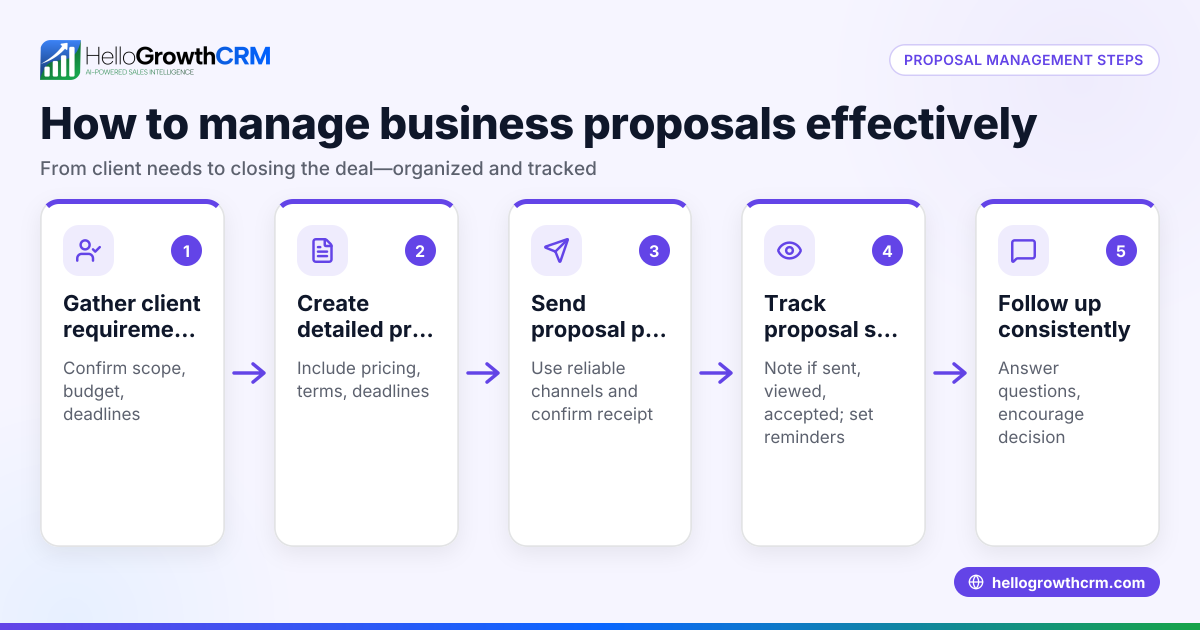
- Capture the lead or inquiry promptly: When a potential client requests a quote, record their details immediately. Check that you have all necessary project information like scope, location, deadlines, and special client requirements.
- Assign the proposal to a responsible team member: Make sure one person owns the proposal task and sets the next steps to avoid confusion or delays.
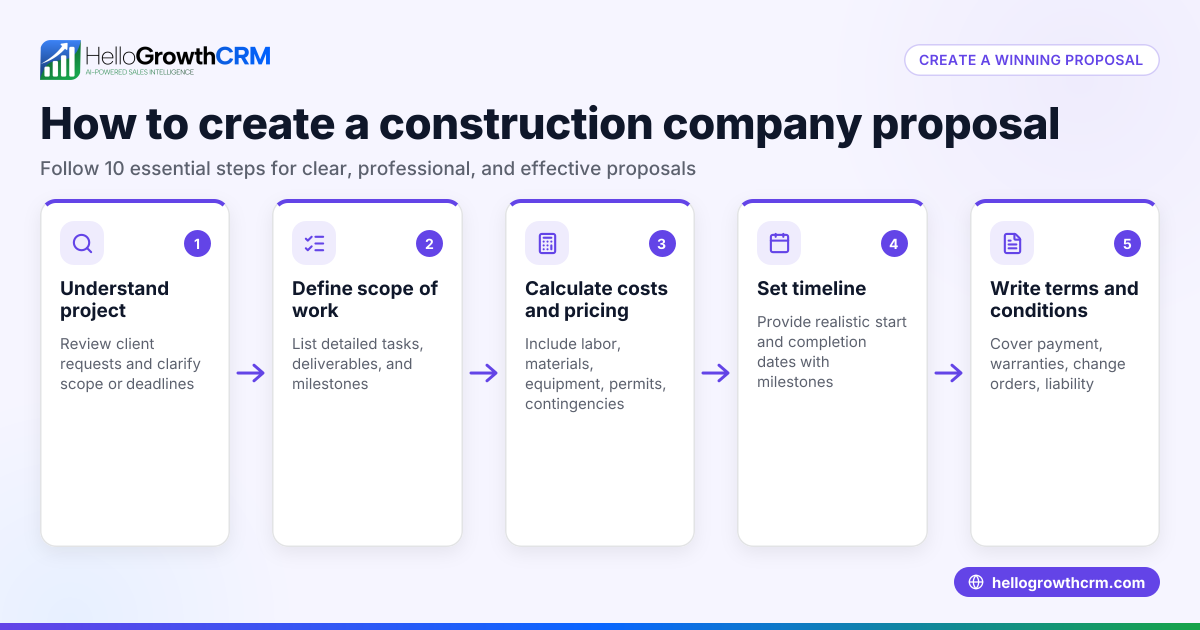
- Prepare a detailed cost estimate: Break down costs for materials, labor, equipment rental, and subcontractors. Verify quantities and prices with suppliers and subcontractors.
- Draft the proposal document: Include a clear project description, cost estimate, payment terms, timelines, and any compliance or legal conditions required by the client.
- Review internally before sending: Have a manager or accountant verify the numbers and terms to avoid errors or omissions.
- Send the proposal and track its status: Confirm the client received it and monitor if they viewed or accepted it. Set reminders to follow up.
- Follow up according to schedule: Contact the client for questions or to close the deal. Keep notes on communications.
- Update your pipeline and records: Mark proposals as won, lost, or pending. Organize all documents and communications for easy reference.
Following these steps helps maintain professionalism and speeds up your sales cycle. For tailored advice, see Contractors and construction.
Example (fictional figures)
A Denver-based construction company, Rocky Mountain Builders, receives an inquiry on 06/01/2026 for a commercial office renovation. They estimate costs as follows:
- Materials: $120,000
- Labor: $85,000
- Equipment rental: $15,000
- Subcontractors: $30,000
Total estimated cost = $120,000 + $85,000 + $15,000 + $30,000 = $250,000
They add a 10% contingency for unexpected expenses:
$250,000 × 10% = $25,000
Final proposal amount = $250,000 + $25,000 = $275,000
They draft the proposal including timelines and payment terms, review internally, and send it on 06/03/2026. They set a follow-up task for 06/10/2026 to check client feedback and keep the lead status updated.
This clear, documented process helps Rocky Mountain Builders avoid missed details and keeps the project moving toward contract closure.
Common mistakes
- Delaying proposal creation: Leads can go cold if you wait. Prevent this by capturing leads immediately and assigning clear ownership.
- Incomplete cost breakdowns: Missing costs can cause losses or disputes. Double-check all cost components and quantities.
- Poor document tracking: Without knowing if a proposal was viewed or accepted, follow-up is guesswork. Use tools that show proposal status.
- Lack of follow-up: Many deals fail due to no timely follow-up. Schedule reminders and next steps.
- Scattered information across emails, texts, and notes: This causes confusion and lost data. Centralize leads and proposals in one system such as HelloGrowthCRM.
- Not reviewing proposals internally: Errors can slip through without a second set of eyes. Have a manager or accountant verify proposals.
For more on avoiding these pitfalls in construction, visit Contractors and construction.
Doing this in HelloGrowthCRM
HelloGrowthCRM helps construction teams manage proposals efficiently by allowing you to create, send, and track quotes and proposals directly from a deal record. You can see the quote status—sent, viewed, or accepted—on the same screen as your follow-up task. Every inquiry from a web form, call, or WhatsApp message automatically becomes a lead with an owner and a next step, preventing leads from getting lost in notebooks or spreadsheets. This centralizes your sales process and keeps your team aligned. Learn more about WhatsApp and SMS CRM and HelloGrowthCRM for the United States.
Frequently asked questions
What should a construction proposal include? A construction proposal should include a detailed scope of work, cost breakdown (materials, labor, equipment, subcontractors), project timeline, payment terms, and any legal or compliance information required by the client.
How do I track proposal status effectively? Use a CRM or proposal management tool that shows when proposals are sent, viewed, and accepted. This visibility helps you know when to follow up and which proposals need attention.
How can I speed up proposal turnaround? Capture leads immediately, assign clear ownership, use templates for proposals, and automate reminders for follow-up to reduce delays.
Can a CRM help with construction proposal management? Yes, a CRM like HelloGrowthCRM centralizes lead capture, proposal creation, and tracking, which reduces errors and speeds up your sales process.
What common mistakes should I avoid in construction proposals? Avoid delays in preparing proposals, incomplete cost estimates, poor follow-up, and scattered information. Using a CRM can help prevent these issues.
Key takeaways
- Capture and assign leads promptly to avoid lost opportunities.
- Prepare detailed, accurate cost estimates and proposals.
- Track proposal status and schedule follow-ups consistently.
- Centralize information to prevent scattered data and delays.
- Use tools like HelloGrowthCRM to streamline proposal and lead management.
Start managing your construction proposals more effectively today. Start on the Free Forever plan (200 leads, no credit card).
Ready to put this into practice?
Set up your pipeline, WhatsApp follow-ups, and AI lead scoring in minutes — free, no credit card.
Try HelloGrowthCRM freeGet CRM tips in your inbox
Join thousands of sales professionals who get weekly insights on CRM strategy, AI automation, and pipeline optimization.

The HelloGrowthCRM team publishes guides on CRM strategy, AI sales tools, and revenue operations for small business sales teams.