HelloGrowthCRM software
Built for real small-business sales teams
HelloGrowthCRM helps reps qualify faster, follow up on time, and close more deals—with practical automation in one place.
- AI lead scoring and pipeline visibility
- Built-in dialer, WhatsApp, and email automation
- Sales forecasting and RevOps-ready reporting
A CRM for department stores is software that helps manage customer relationships, track leads, and streamline sales processes across multiple product categories. It should support fast follow-up, multi-channel messaging, and easy team collaboration. This article explains why department stores need a CRM, the steps to choose one, common mistakes to avoid, and how HelloGrowthCRM can help your sales team stay on top of leads.
Why this comes up / what goes wrong
Department stores often sell a wide range of products and serve many customers daily. Small or mid-sized department stores typically handle sales through manual methods like WhatsApp chats, phone calls, or spreadsheets. This leads to slow follow-up, lost leads, and poor tracking of customer interactions. Without a proper CRM, sales teams struggle to coordinate, miss repeat business opportunities, and cannot forecast sales accurately.
Owners and sales leaders search for "crm for department stores" because they want a system that fits their team size and workflow, integrates with their communication channels, and helps them convert more leads into sales without adding complexity.
Step-by-step
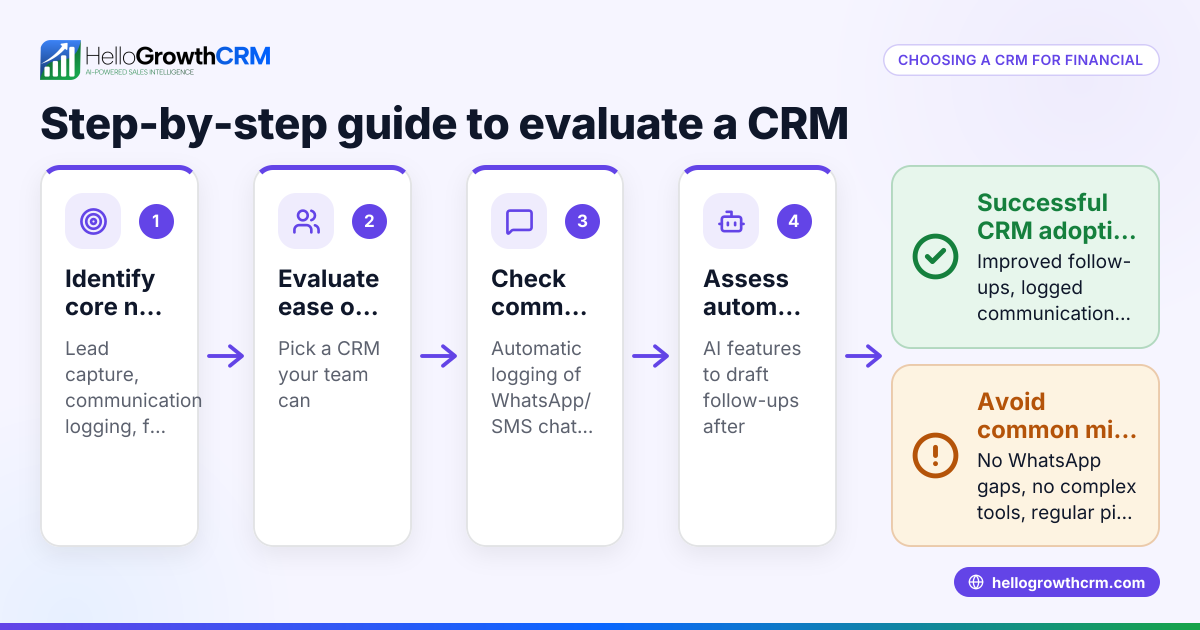
- Identify your store’s sales process and pain points
- Map out how leads come in (walk-ins, calls, WhatsApp, online inquiries).
- Note where leads get lost or delayed in follow-up.
- Check if your team uses spreadsheets or WhatsApp and if that causes confusion.
- List must-have CRM features for your department store
- Lead capture from sources like IndiaMART or web forms.
- Messaging through WhatsApp and SMS where most customers respond.
- Ability to log conversations automatically for easy reference.
- Task and pipeline management to track lead progress.
- Sales forecasting and reporting to plan inventory and staff.
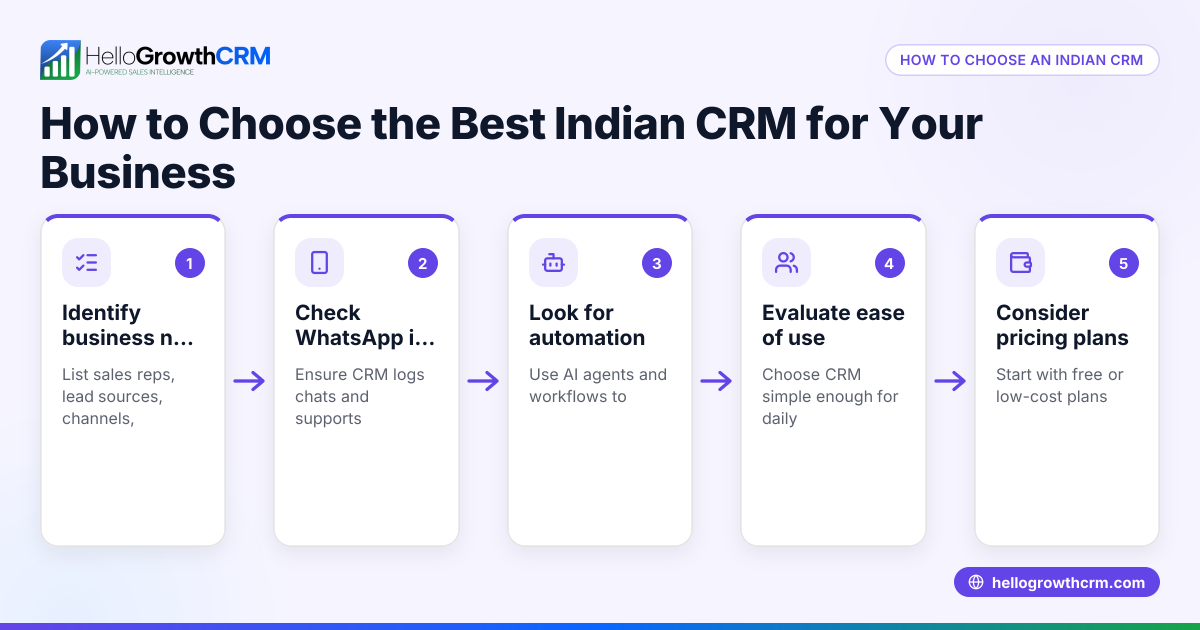
- Evaluate CRM options for ease of use and adoption
- Choose a CRM that your sales reps can use without extensive training.
- Check if it supports mobile use since many teams work on phones.
- Prefer a WhatsApp-native CRM if WhatsApp is your main communication channel.
- Check integration and automation capabilities
- Confirm if the CRM can capture leads automatically from your existing platforms.
- Look for AI features that can draft follow-up messages to save time.
- See if there is support for managing follow-up queues if you lack a dedicated sales manager.
- Compare pricing and plans
- Understand what features come in each plan.
- Avoid hidden costs for additional users or messages.
- Consider starting with a free or trial plan to test usability.
- Request demos and trial runs
- Involve your sales team in demos to get feedback.
- Test the CRM with real leads to check if follow-ups are faster and more organised.
- Plan for onboarding and ongoing support
- Ensure the vendor offers training or managed services if needed.
- Check for regular updates and customer support availability.
Example (fictional figures)
Rajesh runs a department store in Pune with 15 sales reps. He receives 500 leads monthly through phone, WhatsApp, and IndiaMART. Without a CRM, follow-up delays cause him to lose a significant number of leads.
Rajesh estimates that converting a lead earns ₹2,000 on average.
- Total leads: 500
- Leads lost due to slow follow-up: 150 (assumed for example) NEEDS EXPERT REVIEW
- Lost revenue: 150 × ₹2,000 = ₹3,00,000
By implementing a CRM that automates WhatsApp follow-ups and assigns tasks weekly, Rajesh reduces lost leads to 50.
- New leads lost: 50
- Leads saved: 150 - 50 = 100
- Additional revenue: 100 × ₹2,000 = ₹2,00,000
This shows how a CRM can improve revenue by speeding up lead follow-up.
Common mistakes
- Choosing a CRM without WhatsApp integration
- Most Indian customers respond on WhatsApp; missing this means slower replies.
- Prevent by selecting a WhatsApp-native CRM like HelloGrowthCRM. See WhatsApp and SMS CRM.
- Overcomplicating the CRM with features your team won’t use
- Complex CRMs lead to poor adoption and more errors.
- Prevent by involving your sales reps in CRM choice and starting with a simple plan.
- Ignoring lead capture automation
- Manual entry causes delays and data loss.
- Prevent by choosing a CRM that captures leads from IndiaMART, JustDial, and web forms automatically.
- Not planning for follow-up management
- Without a sales manager, leads can pile up unattended.
- Prevent by using Managed RevOps services that work your follow-up queue every week. Learn about Managed RevOps here.
- Neglecting AI tools that save time
- Writing follow-up messages manually wastes hours.
- Prevent by using AI agents that draft messages after calls for quick review and send. See AI agents.
- Skipping sales forecasting and reporting
- Without data, inventory and staffing decisions suffer.
- Prevent by using CRM features that provide pipeline visibility and sales reports.
Doing this in HelloGrowthCRM
HelloGrowthCRM supports WhatsApp and SMS messaging where conversations with leads are automatically logged on the lead record, making follow-ups easy to track. Its AI agents (in Beta) draft follow-up messages after calls, so sales reps only need to review and send, saving time. For founders without a sales manager, HelloGrowthCRM offers Managed RevOps, where a specialist works on the follow-up queue every week to keep leads moving.
Learn more about HelloGrowthCRM’s capabilities on WhatsApp and SMS here and the built-in CRM dialer.
Frequently asked questions
What features should a CRM for department stores have? A CRM should enable fast lead capture, multi-channel messaging (especially WhatsApp and SMS), task and pipeline management, and sales reporting. Automation features like AI drafting of follow-ups help your team save time.
Can a CRM integrate with WhatsApp for sales follow-up? Yes, many CRMs now offer WhatsApp-native features where conversations are logged automatically, and follow-ups can be sent as messages. This is important for Indian department stores where WhatsApp is a primary communication channel.
How does Managed RevOps help small department stores? If you don’t have a sales manager, Managed RevOps provides expert support to manage your follow-up queue weekly, clean your pipeline, and deliver reports. This keeps your sales process efficient without hiring extra staff.
Is AI useful in a CRM for department stores? AI can draft follow-up messages and update records automatically, reducing manual work for sales reps. This helps them respond faster and focus on closing deals.
How to ensure my sales team adopts the CRM? Choose a CRM that is easy to use, mobile-friendly, and fits your current communication channels. Involve your team in demos and start with essential features to avoid overwhelming them.
Key takeaways
- Choose a CRM that supports WhatsApp and SMS messaging for fast customer response.
- Automate lead capture from platforms like IndiaMART and web forms to avoid manual delays.
- Use AI agents to draft follow-ups and Managed RevOps to maintain consistent follow-up.
- Avoid overly complex CRMs to ensure your sales team actually uses the system.
- Regular sales forecasting and reporting help plan inventory and staffing.
Start improving your department store’s sales process today with a CRM built for Indian SMBs. Start on the Free Forever plan (200 leads, no credit card).
Ready to put this into practice?
Set up your pipeline, WhatsApp follow-ups, and AI lead scoring in minutes — free, no credit card.
Try HelloGrowthCRM freeGet CRM tips in your inbox
Join thousands of sales professionals who get weekly insights on CRM strategy, AI automation, and pipeline optimization.

The HelloGrowthCRM team publishes guides on CRM strategy, AI sales tools, and revenue operations for small business sales teams.