HelloGrowthCRM software
Built for real small-business sales teams
HelloGrowthCRM helps reps qualify faster, follow up on time, and close more deals—with practical automation in one place.
- AI lead scoring and pipeline visibility
- Built-in dialer, WhatsApp, and email automation
- Sales forecasting and RevOps-ready reporting
In Canada, a CRM for an interior design business should do more than store contacts: it should help you track leads by source, keep proposal and deposit records tied to the right province, preserve consent evidence for marketing, and avoid scheduling mistakes across time zones and languages.
Interior design work creates awkward admin edges that generic CRM advice usually skips. A designer may start with a discovery call from a Google Business Profile lead, send a paid consultation invoice, collect a deposit by Interac e-Transfer, revise a furnishing proposal twice, and then coordinate installers across provinces. If your system only captures names, emails and a vague deal stage, you will still end up rebuilding the real story from inboxes, bank records and text threads.
For a Canadian firm, the better question is not “does this CRM have pipelines?” Nearly all of them do. The useful question is whether your setup reflects Canadian tax treatment, privacy law, messaging consent, bilingual communication and the payment methods clients actually use.
Lead sources for Canadian design firms need their own fields
Many interior design enquiries in Canada do not arrive from one polished web form. They come from Google Business Profile, Kijiji, Facebook, LinkedIn, HomeStars, referrals and, for some firms, Yellow Pages. Those channels behave differently. A referral from a contractor often arrives half-qualified. A HomeStars prospect may be shopping several firms at once. A Kijiji lead may want a fast price check rather than a full-service engagement.
Your CRM should capture source at the first touch and preserve it all the way through the deal. That sounds basic, but it changes daily decisions: who gets called first, which consultations deserve calendar space, and which channels produce profitable work instead of low-margin quoting.
For an interior design studio, source alone is not enough. Add fields for project type, location, renovation stage, approximate budget band and whether the prospect wants design-only, procurement support, or full project coordination. Those fields help you separate a condo furnishing project in Toronto from a custom-home renovation in Calgary before your team spends time on the wrong follow-up.
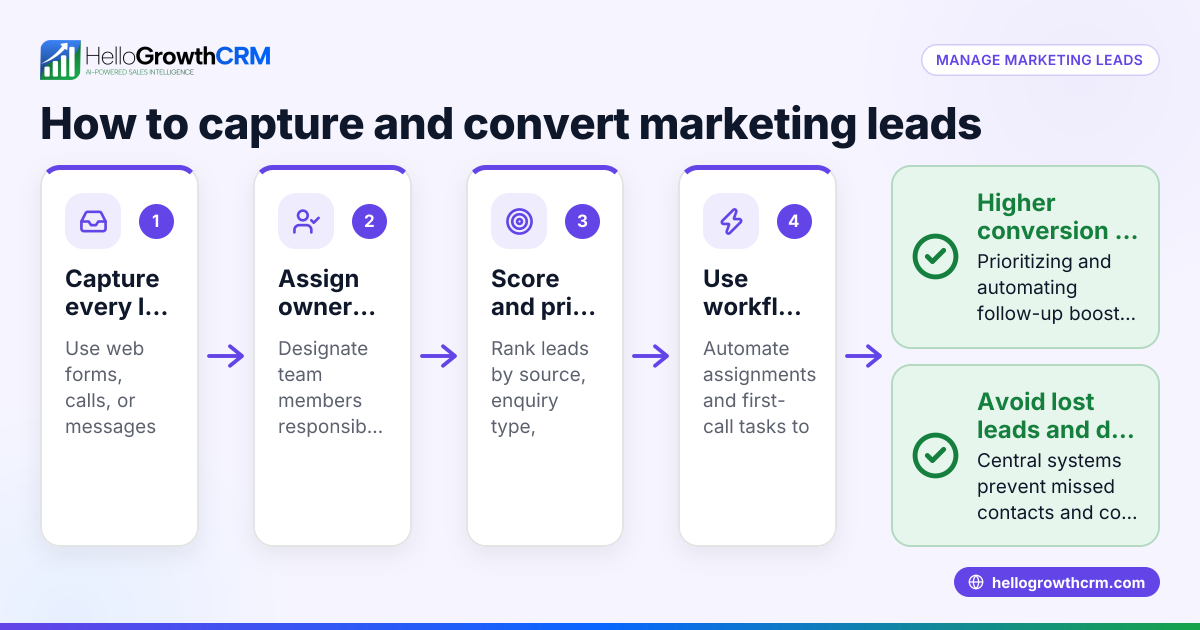
If you want a simpler intake process, lead capture and qualification tools can keep new enquiries organized as they enter the pipeline. The point is not to automate taste or fit; it is to stop valuable context from disappearing between the first email and the first proposal.
Province of supply belongs on every paid design job
Canadian interior designers often focus on room plans, finishes and procurement schedules, then discover later that their records do not show enough tax context for each transaction. That matters because the combination of GST, HST, PST and, in Quebec, QST depends on where the supply takes place. The Canada Revenue Agency publishes GST and HST guidance, and Revenu Québec publishes QST guidance. If you work across provinces, the CRM record for each billable engagement should carry the province connected to the supply, not just the client mailing address.
This becomes especially important when your work includes consultation fees, design retainers, product sourcing, project management and deposits. CRA guidance distinguishes between the timing of tax obligations and the treatment of deposits and forfeited amounts; those are related questions, but they are not identical. A CRM that only stores invoice totals without transaction type will not give your bookkeeper enough to review later.
In practice, interior designers should attach three things to the deal record: where the work is supplied, what kind of amount was collected, and the date that amount was received. If you later need to check whether a consultation fee, deposit or cancellation amount was treated properly, you can do it from one place instead of reconstructing the file.
Do not hard-code tax assumptions into templates. Use the current CRA and Revenu Québec guidance for the applicable tax, and confirm with your accountant which treatment applies to your services and goods mix. A multi-province business needs transaction detail, not just annual totals.
Deposits, procurement money and payment rails change the record you need
Canadian clients do not all pay the same way. Interior design firms commonly receive money by Interac e-Transfer, pre-authorised debit, credit card, cheque and wire transfer. That matters because Interac e-Transfers land directly in the bank rather than through a card processor. If your CRM workflow assumes every payment comes through card checkout, you will systematically miss received funds and chase clients who have already paid.
Design businesses also handle different kinds of money that should not be blurred together. A paid consultation, a design retainer, a procurement deposit for furnishings, and reimbursement for purchased items each create different operational questions. Even before accounting treatment is settled, your CRM should let the team see what the payment was for, which proposal or invoice it relates to, and whether goods were ordered against it.
The arithmetic below is illustrative; the figures are made up to show the shape of the decision. Suppose a Vancouver interior designer sends a proposal for a condo furnishing package with C$3,200 for design services and C$18,500 for furnishings to be procured later. The client first pays C$750 for an on-site consultation, then C$9,000 as a procurement deposit by Interac e-Transfer, and later settles the balance by credit card. If those amounts are all recorded as one generic “payment received,” the team cannot tell what has been earned, what authorizes purchasing, or which tax treatment needs review. If the CRM links each amount to the relevant quote, invoice and payment method, the operational picture is clear even before the final accounting entries are done. This leaves out chargebacks, supplier refunds, freight, customs and the exact tax treatment, all of which need separate review.
That is where documents tied to deals matter. A system with quotes, proposals, invoices and payment reconciliation tied to invoice records can reduce the amount of detective work after a busy install month.
CASL means your CRM must remember consent, not just the email address
Canadian designers often mix service updates and marketing in the same inbox habits: a project update, then a note about new packages, then a seasonal promotion to old enquiries. Under Canada’s Anti-Spam Legislation, commercial electronic messages need more than a contact field. CASL requires consent, sender identification and a working unsubscribe mechanism. The Canadian Radio-television and Telecommunications Commission administers CASL guidance and enforcement.
For CRM setup, the practical issue is evidence. A valid consent record should show date, source and type. If consent was implied rather than express, the record should also show the event it came from and when it lapses according to current CRTC guidance. Without that, your mailing list becomes a pile of contacts you are nervous to use.
Interior designers also need to keep service communication separate from promotional outreach. A project scheduling message may be purely transactional. Add a line promoting a new package or encouraging a referral, and it can move into CASL territory. That is why your CRM should use distinct templates and workflows for project communication versus marketing nurture.
When firms use sequences, campaigns and a shared inbox, the useful discipline is not “send more follow-ups.” It is creating a clean audit trail: who opted in, what they agreed to receive, and which messages are operational rather than promotional.
Quebec work changes your privacy and language requirements
If your design firm serves clients in Quebec, your CRM choice affects more than translation. Quebec’s Law 25 adds obligations around consent, transparency and reporting of confidentiality incidents. The Commission d’accès à l’information oversees that regime, while PIPEDA continues to matter at the federal level for many businesses, with the Office of the Privacy Commissioner of Canada providing guidance.
For a CRM, this means customer-facing communication and internal records both deserve attention. A French landing page alone is not enough. In Quebec, a French confirmation email, reminder flow and proposal language may be part of delivering the service the client reasonably expects. If your system can store a language preference at contact level and trigger the right templates, your team avoids ad hoc translation under deadline pressure.
Privacy setup also matters in day-to-day design work. Client files can contain floor plans, access instructions, family details, budgets and photos of private homes. Your CRM should support disciplined access, clear ownership of records, and a process for responding if information is sent to the wrong recipient or exposed in error. Ask your counsel what your Law 25 and PIPEDA duties are, and then make sure your CRM process matches that advice rather than leaving compliance as a policy document nobody follows.
If platform due diligence is part of your selection process, review the vendor’s security information alongside your own legal requirements.
Scheduling across provinces is harder than it looks
Interior design projects are full of appointments that cannot drift: discovery calls, trade walkthroughs, site visits, white-glove deliveries and install days. Canada has six time zones, one of them offset by half an hour, and daylight saving is not observed uniformly. Saskatchewan is the standing trap. A booking made in October for a March appointment can slip by an hour if your system handles time zones loosely.
That matters even for a small studio. A Toronto-based firm may be sourcing for a client in Halifax, coordinating a supplier in Vancouver and arranging a virtual review with a homeowner in Regina. If the CRM only stamps meetings in the team member’s local time, the record stops being reliable for clients and subcontractors.
Your scheduler should preserve the meeting time zone, write it clearly in confirmations, and keep the event tied to the deal record so a rescheduled install visit does not vanish into someone’s personal calendar. Provincial statutory holidays also differ, so follow-up promises and booking availability should be reviewed against where the client and job site actually are, not just your head office.
For firms that want bookings connected to the pipeline from the start, meeting scheduling and booking pages can shorten the route from enquiry to consultation while keeping the appointment attached to the correct contact and deal.
Accessibility and customer communication are part of the buying decision
A CRM for interior designers should support how clients receive information, not just how the sales team prefers to work. In Ontario, the Accessibility for Ontarians with Disabilities Act affects customer-facing digital content, and other provinces have their own accessibility legislation and policies. For a design firm, that can touch intake forms, email confirmations, proposals viewed online and portal content shared during a project.
This is not only a legal question. Interior design clients routinely review mood boards, scopes, finish schedules and payment requests on phones during commutes or from a job site. If confirmations are hard to read, links are unclear, or important changes are buried in image-heavy emails, the CRM is not helping your customer experience.
One practical review can save a lot of friction. Before committing, test these points on the actual workflow you use:
- Can a lead choose English or French at first contact, and does that preference carry into later messages?
- Can your team distinguish a service notice from a promotional campaign so CASL records stay clean?
- Can each payment be tagged by method, including Interac e-Transfer and cheque, not only credit card?
- Can each deal store province of supply, job-site address and project type without custom workarounds?
- Can proposals, notes, site-visit tasks and client approvals stay in one record instead of scattered across inboxes?
- Can a booking made for another province keep the correct local time through daylight saving changes?
A useful CRM for designers keeps the handoff from sale to project clean
Many interior design firms lose control not at lead capture but just after the client says yes. The estimator, designer, procurement coordinator and installer all need different facts, and too often those facts sit in a winning email thread rather than the system everyone can see. That is where a CRM earns its keep: not as a marketing toy, but as a controlled handoff from opportunity to active work.
For this industry, the minimum useful record after close includes signed scope, proposal version, payment status, supplier dependencies, room-by-room notes, upcoming client decisions and the next internal task owner. A pipeline can still be the backbone, but task boards and activity history are what stop a sold project from becoming an operations scramble.
HelloGrowthCRM fits this part of the job best when used for lead capture, pipeline tracking, task boards, scheduling, messaging and deal-linked commercial documents. Its pipeline management and workflow tools and activity and task boards are useful if you want one place to move an enquiry from first call to proposal, deposit and handoff without losing the thread.
The right CRM for an interior design business in Canada is the one that matches how Canadian clients inquire, pay, consent, schedule and expect to be served; if it cannot do that, it will store data without reducing work.
Ready to put this into practice?
Set up your pipeline, WhatsApp follow-ups, and AI lead scoring in minutes — free, no credit card.
Try HelloGrowthCRM freeGet CRM tips in your inbox
Join thousands of sales professionals who get weekly insights on CRM strategy, AI automation, and pipeline optimization.

The HelloGrowthCRM team publishes guides on CRM strategy, AI sales tools, and revenue operations for small business sales teams.