HelloGrowthCRM software
Built for real small-business sales teams
HelloGrowthCRM helps reps qualify faster, follow up on time, and close more deals—with practical automation in one place.
- AI lead scoring and pipeline visibility
- Built-in dialer, WhatsApp, and email automation
- Sales forecasting and RevOps-ready reporting
In Canada, the right CRM with built-in AI lead scoring is one that ranks prospects using signals your team can lawfully collect, actually sees the channels Canadians use, and keeps enough evidence for consent, tax, language and handoff decisions when a lead becomes revenue.
That sounds narrower than a software feature checklist, but it is the difference between a score your staff trusts and a score they quietly ignore. A Calgary contractor, a Montreal staffing firm and a Vancouver clinic do not all treat the same inquiry as equally sales-ready. In Canada, the useful question is not whether the CRM has AI lead scoring in the abstract. It is whether the model can work with Canadian lead sources, Canadian messaging rules, bilingual communication, province-specific tax handling and payment behaviour that often lives outside card processors.
If you are comparing options, start with the data trail you will need after the score is assigned. A good rank on day one is not enough; the record must still make sense when your team books, quotes, invoices, follows up and proves why a message was sent.
CASL evidence matters more than a high score
Canada’s Anti-Spam Legislation governs commercial electronic messages. In practice, that means a lead score should never be treated as permission to email or text. Your CRM needs a consent record that shows source, date and type of consent, because CASL distinguishes between express and implied consent, and implied consent does not last indefinitely. The regulator and official guidance sit with the CRTC and the Government of Canada’s CASL materials, which are where you should check the current rules and timing.
This has a direct design effect on AI lead scoring. If the model rewards clicks and replies but your database does not separate consented contacts from contacts that only made an inquiry, the score encourages risky behaviour. A safer setup is to let the score answer “who deserves attention next?” while a separate rule answers “which channels are allowed for this person?”
It also helps to keep transactional and promotional messages apart. In Canada, a service message can drift into CASL territory if someone adds a marketing line to it. For that reason, booking confirmations, appointment reminders and account notices should live in different templates and workflows from promotional outreach. If you use sequences and campaigns, check that your team can maintain that separation rather than improvising from one shared template library.
PIPEDA and Quebec Law 25 should decide which fields enter the model
A lead score is only as defensible as the inputs behind it. Across Canada, PIPEDA shapes how private-sector organizations collect, use and disclose personal information in the course of commercial activity. In Quebec, Law 25 adds stricter obligations around consent, transparency and confidentiality incident handling, with oversight from the Commission d’accès à l’information. Federally, the Office of the Privacy Commissioner of Canada is the reference point for PIPEDA guidance.
For CRM selection, this means asking a plain question: do you need each field you plan to feed into the score? If a field is interesting but not necessary for qualification or service delivery, leaving it out is often the cleaner choice. A clinic, legal practice or staffing agency may hold especially sensitive information, and some professions also answer to provincial colleges with their own confidentiality expectations. In those settings, the best AI lead scoring setup is often narrower, with more weight on explicit commercial signals and less on intrusive profiling.
Quebec also changes customer communication expectations. If you sell there, a French-facing journey is not a nice extra. Your booking page, follow-up and confirmation flow may need French alongside English. That is not only a branding issue; it affects conversion data. If French-speaking prospects meet an English-only follow-up path, the model may misread language friction as weak purchase intent.
Canada lead sources create different buying signals than generic web forms
Many Canadian small and mid-sized businesses get leads from Google Business Profile, referrals, Facebook, LinkedIn, Kijiji, HomeStars and older directory traffic such as Yellow Pages. Those sources do not carry equal intent, and they do not produce the same metadata. A person who phones from a Google Business Profile listing after searching for emergency HVAC service is not behaving like someone who filled a broad interest form from social media.
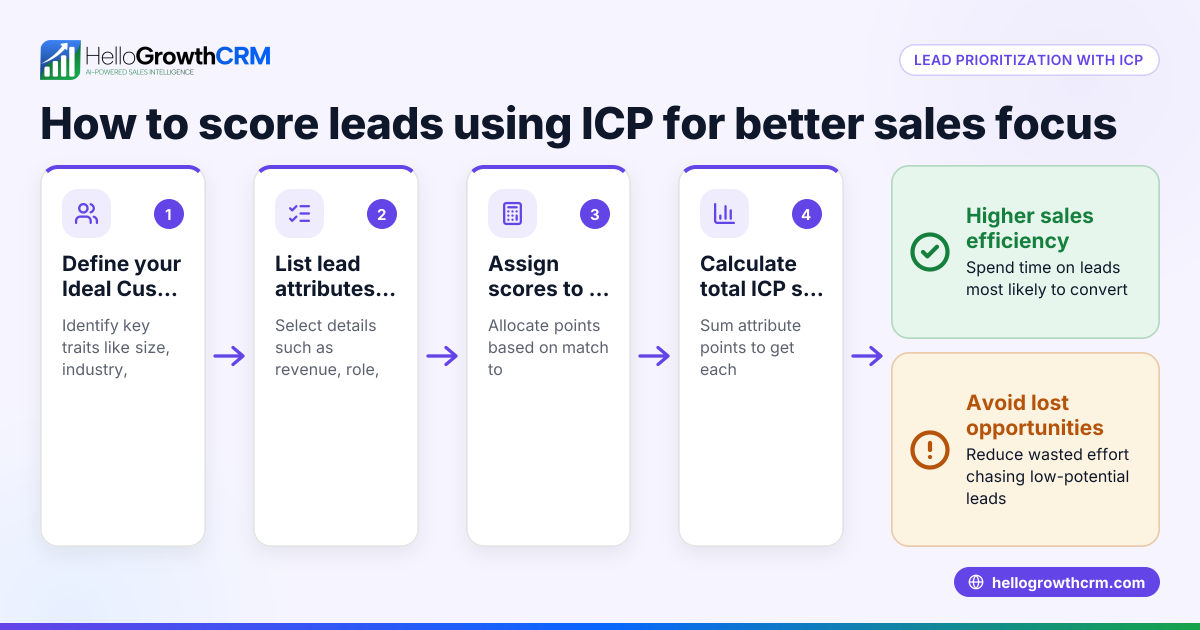
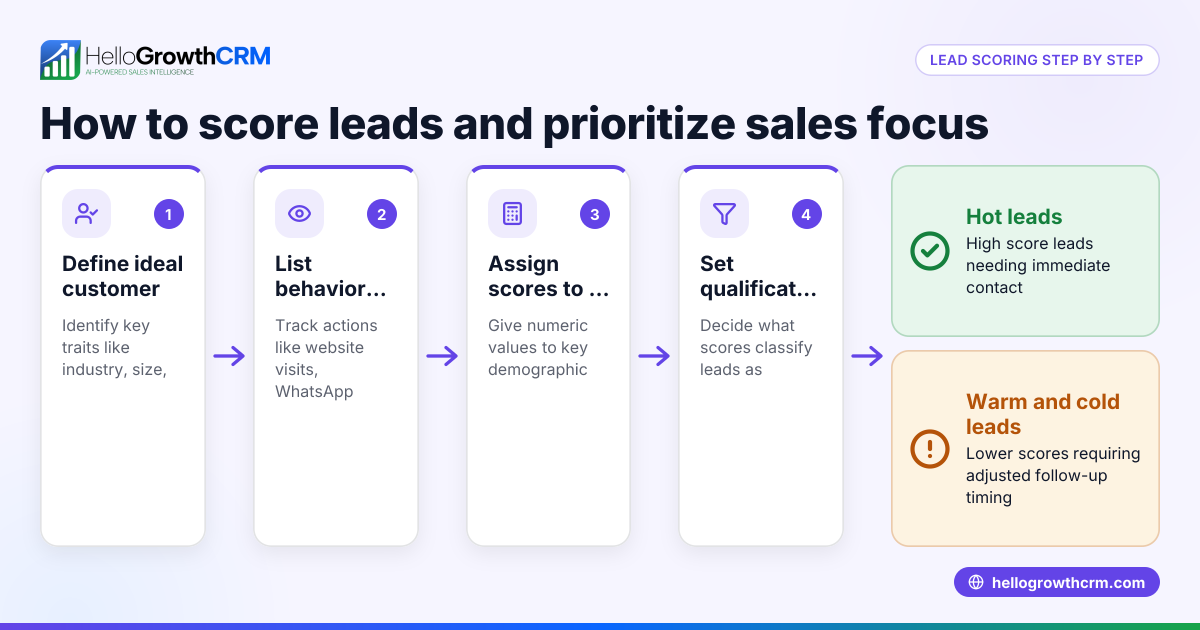
This is where built-in AI lead scoring is useful only if the CRM keeps source, first touch and follow-up history tied together. If your intake process collapses everything into “website lead,” the model is blind. If it preserves the path to inquiry, you can start distinguishing leads that need immediate callback from leads that belong in a slower nurture track.
For businesses with dispersed teams, source can also affect routing. A referral from an existing customer may belong with the account owner. A HomeStars inquiry may need someone skilled at quoting quickly. A LinkedIn lead may need a consultant rather than a closer. When a CRM combines lead capture and AI lead scoring with pipeline entry, you can make those source differences visible before the first handoff instead of cleaning them up after missed follow-ups.
Interac and pre-authorised debit can expose weak scoring logic
Canadian payment habits often reveal whether your CRM is measuring genuine buying intent or just digital convenience. Interac e-Transfer is common for many service businesses, especially local trades and clinics. Pre-authorised debit may matter in ongoing service arrangements. Cheques and wires still appear in some B2B and professional settings. If your scoring logic assumes the card processor is the only proof of commercial progress, it will under-read customers who pay through the bank and overvalue leads who click nicely but never move to a real payment step.
This becomes more important once the lead turns into a quote or invoice. A CRM should let your team connect the score to commercial documents and payments received so you can see which early signals actually correlate with revenue in Canada, not just with form completions. If the system can only see card events, your feedback loop is incomplete.
The tax side matters too. Canada does not have one uniform sales tax treatment. Businesses may deal with GST, HST, provincial sales tax and, in Quebec, QST. The applicable combination can depend on where the supply takes place, and a business operating across provinces may need the province of supply recorded per transaction, not just the total. CRA publishes guidance on GST and HST, including the timing of the tax obligation and the treatment of deposits and forfeited amounts, while Revenu Québec publishes QST guidance. Check the official CRA and Revenu Québec materials for the current rules that apply to your business.
That sounds like finance work rather than lead scoring, but it affects software choice. Once a strong lead becomes a closed deal, the CRM record should preserve the province, amount and document trail needed later. Otherwise the commercial history that teaches the model what a good lead looks like is detached from the operational reality your team must administer.
Six time zones and provincial holidays distort “fast follow-up” in Canada
A CRM vendor demo can make response-time scoring look simple. Canada makes it messy. There are six time zones, one of them offset by half an hour, and daylight saving is not observed uniformly. Saskatchewan catches teams out regularly. A booking made in October for a meeting in March can drift by an hour if the system handles time zones loosely. Provincial statutory holidays also vary, which changes when outreach lands and when no reply should really count against a lead.
For AI lead scoring, this means timing signals need context. A lead who submits late in the evening in British Columbia may look “cold” by Eastern time the next morning even though your team has not truly been slow. A no-show risk model that ignores local holidays may also misclassify bookings. If your business uses appointment-led selling, a CRM with scheduling and booking should preserve local time correctly from the first inquiry through confirmation and reminder.
Teams serving multiple provinces should test a few real scenarios before committing: a lead books near a daylight saving change, a reminder goes to a Quebec customer in French, and an Ontario office hands off to an Alberta rep before a provincial holiday. If the record becomes confusing under those conditions, the score built on top of it will not become clearer later.
Bilingual service in Quebec changes conversion, not just presentation
It is easy to treat French support as a website translation issue. In Canada, and especially in Quebec, it changes lead qualification and follow-up quality. A prospect who asks a detailed question in French may need a French reply, a French booking page and a French confirmation to progress comfortably. If the CRM cannot support that workflow, your team may mark the contact as low intent when the real obstacle was language handling.
This matters for scoring because AI models learn from outcomes. If French-language leads are consistently delayed, routed to the wrong rep or answered in the wrong language, the model may learn the wrong lesson and downgrade a valuable segment. For Quebec operations, review whether the CRM can route by language preference, keep the communication history visible and separate French templates from English ones where needed. If your outreach includes mobile messaging, WhatsApp and SMS workflows can be useful, but only if your consent records and language handling are disciplined.
Accessibility also enters the picture. Ontario businesses should think about the Accessibility for Ontarians with Disabilities Act for customer-facing digital content, and other provinces have their own accessibility legislation. Clear forms and messages improve conversion quality in their own right. A score is less helpful when the front door quietly filters out people because the page is hard to use.
One Canada test is better than a polished generic demo
The arithmetic below is illustrative; the figures are made up to show the shape of the decision. It leaves out staff training time, migration cleanup and any profession-specific compliance review.
Illustrative example: a Mississauga physiotherapy clinic gets an illustrative thirty new inquiries in a made-up month. The clinic estimates that its front desk spends an illustrative C$850 worth of staff time chasing incomplete forms, checking whether follow-up messages were allowed, and correcting bookings that arrived in the wrong queue. It also estimates an illustrative C$1,400 in missed or delayed bookings from high-intent leads that were not called promptly. A CRM with built-in AI lead scoring is attractive, but the clinic does not test it on headline scoring alone.
Instead, the clinic runs one illustrative workflow using invented records: a Google Business Profile inquiry, a referral from an existing patient, and a Quebec French-language inquiry for a telehealth service. It checks whether the CRM stores consent source and date, routes by language, logs calls and notes against the same contact, preserves the booking time correctly, and keeps the eventual quote or invoice attached to the deal record. If the product cuts the made-up admin drag even modestly, the gain is not only the illustrative C$850 saved. It is also cleaner evidence for CASL, fewer booking errors and better learning data for future scoring.
That is the kind of test worth doing in Canada: one short live scenario using your own channels, your own language needs and your own province mix. A generic demo rarely exposes those points.
Where HelloGrowthCRM fits if you want scoring tied to action
If you are evaluating HelloGrowthCRM, focus on whether its pieces line up with the Canadian workflow above. The platform offers AI lead scoring alongside lead capture, qualification and pipeline entry, so a new inquiry can be organized before it is buried in email. Its pipeline tools track opportunities from first contact through close, while task boards keep calls, meetings, notes and internal follow-up tied to the same record. For appointment-led teams, booking pages shorten the path to conversation, and for teams that still rely heavily on phone contact, the built-in dialer logs outcomes back to the contact and deal history.
That combination matters more than any isolated score. In Canada, you want the person marked as high priority to trigger the right next action, on the right channel, with enough recordkeeping for consent and handoff. If you need a low-risk way to trial that workflow first, the free CRM gives you a place to test intake, scoring and follow-up on a small set of real Canadian leads before changing your whole process.
The best AI lead scoring CRM for Canada is the one that can explain, in your own operating conditions, why a lead is worth attention now and what your team is allowed to do next.
Ready to put this into practice?
Set up your pipeline, WhatsApp follow-ups, and AI lead scoring in minutes — free, no credit card.
Try HelloGrowthCRM freeGet CRM tips in your inbox
Join thousands of sales professionals who get weekly insights on CRM strategy, AI automation, and pipeline optimization.

The HelloGrowthCRM team publishes guides on CRM strategy, AI sales tools, and revenue operations for small business sales teams.