HelloGrowthCRM software
Built for real small-business sales teams
HelloGrowthCRM helps reps qualify faster, follow up on time, and close more deals—with practical automation in one place.
- AI lead scoring and pipeline visibility
- Built-in dialer, WhatsApp, and email automation
- Sales forecasting and RevOps-ready reporting
In Canada, a crypto CRM should do more than store contacts: it needs to track consent, province of supply, payment method, language, and timing so your team can sell and follow up without creating tax, privacy, or messaging problems.
That matters because a Canadian crypto business rarely runs on one clean channel. Leads may come from Google Business Profile, LinkedIn, referrals, Kijiji, Facebook or an industry event. Payments may arrive by credit card, wire transfer, cheque, pre-authorised debit or Interac e-Transfer. Customers may expect English service in one province and French in Quebec. If your CRM only captures name, email and deal value, it will not reflect how the business actually operates.
A good setup starts with fields and rules that match Canadian obligations. You do not need every possible field. You need the ones that change how you can contact someone, what tax may apply, where work is delivered, and how cash is reconciled. For teams comparing systems, the useful test is not whether a platform has a crypto label; it is whether it can hold the records your Canadian operation has to prove later.
CASL turns consent records into a core CRM field
For most Canadian businesses using email or SMS to market crypto-related services, CASL is the rule that changes CRM design first. The law is enforced by the CRTC and governs commercial electronic messages. A contact record needs more than an opt-in box. It should preserve the consent type, the date captured, the source, and the exact channel covered.
This is where many teams create risk accidentally. They log a lead from a web form, then send a sequence without preserving whether consent was express or implied. Under CASL, that distinction matters, and implied consent does not last indefinitely. The current rules, timing and guidance are published by the CRTC and the Government of Canada; use those official sources rather than hard-coding an old internal rule into your process.
A second Canadian wrinkle is template separation. A service email about an account issue can fall into CASL’s scope if someone adds a promotional line about a new crypto offering. In practice, your CRM should keep operational messages and marketing sequences in different buckets, with separate approval and templates. If you use sequences and campaigns, the useful control is not automation by itself but the ability to segment contacts by valid consent status before anything is sent.
GST, HST, PST and QST depend on where the supply takes place
Crypto businesses often focus on deal value and forget the location facts that drive indirect tax treatment in Canada. The Canada Revenue Agency publishes the place-of-supply rules for GST and HST, and Revenu Québec publishes Quebec rules for QST. If you operate across provinces, your CRM needs the province connected to each transaction, not just the customer’s billing country and total amount.
This becomes especially important when your sales team takes deposits, charges cancellation amounts, or bills in stages. CRA guidance distinguishes between the timing of a tax obligation and the treatment of deposits or forfeited amounts; those are not identical issues. A single “amount received” field is not enough if finance later needs to determine what happened, where it happened, and when it became taxable under the applicable rules.
Do not rely on memory for current numbers. For registration obligations, filing timing, and the current tax amounts that may apply, check the Excise Tax Act guidance from CRA and the Quebec sales tax material from Revenu Québec. If your CRM can store transaction location, document type, and receipt status alongside the deal, the tax analysis becomes possible. If it cannot, your team will be reconstructing facts from email threads at month-end.
For operators that issue quotes before payment, tying commercial documents to the underlying opportunity also helps. A pipeline that moves from inquiry to paid work is useful only if the record later shows what was sold, in which province, and how money was collected. That is why some firms look for pipeline management and quoting tools in the same workflow rather than as separate systems.
Interac e-Transfer changes how you reconcile crypto sales
In Canada, Interac e-Transfer is common enough that a card-only view of collections will miss real cash. That matters for many crypto-adjacent businesses, especially consultancies, broker support firms, mining service providers, and smaller operators selling education or advisory packages. An e-Transfer lands in the bank, not in a card processor dashboard, so the CRM should record payment rail as its own field.
Without that field, revenue can look late when it has actually been paid, or paid when it has not yet cleared in the way your internal process requires. The same issue appears with wire transfer, cheque and pre-authorised debit. These methods behave differently operationally. A payment marked simply as “received” gives too little context for collections, support and tax review.
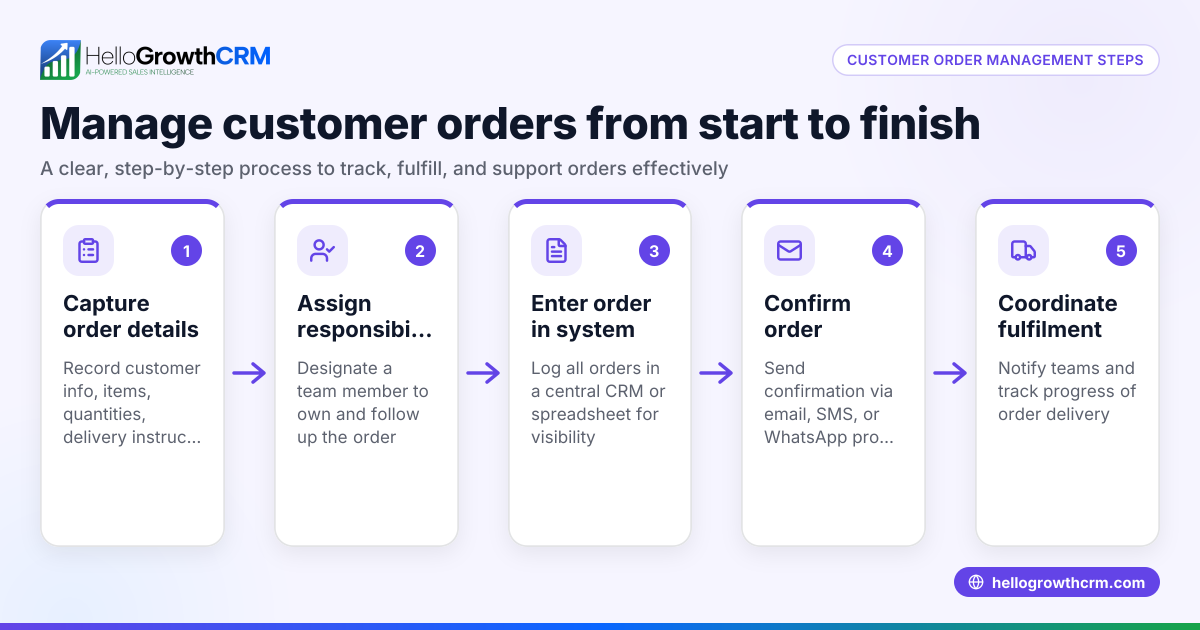
The arithmetic below is illustrative; the figures are made up to show the shape of the decision. Suppose a Calgary business selling crypto compliance workshops sends a quote for C$18,500 to a client in Ontario. The client pays a C$5,000 deposit by Interac e-Transfer, then the balance of C$13,500 by wire after delivery. If the CRM only syncs card receipts, the deal appears partially unpaid until someone checks the bank manually. If tax review later asks when money was received, whether the deposit was applied, and which province the supply relates to, the team has to piece the story together from bank notes and email. A better record would show province, deposit status, payment rail, document issued, and final settlement date in one place. This illustration leaves out the underlying legal characterization of the supply and any registration analysis, which should be checked against CRA and, where relevant, Revenu Québec guidance.
Quebec adds language and privacy duties that affect customer records
If your crypto business serves Quebec, the CRM is part of your compliance posture, not just your sales process. Quebec’s Law 25 creates privacy obligations around consent, transparency and reporting of confidentiality incidents, with oversight from the Commission d’accès à l’information. At the federal level, PIPEDA remains relevant outside provincial private-sector regimes, with the Office of the Privacy Commissioner of Canada providing guidance.
For daily operations, this means a Quebec contact record should support more than province. You may need preferred language, communication permissions, and proof of how personal information was collected and used. Quebec’s language expectations also reach customer-facing communications. In practice, if your business is marketing or onboarding customers in Quebec, a French landing page, confirmation and reminder are often not optional from a commercial standpoint and may be legally significant depending on what is being offered and how.
This is one reason businesses should test a CRM with real customer journeys rather than feature checklists. Can a Montreal lead receive French confirmation while an Alberta lead receives English? Can your team keep privacy notes tied to the same record that holds the deal? Can you limit unnecessary copying of personal data across inboxes and spreadsheets? If these controls matter to you, review the vendor’s documented posture and your own processes together; a general security overview is only one part of the answer.
Canada’s calendar quirks can break booking and follow-up logic
Canada has six time zones, one of them offset by half an hour, and daylight saving is not handled uniformly everywhere. Saskatchewan is a recurring trap for booking logic, and a meeting booked in October for March can drift by an hour if the system stores the wrong time basis. For a crypto business running consultations, demos, investor calls or onboarding sessions nationally, this is not a minor detail.
Provincial statutory holidays also vary. A reminder sequence that works in British Columbia may land on a holiday in another province. If your sales or compliance workflow depends on exact call times or reminder windows, a CRM should store the customer’s location and render the booking in local time, not in the rep’s default setting.
That becomes more important when several teams touch the same record. A Vancouver rep, a Toronto compliance lead and a St. John’s customer should all see the same appointment translated correctly for their own context. If you use scheduling and booking, test bookings that cross provinces and cross the spring and autumn clock changes before you rely on the automation.
Lead source matters because Canadian channels behave differently
Not every Canadian lead source produces the same quality of contact data. A referral from an accountant is usually richer than a Kijiji inquiry. A Google Business Profile lead may arrive ready to talk by phone, while a LinkedIn lead may expect a slower, more formal outreach path. If you run a crypto business, these differences affect both conversion and compliance because the source often tells you what consent evidence you have and which channel is appropriate for first contact.
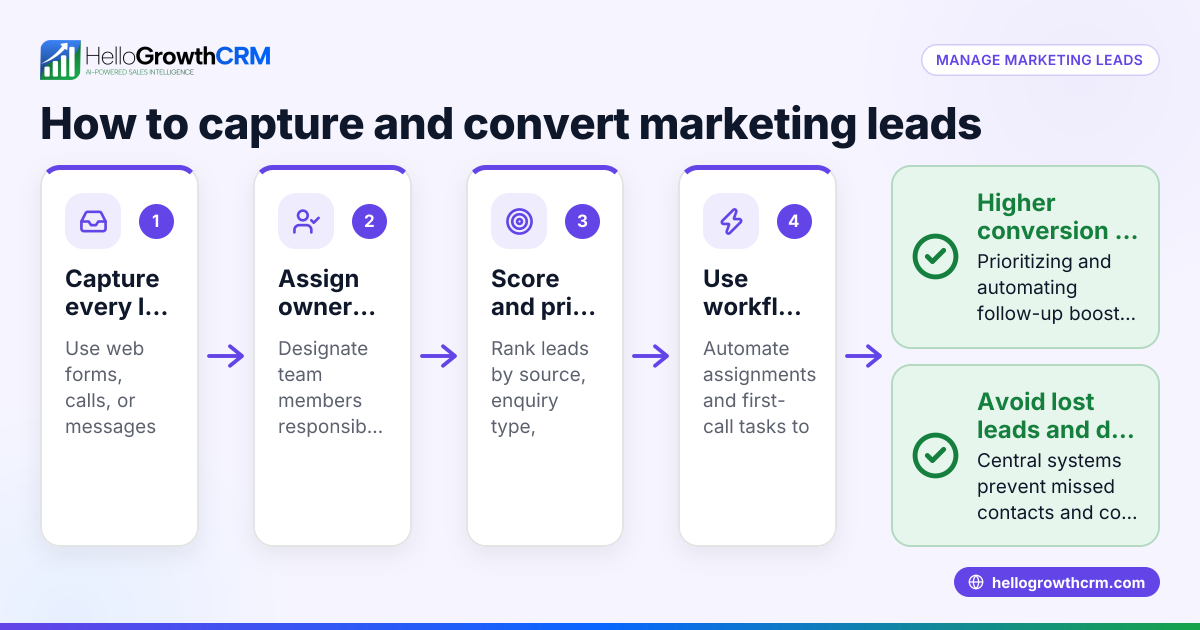
The CRM should therefore store lead source in a disciplined way, not as a free-text afterthought. Google Business Profile, Facebook, LinkedIn, HomeStars, Yellow Pages, referrals and event leads each carry different operational expectations. This is where lead capture and qualification tools are useful: not because a score replaces judgment, but because the system can keep the source, route the inquiry into the right pipeline, and preserve a cleaner history from the start.
If you want one practical audit of your current setup, check whether each new lead record answers these questions:
- Which source created the inquiry?
- What consent exists, on which channel, and when was it captured?
- Which province is relevant to the sale or service?
- What language should customer-facing communication use?
- Which payment rail is expected or already used?
If even one of those answers usually lives outside the CRM, you do not have a reliable operating record yet.
Crypto firms often need a pipeline that shows handoffs, not just stages
Many Canadian crypto businesses sell through a chain of qualification, compliance review, document issue, payment collection and ongoing support. A simple board with “new,” “won” and “lost” does not reflect that reality. The useful Canadian question is where a deal is waiting: on identity review, on a bilingual contract, on deposit receipt, on a province-specific tax check, or on a booked call across time zones.
That is why task history matters as much as stage names. When multiple people touch a file, the CRM should tie calls, notes, meetings and follow-ups to the same record so the next person can see what happened without asking the customer to repeat it. For teams handling a high volume of inquiries, activities and task boards can support those internal handoffs and reduce the habit of tracking important exceptions in private notebooks or chat.
A useful implementation principle is to make stage movement conditional on the facts you actually need. For example, do not let a deal move to a late stage if province is blank or payment rail is unknown. Those are operational controls, not bureaucratic extras. They are what stop a clean-looking pipeline from turning into messy collections and uncertain records later.
Where HelloGrowthCRM can help a Canadian crypto team
HelloGrowthCRM is relevant here when you use it to capture and route leads, track deals from first contact through close, log calls and notes against the same record, and automate follow-up once the right fields are present. Its scheduling, messaging, workflow and pipeline features are the parts that matter most for a Canada-specific crypto setup. If you are mapping a process before buying, the free CRM and the calculators and templates in free sales tools are a practical way to test your fields and stages before you roll anything out widely.
The real value is not that the software says “crypto.” It is that your Canadian business can use one system to preserve the facts that CASL, CRA, Revenu Québec, PIPEDA and Quebec privacy expectations may later require you to show.
Ready to put this into practice?
Set up your pipeline, WhatsApp follow-ups, and AI lead scoring in minutes — free, no credit card.
Try HelloGrowthCRM freeGet CRM tips in your inbox
Join thousands of sales professionals who get weekly insights on CRM strategy, AI automation, and pipeline optimization.

The HelloGrowthCRM team publishes guides on CRM strategy, AI sales tools, and revenue operations for small business sales teams.