HelloGrowthCRM software
Built for real small-business sales teams
HelloGrowthCRM helps reps qualify faster, follow up on time, and close more deals—with practical automation in one place.
- AI lead scoring and pipeline visibility
- Built-in dialer, WhatsApp, and email automation
- Sales forecasting and RevOps-ready reporting
The customer acquisition formula is:
Customer Acquisition Cost (CAC) = Total Sales and Marketing Expenses ÷ Number of New Customers Acquired
This formula tells you how much your business spends on average to acquire one paying customer. Knowing your CAC helps you budget marketing, price products, and forecast growth effectively.
Why this comes up / what goes wrong
Small business owners often wonder about the customer acquisition formula because they want to understand the true cost of gaining new customers. Many struggle to track all expenses related to sales and marketing or confuse leads with actual paying customers. Without an accurate CAC, it’s difficult to know if your marketing and sales efforts are profitable or sustainable.
For example, a small business may spend $10,000 on advertising and sales salaries but only gain 5 new customers. Without calculating CAC, they might not realize that each customer costs $2,000 to acquire, which could be too high for their profit margins.
Common problems include mixing time periods for expenses and customers, ignoring indirect costs like software subscriptions or commissions, and not updating CAC regularly. These mistakes lead to poor decisions about marketing budgets and sales strategies.
Step-by-step
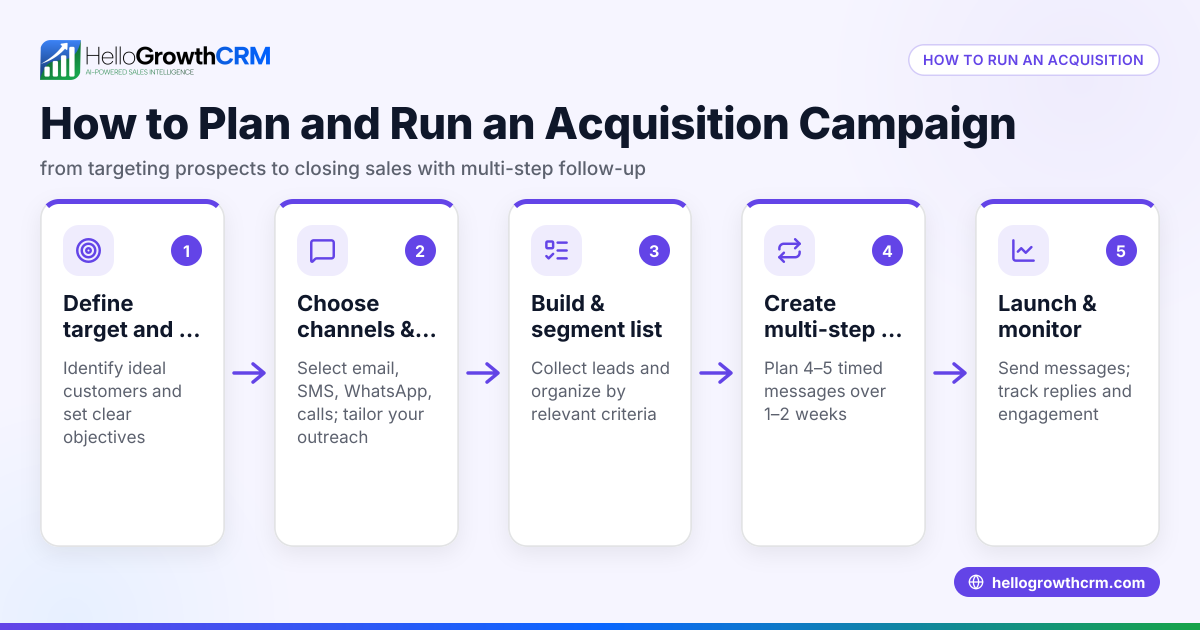
- Add up all sales and marketing expenses for a specific period. Include advertising costs, sales and marketing salaries and commissions, software subscriptions, events, and promotions.
- Count the number of new paying customers acquired in the same period. Use your sales records or CRM data to get an accurate count.
- Calculate your CAC by dividing total expenses by new customers:
CAC = Total Sales and Marketing Expenses ÷ Number of New Customers Acquired
- Compare your CAC to your customer lifetime value (CLV). This comparison helps you see if your acquisition cost is sustainable. If CAC is higher than CLV, you lose money on each customer.
- Track CAC regularly, such as monthly or quarterly, to spot trends and adjust your marketing approach.
- Use CAC to plan marketing budgets and forecast sales growth. Knowing your cost per customer helps you invest wisely.
Example (fictional figures)
A landscaping contractor in Charlotte, North Carolina, wants to calculate CAC for Q1 2026.
- Advertising spend: $12,000
- Sales team salaries and commissions: $18,000
- Marketing software and tools: $3,000
- Events and promotions: $2,000
Total sales and marketing expenses = $12,000 + $18,000 + $3,000 + $2,000 = $35,000
Number of new customers acquired in Q1 2026 = 25
CAC = $35,000 ÷ 25 = $1,400
This means the contractor spends $1,400 to acquire each new customer.
Common mistakes
- Ignoring indirect costs: Not including salaries, commissions, or software underestimates CAC. Prevent this by listing all related expenses.
- Counting leads instead of customers: CAC measures cost per paying customer, not leads. Use your CRM to confirm actual customers.
- Mixing periods: Ensure expenses and customer counts come from the same timeframe.
- Not updating CAC regularly: Marketing costs and efficiency change; track CAC monthly or quarterly.
- Overlooking customer retention impact: CAC is one part of profitability; consider customer lifetime value too. HelloGrowthCRM helps track customer health and retention metrics at customer health score.
- Not using a CRM to track customers and sales: Without a system to organize leads and customers, it’s easy to miscount or lose track, leading to inaccurate CAC. Using a CRM with WhatsApp and SMS integration can improve lead tracking and communication efficiency. See WhatsApp and SMS CRM.
Checklist to Know If Your Customer Acquisition Strategy Is Working
To make sure your CAC efforts pay off, ask yourself these questions regularly:
- Are you consistently tracking all sales and marketing expenses without missing any indirect costs?
- Is the number of new paying customers increasing or stable in relation to your marketing spend?
- Does your CAC stay below your customer lifetime value, ensuring profitability?
- Are you reviewing CAC trends monthly or quarterly to catch any sudden changes?
- Have you identified which marketing channels bring the best customers for the lowest cost?
- Are you adjusting your budget or strategy based on what the data shows?
If you answer “no” to any of these, it’s time to revisit your tracking methods or marketing approach. Keeping this checklist handy helps you stay on top of your customer acquisition health and avoid costly mistakes.
Doing this in HelloGrowthCRM
After acquiring customers, HelloGrowthCRM helps manage ongoing relationships with features like a branded customer portal, referral program tracking, support tickets, and a knowledge base. Service requests stay linked to the same customer record as the deal, keeping your customer data organized and accessible. Learn more at HelloGrowthCRM for the United States.
Frequently asked questions
What is a good customer acquisition cost? A good CAC depends on your industry and customer lifetime value. Generally, your CAC should be significantly lower than the revenue you expect from a customer over time. Tracking CAC alongside customer health and retention metrics helps evaluate profitability. HelloGrowthCRM’s customer health score can assist with this.
How often should I calculate CAC? Calculate CAC at least quarterly to monitor trends and adjust marketing budgets. If your sales cycles are short, monthly tracking provides more timely insights.
Can CAC be negative? No, CAC cannot be negative because it represents the cost spent acquiring customers. However, with referral programs or organic growth, your effective CAC can be very low.
How does HelloGrowthCRM support customer acquisition? HelloGrowthCRM integrates WhatsApp and SMS communication tools to engage leads effectively. It also manages referrals and customer support tickets in one place, improving customer experience after acquisition. See more at WhatsApp and SMS CRM.
Key takeaways
- Customer Acquisition Cost (CAC) = Total Sales and Marketing Expenses ÷ Number of New Customers Acquired.
- Include all related costs and count only paying customers for accurate CAC.
- Track CAC regularly to optimize marketing spend and forecast growth.
- Compare CAC with customer lifetime value to ensure profitability.
- Use HelloGrowthCRM’s customer portal and referral features to improve post-sale management.
Start measuring your customer acquisition cost today to budget smarter and grow your business sustainably.
Start on the Free Forever plan (200 leads, no credit card) at HelloGrowthCRM Free Forever plan.
Ready to put this into practice?
Set up your pipeline, WhatsApp follow-ups, and AI lead scoring in minutes — free, no credit card.
Try HelloGrowthCRM freeGet CRM tips in your inbox
Join thousands of sales professionals who get weekly insights on CRM strategy, AI automation, and pipeline optimization.

The HelloGrowthCRM team publishes guides on CRM strategy, AI sales tools, and revenue operations for small business sales teams.