HelloGrowthCRM software
Built for real small-business sales teams
HelloGrowthCRM helps reps qualify faster, follow up on time, and close more deals—with practical automation in one place.
- AI lead scoring and pipeline visibility
- Built-in dialer, WhatsApp, and email automation
- Sales forecasting and RevOps-ready reporting
A customer centric organization focuses on its customers above all else. Every department and process is designed to meet customer expectations and improve their experience with the company. This approach helps build trust, repeat business, and referrals.
Why this comes up / what goes wrong
Small-business owners often face challenges like losing leads due to slow follow-up, managing sales across email, text, and spreadsheets, or delivering inconsistent customer service. These problems usually stem from a lack of customer centricity—when internal processes prioritize convenience over customer needs. Without a clear focus on customers, teams may fail to respond quickly, personalize communication, or resolve issues effectively. This leads to lost sales, unhappy customers, and missed growth opportunities.
Step-by-step
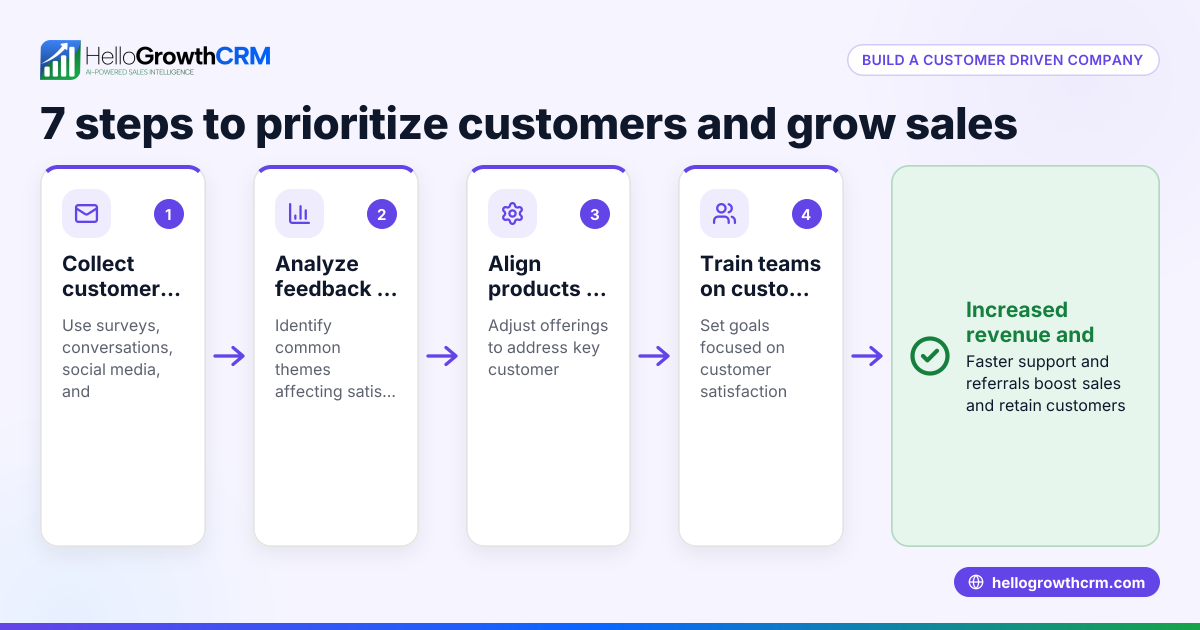
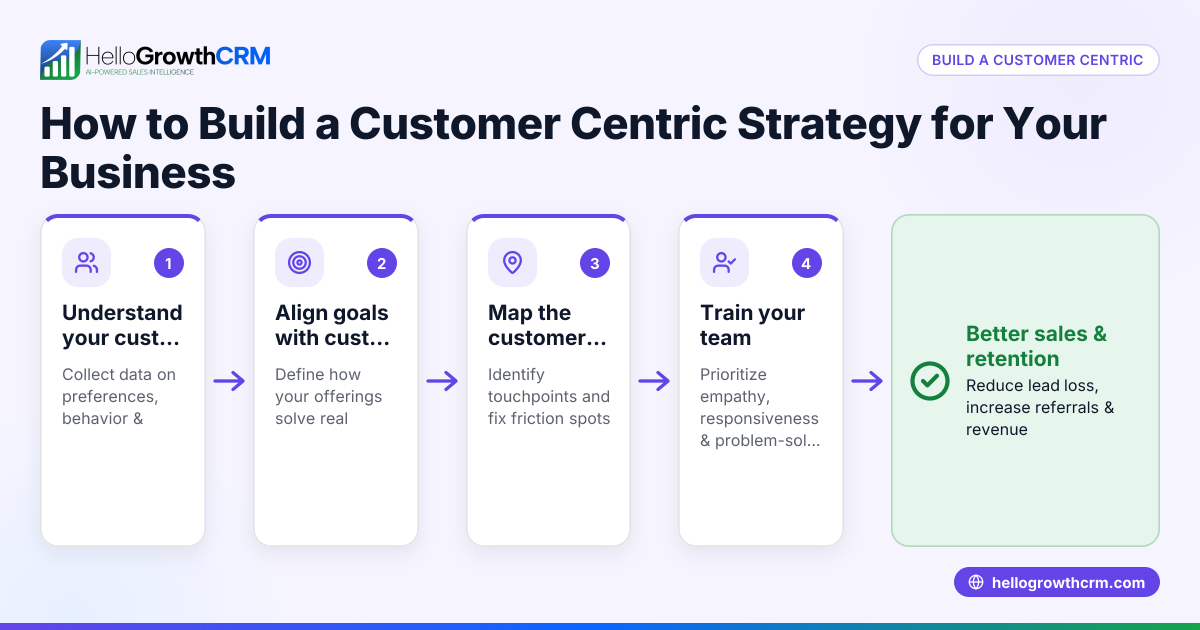
- Map the Customer Journey: Identify every point where customers interact with your business, such as initial inquiry, sales conversations, service delivery, and post-sale support. Check that each touchpoint is smooth, adds value, and avoids friction.
- Gather Customer Feedback: Use surveys, phone calls, or social media to collect honest opinions about your products and services. Check feedback regularly to identify common pain points and areas for improvement.
- Align Your Team Around Customers: Train your staff across sales, marketing, and support to prioritize customer needs. Check that everyone shares customer insights and works toward common customer-focused goals.
- Use Technology to Centralize Customer Data: Store all customer details, interactions, and service requests in one system accessible by your team. Check that your CRM or software supports this centralized view to avoid data silos.
- Personalize Communication: Tailor your messages, offers, and follow-ups based on customer preferences and history. Check that your outreach feels relevant and timely to each customer.
- Measure Customer Health and Satisfaction: Track metrics like repeat purchases, referral rates, and support ticket resolution times. Check these regularly to understand how well you meet customer expectations.
- Continuously Improve: Use customer data and feedback to refine your products, services, and processes. Check that each change enhances the customer experience and drives better outcomes.
Example (fictional figures)
A plumbing company in Austin, Texas, wants to become more customer centric. They start by mapping their customer journey:
- Initial inquiry
- Estimate and booking
- Job completion
- Follow-up and support
They gather feedback showing customers want faster response times and clearer pricing.
They train their team to prioritize quick replies and transparency.
They invest in a CRM to store customer details, track jobs, and manage follow-ups.
By improving these steps, they increase repeat business from $200,000 to $260,000 annually.
Calculation:
$200,000 × 30% = $60,000 (increase from better retention and referrals)
$200,000 + $60,000 = $260,000 (new annual repeat business)
This shows how focusing on customer needs can directly boost revenue.
Common mistakes
- Ignoring customer feedback: Prevent this by regularly collecting feedback and acting on it to improve your business.
- Siloed data and communication: Prevent by centralizing customer information so all teams can access and update it.
- One-size-fits-all messaging: Prevent by personalizing communication based on customer data and preferences.
- Focusing only on sales, not service: Prevent by supporting customers after the sale with service tickets and a knowledge base.
- Not measuring customer health: Prevent by tracking key metrics such as repeat purchases and support tickets to guide decisions. See customer health score for more.
Doing this in HelloGrowthCRM
HelloGrowthCRM helps small and mid-sized US businesses build customer centric organizations by keeping all service requests, tickets, and referrals on the same customer record as the deal. Its branded customer portal lets customers self-serve, reducing friction and improving satisfaction. The knowledge base supports your team and customers with easy access to information. This centralization ensures your team can respond quickly and keep customers happy. Learn more about HelloGrowthCRM for the United States here.
Frequently asked questions
What is a customer centric organization? It is a business that puts the customer’s needs and satisfaction at the center of its decisions, processes, and culture. This approach aims to improve customer loyalty and business growth.
Why is customer centricity important for small businesses? Small businesses often compete on service and relationships. Being customer centric helps you respond faster, personalize communication, and build trust, which can lead to more referrals and repeat sales.
How can I measure if my business is customer centric? Track customer health scores, feedback, repeat purchase rates, and support ticket resolution times. These metrics show how well you meet customer needs.
Can I run a customer centric sales process on WhatsApp and SMS? Yes. Using a WhatsApp and SMS CRM like HelloGrowthCRM helps you manage conversations, follow-ups, and sequences in one place, improving response speed and personalization. See WhatsApp and SMS CRM for details.
How do referrals fit into a customer centric strategy? Referrals come from satisfied customers who trust your business. Tracking and encouraging referrals helps you grow through your customers’ networks, reinforcing customer centricity.
Key takeaways
- A customer centric organization prioritizes customer needs in all processes.
- Map the customer journey and gather feedback to identify improvement areas.
- Centralize customer data and personalize communication for better engagement.
- Support customers after the sale with tickets and knowledge base.
- Use metrics like customer health scores to measure success and guide improvements.
Start building your customer centric organization today. You can begin with HelloGrowthCRM’s free plan that supports up to 200 leads with no credit card required. Get started Get HelloGrowthCRM free plan details.
Ready to put this into practice?
Set up your pipeline, WhatsApp follow-ups, and AI lead scoring in minutes — free, no credit card.
Try HelloGrowthCRM freeGet CRM tips in your inbox
Join thousands of sales professionals who get weekly insights on CRM strategy, AI automation, and pipeline optimization.

The HelloGrowthCRM team publishes guides on CRM strategy, AI sales tools, and revenue operations for small business sales teams.