HelloGrowthCRM software
Built for real small-business sales teams
HelloGrowthCRM helps reps qualify faster, follow up on time, and close more deals—with practical automation in one place.
- AI lead scoring and pipeline visibility
- Built-in dialer, WhatsApp, and email automation
- Sales forecasting and RevOps-ready reporting
A customer centric strategy is a business approach that puts the customer’s needs, preferences, and experience at the center of all decisions and actions. It means designing your products, services, and interactions to create maximum value and satisfaction for customers. This article explains why small businesses need this strategy, offers clear steps to develop it, shows a practical example, and highlights common mistakes to avoid.
Why this comes up / what goes wrong
Small and mid-sized business owners often struggle with losing leads, slow follow-up, and managing sales across disconnected tools like text messages, email, and spreadsheets. Without a clear focus on the customer, businesses may prioritize quick sales over building lasting relationships. This leads to missed opportunities, poor customer retention, and inefficient workflows. A customer centric strategy helps shift the focus to understanding and serving customers better, which improves sales and loyalty.
Step-by-step
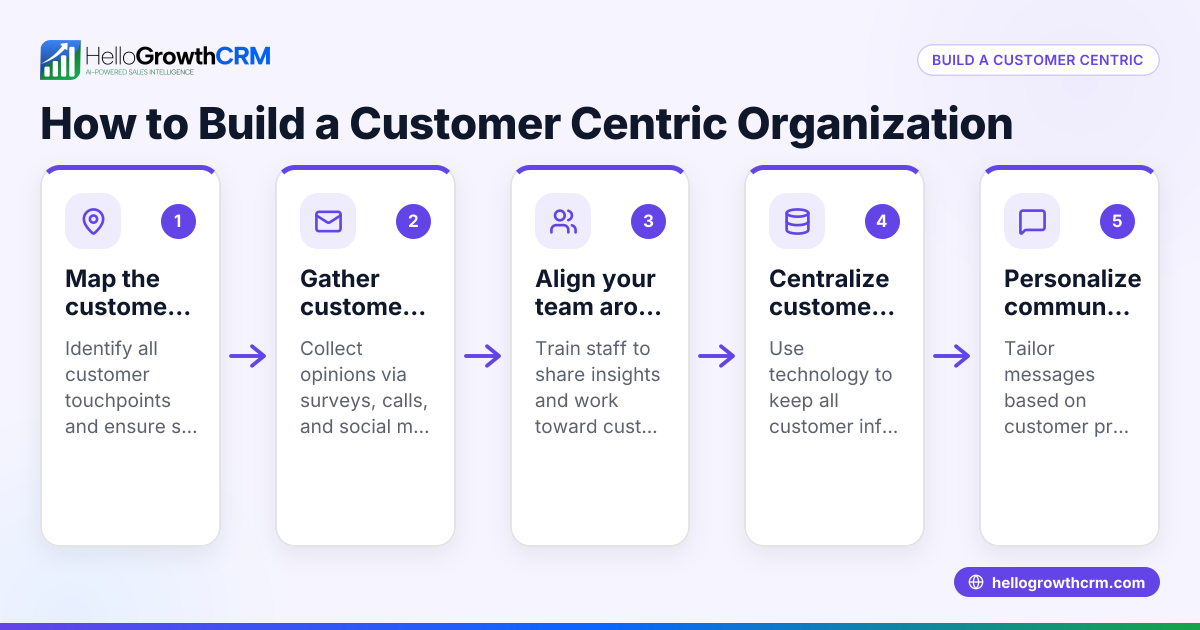
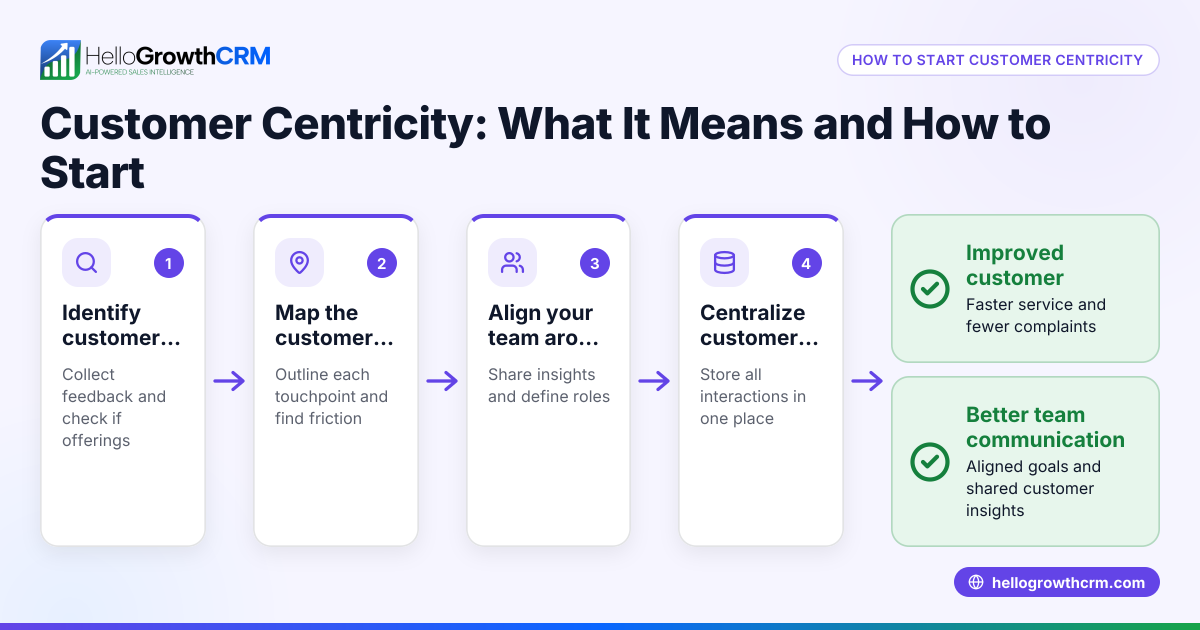
- Understand your customers deeply
- Collect data on customer preferences, behaviors, and feedback.
- Check that you have clear customer profiles and segments.
- Align your business goals with customer needs
- Define how your products or services solve real customer problems.
- Verify that your sales and marketing messages reflect customer priorities.
- Map the entire customer journey
- Identify all touchpoints from first contact to post-sale support.
- Check for gaps or friction points where customers drop off or get frustrated.
- Train your team to prioritize customer experience
- Set standards for responsiveness, empathy, and problem-solving.
- Monitor team interactions to ensure customer-centric behavior.
- Use tools to centralize customer information
- Implement a CRM that keeps all customer data, communication, and history in one place.
- Check that your CRM supports channels your customers use, like WhatsApp and SMS. See how HelloGrowthCRM offers a WhatsApp and SMS CRM to streamline this.
- Measure customer satisfaction and loyalty
- Use surveys, referral tracking, and support ticket resolution times.
- Review your customer health score regularly to spot issues early.
- Continuously improve based on customer feedback
- Update products, processes, and communications as you learn more.
- Keep the customer portal and knowledge base current to empower self-service.
Example (fictional figures)
A residential real-estate team in Phoenix, Arizona, decides to adopt a customer centric strategy starting 01/02/2026. They currently have $1,000,000 in annual sales but face a 30% lead drop-off due to slow follow-up.
- Current lost leads: $1,000,000 × 30% = $300,000
- They implement a CRM and train their team to respond within 1 hour.
- After 6 months, lead drop-off reduces to 15%, increasing sales.
- New sales: $1,000,000 × (100% - 15%) = $850,000
- Sales increase: $850,000 - $700,000 (70% retained before) = $150,000
They also track referrals through the CRM’s referral program, gaining an extra $50,000 in sales.
Total sales after changes = $850,000 + $50,000 = $900,000
This example shows how focusing on customer responsiveness and referrals boosts revenue.
Common mistakes
- Ignoring customer feedback: Prevent by regularly collecting and acting on feedback.
- Using disconnected tools: Prevent by centralizing communication and data in one CRM.
- Focusing only on acquisition, not retention: Prevent by measuring customer health and satisfaction.
- Training sales teams only on products, not empathy: Prevent by including customer experience standards in training.
- Neglecting post-sale service: Prevent by keeping service requests linked to customer records for seamless support.
Doing this in HelloGrowthCRM
HelloGrowthCRM supports a customer centric strategy by keeping service requests, referrals, and support tickets on the same customer record as the deal. Its branded customer portal and knowledge base empower customers to self-serve, reducing friction after the sale. This centralized view helps your team provide consistent, fast service and track customer satisfaction easily. Learn more about these features in HelloGrowthCRM for the United States at /usa.
Frequently asked questions
What is a customer centric strategy? A customer centric strategy means putting customers’ needs and experiences at the core of your business decisions. It focuses on creating value and satisfaction for customers throughout their journey.
Why is customer centricity important for small businesses? Small businesses often compete on personal service and relationships. Being customer centric helps retain customers, increase referrals, and improve sales efficiency by addressing real customer needs.
How can I measure if my business is customer centric? Use tools like customer satisfaction surveys, referral tracking, and customer health scores to monitor loyalty and engagement. HelloGrowthCRM offers a customer health score feature to help with this.
Can I use WhatsApp and SMS in a customer centric strategy? Yes. Many customers prefer quick, informal communication on WhatsApp and SMS. Using a CRM that supports these channels, like HelloGrowthCRM’s WhatsApp and SMS CRM, helps you respond faster and keep all interactions organized.
How do I keep post-sale service customer centric? By linking service requests and support tickets directly to the customer record, your team can provide faster, more personalized help. HelloGrowthCRM’s customer portal and ticketing system support this approach.
Key takeaways
- Customer centric strategy means focusing on customer needs and experience at every step.
- Centralizing customer data and communication improves responsiveness and service.
- Measuring customer health and tracking referrals help grow loyal customer bases.
- Training teams on empathy and customer journey awareness is essential.
- Post-sale support should stay connected to the original customer record for seamless service.
Start building your customer centric strategy today. You can organize your leads, communication, and customer service easily with HelloGrowthCRM. Start on the Free Forever plan (200 leads, no credit card) and put your customers first.
Ready to put this into practice?
Set up your pipeline, WhatsApp follow-ups, and AI lead scoring in minutes — free, no credit card.
Try HelloGrowthCRM freeGet CRM tips in your inbox
Join thousands of sales professionals who get weekly insights on CRM strategy, AI automation, and pipeline optimization.

The HelloGrowthCRM team publishes guides on CRM strategy, AI sales tools, and revenue operations for small business sales teams.