HelloGrowthCRM software
Built for real small-business sales teams
HelloGrowthCRM helps reps qualify faster, follow up on time, and close more deals—with practical automation in one place.
- AI lead scoring and pipeline visibility
- Built-in dialer, WhatsApp, and email automation
- Sales forecasting and RevOps-ready reporting
Customer data analytics means gathering and studying information about your customers, such as their purchase history, communication patterns, and preferences. This analysis reveals insights that help you tailor your marketing, improve sales follow-up, and enhance customer satisfaction. For small and mid-sized businesses, using customer data effectively can prevent lost leads and stalled deals.
Why this comes up / what goes wrong
Many small-business owners struggle with slow or inconsistent sales follow-up because their customer data is scattered across texts, emails, and spreadsheets. Without a clear way to analyze this data, it’s hard to know which leads to prioritize or how to improve customer relationships. This leads to missed sales opportunities and inefficient use of time. Owners often find it difficult to spot where deals stall or which customers need attention next.
Step-by-step
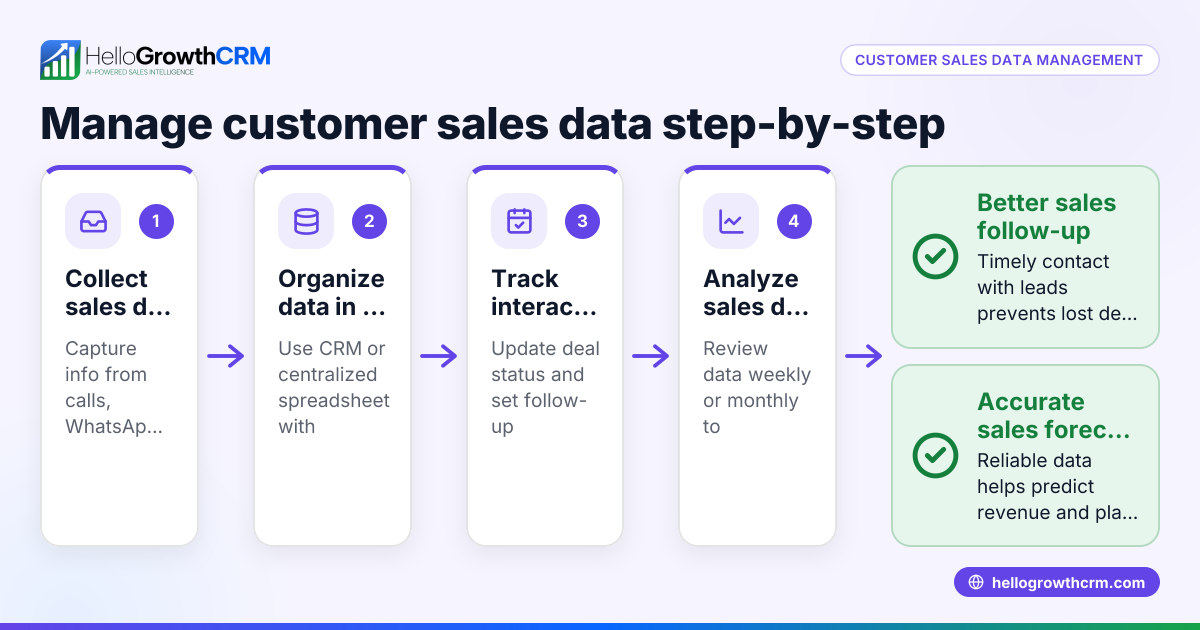
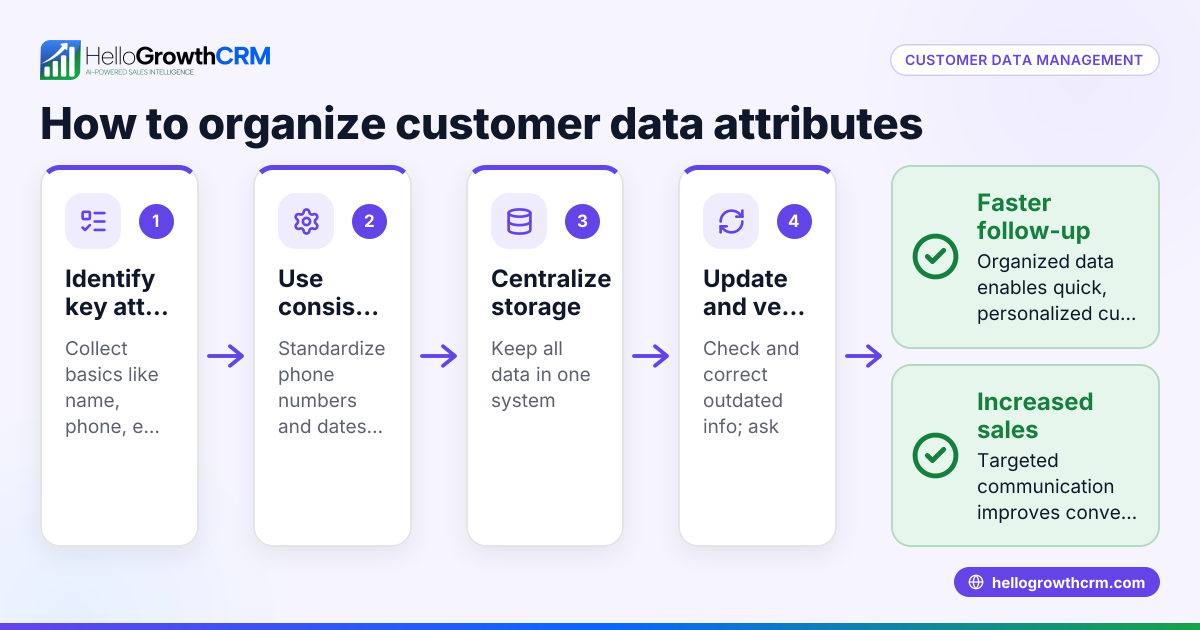
- Collect Customer Data Consistently: Gather data from all touchpoints such as web forms, emails, WhatsApp messages, and phone calls. Check that you capture key details like contact info, inquiry date, and product interest.
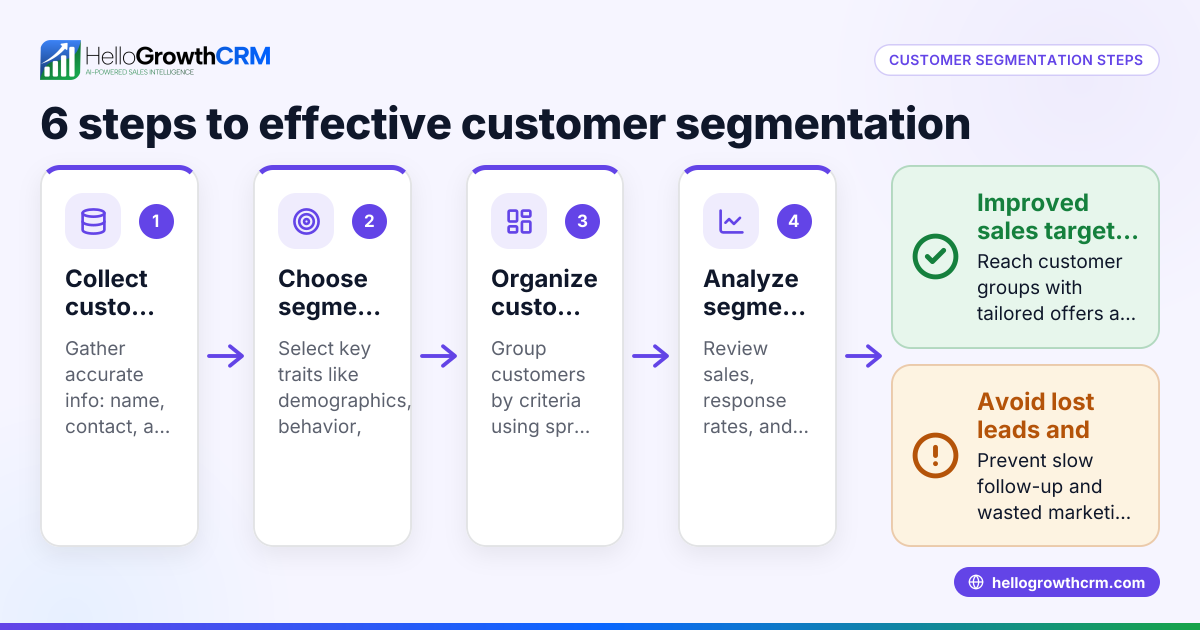
- Organize Data in One Place: Use a CRM or a central database to consolidate customer data. Verify that data is updated regularly and duplicates are removed.
- Segment Your Customers: Group customers by characteristics like purchase history, location, or engagement level. Confirm each segment is meaningful for your sales or marketing goals. See how segmentation supports your customer health score.
- Analyze Customer Behavior: Look for patterns such as which products are most popular or which customers respond best to messages. Check for stages where deals commonly stall.
- Score and Prioritize Leads: Assign scores based on engagement or likelihood to buy, so you focus on high-potential leads first. Review scores regularly to adjust your approach.
- Track Sales Pipeline Health: Monitor how leads move through your sales stages and identify bottlenecks. Confirm that your pipeline data reflects actual sales progress. Tools like pipeline forecast and AI insights help spot stalled deals.
- Use Insights to Improve Follow-up: Apply your findings to tailor messages, schedule timely follow-ups, and offer relevant promotions. Check that response times improve.
Example (fictional figures)
A residential real-estate team in Phoenix, Arizona, uses customer data analytics to improve sales.
- They collect data from web inquiries, phone calls, and WhatsApp messages.
- They organize data in a CRM and segment customers by budget and buying timeline.
- They analyze that many leads stall at the property viewing stage.
- They assign lead scores based on engagement and budget.
- They prioritize leads with a score above 70.
Calculations:
Total leads: 500 Leads stalling at viewing: 500 × 0.3 = 150 High-score leads: 500 × 0.4 = 200
By focusing on high-score leads and improving follow-up at the viewing stage, they increase closed deals by 15% over six months.
Common mistakes
- Ignoring Data Consistency: Prevent by standardizing data entry and regularly cleaning your database.
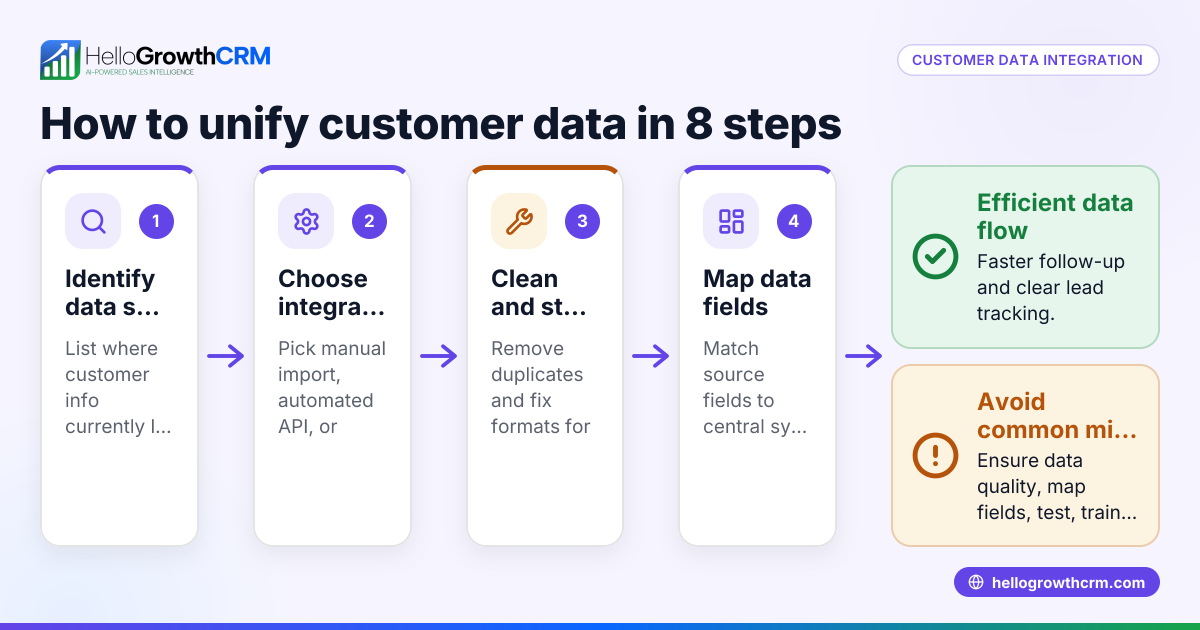
- Relying on Multiple Unconnected Tools: Prevent by consolidating data into one system like a CRM to avoid lost or duplicated data.
- Not Segmenting Customers: Prevent by grouping customers to target communications effectively.
- Failing to Track Sales Pipeline Health: Prevent by regularly reviewing pipeline stages to spot stalled deals using tools like pipeline forecast and AI insights.
- Overlooking Post-sale Service Data: Prevent by integrating service requests and tickets on the same customer record to maintain a full picture.
Doing this in HelloGrowthCRM
HelloGrowthCRM helps small businesses analyze customer data with features like pipeline forecast and AI insights, which show where deals stall without building spreadsheets. HelloGrowthCRM has completed a SOC 2 Type II examination and supports CCPA data-subject rights. After a sale, service requests stay linked to the same customer record through the customer portal, referrals, tickets, and knowledge base features. Learn more about HelloGrowthCRM for the United States.
Frequently asked questions
What is customer data? Customer data includes any information you collect about your customers, such as contact details, purchase history, communication records, and preferences. This data forms the basis for customer data analytics.
How can I use customer data analytics to improve sales? By analyzing customer data, you can identify which leads are most likely to convert, understand customer preferences, and spot where sales processes slow down. This lets you prioritize follow-up and tailor your sales approach.
What tools help with customer data analytics? CRMs that integrate communication channels like WhatsApp and SMS, and offer AI-driven pipeline forecasting, help small businesses manage and analyze customer data efficiently. HelloGrowthCRM provides these capabilities with built-in sales forecasting and customer service tracking.
How often should I update my customer data? Regular updates are crucial. Check and clean your data weekly or monthly to remove duplicates, correct errors, and add new information from recent interactions.
Why is segmenting customers important? Segmenting helps target your marketing and sales efforts to groups with similar needs or behaviors, increasing the effectiveness of your communication and offers. See how segmentation supports your customer health score.
Key takeaways
- Customer data analytics means collecting and studying customer info to improve sales and service.
- Organize all customer data in one place and segment it for better targeting.
- Use AI insights and pipeline forecasting to identify stalled deals and prioritize leads.
- Avoid scattered data and inconsistent updates to prevent lost sales opportunities.
- Integrate post-sale service data to maintain a complete customer profile.
Start improving your customer data analytics today with HelloGrowthCRM. Start on the Free Forever plan (200 leads, no credit card).
Ready to put this into practice?
Set up your pipeline, WhatsApp follow-ups, and AI lead scoring in minutes — free, no credit card.
Try HelloGrowthCRM freeGet CRM tips in your inbox
Join thousands of sales professionals who get weekly insights on CRM strategy, AI automation, and pipeline optimization.

The HelloGrowthCRM team publishes guides on CRM strategy, AI sales tools, and revenue operations for small business sales teams.