HelloGrowthCRM software
Built for real small-business sales teams
HelloGrowthCRM helps reps qualify faster, follow up on time, and close more deals—with practical automation in one place.
- AI lead scoring and pipeline visibility
- Built-in dialer, WhatsApp, and email automation
- Sales forecasting and RevOps-ready reporting
Customer engagement trends describe how businesses today interact with customers to build loyalty, increase satisfaction, and boost sales. For small and mid-sized US businesses, these trends focus on faster, personalized communication through preferred channels such as WhatsApp and SMS, integrating sales and service interactions on one platform, and empowering customers with self-service portals.
Why this comes up / what goes wrong
Many small-business owners struggle with slow follow-up and fragmented communication spread across texts, emails, and spreadsheets. This leads to lost leads, missed sales opportunities, and poor customer experience. For example, a sales team might reply to a customer inquiry days later or lose track of service requests because records are kept separately. Without clear insight into customer preferences and engagement metrics, it’s hard to improve. Understanding current customer engagement trends helps owners prioritize the right channels and tools to keep customers satisfied and competitive.
Step-by-step
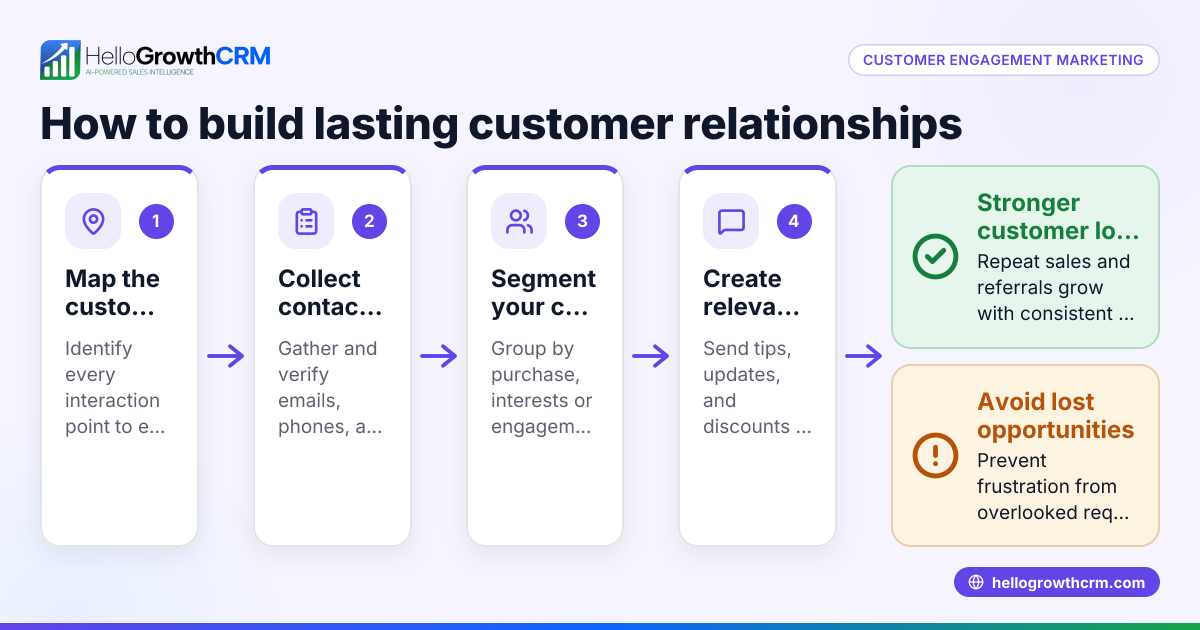
- Identify your customer communication channels. Check where your customers prefer to reach you—WhatsApp, SMS, email, or phone. Focus your efforts on those channels to meet customers where they are. Survey your customers or review past interactions to see which channels get the fastest responses.
- Implement personalized messaging. Use customer data like purchase history, preferences, or past issues to tailor follow-ups and offers. Personalization makes communication relevant and increases response rates. For instance, mention a recent purchase or remind them of a service due.
- Integrate sales and service records. Keep all customer interactions, including service requests, on one platform to maintain context and improve response times. This avoids repeating information and makes it easier for your team to assist customers.
- Offer self-service options. Provide a branded customer portal where customers can find answers, submit tickets, and participate in referral programs. This reduces support workload and speeds up resolutions.
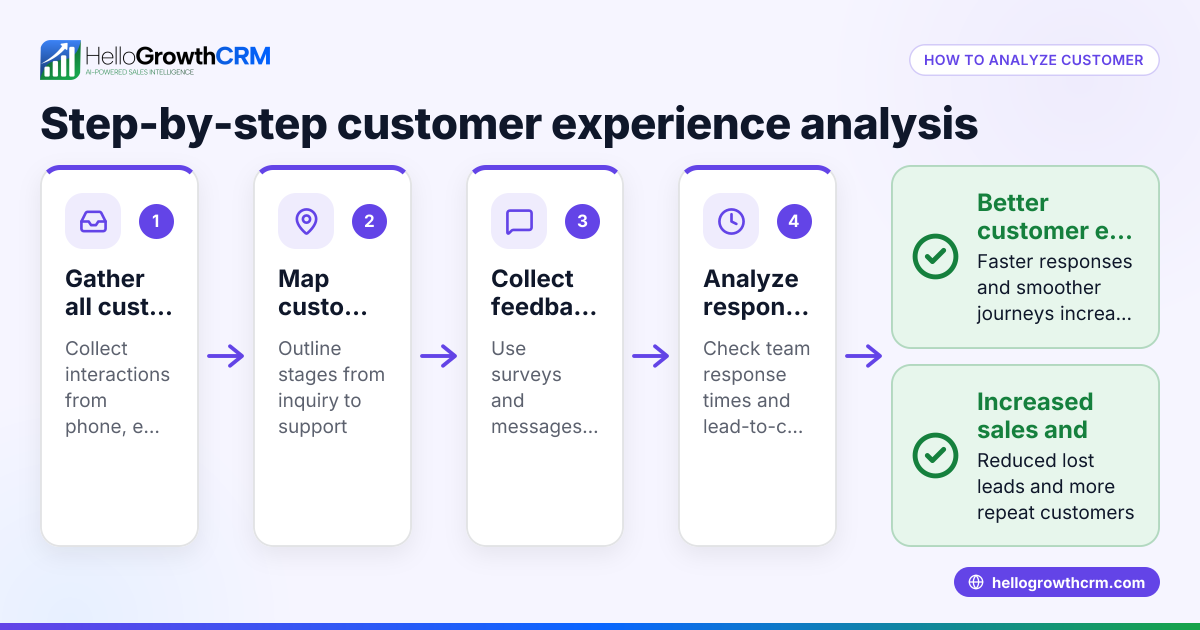
- Monitor engagement metrics. Track response times, customer satisfaction, referral rates, and conversion to evaluate and refine your strategies. Use these insights to adjust messaging, channels, or service offerings.
For more on measuring customer satisfaction, see customer health score.
Example (fictional figures)
A plumbing company in Austin, Texas, wants to improve customer engagement. They currently respond to inquiries via email and phone but decide to add WhatsApp messaging and a customer portal.
- Current leads per month: 150
- Conversion rate: 20% (30 sales)
- Average sale value: $1,200
After implementing WhatsApp and a customer portal for service tickets, three months later:
- Leads increase by 15% to 173 (150 × 1.15 = 172.5, rounded to 173)
- Conversion rate improves to 25% due to faster follow-up (173 × 25% = 43 sales)
- Average sale value remains $1,200
Revenue before: 150 leads × 20% conversion = 30 sales 30 sales × $1,200 = $36,000
Revenue after: 173 leads × 25% conversion = 43 sales 43 sales × $1,200 = $51,600
Revenue increase: $51,600 - $36,000 = $15,600
This example shows how adopting current customer engagement trends can significantly increase sales.
Common mistakes
- Ignoring customer channel preferences. Only using email when customers prefer WhatsApp or SMS leads to missed engagement. Prevent by surveying customers or testing channels.
- Not personalizing communication. Generic messages reduce response rates. Use customer data for tailored messages.
- Separating sales and service data. This causes lost context and slower responses. Integrate all interactions on one platform.
- Lacking self-service options. Without portals, support teams get overwhelmed, and customers wait longer. Offer a branded portal for FAQs, tickets, and referrals.
- Failing to measure engagement. Without tracking metrics, you can’t improve. Regularly monitor response times, satisfaction, and referral activity.
Learn more about integrating messaging in sales workflows with WhatsApp and SMS CRM.
Doing this in HelloGrowthCRM
HelloGrowthCRM supports these trends with a branded customer portal that includes referrals, tickets, and a knowledge base. After the sale, service requests stay linked to the same customer record as the deal, keeping all interactions in one place. This simplifies managing customer engagement from lead capture through post-sale support. For US businesses, HelloGrowthCRM offers tailored features to improve communication and tracking. See HelloGrowthCRM for the United States for details.
Frequently asked questions
What are the most effective channels for customer engagement today? Messaging apps like WhatsApp and SMS are preferred for their immediacy and convenience. Email remains important but is often supplemented by these faster, more direct channels.
How can small businesses personalize customer engagement? Use customer data such as purchase history and preferences to send tailored messages and offers. Automation tools can help scale personalized communication efficiently.
Why is integrating sales and service data important? It ensures all customer interactions are visible in one place, improving response times and customer satisfaction by avoiding repeated explanations.
What role do customer portals play in engagement? Portals allow customers to find answers, submit tickets, and track referrals independently, reducing support workload and speeding up resolutions.
How do I measure if my engagement efforts are working? Track metrics like response time, conversion rates, customer satisfaction scores, and referral activity to evaluate and refine your approach.
Key takeaways
- Customer engagement trends focus on fast, personalized communication through preferred channels.
- Integrating sales and service interactions on one platform improves customer experience.
- Offering a branded self-service portal empowers customers and reduces support workload.
- Tracking engagement metrics helps optimize communication strategies.
- Using messaging apps like WhatsApp and SMS aligns with current customer preferences.
Start improving your customer engagement today. Start on the Free Forever plan (200 leads, no credit card).
Ready to put this into practice?
Set up your pipeline, WhatsApp follow-ups, and AI lead scoring in minutes — free, no credit card.
Try HelloGrowthCRM freeGet CRM tips in your inbox
Join thousands of sales professionals who get weekly insights on CRM strategy, AI automation, and pipeline optimization.

The HelloGrowthCRM team publishes guides on CRM strategy, AI sales tools, and revenue operations for small business sales teams.