HelloGrowthCRM software
Built for real small-business sales teams
HelloGrowthCRM helps reps qualify faster, follow up on time, and close more deals—with practical automation in one place.
- AI lead scoring and pipeline visibility
- Built-in dialer, WhatsApp, and email automation
- Sales forecasting and RevOps-ready reporting
Customer experience in retail means making every interaction from browsing to after-sale service easy and satisfying for shoppers. It involves fast responses, clear communication, and consistent service across channels. This article covers why customer experience matters in retail, step-by-step improvements, a US-based example, common mistakes, and how HelloGrowthCRM helps manage retail customer interactions.
Why this comes up / what goes wrong
Retail business owners and accountants in the US often struggle with managing customer experience because their sales and service processes are spread across text messages, emails, and spreadsheets. This fragmentation leads to slow follow-up, lost leads, and inconsistent service. For example, a small retail shop may miss a customer inquiry sent via WhatsApp or lose track of a service request after purchase. Without a clear system, customers feel ignored or frustrated, reducing repeat sales and referrals. This challenge is common in retail shops where quick, reliable communication is key to closing sales and maintaining loyalty.
Step-by-step
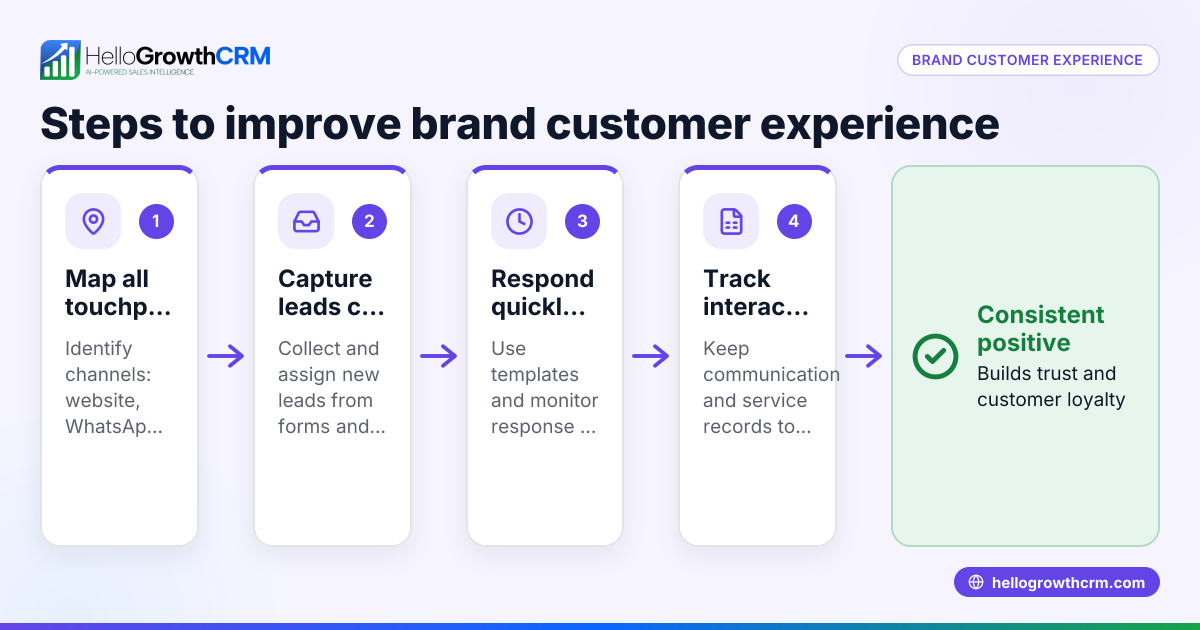
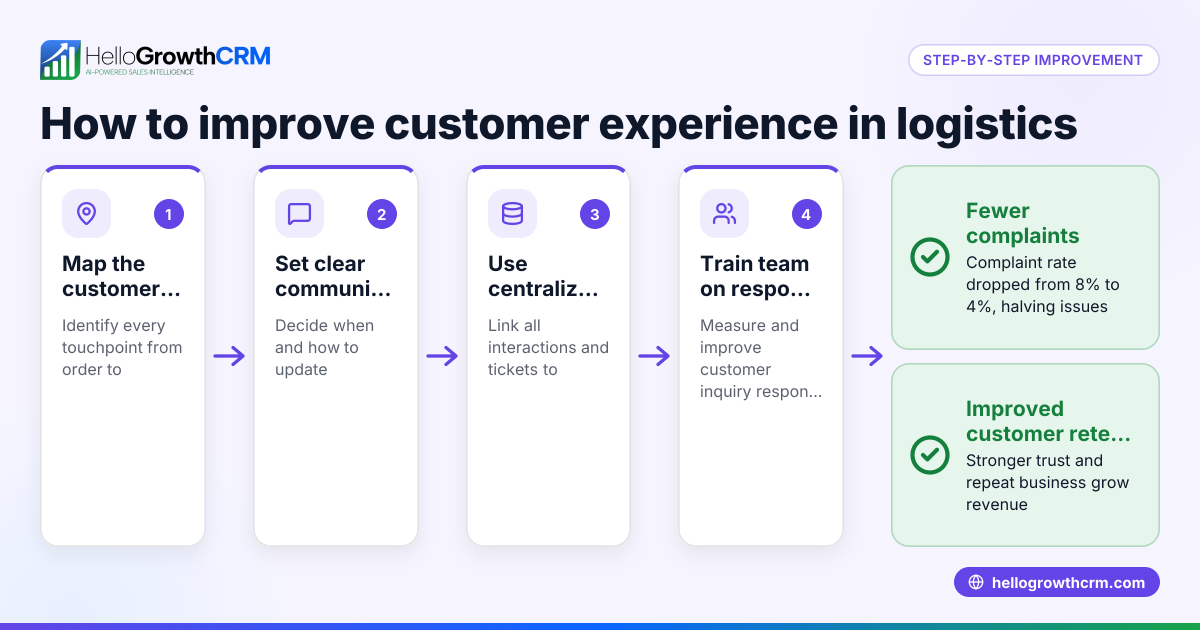
- Map your customer touchpoints: Identify every point where customers interact with your business—website, in-store, phone, WhatsApp, email, social media. Check that no channel is overlooked.
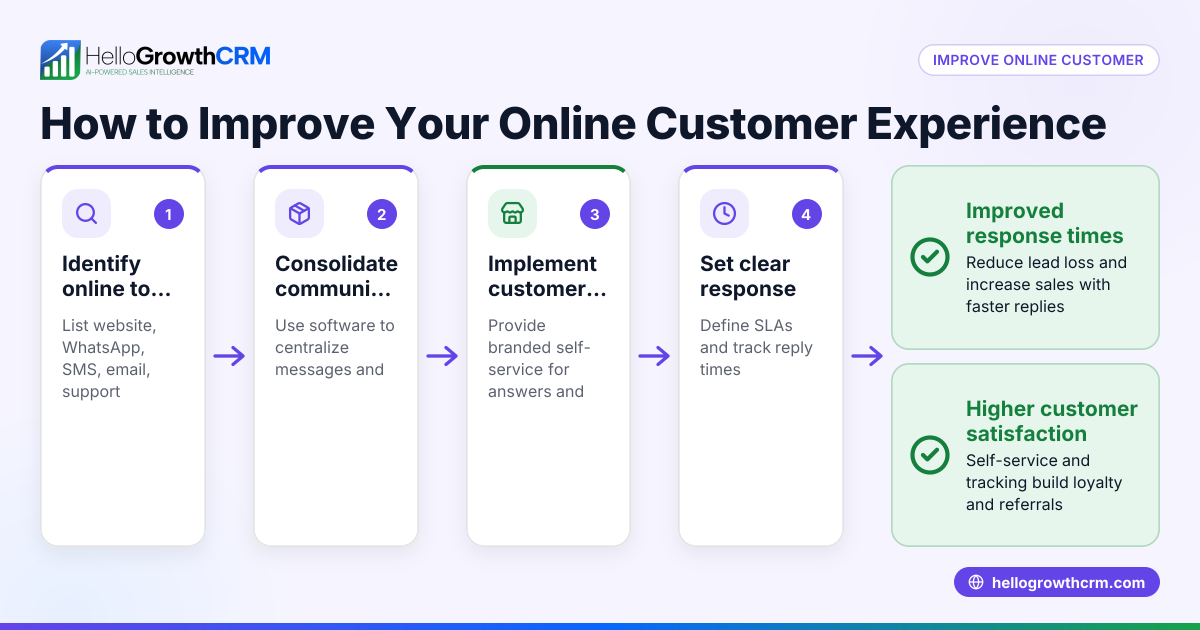
- Set response time goals: Decide how quickly you will reply to inquiries on each channel. For retail, same-day or within a few hours is often expected. Monitor your team’s adherence to these goals.
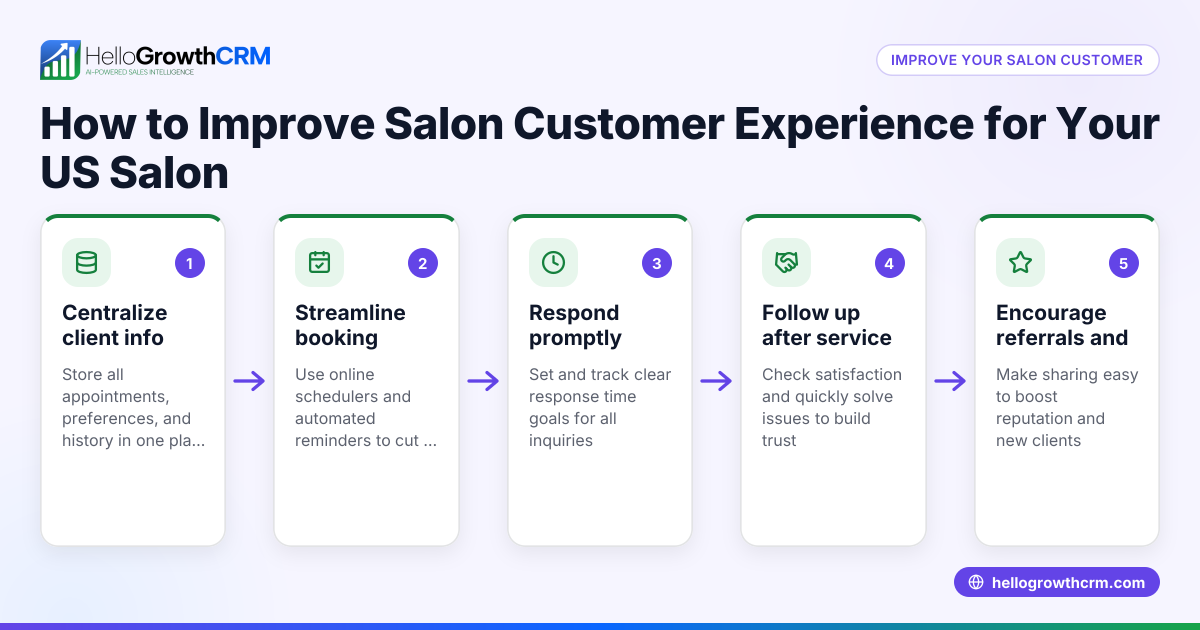
- Centralize communication: Use a system that collects messages and calls in one place to avoid missed conversations and lost leads. This improves tracking and follow-up.
- Train your team on consistent messaging: Make sure all staff know product details, policies, and tone to provide uniform answers. Regular refreshers help maintain quality.
- Track customer requests and issues: Log service tickets or complaints linked to each customer to ensure follow-up and resolution. This prevents problems from falling through the cracks.
- Ask for feedback regularly: Use surveys or direct questions to learn what customers like or want improved. Analyze feedback to guide changes.
- Reward loyalty and referrals: Implement programs to encourage repeat business and word-of-mouth. Track participation and effectiveness.
- Review customer health scores: Monitor engagement and satisfaction metrics to spot at-risk customers and act early. Learn more about customer health score management here.
Example (fictional figures)
A retail clothing shop in Austin, Texas, wants to improve customer experience by reducing lead response time and tracking service issues.
- Current average response time: 48 hours
- Target response time: 4 hours
- Monthly inquiries: 300
Steps:
- Hire a part-time rep to answer calls and WhatsApp messages.
- Use a CRM with a built-in dialer to call back leads promptly.
- Log all interactions to track follow-up and outcomes.
Savings and gains:
- Assume 20% of leads convert if contacted within 4 hours, but only 5% convert with 48-hour delay.
- Leads contacted monthly = 300
- Expected conversions now = 300 × 5% = 15
- Expected conversions after improvement = 300 × 20% = 60
Revenue per sale = $150
Monthly revenue now = 15 × $150 = $2,250 Monthly revenue after = 60 × $150 = $9,000
Revenue increase = $9,000 - $2,250 = $6,750
By improving response time and tracking, the shop could increase monthly revenue by $6,750.
Common mistakes
- Ignoring multi-channel inquiries: Customers use different platforms; missing WhatsApp or social media messages loses sales. Prevent by centralizing communication.
- Slow follow-up: Delays cause lost interest. Set and monitor response time goals.
- Lack of training: Inconsistent answers confuse customers. Provide regular team training.
- Not tracking service issues: Unresolved problems hurt reputation. Use ticketing linked to customer records.
- No feedback loop: Without asking customers, you miss improvement opportunities. Use surveys or direct questions.
- Failing to reward loyalty: Customers who feel appreciated buy more. Implement referral and loyalty programs.
Learn more about managing retail shops and customer experience here.
Doing this in HelloGrowthCRM
HelloGrowthCRM helps retail teams improve customer experience by integrating a built-in dialer that lets reps work lists inside the CRM and log call outcomes directly on leads. After sales, service requests, tickets, and referrals stay linked to the same customer record, keeping all interactions in one place. This reduces lost follow-ups and improves service consistency. Explore HelloGrowthCRM features for the United States here.
Frequently asked questions
What is the best way to track customer interactions in retail? Centralizing all communication channels into one CRM system helps track every customer interaction, from calls to messages. This prevents missed inquiries and provides a full history for better service.
How fast should retail businesses respond to customer inquiries? Response times vary, but aiming for replies within a few hours, ideally same-day, improves customer satisfaction and increases sales chances.
How can I measure if my customer experience is improving? Use customer health scores, feedback surveys, and track repeat purchases or referrals to monitor improvements.
Why is consistent messaging important in retail? Consistent answers build trust and reduce confusion, making customers more likely to buy and return.
Can a CRM help with post-sale service in retail? Yes, a CRM that tracks service tickets and referrals on the same customer record ensures issues are resolved and customers stay engaged.
Learn more about customer health scores here.
Key takeaways
- Centralize all customer communications to avoid missed leads.
- Set and enforce quick response times for inquiries.
- Train staff for consistent and accurate messaging.
- Track service requests and follow up until resolution.
- Use feedback and loyalty programs to boost satisfaction and retention.
- Tools like HelloGrowthCRM’s built-in dialer and customer portals help manage these tasks efficiently.
Start improving your retail customer experience today. Start on the Free Forever plan (200 leads, no credit card).
Ready to put this into practice?
Set up your pipeline, WhatsApp follow-ups, and AI lead scoring in minutes — free, no credit card.
Try HelloGrowthCRM freeGet CRM tips in your inbox
Join thousands of sales professionals who get weekly insights on CRM strategy, AI automation, and pipeline optimization.

The HelloGrowthCRM team publishes guides on CRM strategy, AI sales tools, and revenue operations for small business sales teams.