HelloGrowthCRM software
Built for real small-business sales teams
HelloGrowthCRM helps reps qualify faster, follow up on time, and close more deals—with practical automation in one place.
- AI lead scoring and pipeline visibility
- Built-in dialer, WhatsApp, and email automation
- Sales forecasting and RevOps-ready reporting
Customer journey optimization is the process of improving every step a customer takes with your business. This includes initial contact, sales conversations, and ongoing support after the sale. The goal is to make each interaction smoother and more satisfying, which leads to higher sales and stronger customer loyalty. This article covers why small businesses need to optimize the customer journey, step-by-step instructions, a fictional example, common pitfalls, and how HelloGrowthCRM helps manage customer relationships.
Why this comes up / what goes wrong
Small-business owners often face lost leads and missed sales because customers drop out at various points. This happens when follow-up is slow, communication is inconsistent, or post-sale service is lacking. Many small businesses manage leads using text messages, emails, and spreadsheets, which can cause confusion and delays. Without a clear view of the customer journey, it’s difficult to identify where improvements are needed or how to prioritize actions.
Step-by-step
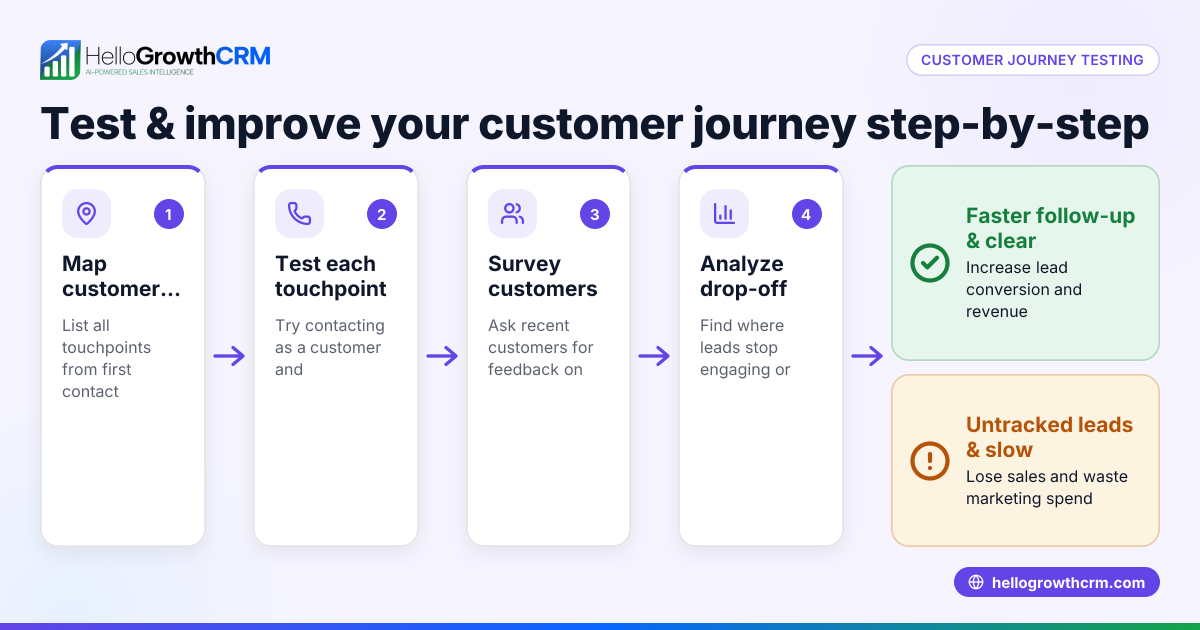
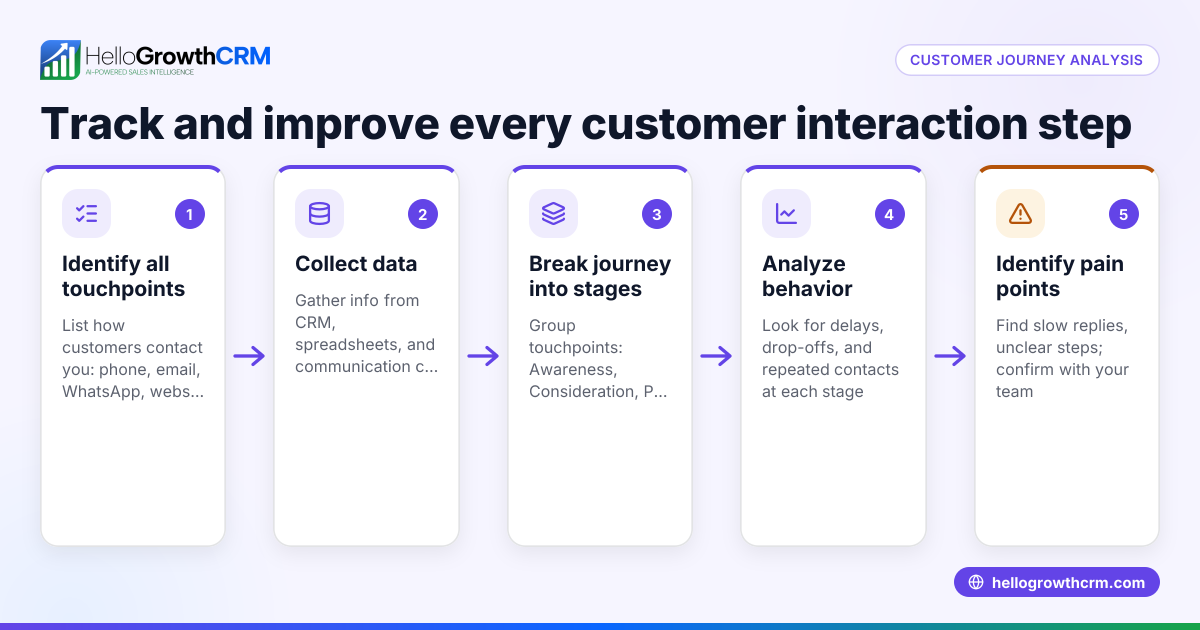
- Map your current customer journey: Write down each step customers take from first contact to purchase and beyond. Include how they find you, how you respond, sales conversations, and after-sale support.
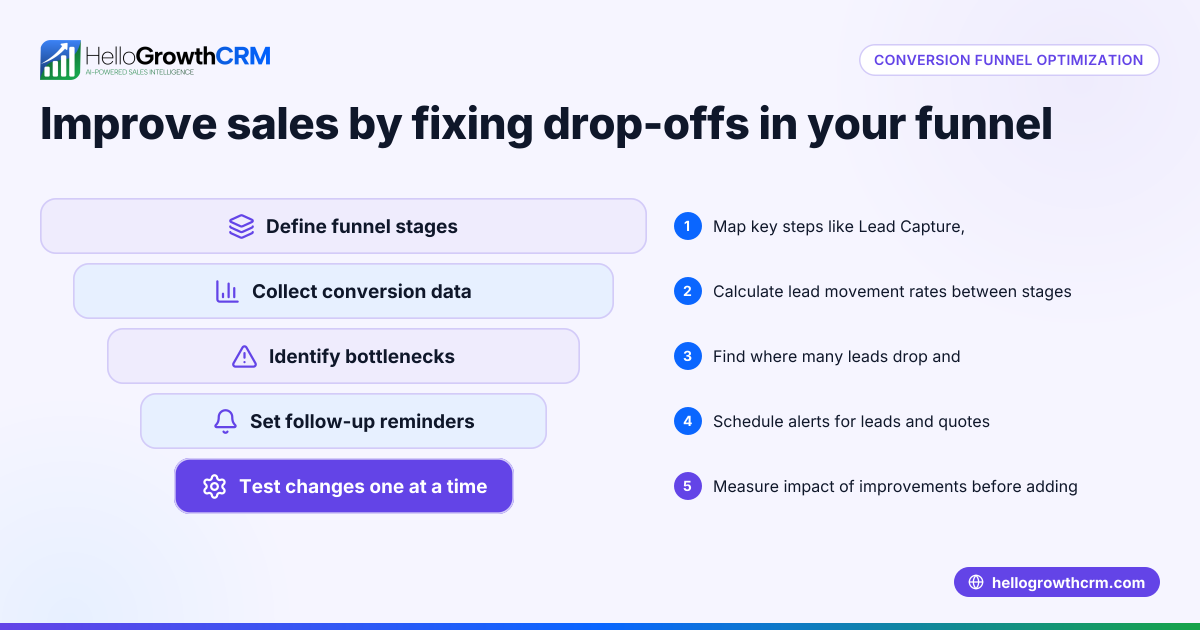
- Identify pain points and delays: Look for where customers drop off or show dissatisfaction. Check for slow response times, repeated questions, or unclear next steps.
- Set clear goals for each stage: Define what success looks like at every step, such as responding to inquiries within 1 hour or having a referral program active after purchase.
- Improve communication channels: Use consistent messaging across text, email, and WhatsApp. Automate follow-ups to reduce delays and keep leads engaged. Learn about WhatsApp and SMS CRM for efficient communication.
- Track and measure progress: Monitor lead status, customer satisfaction, and sales results. Adjust your approach based on data. Consider using a customer health score to understand client engagement.
- Create a feedback loop: Ask customers for feedback after each stage to find new areas for improvement.
- Train your team: Ensure everyone understands the customer journey and their role in optimizing it.
- Leverage customer referrals and support: Encourage satisfied customers to refer others and provide easy access to support through self-service portals and knowledge bases.
Example (fictional figures)
A plumbing company in Austin, Texas, wants to improve its customer journey. They currently respond to inquiries in 24 hours, but many leads go cold.
- Monthly inquiries: 200
- Current conversion rate: 10% (20 sales)
- Average sale value: $1,200
They aim to respond within 2 hours, expecting to increase conversion to 15%.
Current monthly revenue:
200 inquiries × 10% conversion = 20 sales 20 sales × $1,200 = $24,000
Projected monthly revenue after optimization:
200 inquiries × 15% conversion = 30 sales 30 sales × $1,200 = $36,000
Revenue increase:
$36,000 - $24,000 = $12,000
By improving response time and communication, the company can increase revenue by $12,000 per month.
Common mistakes
- Ignoring data and feedback: Prevent this by regularly reviewing where customers drop off and asking for their feedback.
- Overcomplicating the process: Keep journey steps simple and clear to avoid confusion.
- Relying solely on manual follow-up: Use automation for timely responses.
- Failing to train the team: Train everyone on the optimized journey for consistency.
- Neglecting post-sale service: Continue engagement with support tickets and referrals to retain customers.
- Using disconnected tools: Avoid managing leads across multiple platforms; use integrated tools to keep data and communication in one place. For example, HelloGrowthCRM offers a branded customer portal, referrals tracking, and support tickets.
Doing this in HelloGrowthCRM
HelloGrowthCRM supports customer journey optimization by keeping service requests, referrals, and support tickets on the same customer record as the deal. It offers a branded self-service customer portal and a knowledge base to help customers find answers quickly. These features help small businesses maintain consistent post-sale support and track referrals efficiently. Learn more about HelloGrowthCRM for the United States and how it integrates WhatsApp and SMS CRM for smooth communication.
Frequently asked questions
What is customer journey optimization? Customer journey optimization is the process of improving every interaction a customer has with your business to increase satisfaction and sales. It covers all stages from lead capture to post-sale support.
How does customer journey optimization help small businesses? It helps reduce lost leads, speeds up sales, and builds loyalty by making the buying process easier and more consistent for customers.
What tools can I use for customer journey optimization? CRM software like HelloGrowthCRM offers a customer portal, referrals tracking, and support tickets to keep all customer data and communication organized.
How do referrals fit into customer journey optimization? Referrals turn satisfied customers into advocates who bring in new leads. Tracking referrals lets you reward customers and measure their impact on sales.
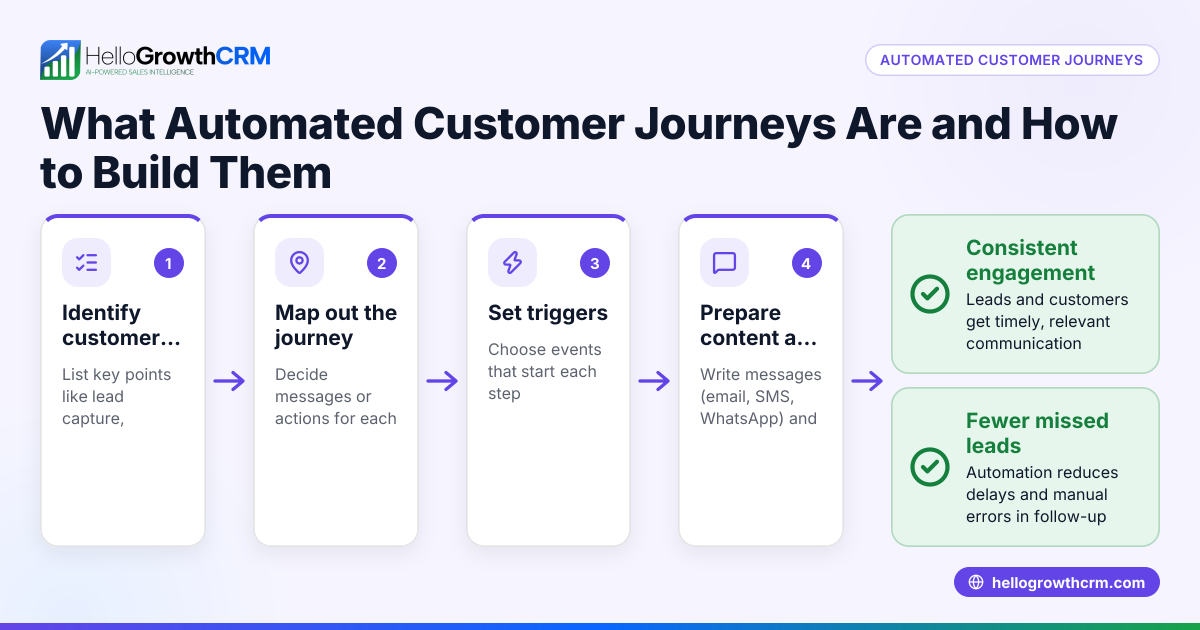
Can I automate communication during the customer journey? Yes, automating follow-ups via WhatsApp, SMS, and email sequences ensures timely responses and keeps leads engaged without manual effort.
Key takeaways
- Customer journey optimization improves every step from lead capture to post-sale support.
- Mapping the journey and identifying pain points is essential.
- Set clear goals and automate communication to reduce delays.
- Use customer feedback and referrals to enhance the experience.
- Avoid common mistakes like ignoring data or relying only on manual follow-up.
- HelloGrowthCRM supports journey optimization with a customer portal, referrals tracking, and support tickets.
Start optimizing your customer journey today. Start on the Free Forever plan (200 leads, no credit card) and see how HelloGrowthCRM can help you manage leads and customers efficiently.
Ready to put this into practice?
Set up your pipeline, WhatsApp follow-ups, and AI lead scoring in minutes — free, no credit card.
Try HelloGrowthCRM freeGet CRM tips in your inbox
Join thousands of sales professionals who get weekly insights on CRM strategy, AI automation, and pipeline optimization.

The HelloGrowthCRM team publishes guides on CRM strategy, AI sales tools, and revenue operations for small business sales teams.