HelloGrowthCRM software
Built for real small-business sales teams
HelloGrowthCRM helps reps qualify faster, follow up on time, and close more deals—with practical automation in one place.
- AI lead scoring and pipeline visibility
- Built-in dialer, WhatsApp, and email automation
- Sales forecasting and RevOps-ready reporting
Website conversion optimization means making changes to your website to increase the percentage of visitors who become customers or leads. For small businesses, this often means turning website visitors into calls, inquiries, or purchases without necessarily increasing your traffic. This article covers why conversion optimization is important, how to do it step-by-step, a practical example with realistic USD figures, common mistakes to avoid, and answers to frequently asked questions.
Why this comes up / what goes wrong
Many small business owners invest time and money to attract visitors to their website but struggle to convert those visitors into paying customers or leads. You might see many visitors but only a few contact requests, sign-ups, or sales. This happens because the website may not clearly guide visitors to take action, load slowly, or have confusing navigation. Without optimizing for conversion, your website can become a costly brochure that doesn’t help grow your business.
Common issues include unclear calls-to-action (CTAs), slow page loading times, poor mobile usability, and overwhelming or distracting content. These problems cause visitors to leave before contacting you or buying.
Step-by-step
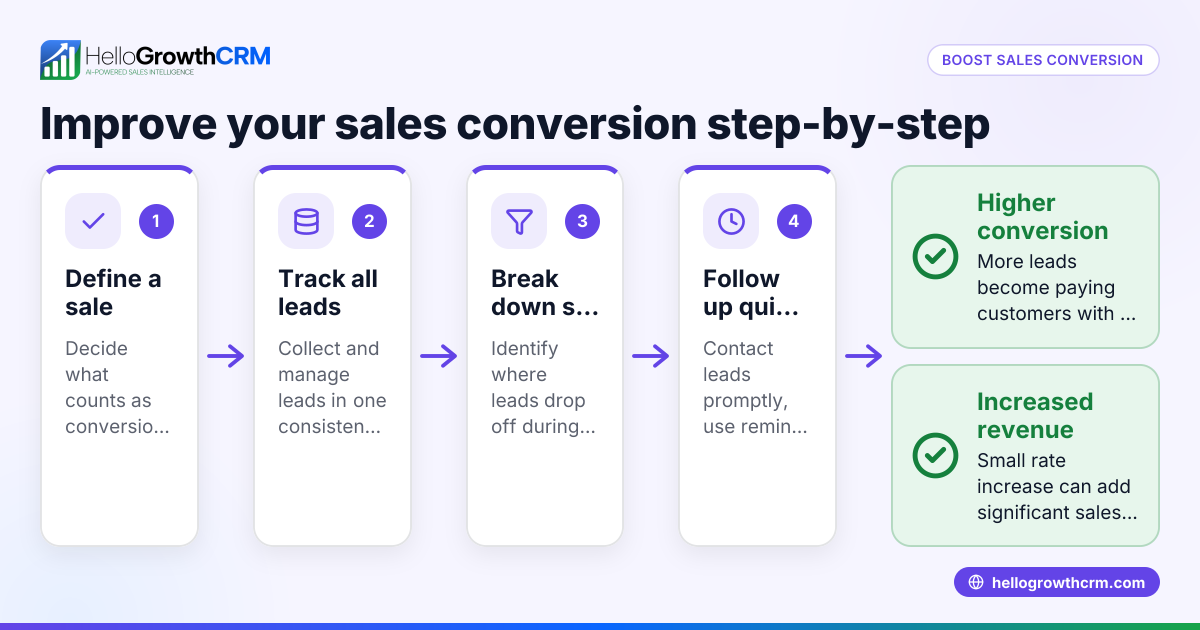
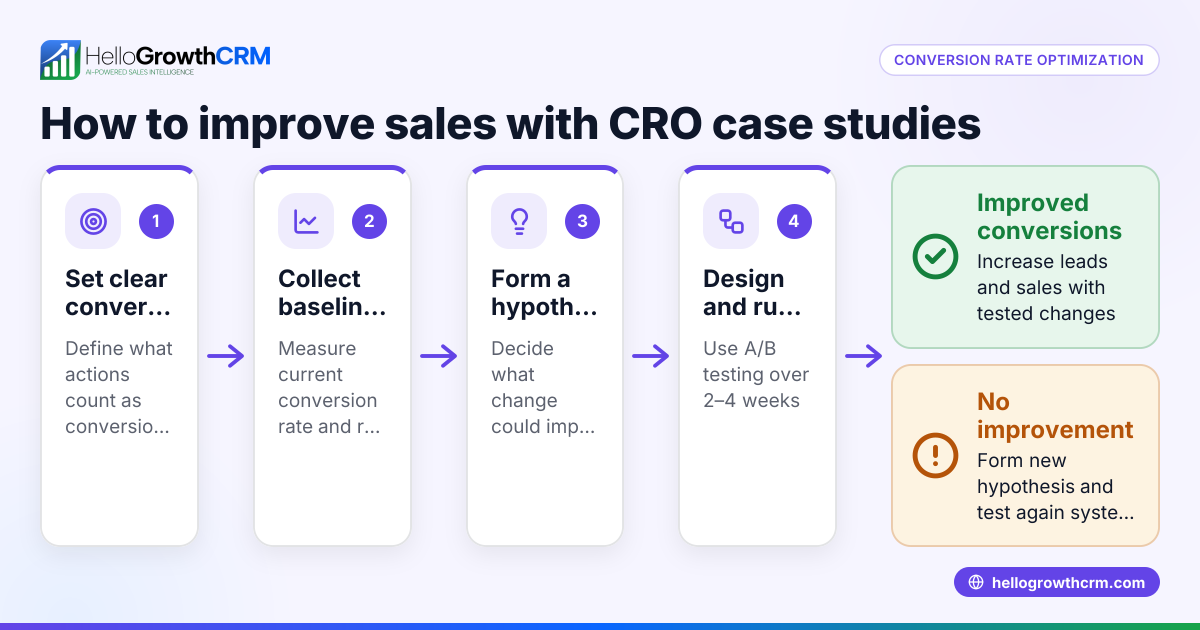
- Define your conversion goal clearly. Decide exactly what action you want visitors to take. Examples include filling out a contact form, calling your sales team, signing up for a newsletter, or making a purchase.
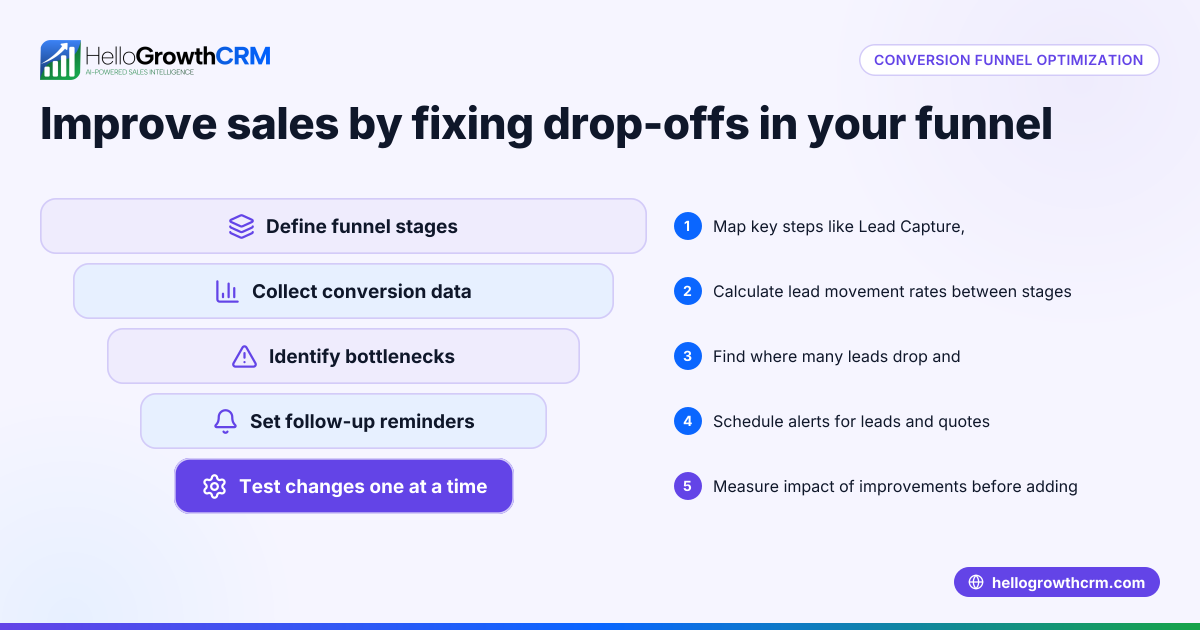
- Analyze current website performance. Use tools like Google Analytics to review visitor numbers, bounce rates, and current conversion rates. This baseline helps measure improvement.
- Improve website speed and mobile usability. Test your site on different devices. Ensure pages load quickly (ideally under 3 seconds) and navigation works smoothly on phones and tablets.
- Simplify your call-to-action (CTA). Make the desired action obvious with clear buttons or links, such as “Call Now,” “Get a Free Quote,” or “Schedule a Consultation.” Use contrasting colors and position CTAs prominently.
- Use clear, benefit-focused messaging. Explain what visitors gain by acting now. Use simple language and highlight your unique value or guarantees.
- Reduce distractions and clutter. Remove unnecessary links, pop-ups, or confusing menus that can distract visitors from converting.
- Add trust elements. Include testimonials, reviews, certifications, or guarantees to reassure visitors.
- Test different versions (A/B testing). Experiment with headlines, button colors, images, or page layouts and measure which versions convert better.
- Follow up quickly on leads. Once visitors convert by submitting a form or calling, respond promptly. Quick follow-up increases sales chances. Using a CRM with tools like a built-in dialer or WhatsApp and SMS sequences can help manage this efficiently, such as built-in CRM dialer and WhatsApp and SMS CRM.
- Repeat and refine. Conversion optimization is ongoing. Keep testing changes and improving based on data.
Example (fictional figures)
A residential real-estate team in Phoenix, Arizona, wants to increase leads from their website. They currently get 1,000 visitors per month but only 10 contact form submissions, which is a 1% conversion rate.
They set a goal to increase conversions to 3% by improving their website.
- Current leads: 1,000 visitors × 1% = 10 leads
- Target leads: 1,000 visitors × 3% = 30 leads
They improve site speed, add clearer CTAs like “Schedule a Free Home Evaluation,” and include client testimonials.
After 3 months, they measure:
- New conversion rate: 3%
- Leads per month: 1,000 visitors × 3% = 30 leads
This triples their leads without increasing traffic, showing the value of conversion optimization.
Common mistakes
- Not defining a clear conversion goal. Prevent this by deciding upfront what counts as a conversion for your business.
- Ignoring mobile users. Prevent by testing your site on phones and tablets to ensure it works well.
- Making CTAs confusing or hard to find. Prevent by using large, clear buttons with simple language.
- Overloading pages with too much information or distractions. Prevent by simplifying design and focusing on your main offer.
- Failing to follow up quickly on leads. Prevent by setting up prompt lead notifications and response processes, possibly using a CRM that supports WhatsApp and SMS follow-up sequences like WhatsApp and SMS CRM.
- Not measuring results or testing improvements. Prevent by regularly using analytics tools and A/B testing.
Frequently asked questions
What is a good website conversion rate? Conversion rates vary by industry but generally range from 1% to 5%. Small businesses should focus on improving their own baseline rather than comparing to others.
How long does conversion optimization take? It can take weeks to months to see meaningful improvements because you need to test changes and collect enough data.
Do I need special tools for conversion optimization? Basic tools like Google Analytics and simple A/B testing platforms help. For follow-up, a CRM with integrated communication tools can streamline lead management.
Can I optimize conversion without redesigning my website? Yes. Often small changes like clearer CTAs, faster loading times, and better messaging can improve conversion without a full redesign.
How does follow-up impact website conversion? Fast and personal follow-up increases the chance of turning leads into customers. Using tools like HelloGrowthCRM for the United States can help manage leads efficiently.
Key takeaways
- Website conversion optimization focuses on increasing the percentage of visitors who take your desired action.
- Clear goals, simple CTAs, fast site speed, and mobile usability are critical.
- Regular testing and measuring results are necessary to improve conversion.
- Quick follow-up on leads maximizes the value of website visitors.
- Avoid clutter and distractions that confuse visitors.
Start improving your website’s ability to turn visitors into customers today. To manage leads efficiently and follow up fast, consider starting on the Free Forever plan (200 leads, no credit card) at Start on the Free Forever plan (200 leads, no credit card).
Ready to put this into practice?
Set up your pipeline, WhatsApp follow-ups, and AI lead scoring in minutes — free, no credit card.
Try HelloGrowthCRM freeGet CRM tips in your inbox
Join thousands of sales professionals who get weekly insights on CRM strategy, AI automation, and pipeline optimization.

The HelloGrowthCRM team publishes guides on CRM strategy, AI sales tools, and revenue operations for small business sales teams.