HelloGrowthCRM software
Built for real small-business sales teams
HelloGrowthCRM helps reps qualify faster, follow up on time, and close more deals—with practical automation in one place.
- AI lead scoring and pipeline visibility
- Built-in dialer, WhatsApp, and email automation
- Sales forecasting and RevOps-ready reporting
The customer life cycle describes the stages a customer experiences with your business, starting from awareness, moving through consideration and purchase, and continuing into retention and advocacy. Managing this cycle means understanding what customers want and need at each stage and acting to keep them engaged and satisfied.
Why this comes up / what goes wrong
Small-business owners often face challenges because they don’t clearly track or manage the customer journey. For instance, slow responses to inquiries can lose leads, missing upsell opportunities reduces revenue, and poor after-sale support hurts repeat business. Without a clear customer life cycle, sales and service efforts become scattered, leading to lost revenue and unhappy customers.
Step-by-step
- Identify your customer life cycle stages. Common stages include Awareness (customers learn about you), Consideration (they evaluate your offer), Purchase (they buy), Retention (they keep buying or using your service), and Advocacy (they recommend you). Depending on your business, you might add stages like Onboarding or Renewal. Check if your business needs custom stages.
- Map what customers do and need at each stage. For example, during Awareness, customers want clear information about your products or services; during Purchase, they want easy payment options; during Retention, they need ongoing support and engagement.
- Set measurable goals for each stage. Track metrics such as lead volume, conversion rates, repeat purchases, or referral counts. These help you know how well your efforts are working.
- Create communication and service plans tailored to each stage. Use emails, calls, WhatsApp, or SMS messages that fit the customer’s current needs and preferences. For example, send educational content during Awareness and support messages during Retention.
- Monitor customer progress regularly. Identify customers who stall or drop out at any stage and adjust your approach to re-engage them.
- Collect feedback and improve continuously. Use surveys, support tickets, or direct conversations to learn what works and what doesn’t.
Example (fictional figures)
Austin Plumbing Co. in Austin, Texas, uses the customer life cycle to improve sales and service.
- In January 2026, they had 500 website visitors (Awareness).
- 50 visitors requested quotes (Consideration).
- 20 of those became paying customers (Purchase), each averaging $1,200 per job.
- 10 customers scheduled annual maintenance (Retention).
- 5 customers referred friends (Advocacy).
Calculations:
Quote conversion rate: 50 ÷ 500 = 0.10 or 10%
Purchase conversion rate: 20 ÷ 50 = 0.40 or 40%
Revenue from new customers: 20 × $1,200 = $24,000
Retention revenue: 10 × $1,200 = $12,000
Referral rate: 5 ÷ 20 = 0.25 or 25%
Austin Plumbing Co. reviews these numbers monthly to spot weak points, such as increasing quote requests or boosting referrals.
Common mistakes
- Ignoring post-sale stages like Retention and Advocacy. Prevent this by tracking repeat business and referrals, not just initial sales.
- Using generic communication for all customers. Tailor messages to the customer’s current stage to keep them interested.
- Failing to measure progress with clear metrics. Set and review goals regularly to spot issues early.
- Losing customer information across multiple tools. Use a system that keeps all customer data and service requests in one place.
- Not asking for referrals. Encourage satisfied customers to refer others with simple, tracked programs.
- Neglecting customer feedback. Regularly collect and act on feedback to improve.
Doing this in HelloGrowthCRM
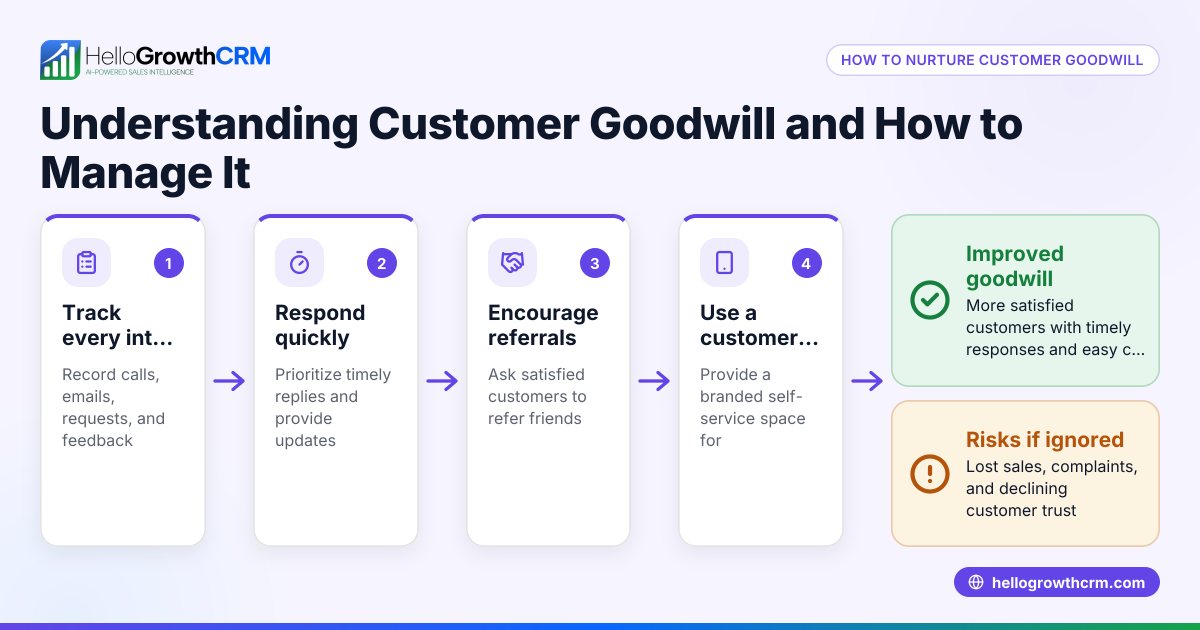
HelloGrowthCRM supports managing the customer life cycle by keeping all service requests, referrals, and tickets linked to the same customer record as the deal. Its branded self-service customer portal and knowledge base help customers get support after purchase, improving retention and satisfaction. You can also track referrals easily. Learn more about these features and how they support customer health at customer health score.
Frequently asked questions
What are the main stages of the customer life cycle? The main stages usually include Awareness, Consideration, Purchase, Retention, and Advocacy. These stages represent how customers interact with your business from first contact through becoming loyal supporters.
How can I improve customer retention? Focus on excellent post-sale service, timely communication, and addressing customer needs quickly. Using tools like support tickets and a customer portal keeps customers satisfied and engaged.
Why is tracking referrals important? Referrals bring in new customers with less cost and higher trust. Tracking referrals helps you reward advocates and understand what motivates customers to recommend your business.
How does HelloGrowthCRM help with communication during the customer life cycle? It integrates WhatsApp and SMS messaging to send timely, stage-appropriate messages to leads and customers. See more about WhatsApp and SMS CRM at WhatsApp and SMS CRM.
Can I track customer progress easily? Yes, HelloGrowthCRM’s customer portal and ticketing system keep all interactions and service requests linked to the customer, making it simple to monitor progress.
Key takeaways
- The customer life cycle tracks customer stages from first contact to loyalty.
- Mapping and managing each stage improves sales and service effectiveness.
- Measure conversion rates and customer actions at every stage.
- Avoid common mistakes like ignoring retention and generic messaging.
- Use a unified system to keep customer data and service requests together.
- HelloGrowthCRM keeps customer data and service requests unified after the sale.
Start managing your customer life cycle today to reduce lost leads and increase repeat business. Start on the Free Forever plan (200 leads, no credit card) and see how HelloGrowthCRM can help your US business grow.
Ready to put this into practice?
Set up your pipeline, WhatsApp follow-ups, and AI lead scoring in minutes — free, no credit card.
Try HelloGrowthCRM freeGet CRM tips in your inbox
Join thousands of sales professionals who get weekly insights on CRM strategy, AI automation, and pipeline optimization.

The HelloGrowthCRM team publishes guides on CRM strategy, AI sales tools, and revenue operations for small business sales teams.