HelloGrowthCRM software
Built for real small-business sales teams
HelloGrowthCRM helps reps qualify faster, follow up on time, and close more deals—with practical automation in one place.
- AI lead scoring and pipeline visibility
- Built-in dialer, WhatsApp, and email automation
- Sales forecasting and RevOps-ready reporting
A customer newsletter is a scheduled message sent to your current customers to keep them updated about your business activities, new products, service improvements, promotions, or helpful information. Its main goal is to maintain ongoing contact, increase customer loyalty, and encourage repeat purchases or referrals.
Why this comes up / what goes wrong
Small-business owners often want to stay connected with their customers but struggle with inconsistent communication or unclear messaging. Many rely on occasional emails, texts, or social media posts that might not reach all customers or appear unprofessional. Without a regular, structured newsletter, customers may forget your business or miss important updates, leading to lost sales or weaker relationships. A customer newsletter provides a reliable, scalable way to nurture customer relationships and keep your brand top of mind.
Step-by-step
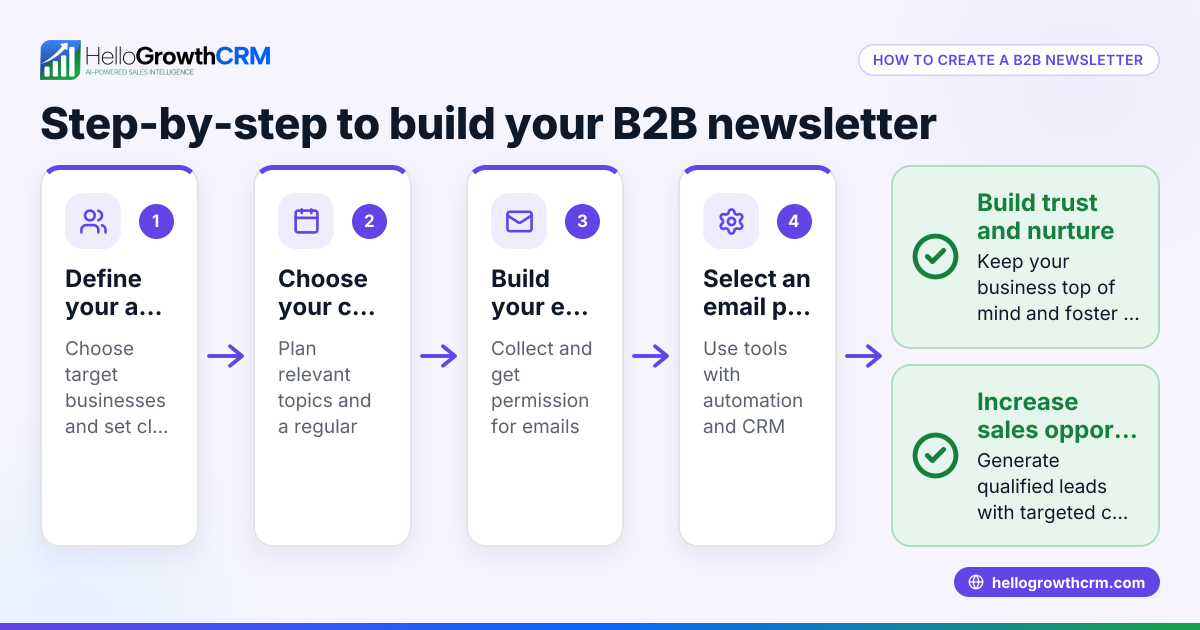
- Define your goals and audience: Decide what you want to achieve with your newsletter. Common goals include encouraging repeat sales, informing customers about new products, or sharing company news. Identify who will receive the newsletter—your entire customer list or specific segments. Check your customer data for accuracy and completeness.
- Choose your content mix: Plan content that adds value to your customers. This can include product updates, helpful tips, special promotions, customer success stories, or answers to frequently asked questions. Make sure the content is relevant and interesting to your audience.
- Select the delivery method: Use an email marketing tool or CRM with email capabilities to send your newsletter. Ensure your email list is clean, with valid addresses, and compliant with anti-spam laws.
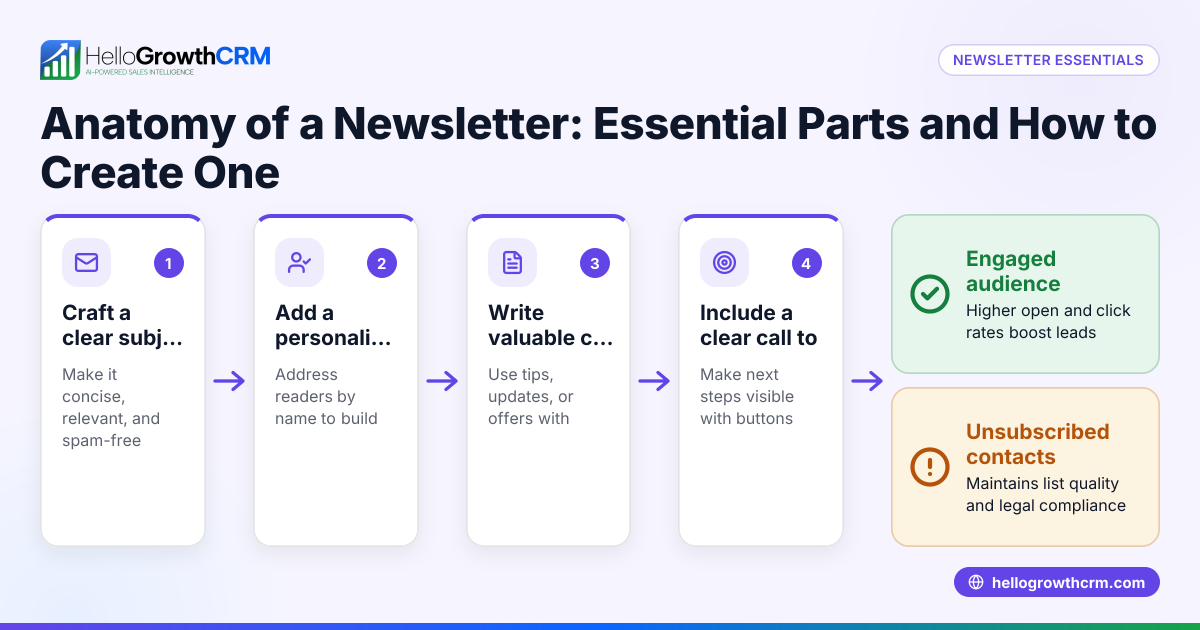
- Design your newsletter template: Create a clear, branded layout that includes your logo, headings, images, and calls to action. Test the design on both desktop and mobile devices to ensure readability.
- Write your newsletter: Use simple, engaging language. Include clear calls to action and links to your website or contact points. Proofread carefully to avoid typos or errors.
- Schedule and send: Choose a consistent schedule, such as monthly or quarterly. Send your newsletter at times when customers are most likely to open it.
- Monitor results and adjust: Track metrics like open rates, click-through rates, and customer replies. Use this information to improve future newsletters.
Example (fictional figures)
Sunrise Realty Group, a residential real estate team in Phoenix, Arizona, plans to send a quarterly customer newsletter starting 07/01/2026.
- They have 800 active clients.
- They send 4 newsletters per year.
- Their email service costs $0.02 per email.
Calculations:
800 clients × $0.02 = $16 per newsletter $16 × 4 newsletters = $64 annual cost
They expect a 5% increase in repeat business from these newsletters, generating an additional $50,000 in sales annually.
$50,000 × 5% = $2,500 additional revenue
This shows the newsletter cost is $64 annually to potentially generate $2,500 in extra revenue, making it a worthwhile investment.
Common mistakes
- Irregular sending: Sending newsletters sporadically confuses customers and reduces engagement. Prevent this by setting a fixed schedule and preparing content in advance.
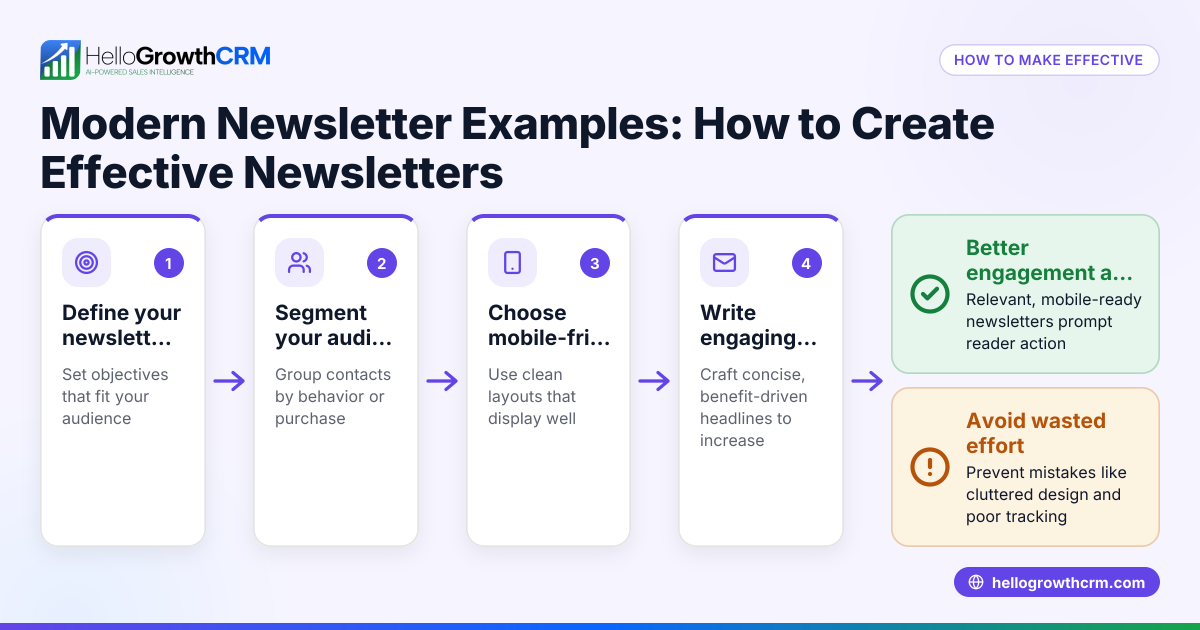
- Irrelevant content: Sending content that doesn’t interest your audience leads to unsubscribes. Avoid this by segmenting your email list and tailoring messages to customer interests.
- Ignoring mobile users: Many customers read emails on phones. Test your newsletter on mobile devices to ensure it displays correctly.
- No clear call-to-action: Without clear next steps, customers may not engage. Include direct calls to action such as visiting your website or contacting sales.
- Neglecting compliance: Failing to follow anti-spam laws can cause penalties. Always include unsubscribe options and respect privacy laws. For managing customer interactions and compliance, see HelloGrowthCRM for the United States.
Doing this in HelloGrowthCRM
HelloGrowthCRM supports customer communication after the sale through its Customer portal, referrals, tickets, and knowledge base features. Service requests and support tickets stay linked to the same customer record as the deal, making it easier to track ongoing conversations and follow-ups. This centralized approach helps you provide consistent service and send timely updates like newsletters. Learn more about these capabilities at customer health score.
Frequently asked questions
What is a customer success newsletter? A customer success newsletter focuses on helping customers get the most value from your products or services. It includes tips, how-to guides, and success stories that improve customer satisfaction and reduce churn.
How often should I send a customer newsletter? Most small businesses send newsletters monthly or quarterly. The key is consistency and avoiding overwhelming your customers with too many emails.
Can I use WhatsApp or SMS for customer newsletters? Yes, many businesses use WhatsApp and SMS for quick updates or promotions. HelloGrowthCRM supports WhatsApp and SMS CRM features that complement email newsletters. See WhatsApp and SMS CRM for details.
How do I measure the success of my newsletter? Track open rates, click-through rates, and customer responses. Use this data to refine your content and timing for better results.
Key takeaways
- A customer newsletter is a regular update to keep existing customers engaged.
- Define clear goals, know your audience, and plan relevant content.
- Maintain a consistent sending schedule and test for readability.
- Avoid common mistakes like irregular sending and irrelevant content.
- HelloGrowthCRM helps manage customer communication after the sale with integrated service tools.
- Monitor results to improve your newsletter over time.
Start building your customer newsletter today to strengthen relationships and boost repeat sales. To manage your customer interactions efficiently, Start on the Free Forever plan (200 leads, no credit card).
Ready to put this into practice?
Set up your pipeline, WhatsApp follow-ups, and AI lead scoring in minutes — free, no credit card.
Try HelloGrowthCRM freeGet CRM tips in your inbox
Join thousands of sales professionals who get weekly insights on CRM strategy, AI automation, and pipeline optimization.

The HelloGrowthCRM team publishes guides on CRM strategy, AI sales tools, and revenue operations for small business sales teams.