HelloGrowthCRM software
Built for real small-business sales teams
HelloGrowthCRM helps reps qualify faster, follow up on time, and close more deals—with practical automation in one place.
- AI lead scoring and pipeline visibility
- Built-in dialer, WhatsApp, and email automation
- Sales forecasting and RevOps-ready reporting
A newsletter is a regular communication sent to your audience to share updates, promotions, or helpful information about your business. Understanding the anatomy of a newsletter means knowing the essential parts that make it effective and engaging. This article covers why small businesses need newsletters, how to build one step-by-step, a practical example with numbers, common mistakes to avoid, and answers to frequent questions.
Why this comes up / what goes wrong
Many small-business owners want to use newsletters as a way to keep in touch with customers and generate leads but struggle with where to start or what to include. Without a clear structure, newsletters can be confusing or boring, resulting in low open rates and minimal engagement. Businesses often lose potential customers because their follow-up communications are inconsistent or lack clarity. Knowing the anatomy of a newsletter helps ensure your messages are clear, valuable, and prompt action.
Step-by-step
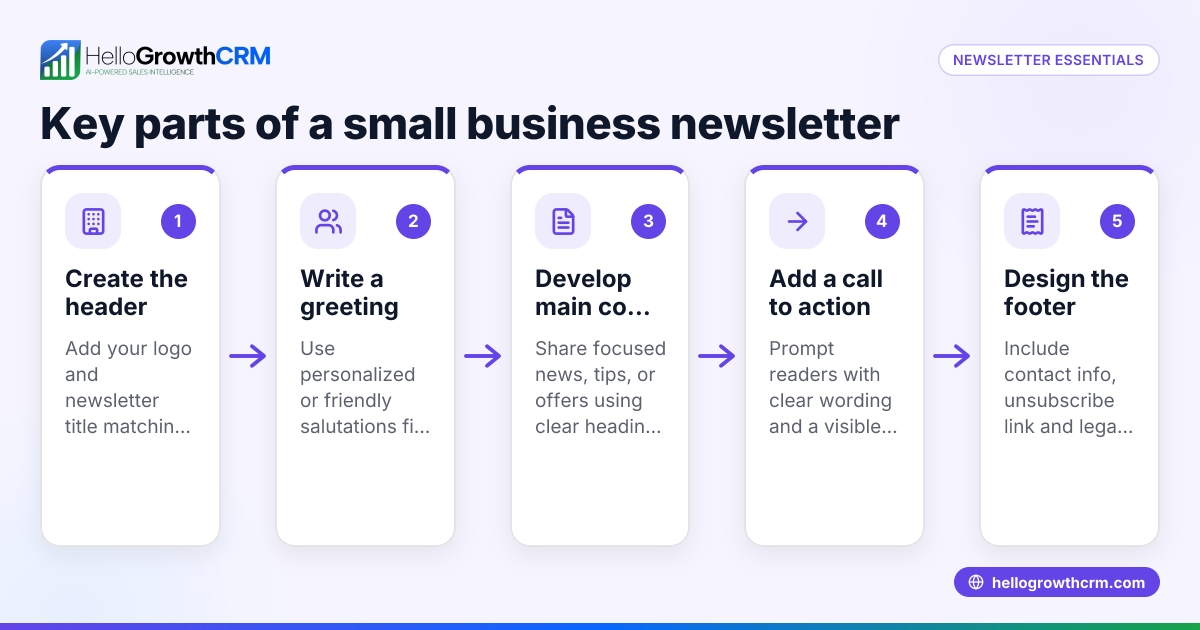
- Craft a clear and compelling subject line: This is the first thing recipients see in their inbox. Make it concise and relevant to encourage them to open your email. Check that it accurately reflects the newsletter’s content and avoids spammy words.
- Add a personalized greeting: Address your audience by name if possible to build connection. A simple "Hello [First Name]," works well.
- Write valuable content: Provide information that benefits your readers, such as tips, updates, or special offers. Keep paragraphs short and use bullet points or subheadings to improve readability.
- Include a clear call to action (CTA): Tell readers exactly what you want them to do next, like visiting your website, booking an appointment, or replying to your message. Make the CTA stand out visually, using buttons or bold text.
- Provide your contact information: Include your business phone number, email address, and social media links so readers can easily reach you.
- Design for readability: Use clean fonts and colors that match your brand. Test your newsletter on desktop and mobile devices to ensure it looks good everywhere.
- Add an unsubscribe option: This is legally required and helps build trust with your audience by giving them control over their subscription.
To manage your contacts and follow-ups efficiently, consider using a WhatsApp and SMS CRM like HelloGrowthCRM. It helps small businesses organize leads and automate communication beyond email. Explore HelloGrowthCRM for the United States to see how it fits your sales process, including its built-in CRM dialer for streamlined outreach.
Example (fictional figures)
A residential real-estate team in Phoenix, Arizona, sends a monthly newsletter to 1,000 subscribers. Their goal is to promote a new listing and share helpful market tips.
- Subject line: "Discover Your Dream Home in Phoenix – New Listing Inside"
- Content: a brief description of the property, three market tips, and a CTA to schedule a viewing.
If 150 recipients open the email: 1,000 × 15% = 150 opens
If 45 of those who open click the CTA: 45 clicks
If 9 of those clicks lead to appointments: 9 appointments
If each appointment has an average sale value of $350,000: 9 × $350,000 = $3,150,000 potential sales
This example shows how an effective newsletter can generate valuable leads and revenue.
Common mistakes
- Ignoring the subject line: Using vague or spammy phrases causes low open rates. Prevent this by testing different subject lines and keeping them clear.
- Overloading with information: Too much content overwhelms readers. Focus on one main topic and use bullet points.
- Weak or missing CTA: Without a clear next step, readers may not engage. Always include a strong, visible CTA.
- Skipping personalization: Generic greetings reduce connection. Use names and segment your list if possible.
- Neglecting mobile optimization: Many read on phones; test your newsletter on mobile devices.
- No unsubscribe link: This can hurt your reputation and violate laws. Always include an unsubscribe option.
Using a CRM like HelloGrowthCRM can help avoid these mistakes by organizing contacts and automating follow-ups, reducing reliance on text messages, email, and spreadsheets. Learn more about its WhatsApp and SMS CRM features.
Frequently asked questions
What is the ideal length for a newsletter? Keep newsletters concise, typically between 200 and 500 words. This respects readers’ time while delivering meaningful content.
How often should I send newsletters? Frequency depends on your business and audience. Monthly or biweekly newsletters are common for small businesses to maintain contact without overwhelming subscribers.
Can I include images or videos in my newsletter? Yes, visuals can increase engagement but use them sparingly to avoid slow loading times and distractions.
How do I grow my newsletter list? Offer incentives like discounts or exclusive content for sign-ups. Promote your newsletter on your website and social media channels.
Is it better to use email or WhatsApp for newsletters? Email remains the standard, but WhatsApp can be effective for direct and conversational communication. HelloGrowthCRM supports both channels for sales teams to manage leads and outreach.
Key takeaways
- A newsletter should include a clear subject line, personalized greeting, valuable content, a strong CTA, contact info, and an unsubscribe option.
- Clear structure and focused content improve reader engagement and response.
- Personalization and mobile-friendly design are essential for better results.
- Avoid common mistakes like weak CTAs, overloaded content, and missing unsubscribe links.
- Using CRM tools like HelloGrowthCRM can streamline newsletter management and follow-up.
Start your newsletter journey today to improve your sales communication. Start on the Free Forever plan (200 leads, no credit card).
Explore more about HelloGrowthCRM for the United States, its WhatsApp and SMS CRM features, and the built-in CRM dialer to enhance your outreach.
Ready to put this into practice?
Set up your pipeline, WhatsApp follow-ups, and AI lead scoring in minutes — free, no credit card.
Try HelloGrowthCRM freeGet CRM tips in your inbox
Join thousands of sales professionals who get weekly insights on CRM strategy, AI automation, and pipeline optimization.

The HelloGrowthCRM team publishes guides on CRM strategy, AI sales tools, and revenue operations for small business sales teams.