HelloGrowthCRM software
Built for real small-business sales teams
HelloGrowthCRM helps reps qualify faster, follow up on time, and close more deals—with practical automation in one place.
- AI lead scoring and pipeline visibility
- Built-in dialer, WhatsApp, and email automation
- Sales forecasting and RevOps-ready reporting
Segmenting customer groups means dividing your customers into smaller groups based on shared traits like buying behavior, location, or needs. This helps you target marketing, sales, and service more effectively. This article explains why segmentation matters, how to do it step-by-step, a detailed example, common mistakes to avoid, and how HelloGrowthCRM supports customer management after the sale.
Why this comes up / what goes wrong
Small and mid-sized business owners often find their customer lists growing but unorganized. Without clear segments, marketing campaigns become generic, sales teams struggle to prioritize leads, and customer service can miss important context. For example, a business might treat all customers the same despite clear differences in purchase frequency or product preferences. This leads to slow follow-up, missed upsell chances, and lower customer satisfaction. Segmenting customer groups helps by creating targeted approaches that fit each group’s specific needs.
Many small businesses try to manage customer data with spreadsheets or simple lists. This makes it hard to track changes or spot patterns. Sales teams may waste time chasing low-value leads or miss opportunities to cross-sell. Marketing messages may not connect because they don’t match customer interests. Customer service may not know a customer’s history or preferences, leading to frustration on both sides.
By grouping customers thoughtfully, you can focus your efforts where they matter most and improve overall business efficiency.
Step-by-step
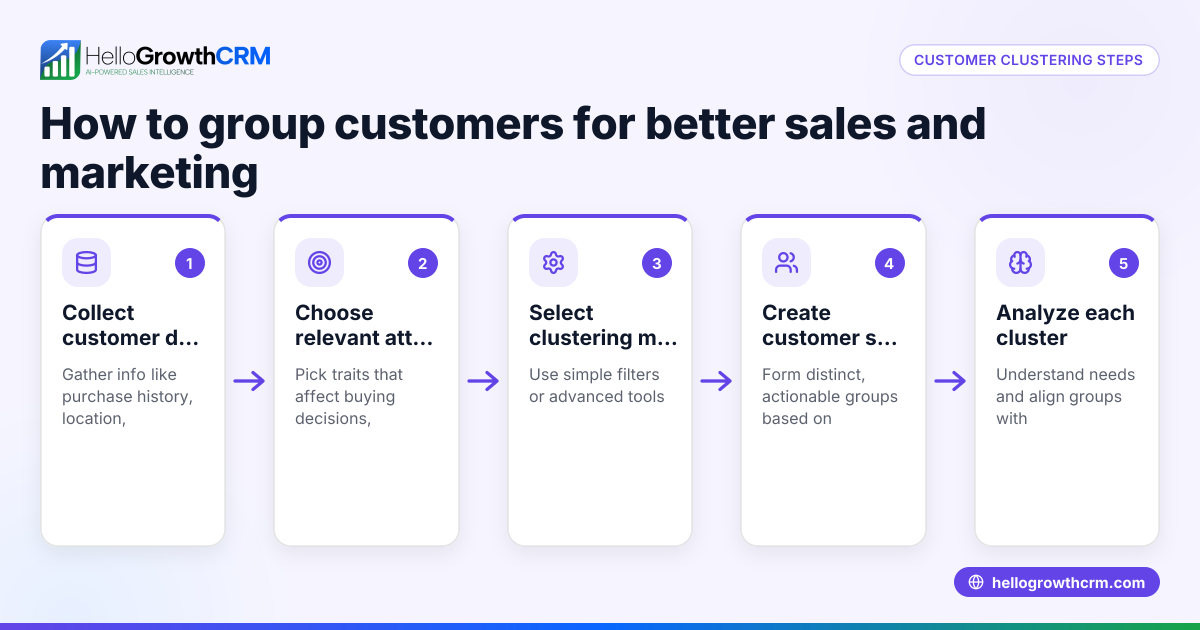
- Collect customer data: Gather information such as purchase history, location, demographics, company size, and communication preferences. Check your existing records, spreadsheets, sales notes, and any online forms. Verify accuracy and fill gaps.
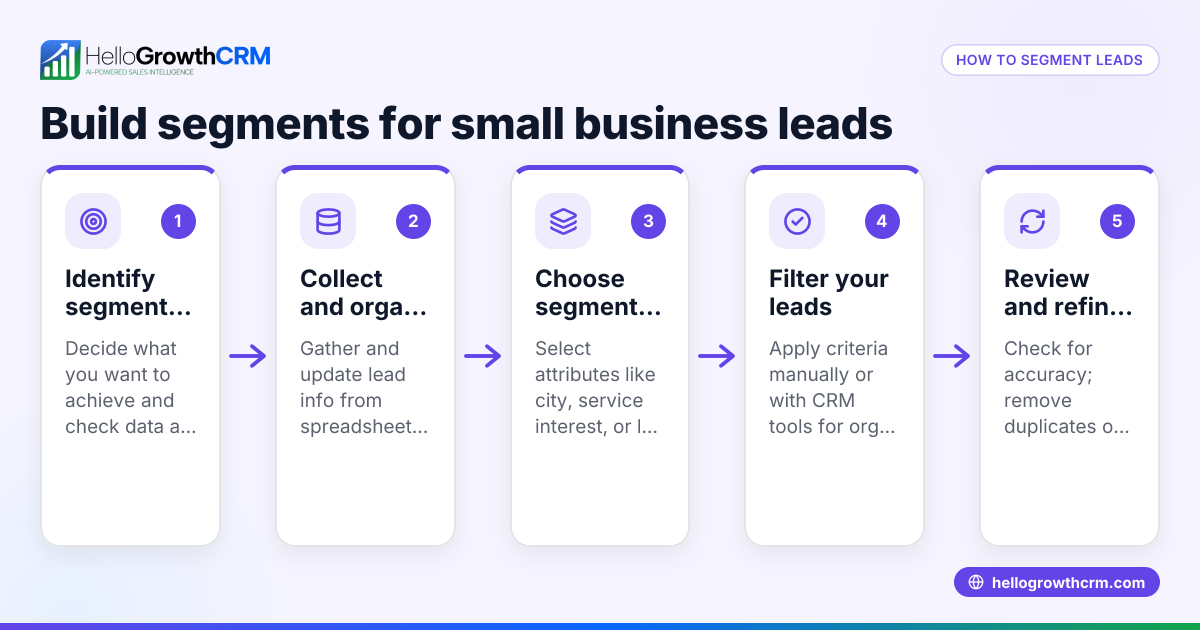
- Define segmentation criteria: Decide which traits matter for your business goals. Common criteria include buying frequency, product types purchased, geographic region, industry, company size, or customer lifetime value.
- Group customers by criteria: Use your CRM or spreadsheet filters, tags, or labels to create distinct groups. Keep the number of segments manageable to maintain clarity and focus.
- Analyze each segment’s behavior: Look at sales volume, average order size, response to marketing, and customer service requests. This helps identify your most valuable or engaged groups.
- Tailor marketing and sales efforts: Develop targeted messages, offers, and follow-up schedules for each segment. For example, frequent buyers might get loyalty rewards while occasional buyers receive product education.
- Monitor and adjust segments regularly: Customer behavior changes, so review your groups every 3 to 6 months and update as needed. Remove inactive customers or create new segments if patterns emerge.
- Use customer health scores to prioritize: Track engagement and satisfaction within segments to focus on the best opportunities. Learn more about this at customer health score.
Example (fictional figures)
A B2B software reseller in Denver, Colorado, wants to segment its 1,200 customers as of 03/15/2026.
- Step 1: Collect data from sales records and customer profiles.
- Step 2: Choose segments by purchase frequency: frequent (10+ purchases/year), occasional (3-9 purchases/year), and rare (1-2 purchases/year).
They find:
- Frequent buyers: 200 customers
- Occasional buyers: 500 customers
- Rare buyers: 500 customers
Average annual revenue per group:
- Frequent buyers: $8,000 each
- Occasional buyers: $3,000 each
- Rare buyers: $500 each
Calculate total revenue per segment:
- Frequent buyers: 200 × $8,000 = $1,600,000
- Occasional buyers: 500 × $3,000 = $1,500,000
- Rare buyers: 500 × $500 = $250,000
The reseller decides to focus marketing on frequent and occasional buyers with personalized offers and upsell campaigns, while sending general newsletters to rare buyers.
Common mistakes
- Using too many segments at once: Creating too many groups makes management complex and dilutes focus. Limit to a few key segments to keep it actionable.
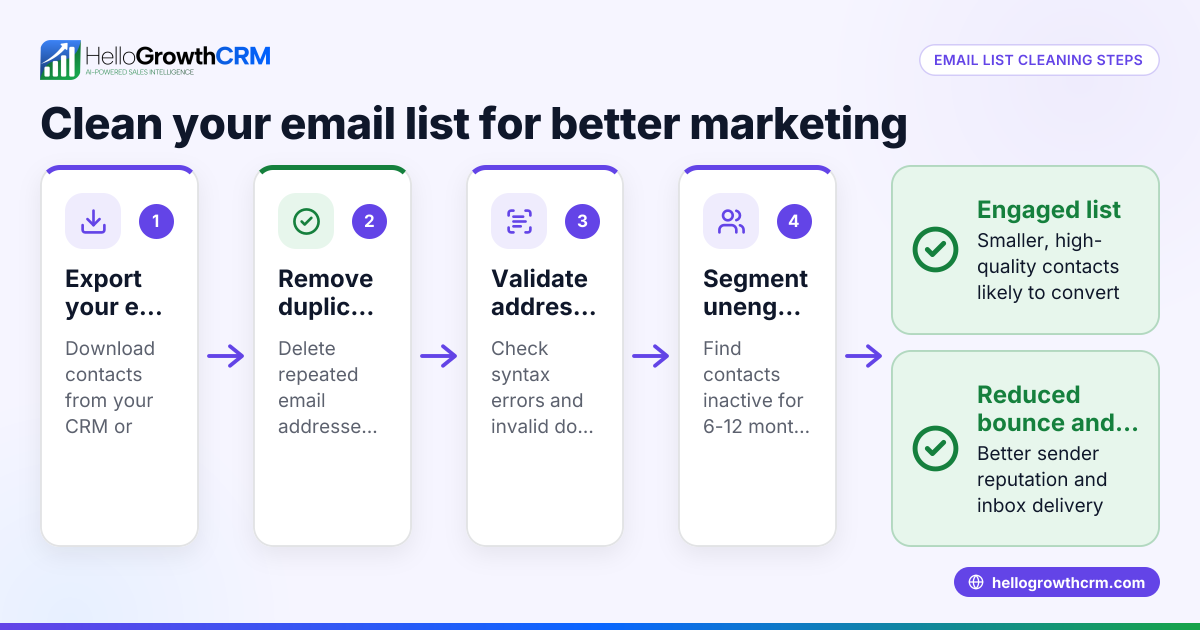
- Ignoring data quality: Segmenting with incomplete or outdated data leads to poor targeting. Regularly clean your customer data before segmenting.
- Not updating segments regularly: Customer behavior and market conditions change. Schedule regular reviews to keep segments relevant.
- Treating segments as static: Customers may move between segments over time. Be ready to reassign them based on new behavior or data.
- Overlooking customer service needs: Segmentation isn’t only for marketing and sales. Tailor support resources and response times to different groups. HelloGrowthCRM keeps service requests linked to the same customer record as the deal, simplifying this process.
- Failing to align sales and marketing: Without clear communication of segments, teams may work at cross-purposes. Share segments clearly between teams for coordinated efforts. Learn more about managing customer communication with WhatsApp and SMS CRM.
Doing this in HelloGrowthCRM
After the sale, HelloGrowthCRM helps keep all service requests, referrals, and support tickets on the same customer record as the deal. The branded customer portal and knowledge base allow customers to self-serve and track their requests, improving satisfaction and reducing response times. This unified view supports better segmentation by keeping all interactions in one place. For details, see HelloGrowthCRM for the United States.
Frequently asked questions
What are the most common ways to segment customer groups? Common methods include demographic (age, location), behavioral (purchase frequency, product use), firmographic (company size, industry), and value-based (revenue generated) segmentation. Choose the method that fits your business goals.
How often should I update my customer segments? Review and update segments every 3 to 6 months to reflect changes in customer behavior, market conditions, or business strategy.
Can segmentation improve customer service? Yes. By understanding different customer needs, you can tailor support resources and response times. HelloGrowthCRM helps by linking service tickets directly to customer records.
Is it necessary to use software for segmentation? While you can segment customers manually in spreadsheets, a CRM system streamlines the process, keeps data organized, and automates updates, making segmentation more effective.
How does segmenting customers help sales teams? Segmentation allows sales teams to prioritize leads, tailor their messaging, and improve follow-up speed, leading to higher conversion rates.
What should I do if my segments overlap? If customers fit multiple segments, prioritize based on your current business goals or create combined segments carefully. Avoid confusion by clearly defining segment rules.
Key takeaways
- Segmenting customers groups your audience by shared traits to target marketing and sales better.
- Start by collecting accurate data and defining clear, manageable segments.
- Regularly update segments to keep them relevant.
- Avoid common mistakes like over-segmentation and ignoring customer service needs.
- Use customer health scores to focus on high-value groups.
- HelloGrowthCRM keeps all service requests linked to customer records, supporting ongoing segmentation and customer management.
Start organizing your customer groups today to improve sales focus and customer satisfaction. Start on the Free Forever plan (200 leads, no credit card).
Ready to put this into practice?
Set up your pipeline, WhatsApp follow-ups, and AI lead scoring in minutes — free, no credit card.
Try HelloGrowthCRM freeGet CRM tips in your inbox
Join thousands of sales professionals who get weekly insights on CRM strategy, AI automation, and pipeline optimization.

The HelloGrowthCRM team publishes guides on CRM strategy, AI sales tools, and revenue operations for small business sales teams.