HelloGrowthCRM software
Built for real small-business sales teams
HelloGrowthCRM helps reps qualify faster, follow up on time, and close more deals—with practical automation in one place.
- AI lead scoring and pipeline visibility
- Built-in dialer, WhatsApp, and email automation
- Sales forecasting and RevOps-ready reporting
Customer service in health care means delivering timely, respectful, and clear support to patients before, during, and after treatment. It involves managing inquiries, appointments, follow-ups, and resolving issues efficiently. This article explains why good customer service matters in health care, provides step-by-step actions to improve it, highlights common pitfalls, and shows how HelloGrowthCRM can help small businesses streamline patient communication.
Why this comes up / what goes wrong
Small and mid-sized health care businesses in the US often struggle with customer service because they manage patient communication across multiple channels like phone calls, texts, emails, and spreadsheets. Without a centralized system, patient inquiries and requests can be lost or delayed, causing frustration and missed appointments. Slow follow-up or inconsistent messaging reduces patient trust and satisfaction, which can harm business reputation and revenue. Business owners and sales leaders want to streamline how they capture patient inquiries, track service requests, and ensure timely responses.
Step-by-step
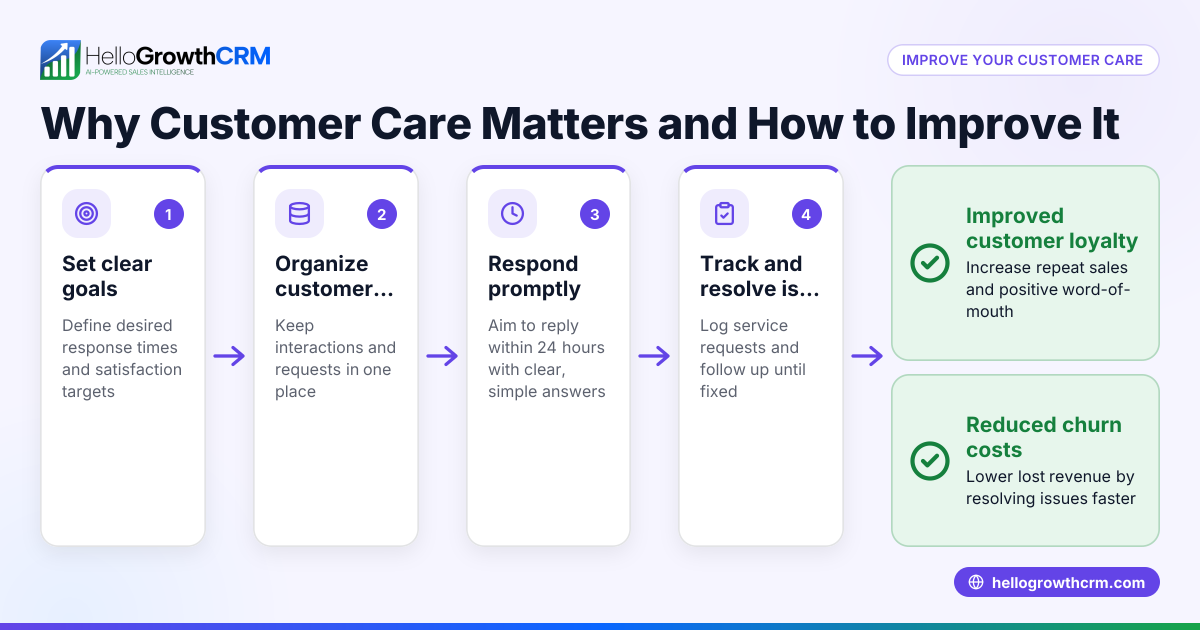
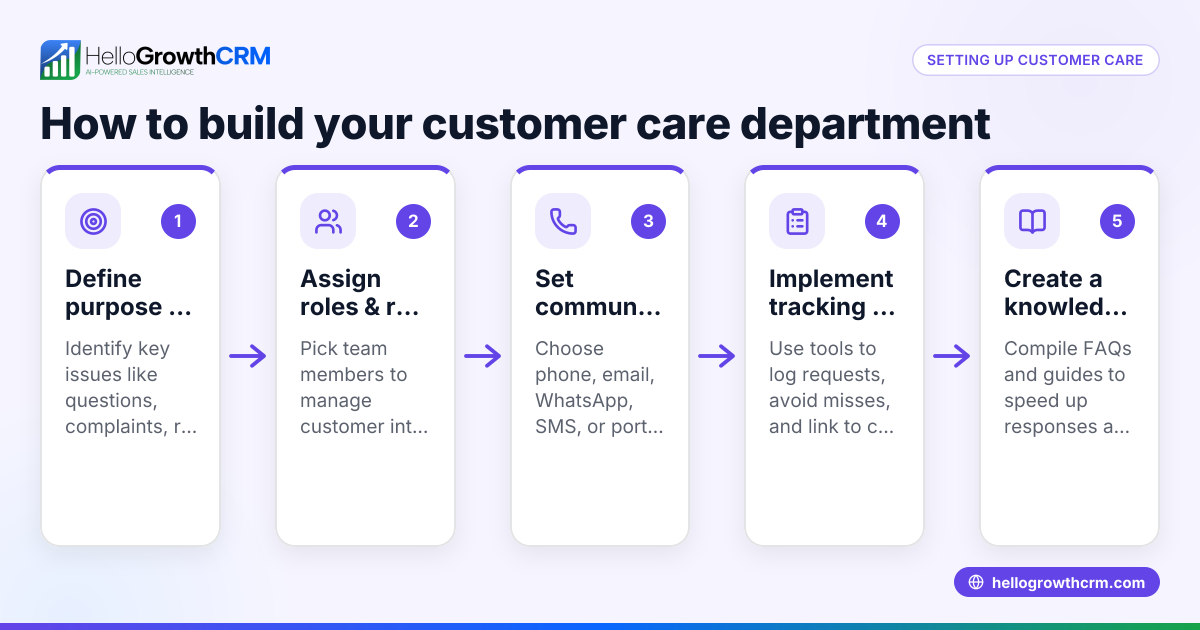
- Centralize patient contact information
- Collect all patient leads and contacts into one system.
- Verify contact details include phone numbers, emails, and preferred messaging channels.
- Establish clear communication channels
- Decide which channels to use (phone, WhatsApp, SMS, email).
- Ensure staff know how to respond promptly on each channel.
- Track inquiries and appointments systematically
- Log every patient inquiry and appointment request.
- Regularly check for unanswered messages or missed calls.
- Use follow-up reminders and task boards
- Assign follow-up tasks to team members.
- Review task boards daily to avoid forgetting any patient.
- Maintain records of service requests and resolutions
- Record patient issues and how they were resolved.
- Periodically review records to identify common problems.
- Train staff on patient communication best practices
- Emphasize empathy, clarity, and professionalism.
- Monitor calls and messages for quality.
- Review and improve regularly
- Collect patient feedback to spot gaps.
- Adjust processes based on feedback and performance data.
Example (fictional figures)
A B2B health care software reseller in Denver, Colorado, wants to improve customer service for its small clinic clients. They track 1,200 patient inquiries yearly and currently miss an estimated number of follow-ups.
- Missed follow-ups before improvement: 300 (estimated)
- Goal: Reduce missed follow-ups by 50%
- Missed follow-ups reduction: 300 × 50% = 150
- Expected missed follow-ups after improvement: 300 - 150 = 150
They invest $3,000 in a CRM system and staff training, expecting to save $15,000 in retained revenue from better patient retention.
- Savings from fewer missed follow-ups: $15,000
- Cost of CRM and training: $3,000
- Net benefit: $15,000 - $3,000 = $12,000
This example shows investing in better customer service systems can yield financial benefits.
Common mistakes
- Using multiple unconnected tools
- Mistake: Managing patient contacts across spreadsheets, texts, and emails separately.
- Prevention: Centralize contacts and communication in one system like HelloGrowthCRM.
- Delaying follow-ups
- Mistake: Responding too slowly to patient inquiries.
- Prevention: Use reminders and task boards to ensure prompt follow-up.
- Ignoring patient communication preferences
- Mistake: Contacting patients through channels they don’t use.
- Prevention: Ask and record preferred communication channels.
- Not logging service requests
- Mistake: Losing track of patient issues after initial contact.
- Prevention: Use a customer portal or ticket system to keep requests linked to patient records.
- Lack of staff training
- Mistake: Staff unaware of communication standards and empathy importance.
- Prevention: Provide regular training and monitor interactions.
- Failing to analyze service data
- Mistake: Not reviewing service results or patient feedback.
- Prevention: Regularly review records and adjust processes accordingly.
Doing this in HelloGrowthCRM
HelloGrowthCRM supports health care businesses with a built-in dialer that lets reps work a list directly inside the CRM and log call outcomes on each lead. After the sale, service requests, referrals, and support tickets stay linked to the same customer record as the deal. This centralizes patient communication and service management, making it easier to track follow-ups and resolve issues efficiently. Learn more about HelloGrowthCRM for the United States and its WhatsApp and SMS CRM features.
Frequently asked questions
What is customer service in health care? Customer service in health care involves managing patient communication and support before, during, and after care. It includes answering inquiries, scheduling appointments, handling complaints, and providing information clearly and respectfully.
Why is customer service important in health care? Good customer service builds patient trust, improves satisfaction, and reduces missed appointments or lost leads. It helps small health care businesses maintain a positive reputation and steady revenue.
How can small health care businesses improve customer service? By centralizing patient contacts, using clear communication channels, tracking inquiries and follow-ups systematically, training staff, and reviewing service outcomes regularly. Using tools like the customer health score can help monitor patient engagement.
Can CRM software help with health care customer service? Yes. CRM tools like HelloGrowthCRM provide built-in dialers, customer portals, and ticket systems that keep all patient interactions and service requests in one place, helping teams follow up faster and more accurately.
What communication channels should health care businesses use? Phone calls, WhatsApp, SMS, and email are common. It’s important to ask patients their preferences and be consistent in responding quickly on those channels.
Key takeaways
- Customer service in health care means managing patient communication clearly and promptly.
- Centralizing contacts and tracking inquiries prevents lost leads and missed appointments.
- Use reminders and task boards to ensure timely follow-up.
- Train staff on empathy and communication best practices.
- Avoid multiple disconnected tools by using integrated CRM systems.
- Regularly review patient feedback and service data to improve.
Start improving your health care customer service today. Start on the Free Forever plan (200 leads, no credit card).
Ready to put this into practice?
Set up your pipeline, WhatsApp follow-ups, and AI lead scoring in minutes — free, no credit card.
Try HelloGrowthCRM freeGet CRM tips in your inbox
Join thousands of sales professionals who get weekly insights on CRM strategy, AI automation, and pipeline optimization.

The HelloGrowthCRM team publishes guides on CRM strategy, AI sales tools, and revenue operations for small business sales teams.