HelloGrowthCRM software
Built for real small-business sales teams
HelloGrowthCRM helps reps qualify faster, follow up on time, and close more deals—with practical automation in one place.
- AI lead scoring and pipeline visibility
- Built-in dialer, WhatsApp, and email automation
- Sales forecasting and RevOps-ready reporting
Customer success OKRs are a structured way to define and track goals that improve how your business supports and retains customers. OKRs combine a clear objective (what you want to achieve) with key results (measurable steps showing progress). For small and mid-sized US businesses, this means focusing efforts on improving customer satisfaction, reducing churn, and increasing referrals or upsells.
Why this comes up / what goes wrong
Small business owners often struggle with customer success because they lack clear goals that align their sales, support, and success teams. Without OKRs, teams may react to problems without a unified strategy, causing slow response times, missed upsell opportunities, and poor customer retention. This is especially common when customer interactions happen across multiple channels like WhatsApp, SMS, and email without centralized tracking.
Owners may find that customer requests get lost, referrals are not tracked, and it’s hard to measure if customers are truly satisfied. Setting customer success OKRs helps focus efforts on the right priorities and provides a way to measure progress.
Step-by-step
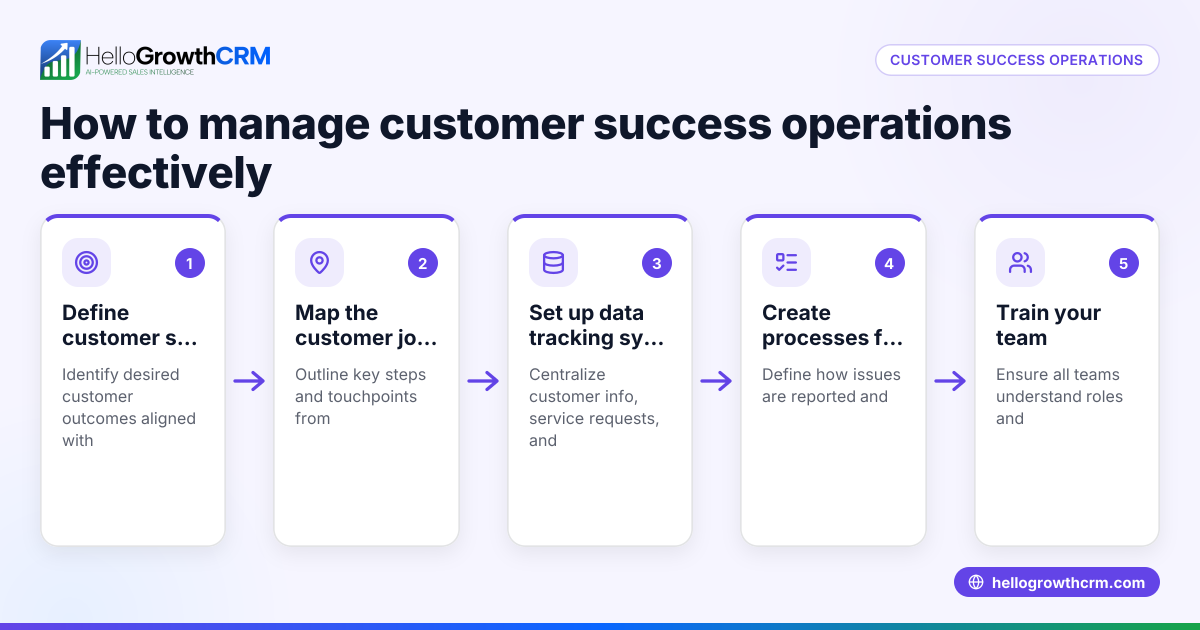
- Define your main customer success objective. This should be clear and focused, such as “Improve customer retention in 2026.” Check that it aligns with your overall business goals.
- Identify 3-5 key results to measure progress. These should be quantifiable, for example, “Reduce average ticket resolution time to a shorter period” or “Increase customer referral rate by 15%.” Check that each key result is specific and measurable.
- Assign ownership to team members. Decide who is responsible for tracking and driving each key result. Check that responsibilities are clear to avoid overlap or gaps.
- Set a timeline for review. OKRs typically run quarterly or yearly. Check that you have a regular cadence to review progress and adjust as needed.
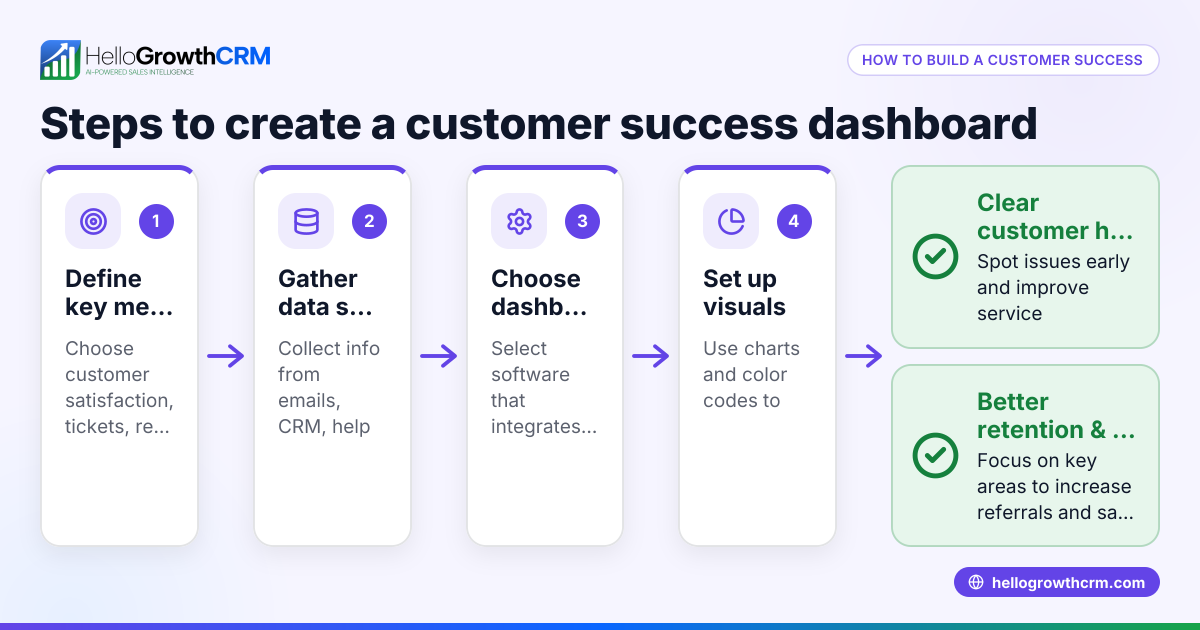
- Use customer data to track results. Gather data from support tickets, referral programs, and customer feedback. Check that your tools can consolidate this data for easy reporting.
- Communicate OKRs to your team. Make sure everyone understands the objectives and their role in achieving them. Check that OKRs are visible and discussed regularly.
- Review and adjust. At the end of the timeline, review outcomes, learn what worked and what didn’t, and set new OKRs accordingly.
For tracking customer health and support tickets, consider tools that integrate your communication channels for better visibility, such as a WhatsApp and SMS CRM system. See WhatsApp and SMS CRM and customer health score for more on these features.
Example (fictional figures)
A two-location dental practice in Columbus, Ohio, wants to improve customer success in 2026.
Objective: Increase patient retention by 10% by 12/31/2026.
Key Results:
- Reduce average appointment follow-up time from 5 days to 2 days.
- Increase patient referral rate from 8% to 12%.
- Resolve a higher percentage of patient support tickets within 24 hours.
Calculations:
Current retention rate: 70%
Goal retention rate: 70% + (70% × 10%) = 70% + 7% = 77%
Current referral rate: 8%
Goal referral rate: 8% + (8% × 50%) = 8% + 4% = 12%
The practice tracks follow-up times and referrals monthly, adjusting staff schedules and communication templates to meet these targets.
This example uses realistic USD figures for context:
Assume the practice has 1,000 active patients generating $1,200,000 annually.
Increasing retention by 7% means retaining 70 more patients:
70 patients × $1,200 average annual revenue per patient = $84,000 additional revenue
Increasing referrals from 8% to 12% means 40 more new patients (assuming 1,000 total patients):
40 patients × $1,200 = $48,000 additional revenue
Together, these improvements could increase annual revenue by $84,000 + $48,000 = $132,000.
Common mistakes
- Setting vague objectives. Prevent this by making objectives specific and measurable.
- Too many key results. Limit to 3-5 to keep focus.
- Not assigning clear ownership. Assign each key result to a responsible person.
- Ignoring data tracking. Use a CRM or customer portal to gather accurate data.
- Failing to review regularly. Schedule quarterly reviews to stay on track.
- Not communicating OKRs. Share OKRs openly with your team to align efforts.
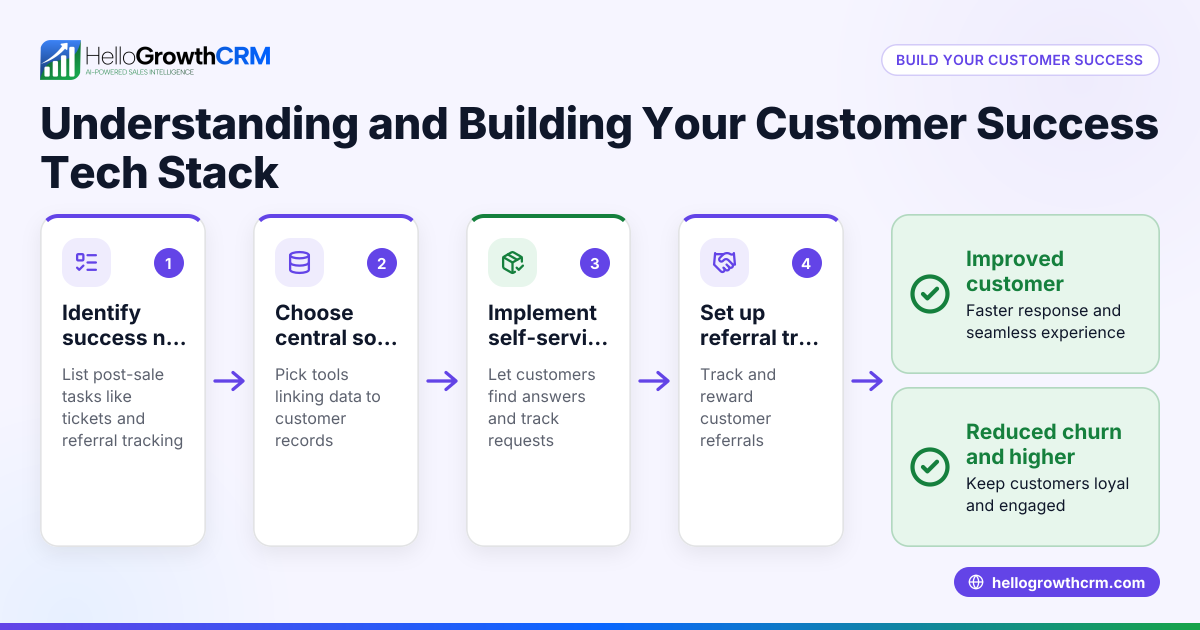
Using a CRM with a customer portal and ticketing system helps avoid many of these mistakes by centralizing customer interactions and data.
Doing this in HelloGrowthCRM
HelloGrowthCRM supports customer success OKRs by keeping all service requests on the same customer record as the deal. Its customer portal lets clients self-serve while referrals and support tickets are tracked in one place. The knowledge base helps your team resolve issues faster, supporting key results like reducing ticket resolution time. For more on managing customer health, see customer health score. HelloGrowthCRM also integrates WhatsApp and SMS channels for seamless communication (WhatsApp and SMS CRM).
Frequently asked questions
What are the best customer success OKRs for a small business? Focus on measurable goals like improving retention rates, reducing support response times, and increasing referrals. Choose objectives that directly impact customer satisfaction and align with your business priorities.
How often should I review customer success OKRs? Typically, quarterly reviews work well. This allows enough time to see progress but keeps the team focused and able to adjust quickly if needed.
Can customer success OKRs include sales goals? Yes, especially for upsells or renewals linked to customer success. Just ensure these goals support overall customer satisfaction and long-term retention.
How do I track customer success OKRs without complex software? Start with spreadsheets and regular team check-ins to monitor key metrics. As your business grows, consider a CRM with features like a customer portal and ticket tracking to centralize data. See customer health score for ideas.
What role does customer feedback play in OKRs? Customer feedback is essential for setting realistic objectives and measuring success. Use surveys, support tickets, and direct conversations to gather insights.
Key takeaways
- Customer success OKRs combine clear objectives with measurable key results focused on customer satisfaction and retention.
- Define specific goals, assign ownership, and set a timeline for regular review.
- Avoid common mistakes like vague goals, too many key results, and poor tracking.
- Use tools like HelloGrowthCRM’s customer portal and ticket system to centralize customer data and improve service.
- Regular communication and data-driven reviews keep your team aligned and focused.
Start improving your customer success today. Start on the Free Forever plan (200 leads, no credit card) to organize your customer interactions and track success effectively.
Ready to put this into practice?
Set up your pipeline, WhatsApp follow-ups, and AI lead scoring in minutes — free, no credit card.
Try HelloGrowthCRM freeGet CRM tips in your inbox
Join thousands of sales professionals who get weekly insights on CRM strategy, AI automation, and pipeline optimization.

The HelloGrowthCRM team publishes guides on CRM strategy, AI sales tools, and revenue operations for small business sales teams.