HelloGrowthCRM software
Built for real small-business sales teams
HelloGrowthCRM helps reps qualify faster, follow up on time, and close more deals—with practical automation in one place.
- AI lead scoring and pipeline visibility
- Built-in dialer, WhatsApp, and email automation
- Sales forecasting and RevOps-ready reporting
A customer targeting strategy is a plan to identify the specific group of customers most likely to buy your product or service and focus your marketing and sales efforts on them. This article covers why small businesses need this strategy, step-by-step instructions to create one, a practical example, common mistakes to avoid, and how HelloGrowthCRM can help manage customer relationships after the sale.
Why this comes up / what goes wrong
Small business owners often face challenges because they try to market to everyone rather than focusing on the customers who are most likely to buy. Without a clear customer targeting strategy, sales teams waste time chasing leads that do not convert or generate profit. This problem is worsened when sales processes rely on spreadsheets, text messages, and email without a central system, causing slow follow-up and lost opportunities. These scattered methods make it difficult to prioritize leads or understand which customers bring the most value.
Step-by-step
- Define your ideal customer profile (ICP). Identify key characteristics such as industry, company size, location, budget, and specific challenges your product solves. Check that these traits align with your product’s strengths and your team’s ability to serve them.
- Segment your existing customers. Group customers by criteria like revenue contribution, loyalty, or product usage. Check which groups generate the most profit or repeat business.
- Research competitor customers. Investigate who your competitors are targeting and look for underserved segments or gaps in the market.
- Prioritize segments by potential. Evaluate each segment’s market size, ease of access, and likelihood to buy. Check that your sales and marketing resources can focus effectively on these segments.
- Develop targeted messaging and offers. Create communication that addresses the specific needs and pain points of each segment. Test messaging to ensure it resonates.
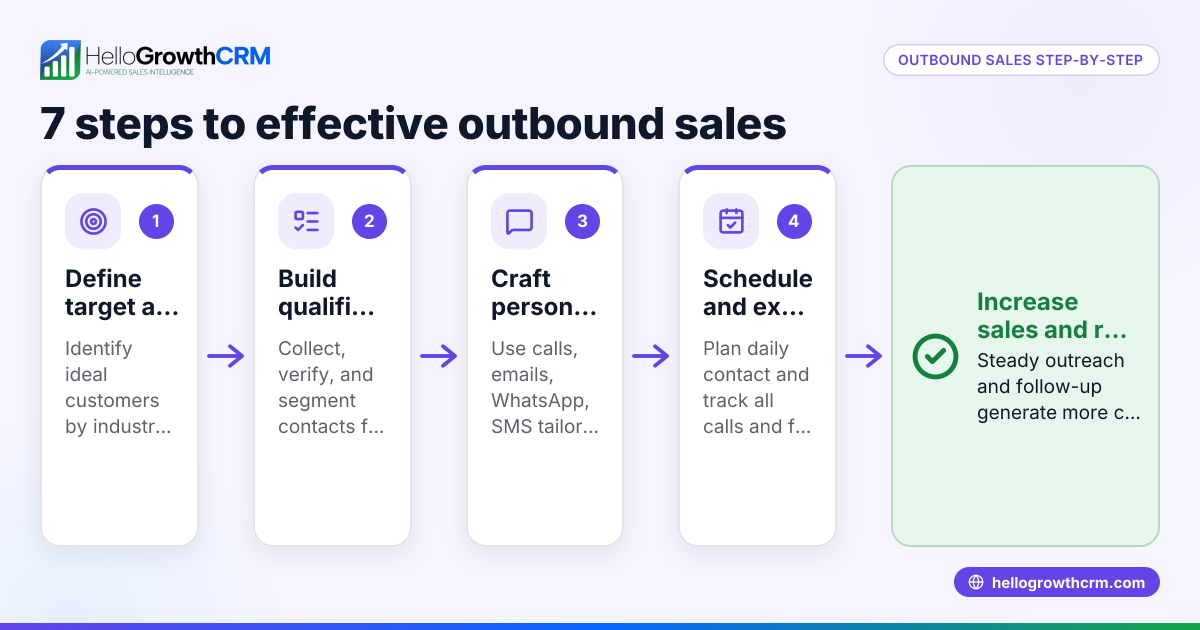
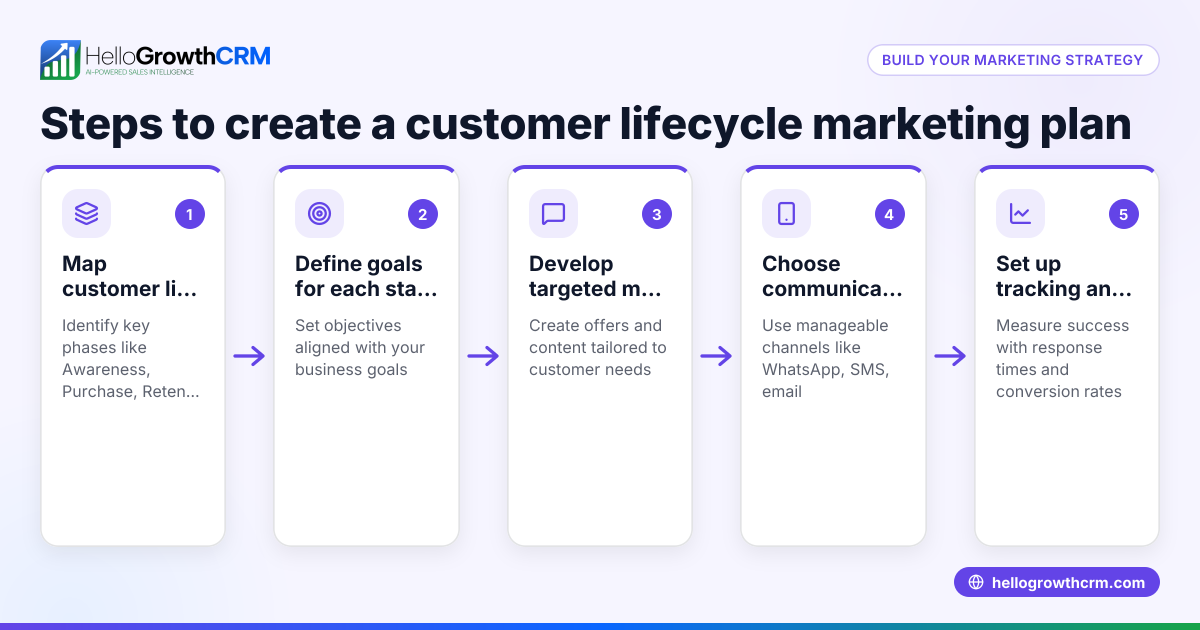
- Select appropriate outreach channels. Choose channels like email, WhatsApp, SMS, or phone calls based on where your target customers are most active and responsive.
- Track and measure results. Use metrics like customer health score to monitor engagement and conversion. Regularly review performance and adjust your targeting strategy as needed.
Example (fictional figures)
A B2B software reseller in Denver, Colorado, starts improving its customer targeting strategy on 07/01/2026.
- Step 1: Define ICP as mid-sized tech companies with 50 to 200 employees and annual revenue over $10,000,000.
- Step 2: Segment current customers and identify the segment of tech companies with 50 to 100 employees as a key group.
- Step 3: Research competitors and find a market gap targeting companies with 100 to 200 employees.
- Step 4: Prioritize the 100 to 200 employee segment because it includes 500 potential companies locally.
- Step 5: Develop messaging emphasizing scalability and integration features.
- Step 6: Choose WhatsApp and email sequences to reach decision-makers.
- Step 7: Track leads monthly using a customer health score dashboard.
Calculations:
- Potential companies: 500
- Assumed conversion rate: 10% (assumed illustrative rate)
- Expected new customers: 500 × 10% = 50
- Average deal size: $20,000
- Potential revenue: 50 × $20,000 = $1,000,000
Common mistakes
- Targeting too broadly: Prevent this by clearly defining your ICP and focusing on segments with proven value.
- Ignoring customer feedback: Prevent by regularly collecting and analyzing customer feedback to refine your targeting.
- Using generic messaging: Prevent by customizing communication for each segment’s specific needs.
- Not tracking results: Prevent by implementing metrics like customer health score and adjusting your strategy accordingly. Learn more about customer health score customer health score.
- Failing to align sales and marketing: Prevent by coordinating outreach channels and messaging, including WhatsApp and SMS CRM tools WhatsApp and SMS CRM.
Doing this in HelloGrowthCRM
After the sale, HelloGrowthCRM keeps service requests, referrals, tickets, and the knowledge base linked on the same customer record as the deal. This helps small businesses track all customer interactions in one place, improving follow-up and support. The branded customer portal lets customers self-serve, reducing support workload. Learn more about HelloGrowthCRM for the United States HelloGrowthCRM for the United States.
Frequently asked questions
What is the difference between customer targeting and segmentation? Customer segmentation divides your entire market into groups based on shared traits. Customer targeting selects specific segments to focus your sales and marketing efforts on.
How often should I update my customer targeting strategy? Review your strategy at least twice a year or whenever you notice changes in customer behavior, market conditions, or product offerings.
Can I target multiple customer segments at once? Yes, but prioritize segments based on potential and resource availability. Use tailored messaging and channels for each segment.
How do I measure if my customer targeting strategy is working? Track lead conversion rates, customer health scores, sales growth, and customer retention. Adjust your approach based on these metrics.
Is WhatsApp a good channel for customer targeting? Yes, especially for small and mid-sized businesses. WhatsApp combined with SMS and email sequences can improve customer engagement and follow-up efficiency.
Key takeaways
- A customer targeting strategy focuses your sales and marketing on the most promising customer groups.
- Start by defining your ideal customer profile and segmenting your current customers.
- Prioritize segments by market potential and align messaging and channels accordingly.
- Avoid common mistakes like broad targeting and lack of tracking.
- Use tools like customer health score and WhatsApp SMS CRM to improve targeting and follow-up.
Start building your customer targeting strategy today. Start on the Free Forever plan (200 leads, no credit card) at free CRM for small business.
Ready to put this into practice?
Set up your pipeline, WhatsApp follow-ups, and AI lead scoring in minutes — free, no credit card.
Try HelloGrowthCRM freeGet CRM tips in your inbox
Join thousands of sales professionals who get weekly insights on CRM strategy, AI automation, and pipeline optimization.

The HelloGrowthCRM team publishes guides on CRM strategy, AI sales tools, and revenue operations for small business sales teams.