HelloGrowthCRM software
Built for real small-business sales teams
HelloGrowthCRM helps reps qualify faster, follow up on time, and close more deals—with practical automation in one place.
- AI lead scoring and pipeline visibility
- Built-in dialer, WhatsApp, and email automation
- Sales forecasting and RevOps-ready reporting
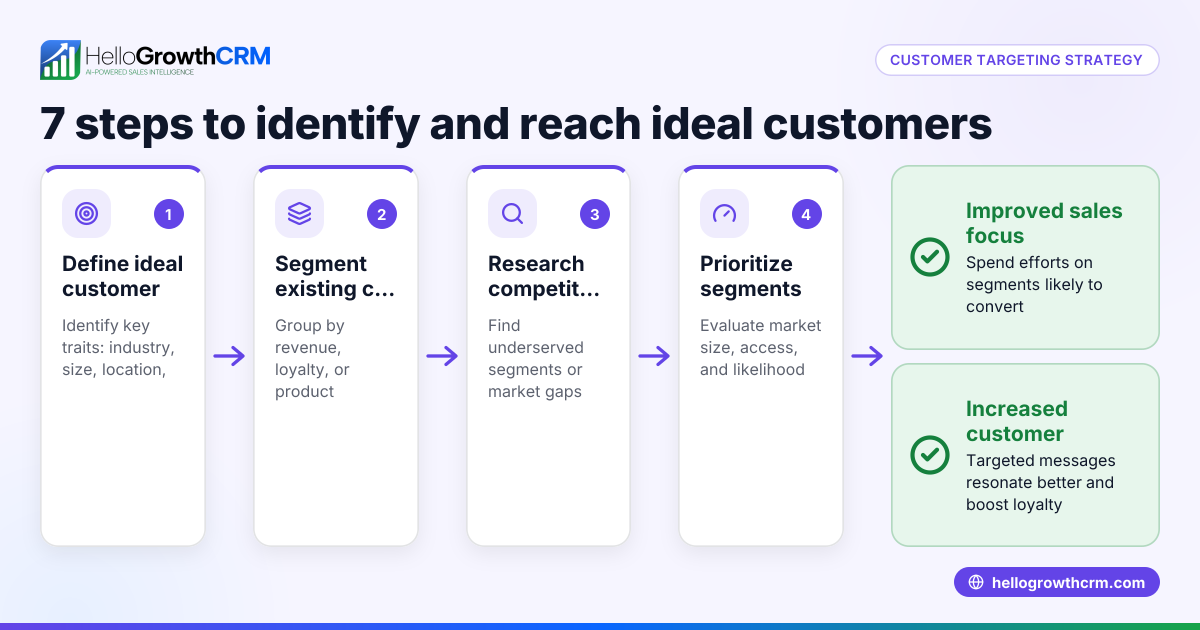
Customer targeting means identifying the specific group of customers most likely to buy your product or service and focusing your marketing and sales efforts on them. For small UK businesses, this means understanding who benefits most from what you offer and tailoring your communication to attract and retain those customers. This article covers why customer targeting is important, how to do it step-by-step, a worked example with realistic figures, common mistakes to avoid, and how HelloGrowthCRM supports customer management after the sale.
Why this comes up / what goes wrong
Many small business owners in the UK face challenges like slow lead follow-up, scattered customer information across WhatsApp, email, and spreadsheets, and difficulty knowing which customers to focus on. Without clear customer targeting, businesses waste time and money marketing to the wrong audience or trying to sell everything to everyone. This leads to poor sales conversion, lost leads, and inefficient use of limited resources. Business owners often ask: "Who should I really be selling to?" and "How do I find and keep my best customers?"
Step-by-step
- Define your product or service clearly
- Write down what you offer, its benefits, and how it solves problems.
- Check if your offering suits a particular industry, size of business, or customer need.
- Identify your current best customers
- List your top customers by revenue, repeat business, or referrals.
- Check common traits like location, industry, company size, or buying habits.
- Research your market
- Use online tools, surveys, or competitor analysis to find who needs your product.
- Check demographics, behaviours, and challenges faced by potential customers.
- Segment your potential customers
- Group them into segments based on shared characteristics (e.g., small retailers in London).
- Check which segment has the highest need and willingness to buy.
- Create customer profiles (personas)
- Write profiles describing typical customers in each segment.
- Include age, job role, goals, challenges, and buying preferences.
- Test your targeting
- Run small marketing campaigns or sales outreach to each segment.
- Check response rates and sales conversions.
- Focus your sales and marketing
- Prioritise segments with the best return on investment.
- Tailor your messaging and channels to those customers.
- Review and adjust regularly
- Monitor changes in customer behaviour and market trends.
- Update your targeting and customer profiles as needed.
For ongoing customer management, consider using a CRM that supports customer health tracking and communication through WhatsApp and SMS, such as HelloGrowthCRM’s WhatsApp and SMS CRM and customer health score.
Example (fictional figures)
A Birmingham-based accountancy practice wants to focus its marketing on the most profitable clients. They analyse their current customers and find:
- 30 clients in manufacturing, each paying £12,000 annually.
- 50 clients in retail, each paying £6,000 annually.
- 20 clients in technology startups, each paying £10,000 annually.
Step 1: Calculate total revenue per segment:
Manufacturing: 30 × £12,000 = £360,000 Retail: 50 × £6,000 = £300,000 Technology startups: 20 × £10,000 = £200,000
Step 2: Calculate average revenue per client:
Manufacturing: £360,000 ÷ 30 = £12,000 Retail: £300,000 ÷ 50 = £6,000 Technology startups: £200,000 ÷ 20 = £10,000
Step 3: Assess profitability and effort:
The practice notes manufacturing clients pay the most but require more support hours. Retail clients are less profitable but easier to manage. Technology startups pay well and are growing.
Step 4: Decide to focus on manufacturing and technology startups, tailoring marketing messages accordingly.
This example shows how segmenting customers by revenue and effort helps target the most valuable groups.
Common mistakes
- Trying to target everyone
- Prevent by clearly defining your ideal customer profiles and focusing on them.
- Ignoring data on current customers
- Prevent by analysing your existing customer base to find profitable segments.
- Not testing targeting assumptions
- Prevent by running small campaigns and measuring results before scaling.
- Using generic messaging
- Prevent by tailoring communications to each customer segment’s needs.
- Failing to update customer profiles
- Prevent by regularly reviewing market trends and customer feedback.
- Scattered customer information
- Prevent by centralising customer data in one system to track interactions and preferences.
Doing this in HelloGrowthCRM
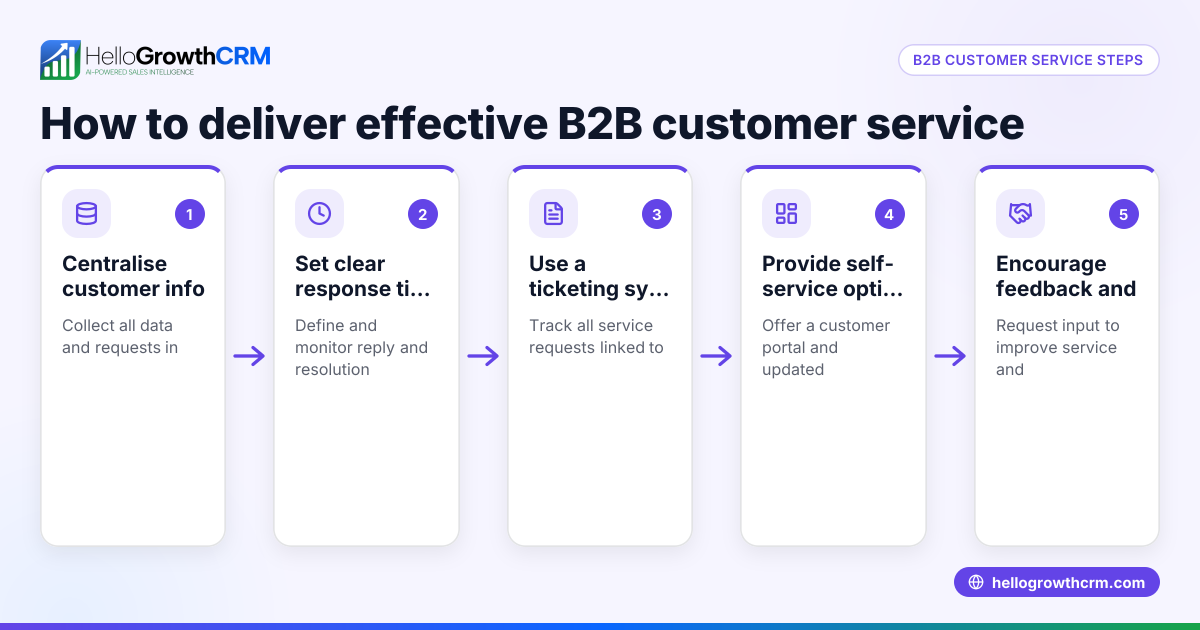
HelloGrowthCRM helps you keep all customer information in one place. After the sale, service requests stay on the same customer record as the deal, so you have full visibility of customer history. The branded customer portal lets customers access support and information themselves, while referral tracking helps grow your business through word of mouth. Support tickets and a knowledge base make managing customer queries easier and more efficient. Learn more about these features at HelloGrowthCRM for the United Kingdom.
Frequently asked questions
What is the difference between customer targeting and segmentation? Customer targeting is choosing which groups of customers to focus your sales and marketing on, while segmentation is the process of dividing your market into groups based on shared traits. Segmentation helps inform your targeting decisions.
How do I know if my customer targeting is working? You measure success by tracking response rates, sales conversions, and customer retention within your targeted segments. Regularly reviewing these metrics helps you adjust your targeting for better results.
Can I target customers using WhatsApp and SMS? Yes, many UK businesses use WhatsApp and SMS to reach customers directly. Using a CRM like HelloGrowthCRM with built-in WhatsApp and SMS features helps you manage these communications efficiently and track customer engagement.
How often should I update my customer targeting? Review your customer targeting at least every 6 to 12 months or whenever you notice changes in customer behaviour, market conditions, or your product offering.
What if my business sells to very different types of customers? You can create multiple customer profiles and target each segment separately with tailored marketing and sales approaches. Using a CRM helps keep these segments organised.
Key takeaways
- Customer targeting means focusing sales and marketing on the customers most likely to buy.
- Start by analysing your current customers and market to identify profitable segments.
- Create detailed customer profiles and test your targeting with small campaigns.
- Avoid common mistakes like trying to target everyone or ignoring data.
- Use tools like HelloGrowthCRM to centralise customer data and manage relationships efficiently.
Start focusing your sales efforts on the right customers today. Start on the Free Forever plan (200 leads, no credit card) and see how HelloGrowthCRM can help you organise and grow your customer base.
Ready to put this into practice?
Set up your pipeline, WhatsApp follow-ups, and AI lead scoring in minutes — free, no credit card.
Try HelloGrowthCRM freeGet CRM tips in your inbox
Join thousands of sales professionals who get weekly insights on CRM strategy, AI automation, and pipeline optimization.

The HelloGrowthCRM team publishes guides on CRM strategy, AI sales tools, and revenue operations for small business sales teams.