HelloGrowthCRM software
Built for real small-business sales teams
HelloGrowthCRM helps reps qualify faster, follow up on time, and close more deals—with practical automation in one place.
- AI lead scoring and pipeline visibility
- Built-in dialer, WhatsApp, and email automation
- Sales forecasting and RevOps-ready reporting
Ecommerce conversion rate optimisation means improving the percentage of visitors to your online store who complete a purchase. To do this, focus on analysing customer behaviour, streamlining your website, testing changes, and refining your sales funnel. This article covers why ecommerce businesses struggle with conversions, step-by-step optimisation actions, a US-based example, common mistakes to avoid, and frequently asked questions.
Why this comes up / what goes wrong
Many ecommerce business owners in the US find that despite good traffic to their websites, sales do not match expectations. This often happens because visitors get distracted, encounter friction in the buying process, or lack trust in the site. For example, a small online retailer selling specialty kitchenware might see many visitors browse but few complete checkout. Without clear data and a systematic approach, owners or accountants struggle to identify which parts of the customer journey need improvement.
These issues can stem from slow site speed, unclear product information, complicated checkout, lack of mobile optimisation, or poor follow-up on abandoned carts. Ecommerce conversion rate optimisation is crucial to turning more visitors into paying customers, increasing revenue without necessarily increasing marketing spend.
Step-by-step
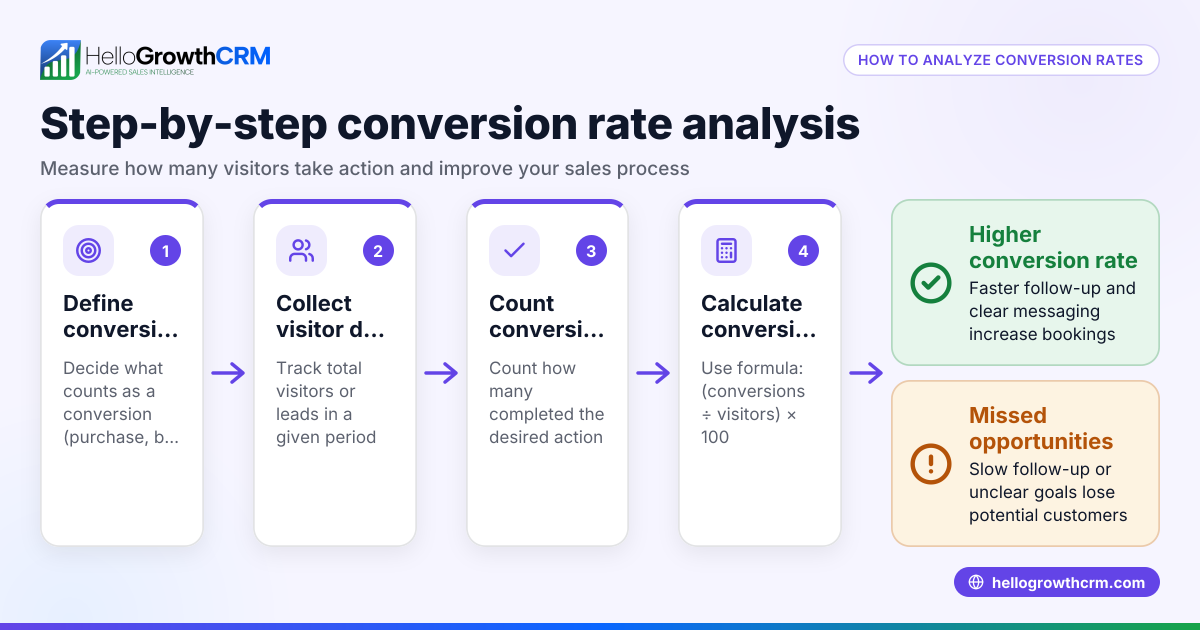
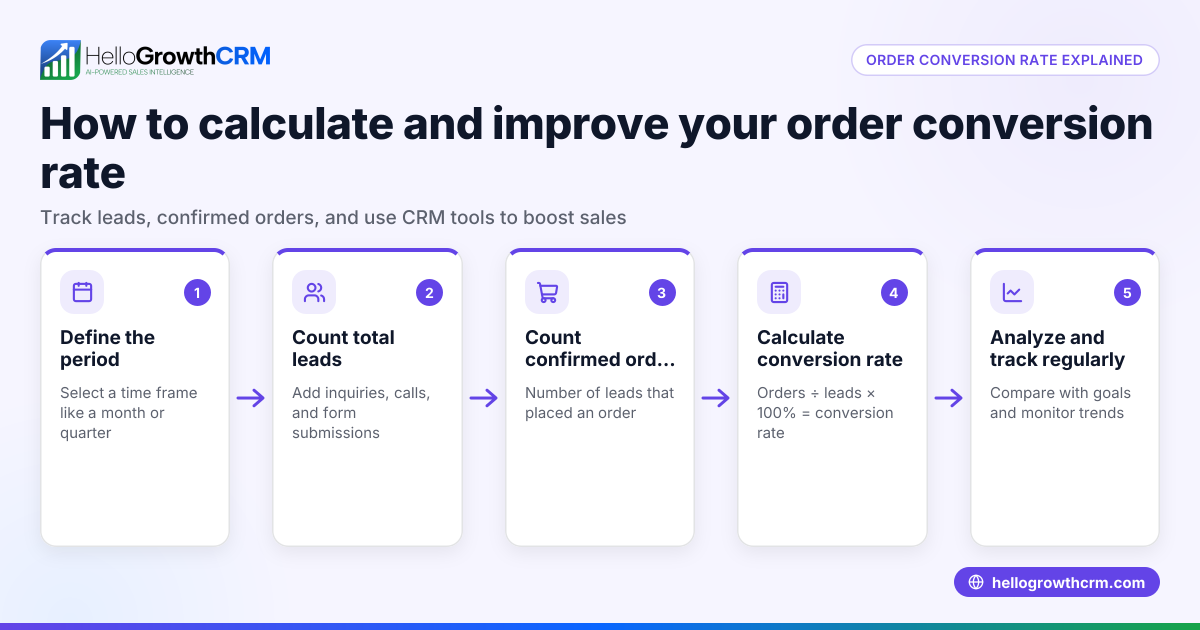
- Measure your current conversion rate
- Calculate the ratio of completed purchases to total website visitors over a set period.
- Use analytics tools or your ecommerce platform’s reports.
- Analyse visitor behaviour
- Use heatmaps, session recordings, and funnel analysis to see where visitors drop off.
- Identify pages with high exit rates or slow loading times.
- Improve website usability
- Simplify navigation and reduce clutter.
- Ensure product pages have clear images, descriptions, and pricing.
- Optimize for mobile devices.
- Streamline the checkout process
- Reduce the number of steps to complete a purchase.
- Offer multiple payment options.
- Provide guest checkout without mandatory account creation.
- Build trust and reduce buyer hesitation
- Display customer reviews and ratings.
- Show clear return policies and guarantees.
- Use secure payment badges.
- Test changes with A/B testing
- Change one element at a time (e.g., button color, headline) and measure impact.
- Use results to implement the most effective changes.
- Follow up on abandoned carts
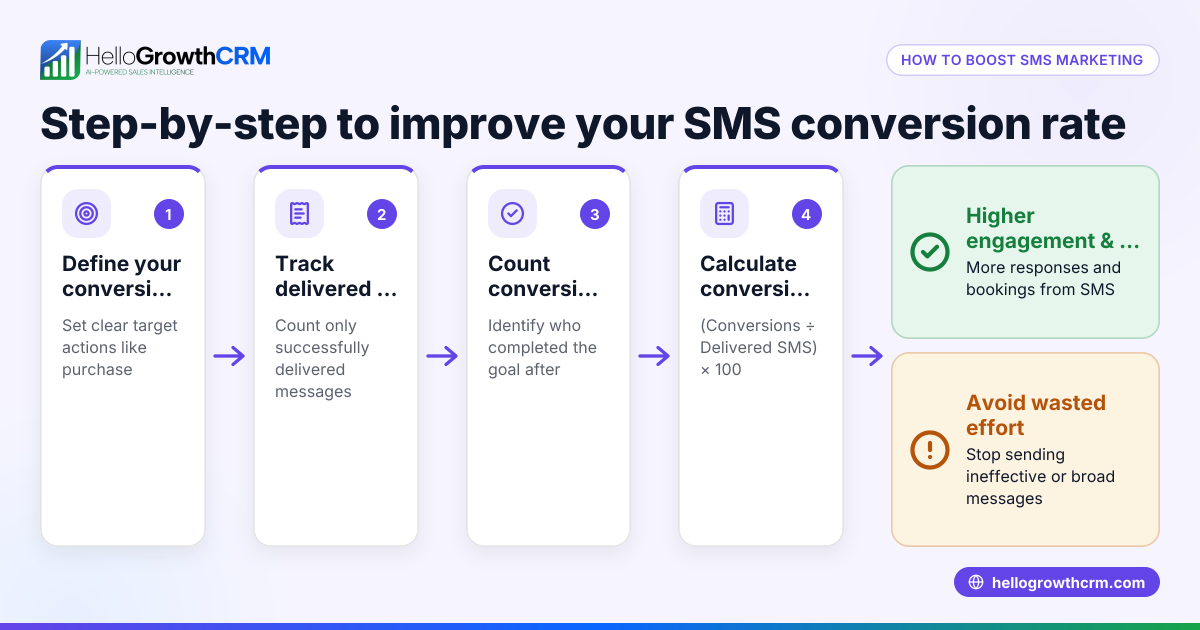
- Send reminder emails or SMS messages.
- Offer incentives like discounts or free shipping.
- Continuously monitor and adjust
- Regularly review analytics.
- Adapt to seasonal trends and customer feedback.
For ecommerce and online sellers, integrating these steps into your routine can steadily improve conversion rates and sales. To learn more about industry-specific strategies, visit E-commerce and online sellers.
Example (fictional figures)
Consider a US-based ecommerce store called "DenverTech Gadgets," selling consumer electronics online in Denver, Colorado. In January 2026, they had 50,000 visitors and 1,000 completed sales.
- Current conversion rate = (1,000 ÷ 50,000) × 100 = 2%
After analysing visitor behaviour, they found a high drop-off at checkout due to a lengthy form. They simplified checkout, added guest checkout, and improved mobile responsiveness.
In February 2026, visitors remained 50,000 but sales increased to 1,500.
- New conversion rate = (1,500 ÷ 50,000) × 100 = 3%
Conversion rate improvement = 3% - 2% = 1 percentage point
Revenue impact assuming average order value of $100:
- January revenue = 1,000 × $100 = $100,000
- February revenue = 1,500 × $100 = $150,000
Revenue increase = $150,000 - $100,000 = $50,000
This example shows how a 1% increase in conversion rate can lead to a significant revenue boost without increasing traffic.
Common mistakes
- Ignoring mobile optimisation
- Many shoppers use smartphones. Not optimising for mobile leads to lost sales.
- Prevent by testing your site on various devices regularly.
- Overcomplicating checkout
- Long forms or forced account creation deter buyers.
- Prevent by simplifying steps and allowing guest checkout.
- Not using data to guide changes
- Guesswork wastes time and resources.
- Prevent by relying on analytics and A/B testing.
- Neglecting follow-up on abandoned carts
- Potential sales are lost without reminders.
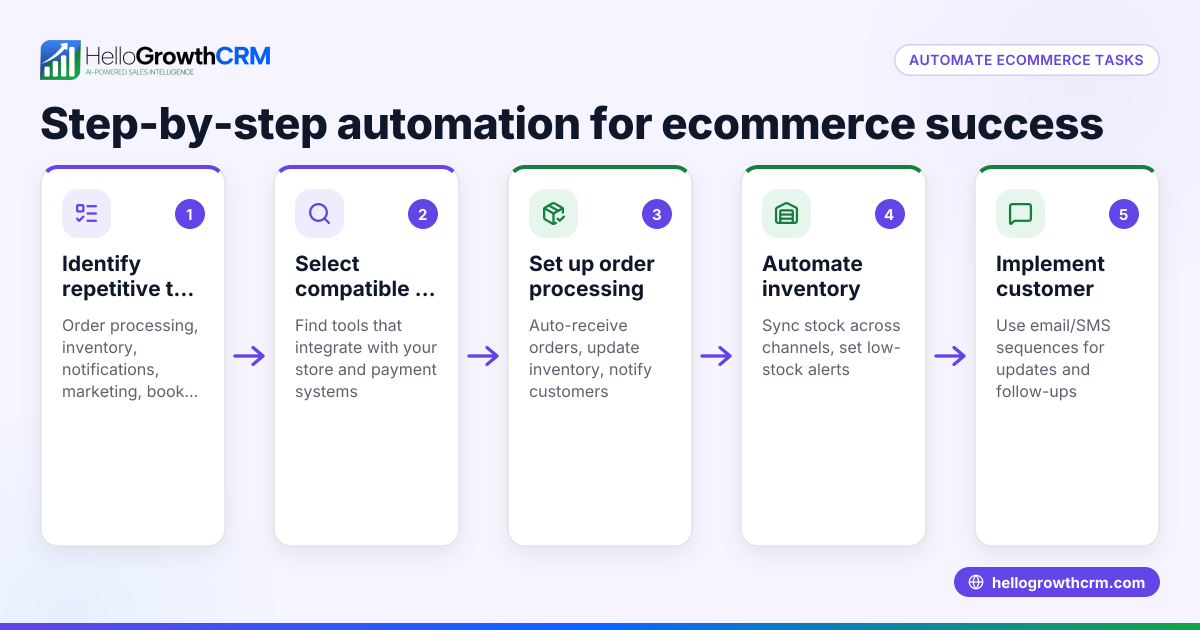
- Prevent by setting up automated cart abandonment emails or messages.
- Lack of trust signals
- Without reviews or security badges, shoppers hesitate.
- Prevent by prominently displaying trust elements.
- Failing to test website speed
- Slow loading frustrates visitors.
- Prevent by regularly testing and optimizing site performance.
For US ecommerce businesses, avoiding these mistakes supports better conversion rates and aligns with best practices for HelloGrowthCRM for the United States and other digital tools.
Frequently asked questions
What is a good ecommerce conversion rate? A typical ecommerce conversion rate varies by industry but generally ranges from 1% to 3%. Higher rates indicate better optimisation, but it depends on your niche and traffic quality.
How often should I test changes on my ecommerce site? Regular testing is key. Monthly or quarterly A/B tests help identify what works best. Avoid changing too many elements at once to isolate effects.
Can social proof improve conversion rates? Yes, displaying customer reviews, testimonials, and ratings builds trust and encourages purchases. Adding verified reviews is especially effective.
Should I focus on traffic or conversion rate first? Both matter, but improving conversion rate often yields quicker revenue gains without extra marketing spend. Start by optimising your existing traffic.
How can I recover sales from abandoned carts? Send reminder emails or SMS with clear calls to action and, if appropriate, incentives like discounts. Automated sequences help streamline this process.
Is it worth integrating WhatsApp or SMS for ecommerce sales follow-up? Yes, direct messaging through WhatsApp or SMS can speed up communication and increase conversions. For more on this, see WhatsApp and SMS CRM.
Key takeaways
- Measure and understand your current ecommerce conversion rate.
- Analyse visitor behaviour to identify friction points.
- Simplify your website and checkout process, especially for mobile users.
- Use A/B testing to validate improvements.
- Follow up on abandoned carts with reminders and incentives.
- Display trust signals to reduce buyer hesitation.
Start improving your ecommerce conversion rate today by applying these steps systematically. To begin managing your leads and sales more effectively, Start on the Free Forever plan (200 leads, no credit card).
Ready to put this into practice?
Set up your pipeline, WhatsApp follow-ups, and AI lead scoring in minutes — free, no credit card.
Try HelloGrowthCRM freeGet CRM tips in your inbox
Join thousands of sales professionals who get weekly insights on CRM strategy, AI automation, and pipeline optimization.

The HelloGrowthCRM team publishes guides on CRM strategy, AI sales tools, and revenue operations for small business sales teams.