HelloGrowthCRM software
Built for real small-business sales teams
HelloGrowthCRM helps reps qualify faster, follow up on time, and close more deals—with practical automation in one place.
- AI lead scoring and pipeline visibility
- Built-in dialer, WhatsApp, and email automation
- Sales forecasting and RevOps-ready reporting
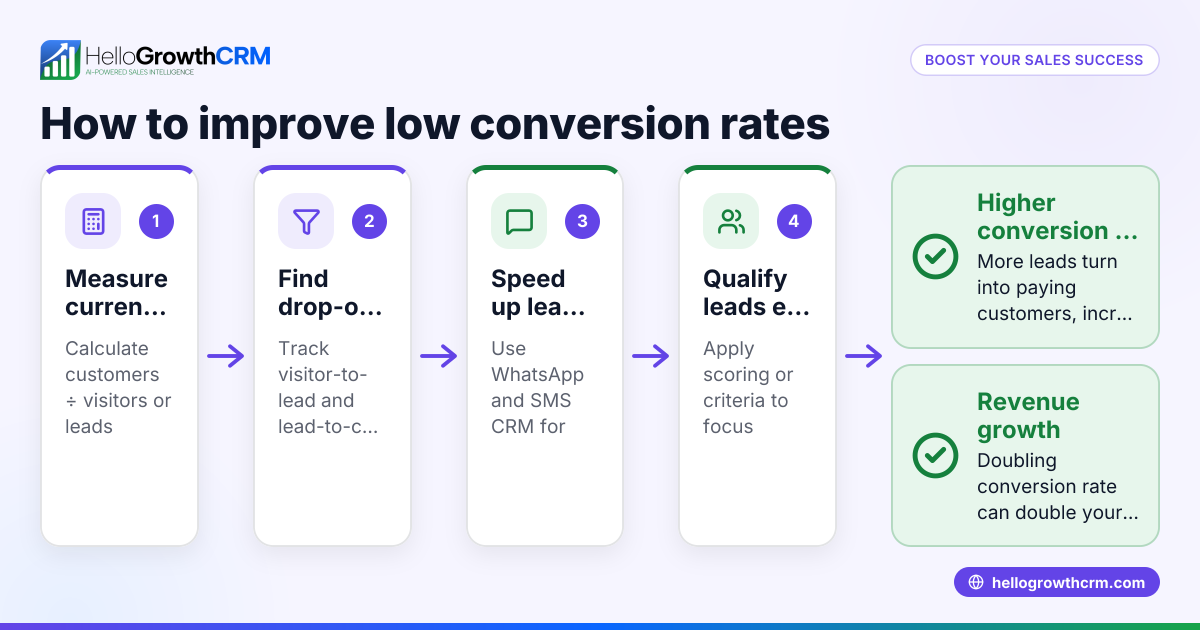
Conversion rate analysis measures the percentage of visitors or leads who take a desired action, such as making a purchase, signing up, or booking a service. This metric helps small business owners evaluate how effectively their marketing and sales efforts convert interest into actual business. Understanding conversion rates allows you to identify bottlenecks in your sales process and improve revenue.
Why this comes up / what goes wrong
Small business owners often run into conversion rate analysis when they notice that many potential customers visit their website, social media, or store but few actually buy or book. For example, a local dental practice may get many inquiries but few appointments booked. Without analyzing conversion rates, it’s hard to know if the problem lies in lead follow-up, website design, pricing, or sales communication.
Many small businesses lose leads due to slow follow-up or managing sales across text messages, emails, and spreadsheets. This fragmented approach makes it difficult to track how many leads turn into customers, leading to missed revenue opportunities.
Step-by-step
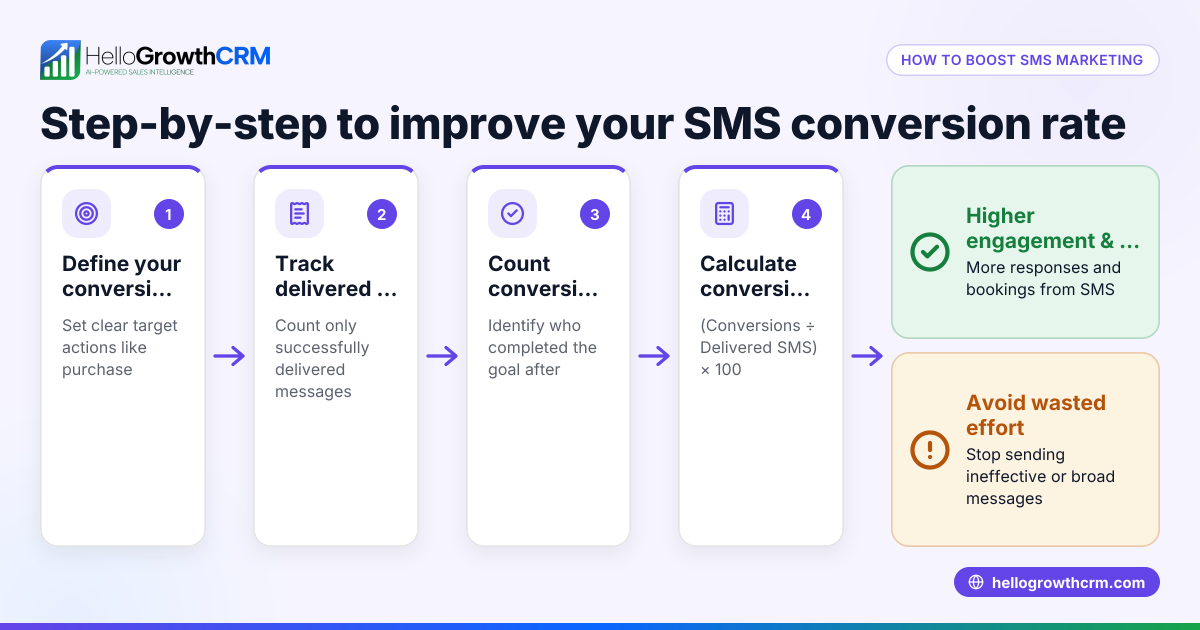
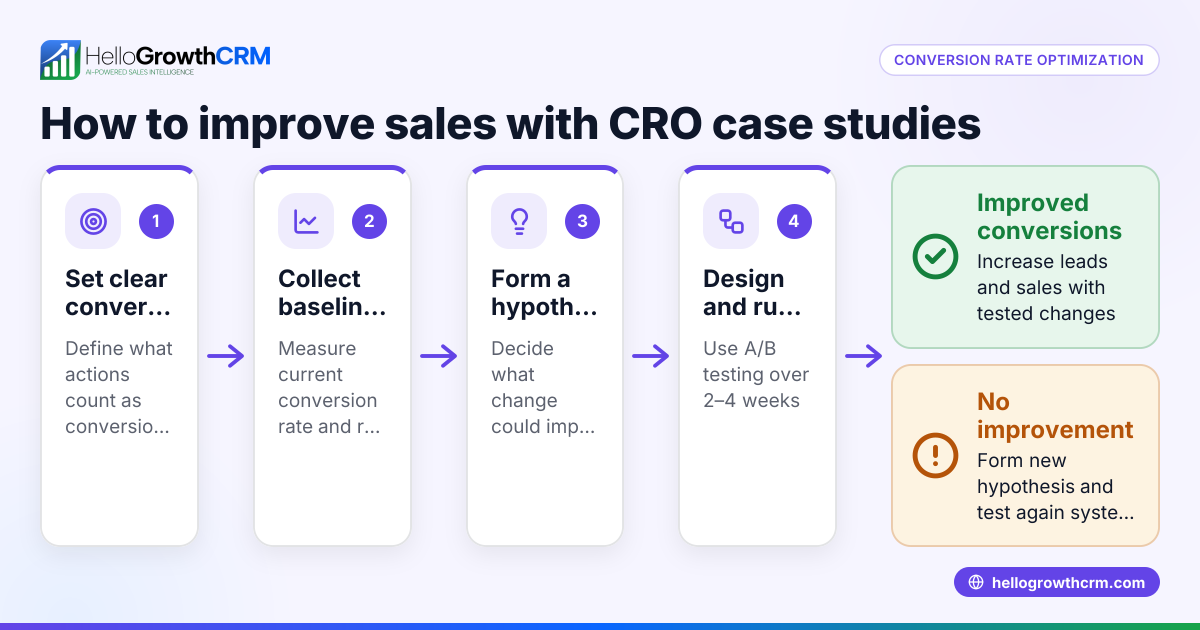
- Define your conversion goal clearly. Decide what action counts as a conversion (e.g., online purchase, booked appointment, signed contract).
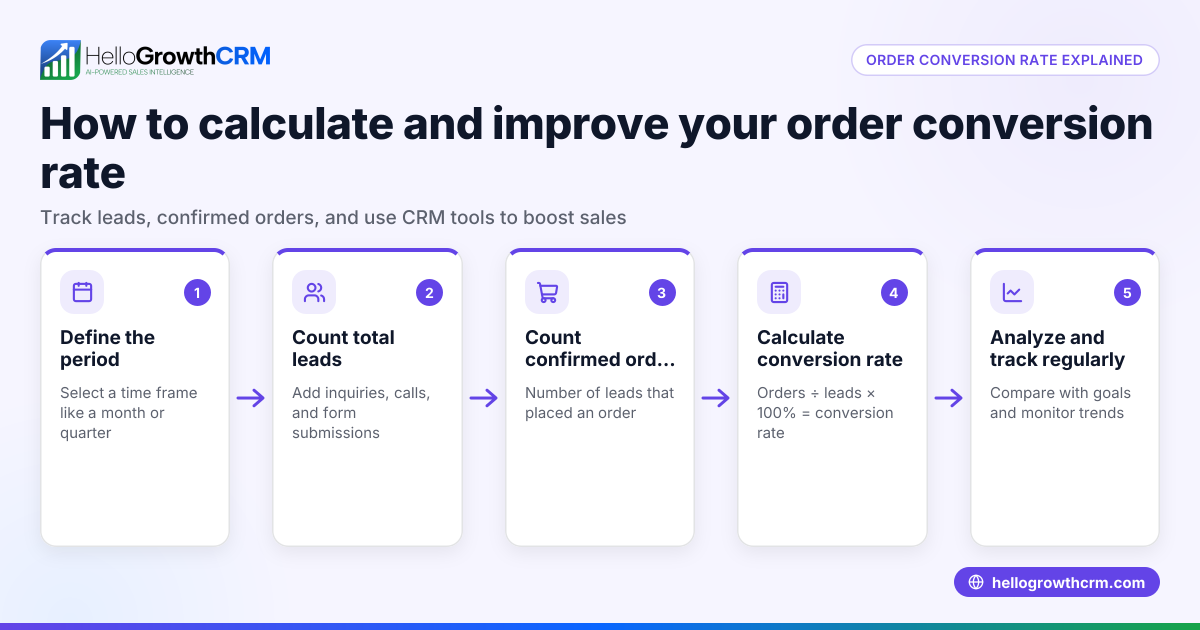
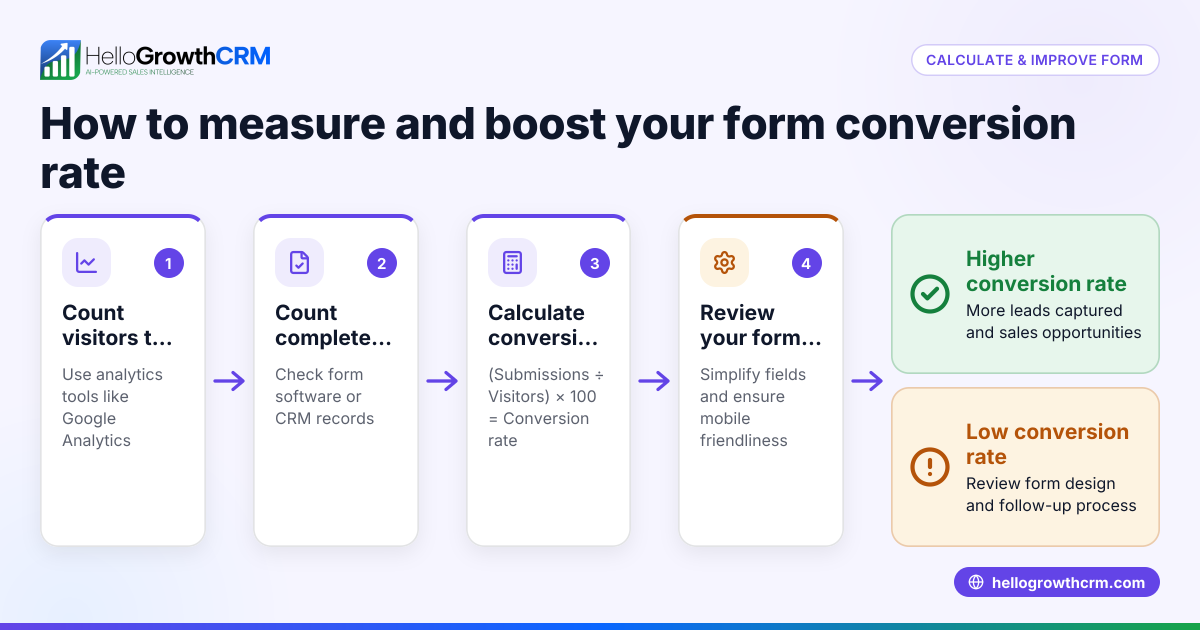
- Collect data on total visitors or leads. Track how many people visited your website, store, or contacted you during a set period.
- Count the number of conversions in the same period. This is how many people completed the desired action.
- Calculate the conversion rate using the formula:
Conversion rate = (Number of conversions ÷ Number of visitors or leads) × 100
- Analyze the results. Compare your conversion rate to industry averages or past performance to see if it’s low, average, or high.
- Identify factors affecting conversion. Check your sales follow-up speed, messaging clarity, pricing, and ease of purchase.
- Test improvements. Change one factor at a time (e.g., faster follow-up, clearer calls to action) and measure if conversion rates improve.
- Repeat regularly. Conversion rate analysis is ongoing. Track changes monthly or quarterly to spot trends.
Example (fictional figures)
A two-location dental practice in Columbus, Ohio, wants to analyze its online appointment booking conversion rate for March 2026.
- Total website visitors in March: 5,000
- Total appointment bookings from the website in March: 250
Calculate conversion rate:
Conversion rate = (250 ÷ 5,000) × 100
Conversion rate = 0.05 × 100
Conversion rate = 5%
This means 5% of website visitors booked an appointment.
The practice reviews their follow-up process and finds that improving response speed and messaging clarity could increase bookings. They plan to respond to all inquiries within 24 hours and track if the conversion rate rises next month.
Common mistakes
- Not defining a clear conversion goal. Prevent this by specifying exactly what counts as a conversion before measuring.
- Mixing different traffic sources without segmentation. Track conversion rates separately for website visitors, social media leads, and walk-ins to get accurate insights.
- Ignoring the time period alignment. Ensure the visitor count and conversion count come from the same dates.
- Failing to follow up promptly. Slow responses reduce conversion chances; improve by organizing leads and follow-up tasks efficiently, possibly using a CRM.
- Relying on incomplete data. Use reliable tracking tools or systems to avoid undercounting visitors or conversions.
- Not testing changes systematically. Change one variable at a time to understand what impacts conversion rates.
Frequently asked questions
What is a good conversion rate for small businesses? Conversion rates vary widely by industry and channel. A typical online conversion rate might range from 2% to 5%, but what matters most is improving your own rate over time. Compare your rate to similar businesses or past results for context.
How can I track conversion rates without technical skills? Start by counting leads and conversions manually using simple spreadsheets or appointment logs. Over time, consider tools that integrate lead capture and tracking, such as a WhatsApp and SMS CRM, to automate data collection and follow-up.
Why does my conversion rate drop suddenly? A sudden drop could result from website issues, changes in pricing or offers, slower sales follow-up, or external factors like competition or seasonality. Review recent changes and your sales process to identify causes.
Can improving sales follow-up increase conversion rates? Yes. Faster and more consistent follow-up often leads to higher conversions. Using a built-in CRM dialer or organized task boards helps ensure no lead is lost due to delay.
How often should I perform conversion rate analysis? Monthly or quarterly analysis is recommended to spot trends and measure the impact of changes. Regular review helps keep your sales process efficient.
What tools can help with conversion rate analysis? Besides spreadsheets, small businesses benefit from CRM tools that track leads, automate follow-ups, and report conversion metrics. Consider solutions like HelloGrowthCRM for the United States that support sales workflows through messaging channels.
Key takeaways
- Conversion rate analysis shows how well you turn visitors or leads into customers.
- Define a clear conversion goal and collect accurate visitor and conversion data.
- Calculate conversion rate as (conversions ÷ visitors) × 100.
- Analyze and improve factors like follow-up speed, messaging, and sales process.
- Avoid common mistakes like unclear goals, mixed data, and slow follow-up.
- Regularly track and test changes to increase your conversion rate.
Start your conversion rate analysis today to identify sales opportunities and improve revenue. For small businesses managing leads via text and email, consider tools like HelloGrowthCRM for the United States that support WhatsApp and SMS CRM sales workflows. Using a built-in CRM dialer can help speed up lead follow-up and keep full call history tied to contacts and deals.
Start on the Free Forever plan (200 leads, no credit card) to organize your leads and track conversions easily.
Ready to put this into practice?
Set up your pipeline, WhatsApp follow-ups, and AI lead scoring in minutes — free, no credit card.
Try HelloGrowthCRM freeGet CRM tips in your inbox
Join thousands of sales professionals who get weekly insights on CRM strategy, AI automation, and pipeline optimization.

The HelloGrowthCRM team publishes guides on CRM strategy, AI sales tools, and revenue operations for small business sales teams.