HelloGrowthCRM software
Built for real small-business sales teams
HelloGrowthCRM helps reps qualify faster, follow up on time, and close more deals—with practical automation in one place.
- AI lead scoring and pipeline visibility
- Built-in dialer, WhatsApp, and email automation
- Sales forecasting and RevOps-ready reporting
Contact centre optimisation means improving how your business handles customer interactions to increase efficiency, reduce wait times, and boost customer satisfaction. This article explains why optimisation matters for small businesses, provides step-by-step actions to enhance your contact centre, offers a realistic example with figures, highlights common mistakes, and answers frequently asked questions.
Why this comes up / what goes wrong
Many small businesses in the US face challenges in managing customer contacts effectively. Often, they use multiple communication channels like phone calls, WhatsApp, SMS, and email without a unified system. This fragmentation leads to slow responses, missed leads, inconsistent customer experiences, and lost sales opportunities. Owners and sales leaders want to optimise their contact centres to improve response times and customer satisfaction but may not know the practical steps to take or how to measure success.
Step-by-step
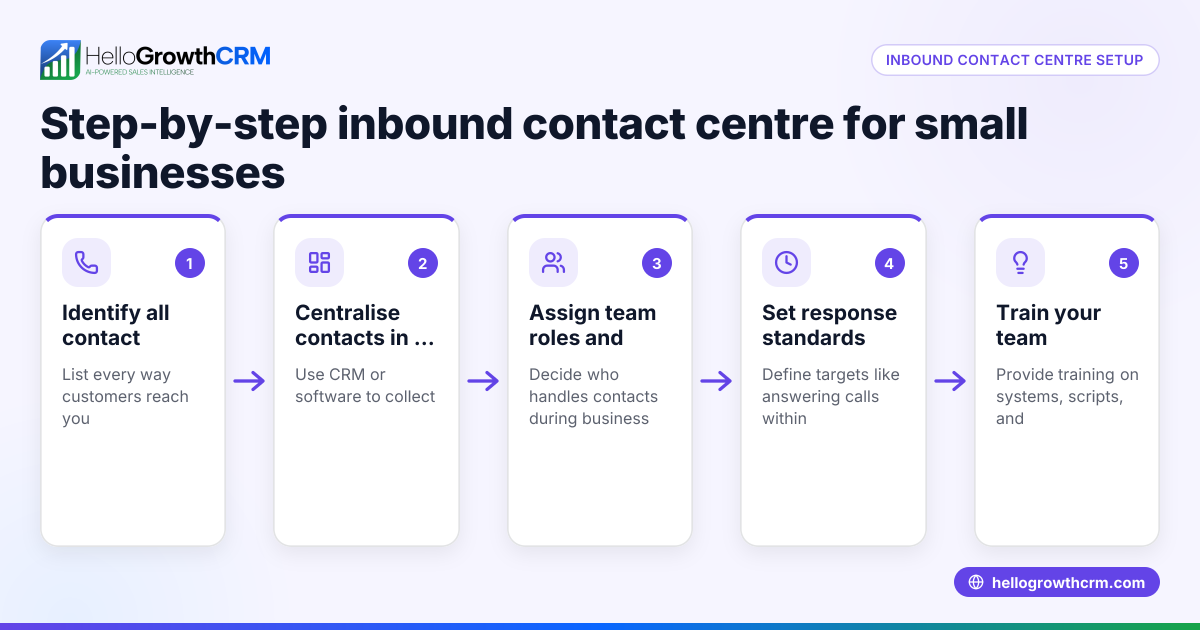
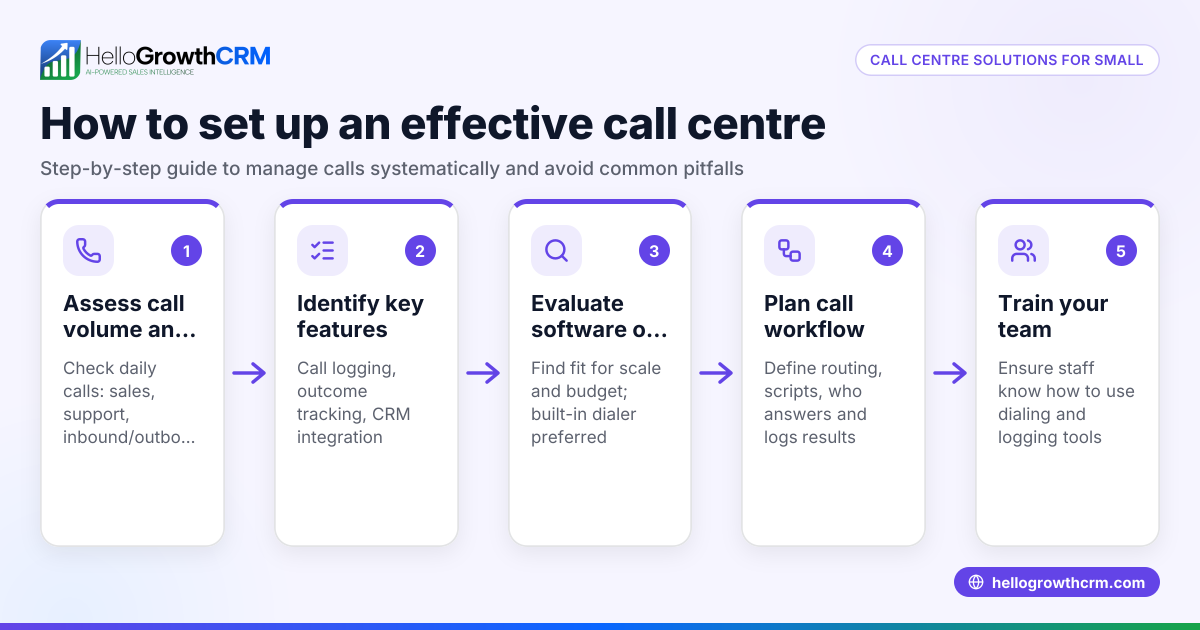
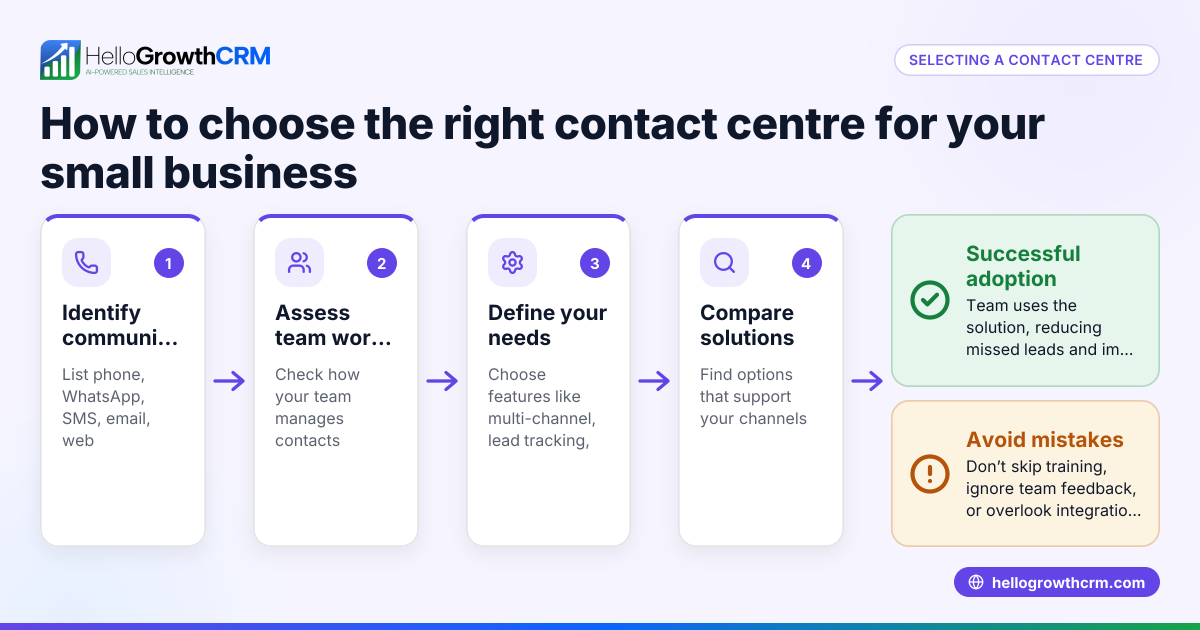
- Assess your current contact centre setup
- List all communication channels your business uses (phone, WhatsApp, SMS, email).
- Check how leads and customer requests are tracked and assigned.
- Measure average response times and identify missed or delayed contacts.
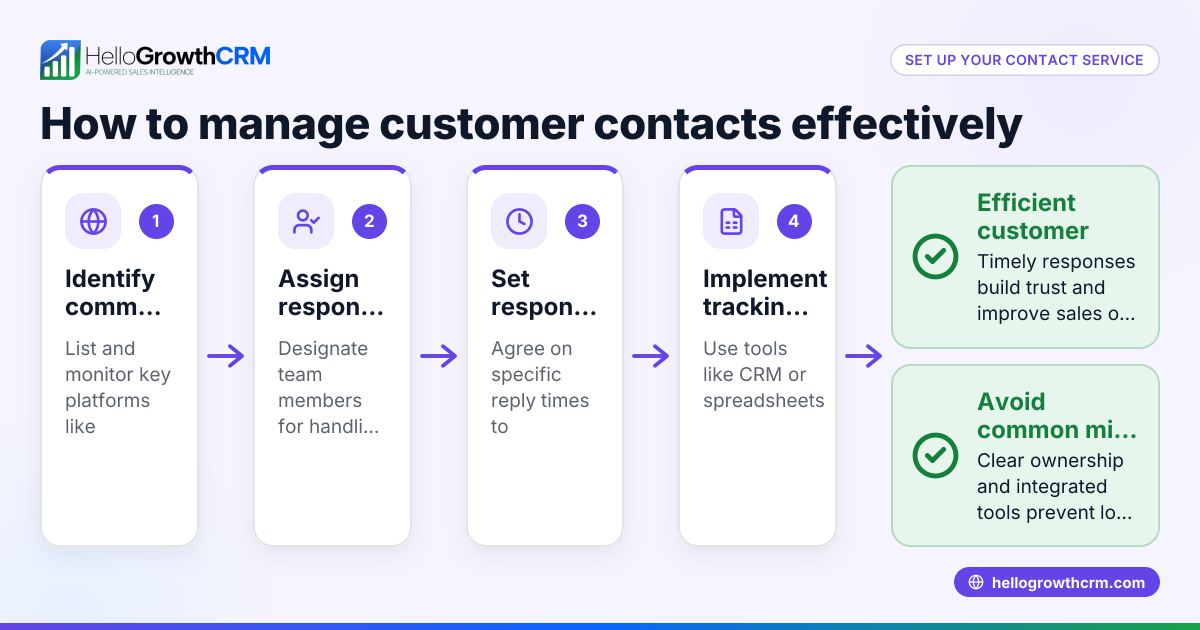
- Centralise communication and data
- Adopt a single system that integrates all channels and captures leads from web forms.
- Ensure all team members access the same up-to-date customer information to avoid duplication or lost contacts.
- Implement lead prioritisation and scoring
- Develop criteria to rank leads by their readiness to buy or urgency.
- Focus follow-up efforts on high-priority leads first to improve conversion.
- Standardise follow-up processes
- Create templates and automated sequences for emails, WhatsApp, and SMS.
- Set clear timelines for follow-up tasks to ensure no lead is forgotten.
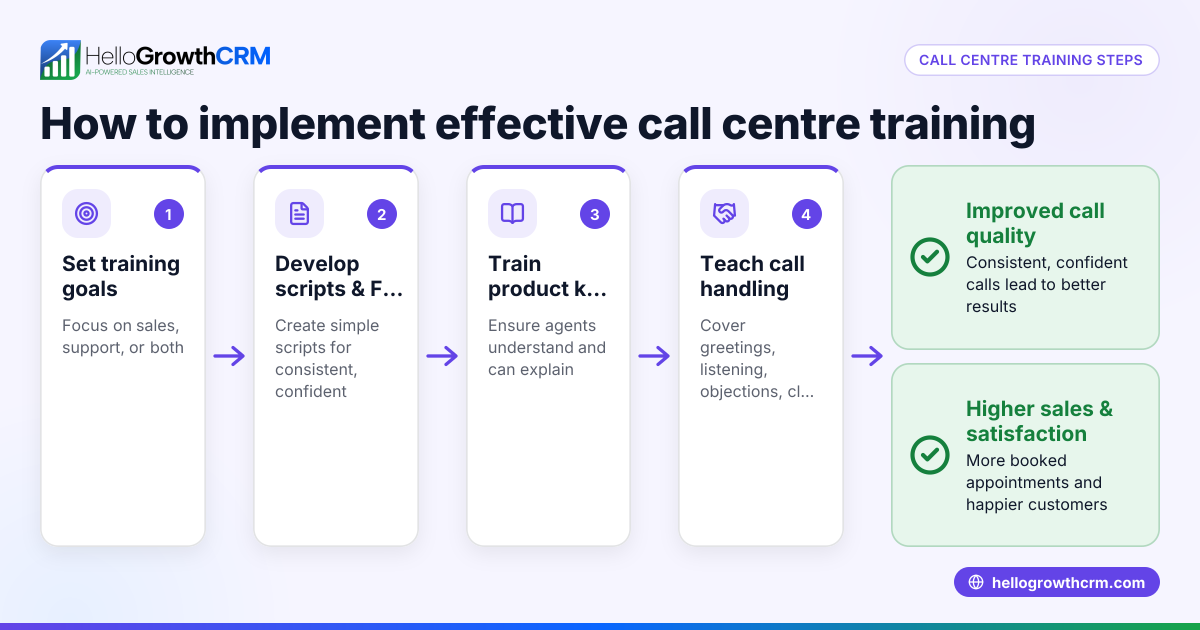
- Train your team on tools and communication best practices
- Provide regular training so everyone understands how to use the system effectively and communicate consistently.
- Measure key performance metrics regularly
- Track call answer rates, average response times, lead conversion rates, and customer satisfaction.
- Use sales forecasting and reporting to identify trends and areas needing improvement.
- Continuously improve based on data and feedback
- Adjust workflows, scripts, and prioritisation rules based on what the data shows and customer feedback.
Example (fictional figures)
Consider a plumbing company in Austin, Texas, with 10 employees handling inbound calls, WhatsApp messages, and emails. Before optimisation, they struggled to respond quickly, causing lost sales.
- Monthly leads: 500
- Conversion rate before optimisation: 20% (100 sales)
- Average revenue per sale: $1,200
Monthly revenue before optimisation: $1,200 × 100 = $120,000
On 01/15/2026, they implemented a centralised system with lead scoring and follow-up sequences.
- Lost leads reduced due to faster follow-up with improved processes.
- Conversion rate increased to 30% (150 sales)
Monthly revenue after optimisation: $1,200 × 150 = $180,000
Revenue increase: $180,000 - $120,000 = $60,000
This example shows how optimising the contact centre can significantly increase sales revenue by improving follow-up and lead management.
Common mistakes
- Not centralising communication: Using separate tools for calls, WhatsApp, and email leads to lost information. Prevent by adopting a unified system.
- Ignoring lead prioritisation: Treating all leads equally wastes time. Prevent by scoring leads and focusing on high-value prospects.
- Lack of standardised follow-up: Inconsistent messaging confuses customers. Prevent by creating clear templates and sequences.
- Poor team training: Tools are underused if staff aren’t trained. Prevent by regular training and support.
- Neglecting metrics: Without measuring performance, problems go unnoticed. Prevent by tracking key indicators like response times and conversions.
Frequently asked questions
What is contact centre optimisation? Contact centre optimisation is the process of improving how a business manages customer interactions to increase efficiency, customer satisfaction, and sales. It involves streamlining communication channels, prioritising leads, standardising follow-up, and measuring performance.
Why is contact centre optimisation important for small businesses? Small businesses often lose leads due to slow or inconsistent follow-up. Optimising the contact centre helps ensure timely responses, better customer experiences, and higher conversion rates, which are vital for growth.
How can I start optimising my contact centre? Begin by assessing your current communication channels and processes. Then centralize data, implement AI lead scoring, standardize follow-up, train your team, and track key metrics. Using HelloGrowthCRM's WhatsApp and SMS messaging or built-in CRM dialer can help manage communications efficiently.
What common tools help with contact centre optimisation? Tools that unify channels like phone, WhatsApp, SMS, and email, combined with lead capture and scoring, task boards, and reporting, support optimisation. For example, a CRM with a built-in dialer and WhatsApp integration can streamline workflows.
How do I measure if optimisation is working? Track metrics such as average response time, lead conversion rate, missed calls, and sales revenue. Improvement in these numbers indicates successful optimisation.
Key takeaways
- Contact centre optimisation improves how your business handles customer contacts to boost efficiency and sales.
- Centralising communication and data prevents lost leads and confusion.
- Prioritising leads and standardising follow-up ensures timely and consistent customer engagement.
- Training your team and measuring key metrics are essential for ongoing improvement.
- Using integrated tools like a WhatsApp and SMS CRM and a built-in CRM dialer supports effective optimisation.
Start improving your contact centre today. Start on the Free Forever plan (200 leads, no credit card) and manage your leads better.
Explore more about HelloGrowthCRM for the United States and how a WhatsApp and SMS CRM with a built-in CRM dialer can help streamline your contact centre.
Ready to put this into practice?
Set up your pipeline, WhatsApp follow-ups, and AI lead scoring in minutes — free, no credit card.
Try HelloGrowthCRM freeGet CRM tips in your inbox
Join thousands of sales professionals who get weekly insights on CRM strategy, AI automation, and pipeline optimization.

The HelloGrowthCRM team publishes guides on CRM strategy, AI sales tools, and revenue operations for small business sales teams.