HelloGrowthCRM software
Built for real small-business sales teams
HelloGrowthCRM helps reps qualify faster, follow up on time, and close more deals—with practical automation in one place.
- AI lead scoring and pipeline visibility
- Built-in dialer, WhatsApp, and email automation
- Sales forecasting and RevOps-ready reporting
Ecommerce management software Singapore helps online sellers and ecommerce business owners manage orders, stock, customer data, and sales workflows efficiently. Many Singapore businesses struggle with manual tracking on spreadsheets, WhatsApp, and email, leading to lost sales and slow follow-up. This article covers why ecommerce businesses seek management software, a step-by-step guide to selecting one, a local example with realistic figures, common mistakes to avoid, and how HelloGrowthCRM supports lead management.
Why this comes up / what goes wrong
Ecommerce businesses in Singapore often start by selling on platforms like Shopee, Lazada, or their own website. Without software, they track orders and customers manually using spreadsheets, WhatsApp chats, and emails. This creates problems:
- Lost or delayed follow-up on customer enquiries.
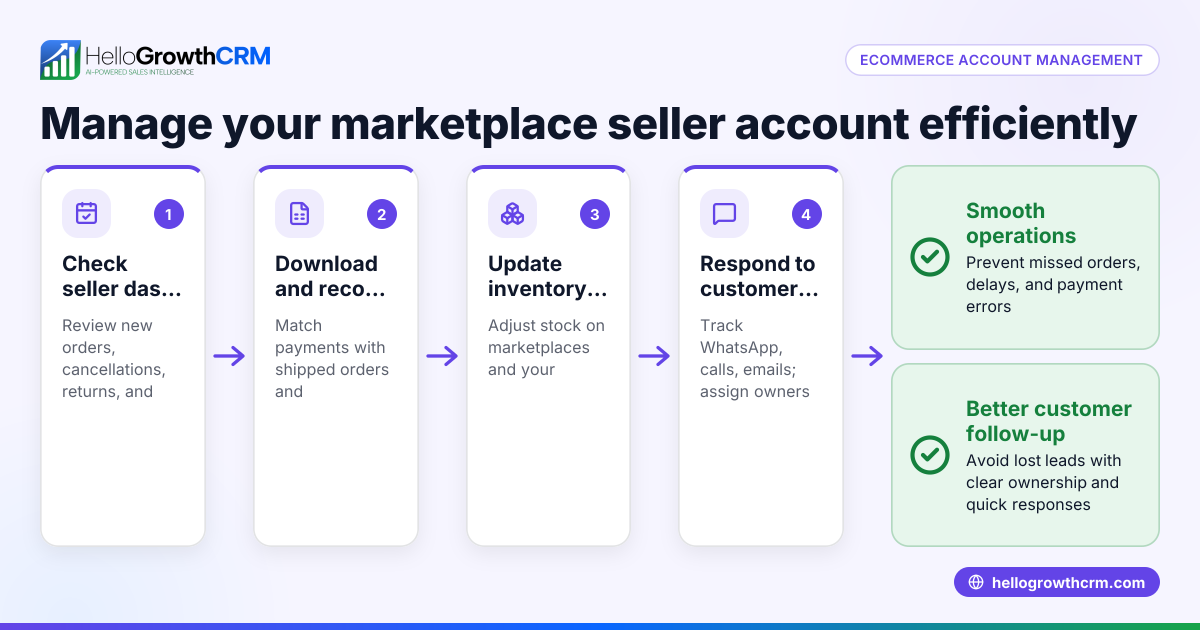
- Difficulty tracking inventory and orders across multiple sales channels.
- Lack of a single view of sales pipelines and customer status.
- Time wasted switching between apps and manual copying of data.
Accountants and business owners want ecommerce management software that centralises these activities, automates routine tasks, and integrates with local payment and delivery services. They also want software that fits Singapore’s unique market, such as supporting WhatsApp communication and local currencies.
Step-by-step
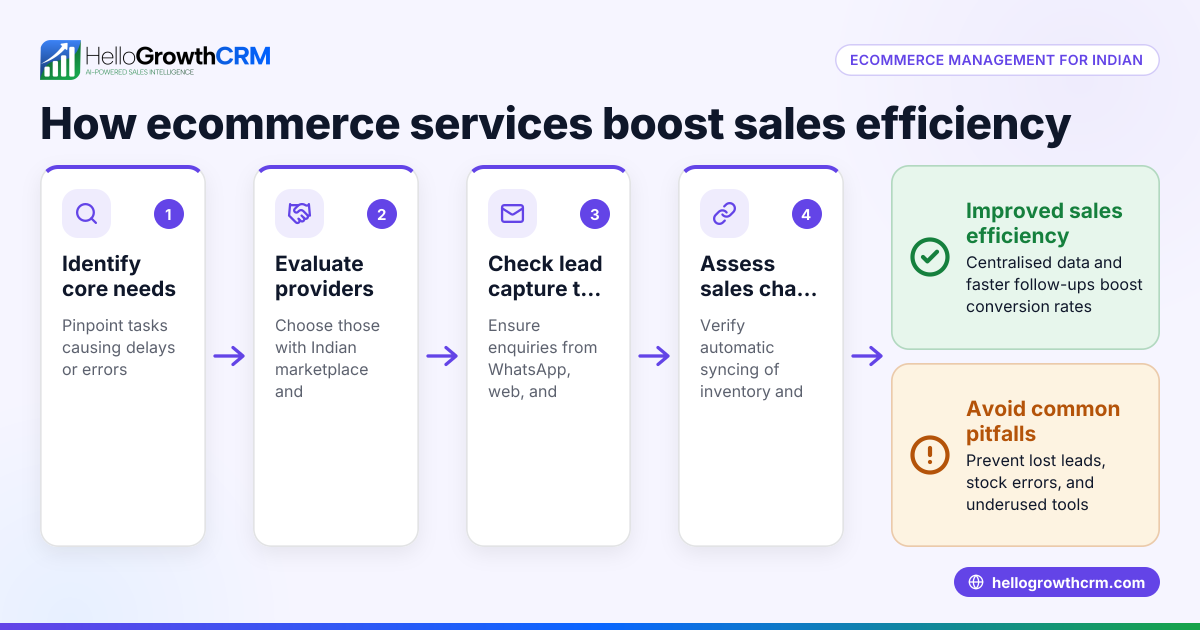
- Identify your core needs
- List what you must manage: orders, inventory, customer contacts, payments, delivery tracking.
- Check if you sell on multiple platforms needing integration.
- Check for local support and compliance
- Ensure the software supports SGD pricing and local payment gateways.
- Confirm customer support is available in Singapore time zones.
- Evaluate features for sales and customer management
- Look for order management, inventory updates, and customer communication tools.
- Consider if it supports WhatsApp and SMS for customer follow-up.
- Consider ease of use and team adoption
- Choose software with a user-friendly interface your team will actually use.
- Check if it offers mobile access for remote work.
- Review integration capabilities
- Confirm it connects with your website, social media shops, and accounting software.
- Assess pricing and scalability
- Compare plans to your current and projected business size.
- Watch for hidden fees on additional users or features.
- Trial and test the software
- Use free trials or demos to see how it fits your workflows.
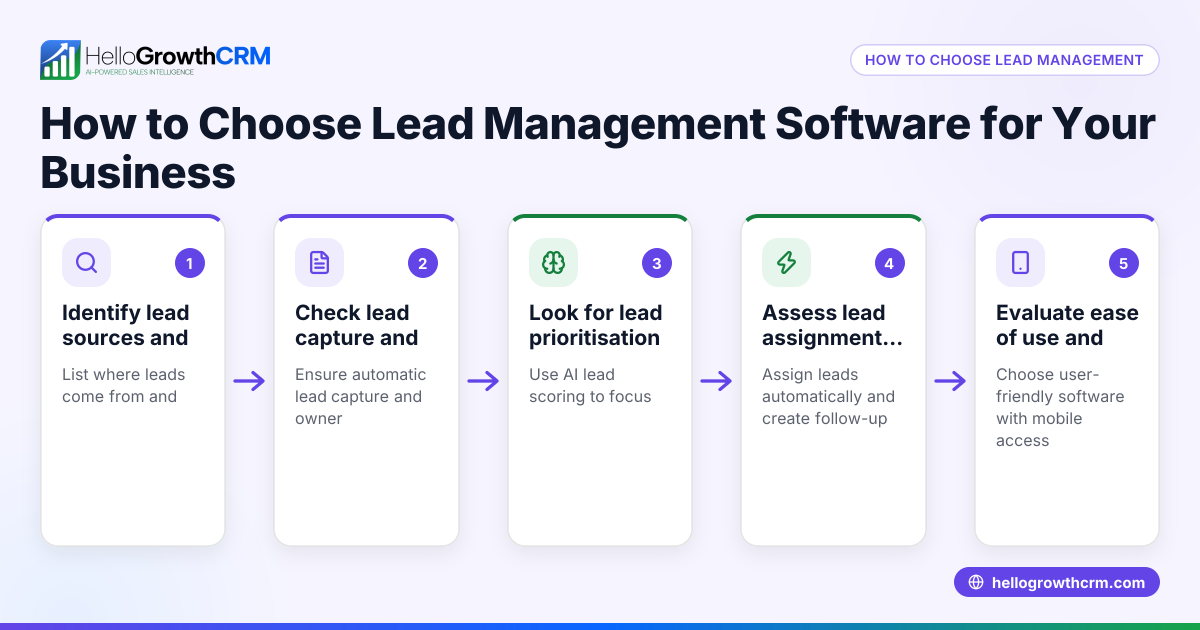
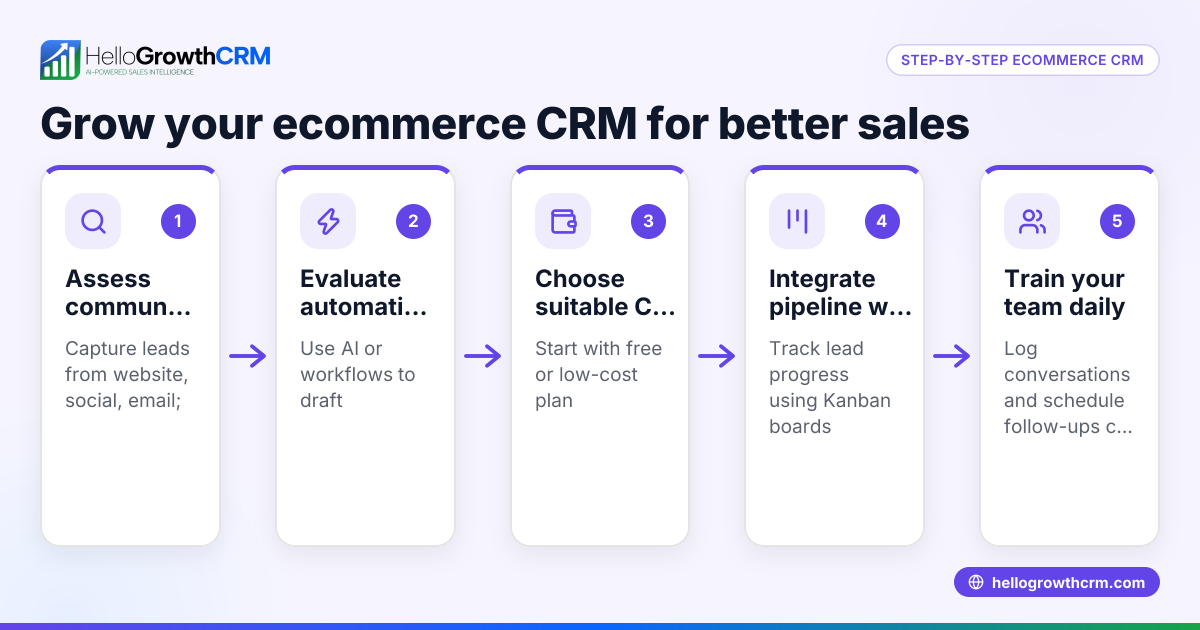
- Check for lead and pipeline management
- Make sure new enquiries from forms or WhatsApp land as leads with owners and next steps, avoiding lost opportunities.
For ecommerce and online sellers, these steps help narrow down options and choose software that matches Singapore’s market and business needs. Learn more about ecommerce management in Singapore at E-commerce and online sellers.
Example (fictional figures)
A Singapore-based online fashion retailer in Novena sells through their website and WhatsApp.
- Monthly sales: S$120,000
- Orders per month: 1,200
- Average order value: S$100
- Inventory SKUs: 150
They want software to track orders, manage stock, and follow up leads from WhatsApp and website forms.
Step 1: Identify needs
- Order and inventory management
- Lead capture from WhatsApp and website
- Sales pipeline tracking
Step 2: Check local support
- Software supports SGD pricing and local delivery partners
Step 3: Evaluate features
- Must have WhatsApp lead capture and follow-up tools
Step 4: Ease of use
- Mobile app for sales team on the go
Step 5: Integration
- Connects with Shopify website and local payment gateways
Step 6: Pricing
- Starts with Free plan for up to 200 leads, scalable as business grows
Step 7: Trial
- Use free trial to test lead capture and pipeline boards
Step 8: Lead management
- Every enquiry from WhatsApp or form becomes a lead with an owner and next step
This structured approach helps the retailer avoid lost sales and manage growth efficiently.
Common mistakes
- Choosing software without local payment and delivery support
- Prevent by verifying supported payment methods and delivery partners.
- Ignoring ease of use leading to poor team adoption
- Prevent by involving your sales and support team in trials.
- Overlooking integration with existing sales channels
- Prevent by listing all platforms and confirming integration capability.
- Failing to check lead capture and follow-up automation
- Prevent by testing how enquiries from WhatsApp and web forms are handled.
- Selecting software based on price alone
- Prevent by balancing cost with features and scalability.
- Not planning for business growth and scalability
- Prevent by choosing software with flexible plans and add-ons.
For more on integrating WhatsApp and SMS in sales, see WhatsApp and SMS CRM.
Doing this in HelloGrowthCRM
HelloGrowthCRM captures every enquiry from forms, calls, or WhatsApp as a lead with an assigned owner and a next step, preventing lost leads. This keeps your sales pipeline organised and moving towards conversion, all within one platform designed for Singapore businesses. Learn how HelloGrowthCRM helps local sales teams at HelloGrowthCRM for Singapore.
Frequently asked questions
What features should ecommerce management software have for Singapore businesses? Look for order and inventory management, integration with local payment gateways, WhatsApp communication support, and lead capture from web forms and chats. Local customer support and SGD pricing are important.
Can ecommerce management software integrate with WhatsApp? Yes, some software like HelloGrowthCRM captures leads directly from WhatsApp messages, assigning them to sales team members with clear next steps.
Is it necessary to have software that supports multiple sales channels? If you sell on platforms like Shopee, Lazada, and your website, multi-channel integration saves time and prevents errors by syncing orders and inventory.
How do I ensure my team will use the software? Choose software with a simple interface and involve your team in trial periods. Mobile access and automation reduce manual work, increasing adoption.
What should I avoid when choosing ecommerce management software? Avoid software without local support or that doesn’t capture leads efficiently. Also, don’t pick based solely on price; consider features and scalability.
Key takeaways
- Ecommerce management software centralises orders, inventory, and customer data.
- Local support for SGD pricing, payment gateways, and WhatsApp is crucial in Singapore.
- Test software for ease of use, integration, and lead capture before buying.
- Avoid common mistakes like ignoring team adoption and missing multi-channel support.
- HelloGrowthCRM helps capture and manage leads from WhatsApp and web forms.
Start managing your ecommerce leads and sales pipeline better today. Start on the Free Forever plan (200 leads, no credit card).
Ready to put this into practice?
Set up your pipeline, WhatsApp follow-ups, and AI lead scoring in minutes — free, no credit card.
Try HelloGrowthCRM freeGet CRM tips in your inbox
Join thousands of sales professionals who get weekly insights on CRM strategy, AI automation, and pipeline optimization.

The HelloGrowthCRM team publishes guides on CRM strategy, AI sales tools, and revenue operations for small business sales teams.