HelloGrowthCRM software
Built for real small-business sales teams
HelloGrowthCRM helps reps qualify faster, follow up on time, and close more deals—with practical automation in one place.
- AI lead scoring and pipeline visibility
- Built-in dialer, WhatsApp, and email automation
- Sales forecasting and RevOps-ready reporting
Ecommerce SMS marketing uses text messages to reach customers directly on their mobile devices. This method helps ecommerce businesses increase sales by sending timely promotions, order notifications, and personalized messages to opted-in customers. This article explains why ecommerce owners consider SMS marketing, how to implement it step-by-step, a fictional US business example, common pitfalls to avoid, and how HelloGrowthCRM supports SMS and WhatsApp communication.
Why this comes up / what goes wrong
Ecommerce business owners and accountants in the US often seek effective ways to boost customer engagement and sales without overwhelming customers with emails. SMS marketing offers immediate, direct communication with high open rates and quick responses. However, many ecommerce owners struggle with choosing the right SMS platform, managing compliance with US regulations such as the Telephone Consumer Protection Act (TCPA), and integrating SMS with their existing sales and customer management tools. Accountants also look for clear records of marketing expenses and return on investment. Without a streamlined SMS marketing process, businesses risk slow follow-up, lost leads, and poor customer experience.
Step-by-step
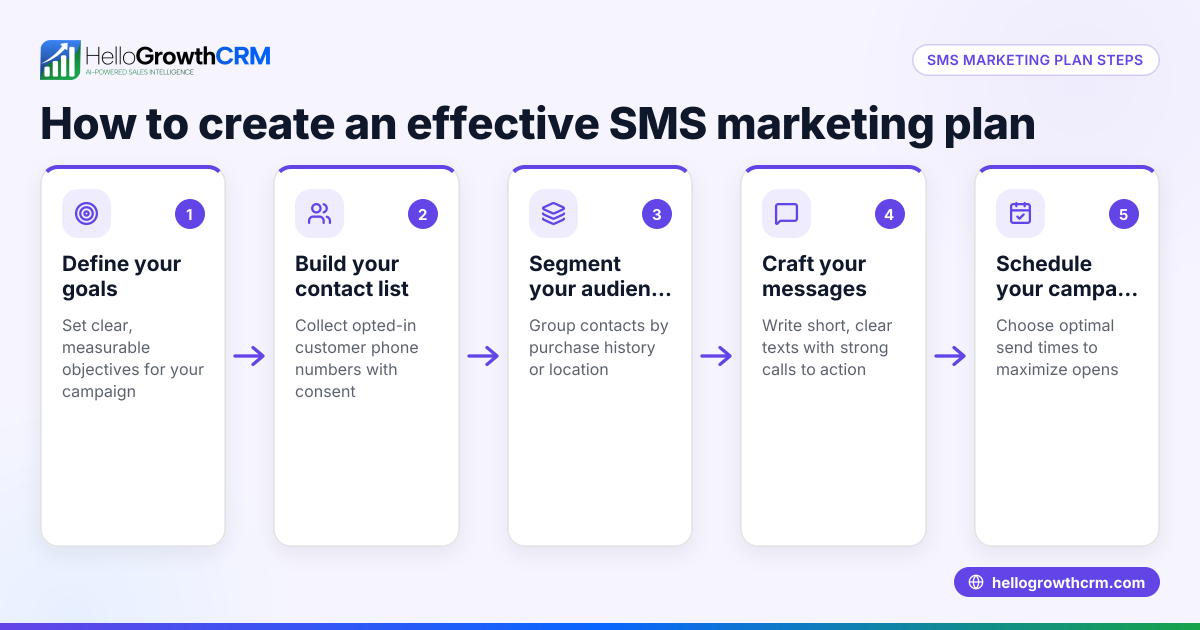
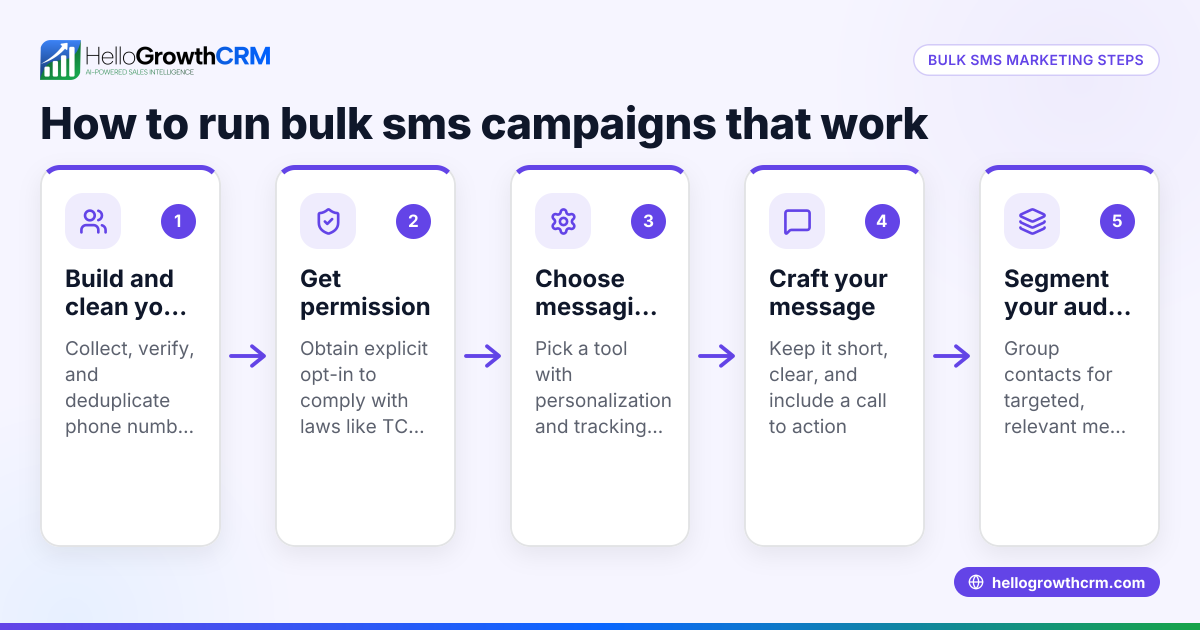
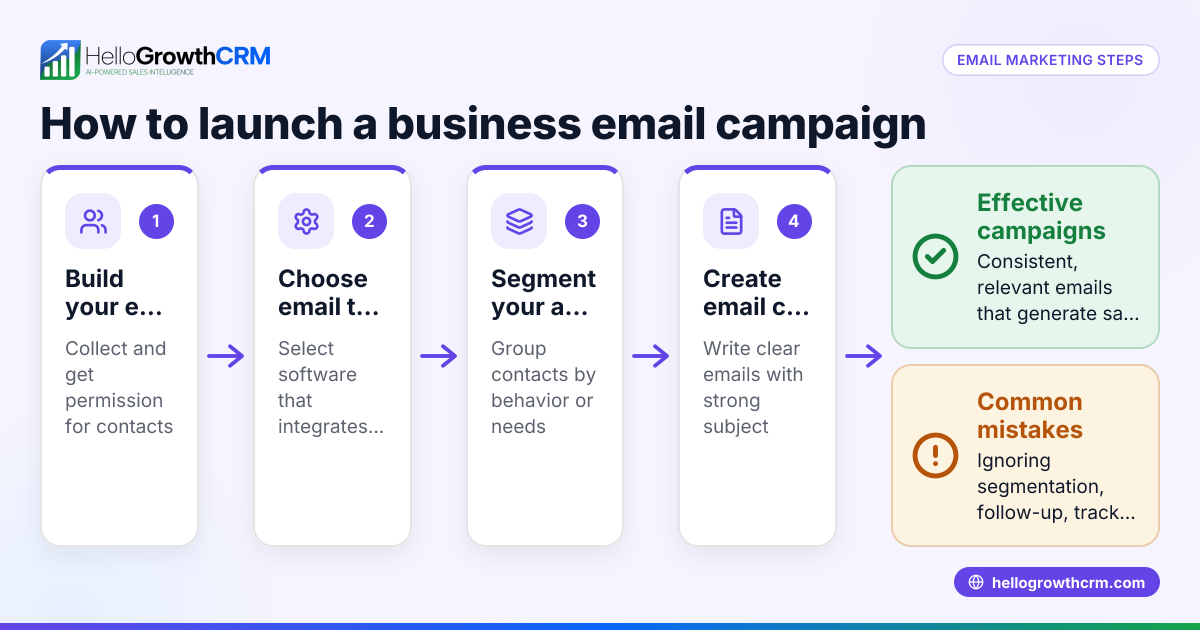
- Collect SMS opt-ins legally: Ensure customers explicitly opt in to receive SMS messages. Verify your opt-in process complies with US regulations like the TCPA. (docs.fcc.gov) Use web forms, checkout pages, or text-to-join campaigns to gather consent.
- Choose an SMS marketing platform: Select a tool that integrates well with your ecommerce operations and CRM. Look for features such as message scheduling, personalization, segmentation, automation, and compliance support.
- Segment your audience: Group customers based on purchase history, location, engagement level, or other relevant criteria. Targeted messaging improves conversion rates and customer satisfaction.
- Create engaging SMS campaigns: Write concise messages with a clear call to action, such as limited-time discounts, restock alerts, or personalized recommendations. Include direct links to your ecommerce site.
- Schedule and automate messages: Use your platform to schedule campaigns around key dates like sales, holidays, or new product launches. Automate order updates and follow-ups to save time and maintain customer engagement.
- Monitor and analyze results: Track delivery rates, click-through rates, conversions, and sales generated from SMS campaigns. Use this data to refine your messaging and targeting.
- Maintain compliance and respect customer preferences: Provide easy opt-out options in every message and avoid sending texts too frequently to prevent unsubscribes and complaints.
For more on integrating SMS with sales workflows, see WhatsApp and SMS CRM and how it fits ecommerce at E-commerce and online sellers.
Example (fictional figures)
A two-location skincare ecommerce store in Columbus, Ohio, launched SMS marketing on 01/15/2024. They collected 5,000 SMS opt-ins from their website and checkout.
- Average order value (AOV): $75
- SMS campaign sent to 4,500 customers (after excluding opt-outs)
- Conversion rate from SMS: 8%
Calculations:
Number of customers who bought via SMS = 4,500 × 8% = 360
Revenue from SMS campaign = 360 × $75 = $27,000
Cost of SMS campaign (platform + messages) = $1,200
Net revenue = $27,000 - $1,200 = $25,800
This shows a strong return on investment when SMS marketing is targeted and managed well.
Common mistakes
- Ignoring legal compliance: Not obtaining proper opt-in can lead to fines and legal issues. Prevent this by using clear opt-in forms and tracking customer consent carefully.
- Over-messaging customers: Sending too many texts causes opt-outs and damages brand reputation. Set frequency limits and respect customer preferences.
- Generic messaging: One-size-fits-all texts reduce engagement and conversions. Use segmentation to tailor messages to customer interests and behaviors.
- Not tracking results: Without monitoring campaign performance, you can’t improve your SMS marketing. Use analytics to measure delivery, clicks, and sales.
- Separating SMS from sales tools: Managing SMS communication outside your CRM leads to lost leads and slow follow-up. Integrate SMS messaging with your CRM for better tracking and customer management.
Learn more about avoiding these mistakes at HelloGrowthCRM for the United States.
Doing this in HelloGrowthCRM
HelloGrowthCRM offers a WhatsApp-native CRM with WhatsApp and SMS messaging workflows that help teams engage leads and customers on channels they already use. WhatsApp conversations with a lead are logged on the lead record, and follow-ups can go out as WhatsApp or SMS messages, keeping communication organized and timely. For details, visit WhatsApp and SMS CRM.
Frequently asked questions
What is the best time to send ecommerce SMS messages? The best time varies by audience, but generally mid-morning or early evening on weekdays works well. Test different times and monitor engagement to find your optimal schedule.
How do I comply with US SMS marketing laws? You must get explicit opt-in from customers before sending messages, provide clear opt-out instructions, and avoid sending unsolicited texts. Compliance with the TCPA is essential. Consult legal advice if needed.
Can I use SMS marketing for order updates? Yes, transactional SMS like order confirmations and shipping alerts improve customer experience and reduce support queries.
How does SMS marketing compare to email marketing for ecommerce? SMS typically has higher open rates and faster responses but is limited in message length. Email allows richer content but risks being overlooked. Combining both channels is effective.
What features should I look for in an ecommerce SMS platform? Look for easy opt-in management, segmentation, automation, compliance tools, and integration with your CRM or ecommerce platform.
Key takeaways
- Ecommerce SMS marketing drives sales by reaching customers directly on their phones.
- Legal opt-in and compliance with TCPA are critical.
- Segment your audience and personalize messages to improve results.
- Automate and schedule campaigns for efficiency.
- Track campaign performance and adjust strategy accordingly.
- Integrate SMS with CRM for better lead management and follow-up.
Start your ecommerce SMS marketing with HelloGrowthCRM’s WhatsApp and SMS features to keep all conversations logged and follow-ups timely. To begin, Start on the Free Forever plan (200 leads, no credit card).
Ready to put this into practice?
Set up your pipeline, WhatsApp follow-ups, and AI lead scoring in minutes — free, no credit card.
Try HelloGrowthCRM freeGet CRM tips in your inbox
Join thousands of sales professionals who get weekly insights on CRM strategy, AI automation, and pipeline optimization.

The HelloGrowthCRM team publishes guides on CRM strategy, AI sales tools, and revenue operations for small business sales teams.