HelloGrowthCRM software
Built for real small-business sales teams
HelloGrowthCRM helps reps qualify faster, follow up on time, and close more deals—with practical automation in one place.
- AI lead scoring and pipeline visibility
- Built-in dialer, WhatsApp, and email automation
- Sales forecasting and RevOps-ready reporting
An SMS marketing plan is a strategy that outlines how your business will use text messaging to engage customers, promote offers, and drive sales. It includes defining goals, building a contact list, crafting messages, scheduling sends, and measuring results. This article covers why you need an SMS marketing plan, step-by-step instructions to create one, a worked example with realistic figures, common mistakes to avoid, and how HelloGrowthCRM can support your SMS marketing efforts with WhatsApp and SMS CRM workflows.
Why this comes up / what goes wrong
Small-business owners often consider SMS marketing because it offers direct, immediate communication with customers on their mobile devices. However, many struggle because they lack a clear plan. Without a structured approach, messages may be sent too infrequently or too often, content might fail to engage, and legal compliance can be overlooked. This leads to poor response rates, lost leads, and even customer opt-outs. The search for an "sms marketing plan" reflects the need to organize SMS marketing into a repeatable, measurable process that fits their business size and resources.
Step-by-step
- Define your goals: Decide what you want to achieve with SMS marketing. Common goals include increasing sales, promoting events, or improving customer retention. Check that your goals are specific and measurable.
- Build your contact list legally: Collect phone numbers from customers who have opted in to receive messages. Use web forms, in-store sign-ups, or integrations. Verify consent to comply with regulations.
- Segment your audience: Group contacts based on factors like purchase history or location. This allows you to send relevant messages that increase engagement.
- Craft your messages: Write concise, clear texts with a strong call to action. Include offers, reminders, or updates. Check message length and tone.
- Schedule your campaigns: Plan when to send messages to maximize open rates. Avoid sending too early or too late in the day.
- Test your messages: Send test texts to yourself or a small group to check formatting and links.
- Launch the campaign: Send your messages to the selected segment.
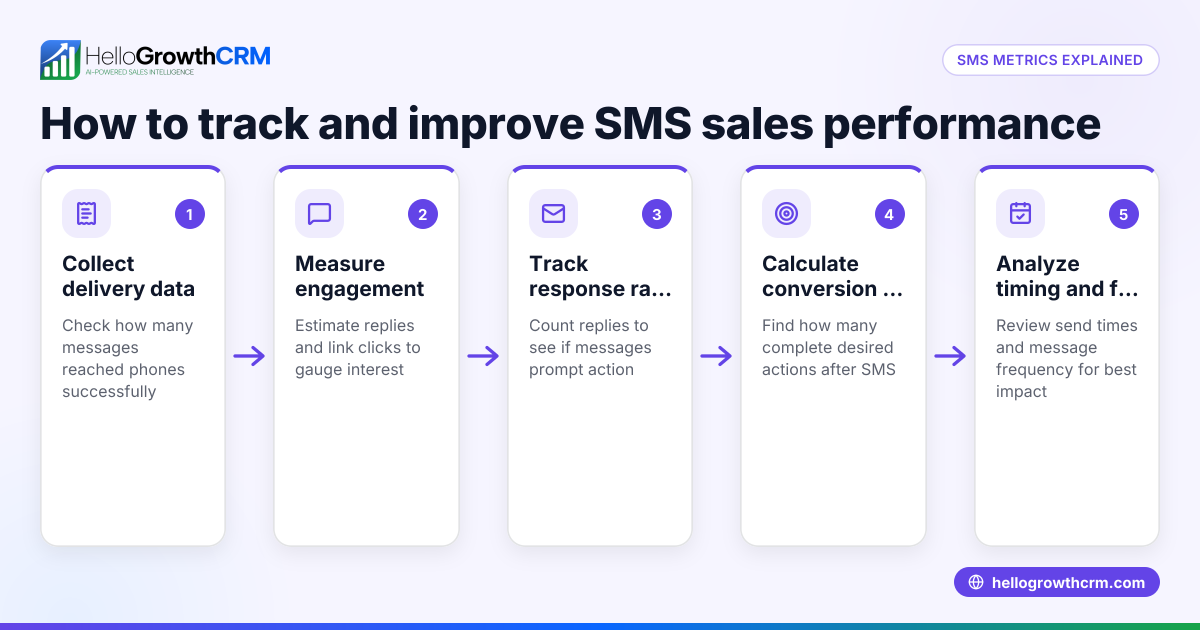
- Monitor and analyze results: Track delivery rates, responses, and conversions. Use this data to refine future campaigns.
- Maintain your list: Regularly update contact information and remove unsubscribed numbers.
Check that your SMS marketing tools support these steps, including contact management and message scheduling. For example, HelloGrowthCRM offers WhatsApp and SMS workflows that log conversations and support follow-ups. Learn more about WhatsApp and SMS CRM.
Example (fictional figures)
A landscaping contractor in Charlotte, North Carolina, plans an SMS campaign to promote spring clean-up services.
- Goal: Book 20 clean-up jobs in March.
- Contact list: 500 opted-in customers.
- Offer: $50 off clean-up service.
Step 1: Segment list by customers who used services last year (300 contacts).
Step 2: Craft message: "Spring is here! Get $50 off your clean-up service. Book by 03/15/2026. Call us now!"
Step 3: Schedule sends for 03/01/2026 at 10 AM.
Expected conversion rate: 5% (15 customers).
Revenue per job: $300.
Calculations:
$300 × 15 customers = $4,500 expected revenue
Discount given: $50 × 15 customers = $750
Net revenue: $4,500 - $750 = $3,750
If the campaign costs $100 for SMS service fees, net profit is:
$3,750 - $100 = $3,650
This example shows how a clear SMS marketing plan can lead to measurable business growth.
Common mistakes
- Ignoring opt-in rules: Sending messages without consent can lead to legal issues and customer complaints. Prevent this by always collecting explicit opt-ins.
- Over-messaging: Bombarding customers with texts causes opt-outs. Schedule messages thoughtfully and limit frequency.
- Poor message content: Vague or overly long texts reduce engagement. Keep messages short, clear, and action-oriented.
- Not tracking results: Without monitoring, you can't improve. Use analytics to measure delivery, response, and conversions.
- Neglecting list maintenance: Sending to outdated numbers wastes resources. Regularly clean your contact list.
- Failing to integrate tools: Managing SMS separately from other sales channels leads to inefficiency. Consider a CRM that logs conversations and schedules follow-ups, like HelloGrowthCRM’s WhatsApp and SMS features. See HelloGrowthCRM for the United States and its built-in CRM dialer for more.
Doing this in HelloGrowthCRM
HelloGrowthCRM supports SMS marketing through its WhatsApp and SMS workflows. Conversations with leads are automatically logged on their records, making follow-ups easier and more organized. While the Free Forever plan allows a two-person team to manage their pipeline at no cost, SMS and WhatsApp automation are available on paid plans. This setup helps small teams run targeted SMS campaigns within their sales process. Learn more about these features on the WhatsApp and SMS CRM page.
Frequently asked questions
What is the best time to send SMS marketing messages? The best time usually falls between 10 AM and 8 PM local time to avoid early or late disturbances. Testing different times and analyzing open rates can help you find the optimal window for your audience.
How do I get customers to opt in for SMS marketing? Use clear opt-in methods like web forms, in-store sign-ups, or during checkout. Always explain what kind of messages they will receive and how often.
How often should I send SMS marketing messages? Avoid sending more than 2-4 messages per month to prevent customer fatigue. Frequency depends on your business type and customer preferences.
Can I integrate SMS marketing with my existing sales tools? Yes, integrating SMS with your CRM streamlines communication and tracking. HelloGrowthCRM offers WhatsApp and SMS workflows that log messages and support follow-ups, improving efficiency.
Is SMS marketing expensive for a small business? Costs vary by provider and volume but are generally affordable. Using a CRM with built-in messaging workflows can reduce overhead and improve ROI.
Key takeaways
- An SMS marketing plan outlines goals, lists, messages, scheduling, and analysis.
- Legal opt-in and list maintenance are essential to success.
- Craft clear, concise messages with strong calls to action.
- Monitor campaign results to improve future efforts.
- Avoid over-messaging to keep customers engaged.
- Using a CRM like HelloGrowthCRM helps manage SMS marketing within your sales process.
Start your SMS marketing journey by organizing your plan and using tools that fit your business size and needs.
Ready to try? Start on the Free Forever plan (200 leads, no credit card) and manage your sales pipeline while preparing for SMS campaigns.
Ready to put this into practice?
Set up your pipeline, WhatsApp follow-ups, and AI lead scoring in minutes — free, no credit card.
Try HelloGrowthCRM freeGet CRM tips in your inbox
Join thousands of sales professionals who get weekly insights on CRM strategy, AI automation, and pipeline optimization.

The HelloGrowthCRM team publishes guides on CRM strategy, AI sales tools, and revenue operations for small business sales teams.