HelloGrowthCRM software
Built for real small-business sales teams
HelloGrowthCRM helps reps qualify faster, follow up on time, and close more deals—with practical automation in one place.
- AI lead scoring and pipeline visibility
- Built-in dialer, WhatsApp, and email automation
- Sales forecasting and RevOps-ready reporting
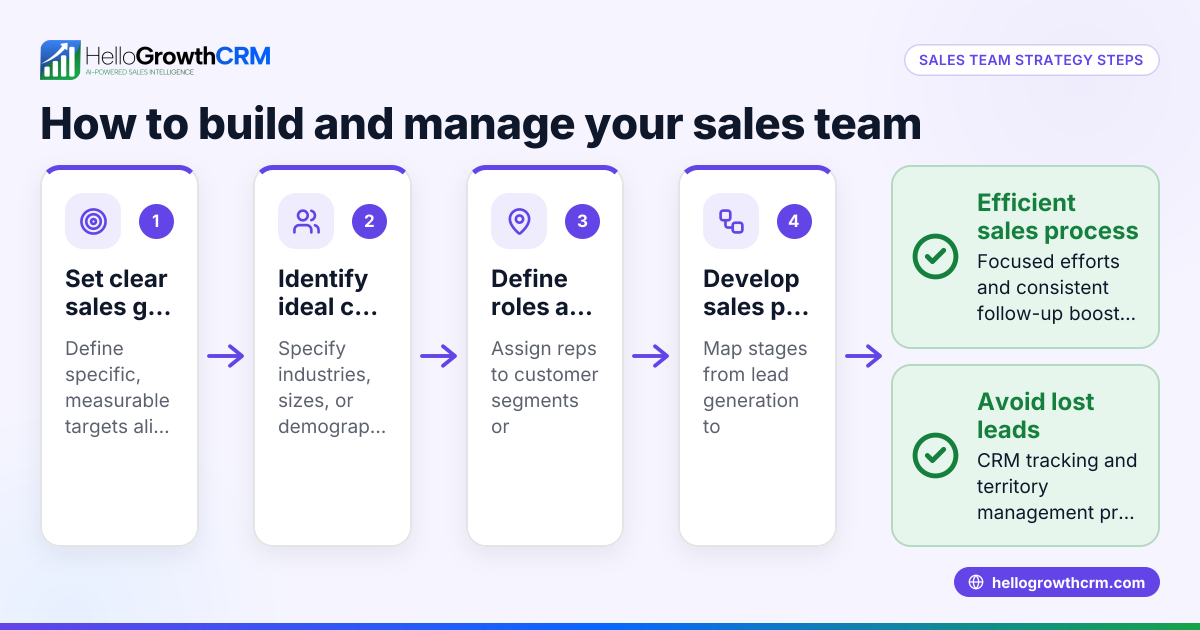
An efficient sales team is one that maximizes sales results by working systematically and prioritizing efforts on the most promising leads. This means clear tracking of deals, timely follow-ups, and organized task management to prevent leads from slipping through the cracks.
Why this comes up / what goes wrong
Many small-business owners face challenges in sales efficiency because their teams rely on scattered communication tools such as text messages, email threads, and spreadsheets. Leads often get lost or forgotten, follow-ups happen too late, and there is no clear visibility into the sales pipeline. Without a structured process, sales reps waste time chasing low-priority leads or duplicating efforts. This inefficiency slows growth, causes missed revenue opportunities, and frustrates both the sales team and customers.
Common scenarios include:
- Sales reps forgetting to follow up on quotations sent last week.
- Managers lacking insight into field sales activities and territory coverage.
- Founders without dedicated sales managers struggling to keep up with lead follow-ups and pipeline hygiene.
These issues highlight the need for a clear, repeatable sales process and accountability.
Step-by-step
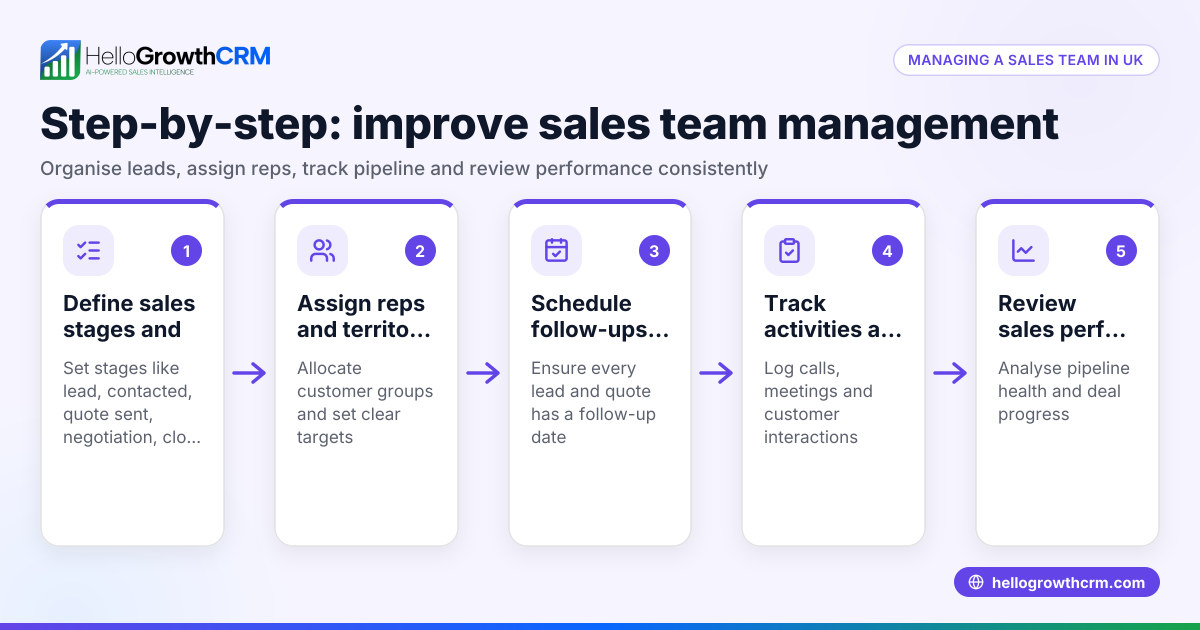
- Define clear sales stages and track deals: Set up a sales pipeline that maps out stages from initial contact to closing the deal. Check regularly that each lead is assigned a stage and a follow-up date to avoid losing track.
- Prioritize leads based on potential value and likelihood to close: Evaluate leads by deal size and probability. Focus your sales efforts on high-value, high-probability opportunities.
- Set follow-up tasks with deadlines: Assign specific follow-up actions and due dates to maintain momentum. Verify that no deal remains without a next step scheduled.
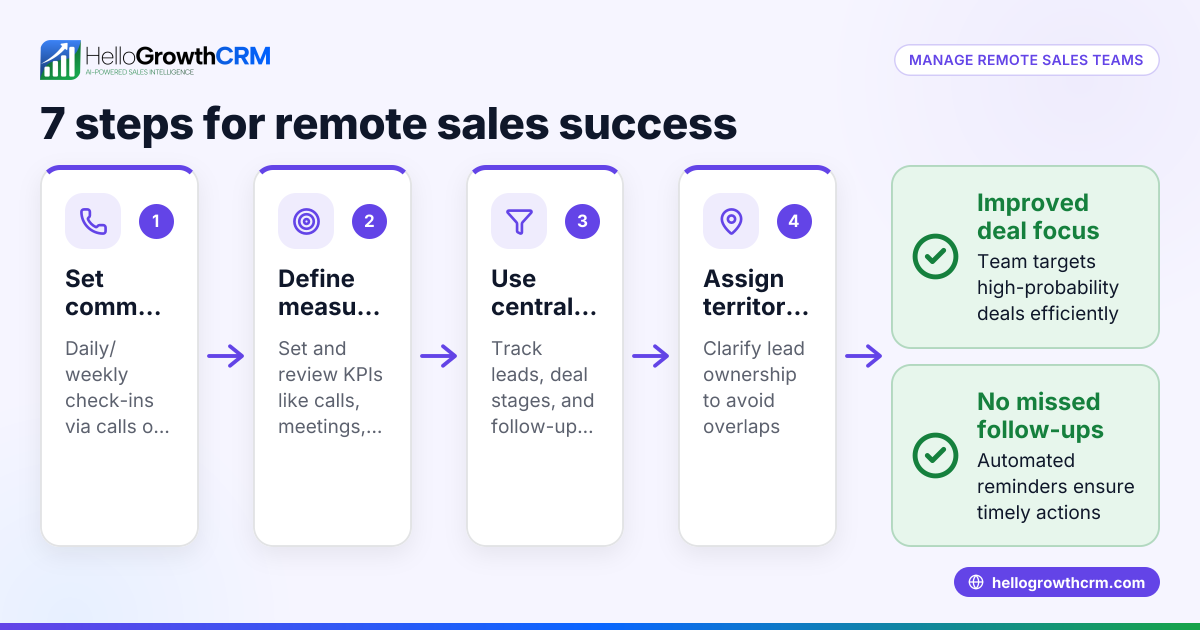
- Use mobile tools for field sales activities: If your team visits customers or prospects, equip them with mobile tools to log visits, capture on-site activity, and track territory coverage in real time.
- Review pipeline health weekly: Analyze deal stages, overdue tasks, and sales forecasts to identify bottlenecks and areas needing attention.
- Assign accountability for pipeline hygiene: Designate someone to regularly clean up stale leads, update deal information, and ensure follow-ups are scheduled and completed.
- Unify communication channels: Consolidate sales communications from email, WhatsApp, SMS, and calls into one system to avoid fragmentation and missed messages.
Example (fictional figures)
A plumbing company in Austin, Texas, wants to improve its sales efficiency. They currently have 50 leads but close only 5 sales a month.
- They create a pipeline with stages: Contacted, Quote Sent, Negotiation, Closed Won/Lost.
- Each quotation sent is entered as a deal in the 'Quote Sent' stage with a follow-up date.
- They prioritize leads expected to bring over $1,000 in revenue.
In May 2026, they have 10 deals in the 'Quote Sent' stage, each valued at $1,200.
Expected revenue from these deals: $1,200 × 10 = $12,000
They set follow-up tasks to contact these leads within 3 days.
By focusing follow-ups and tracking deals clearly, they increase closed sales to 8 in June 2026, raising revenue by $2,400.
Common mistakes
- Not tracking leads in a pipeline: Leads get lost or forgotten. Prevent this by using a deal pipeline tool that tracks every opportunity with stages and follow-up dates.
- Ignoring follow-up deadlines: Leads grow cold if not contacted promptly. Set reminders and assign due dates for follow-ups.
- Failing to prioritize leads: Time is wasted chasing unlikely sales. Score leads by value and probability to focus efforts.
- No accountability for pipeline hygiene: Old leads clutter the system and cause confusion. Assign someone to clean and update the pipeline regularly.
- Using scattered communication tools: Important messages get missed when communication happens across email, SMS, WhatsApp, and calls separately. Unify channels for better visibility.
- Lack of mobile tools for field reps: Without mobile logging, managers lack insight into field sales activity and territory coverage. Use mobile tools to track visits and routes.
Doing this in HelloGrowthCRM
HelloGrowthCRM supports an efficient sales team with features designed to keep deals organized and follow-ups on track. The Deals (pipeline) feature lets you track open opportunities from first contact through close, with stage movement, probability, and expected value. For example, a quotation sent last week will appear as a deal at the 'quote sent' stage with a follow-up date, so it is not forgotten.
For teams with field sales reps, Territories, field operations and commissions allow logging visits from mobile phones and enable managers to see the day's beat and territory coverage.
If you are a founder without a sales manager, Managed RevOps provides done-for-you revenue operations support, including weekly follow-up execution, pipeline cleanup, and KPI reporting to keep your sales process running smoothly.
Learn more about these capabilities at HelloGrowthCRM for the United States, WhatsApp and SMS CRM, and the built-in CRM dialer.
Frequently asked questions
What makes a sales team efficient? An efficient sales team uses a structured pipeline to track every lead, follows up promptly, prioritizes leads by potential value, and regularly reviews progress. Clear processes and accountability are key to efficiency.
How can I measure sales team efficiency? Measure metrics like lead response time, follow-up completion rates, conversion rates, and revenue per sales rep. Also monitor pipeline health and the number of overdue tasks.
What tools help improve sales team efficiency? CRM systems that combine deal tracking, task management, and communication channels help improve efficiency. HelloGrowthCRM offers pipeline management, mobile field tools, and managed revenue operations support.
How do I keep my sales pipeline clean? Assign someone to review and update deals weekly, remove stale leads, and ensure follow-ups are scheduled and completed. This keeps the pipeline actionable and focused.
Can a small business afford sales operations support? Yes, services like HelloGrowthCRM’s Managed RevOps provide affordable, done-for-you pipeline management and follow-up assistance without the need for a full-time sales manager.
Key takeaways
- An efficient sales team tracks leads in a clear pipeline with follow-up dates.
- Prioritize leads by potential value and likelihood to close.
- Set and monitor follow-up tasks to prevent lost opportunities.
- Use mobile tools to track field sales activities and territory coverage.
- Regular pipeline review and cleanup maintain sales momentum.
- Unify communication channels to avoid missed messages.
- HelloGrowthCRM features support these practices with pipeline deals, territory tools, and managed RevOps.
Start building your efficient sales team today. Start on the Free Forever plan (200 leads, no credit card) to organize your sales process and improve follow-up.
Ready to put this into practice?
Set up your pipeline, WhatsApp follow-ups, and AI lead scoring in minutes — free, no credit card.
Try HelloGrowthCRM freeGet CRM tips in your inbox
Join thousands of sales professionals who get weekly insights on CRM strategy, AI automation, and pipeline optimization.

The HelloGrowthCRM team publishes guides on CRM strategy, AI sales tools, and revenue operations for small business sales teams.