HelloGrowthCRM software
Built for real small-business sales teams
HelloGrowthCRM helps reps qualify faster, follow up on time, and close more deals—with practical automation in one place.
- AI lead scoring and pipeline visibility
- Built-in dialer, WhatsApp, and email automation
- Sales forecasting and RevOps-ready reporting
Managing a sales team means organising your salespeople to follow up leads promptly, track opportunities through a clear pipeline, and meet targets consistently. This article covers why managing a sales team is challenging for small UK businesses, step-by-step actions to improve management, a worked example, common pitfalls, and how HelloGrowthCRM supports sales teams.
Why this comes up / what goes wrong
Small business owners in the UK often find managing a sales team difficult because they juggle multiple roles. Without dedicated sales managers, leads can be lost due to slow follow-up or poor tracking. Many run sales processes across WhatsApp, email, and spreadsheets, which leads to disorganisation and missed opportunities. Salespeople may lack clear targets or a structured way to report progress, causing inconsistent results. Without visibility of daily activities or pipeline health, owners struggle to forecast revenue and plan growth.
Step-by-step
- Define clear sales stages and pipeline: Set up stages such as lead, contacted, quote sent, negotiation, and closed. Check regularly that deals progress through these stages without stalling.
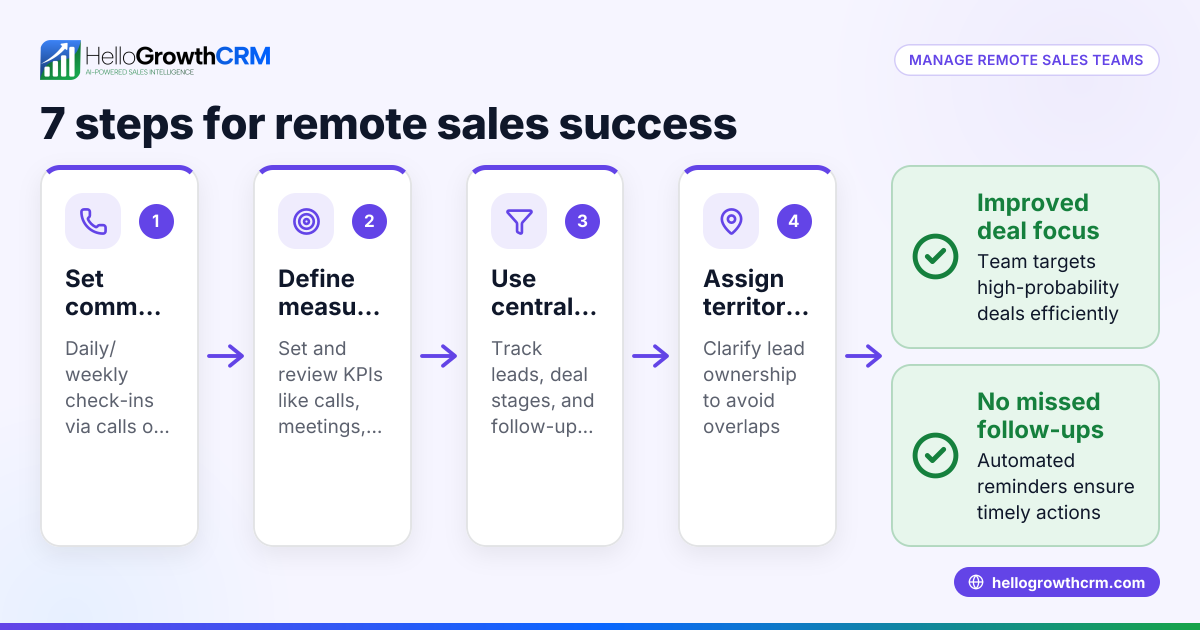
- Assign responsibilities and territories: Allocate sales reps to specific customer groups or areas to avoid overlap and improve accountability. Check that each rep knows their territory and targets.
- Set follow-up schedules and reminders: Ensure every quotation or lead has a follow-up date. Check daily that no deals are forgotten or overdue for contact.
- Track sales activities and visits: Require reps to log calls, meetings, and visits. Check that activity levels match targets and that customer interactions are recorded accurately.
- Review sales performance weekly: Analyse pipeline stages, deal values, and conversion rates. Check for bottlenecks or reps needing support.
- Use sales forecasting for planning: Estimate expected revenue based on deal probability and value. Check forecasts against actual sales monthly.
- Provide coaching and support: Identify reps who need training or help with closing deals. Check progress after coaching sessions.
- Automate repetitive tasks: Use email, WhatsApp, or SMS sequences for follow-ups to save time. Check automation reports to ensure messages are sent and responded to.
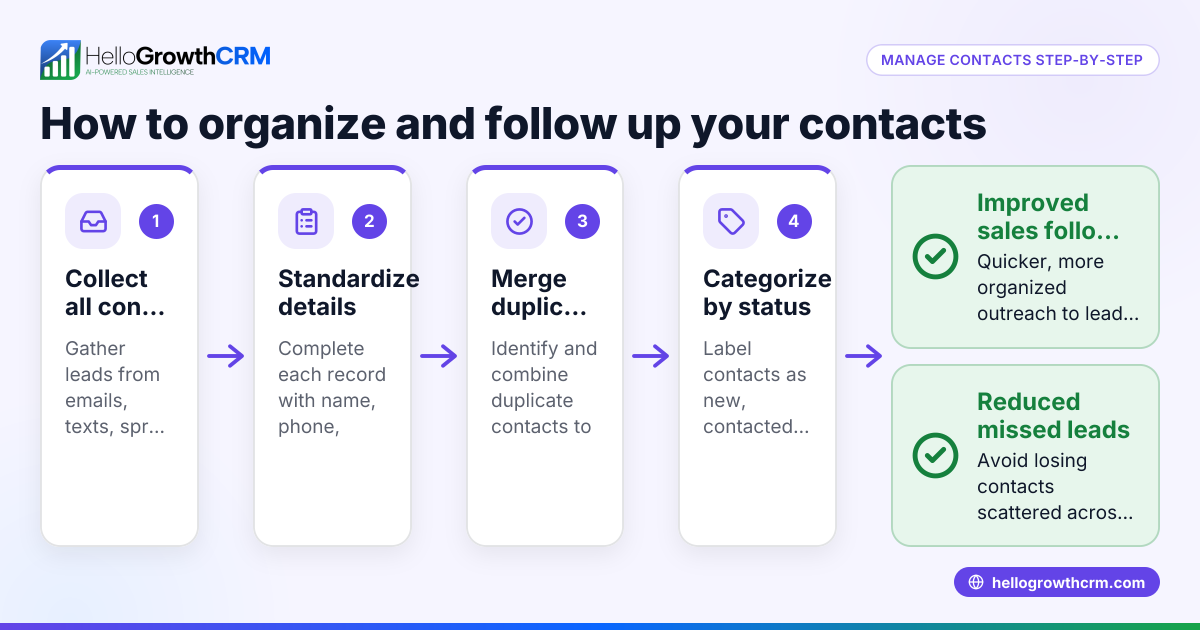
- Maintain clean data: Regularly update contact details, deal status, and notes. Check for duplicates or outdated information.
- Celebrate wins and learn from losses: Recognise successful deals and analyse lost opportunities for improvement.
Example (fictional figures)
A recruitment consultancy in Bristol wants to improve sales management. On 01/04/2026, they have 20 open deals in the pipeline:
- 10 leads at initial contact stage, average value £5,000 each
- 5 quotes sent, average value £15,000 each, with 40% probability
- 5 negotiations ongoing, average value £25,000 each, with 70% probability
Calculate expected revenue:
Leads: 10 × £5,000 × 10% (assumed probability) = £5,000 Quotes sent: 5 × £15,000 × 40% = £30,000 Negotiations: 5 × £25,000 × 70% = £87,500
Total expected revenue = £5,000 + £30,000 + £87,500 = £122,500
This forecast helps the owner plan cash flow and focus support on deals in negotiation.
Common mistakes
- Ignoring follow-up dates: Leads and quotes get forgotten. Prevent this by setting reminders and daily checks.
- Mixing sales channels without tracking: Using WhatsApp, email, and spreadsheets separately causes lost information. Use a unified system to track all communications.
- No clear pipeline stages: Deals stall because reps don’t know next steps. Define and communicate stages clearly.
- Failing to log activities: Without logging visits or calls, it’s hard to measure effort. Require reps to log every customer interaction.
- Overlooking territory management: Overlapping sales efforts confuse customers and waste resources. Assign clear territories.
- Not reviewing performance regularly: Without weekly reviews, problems go unnoticed. Schedule fixed review meetings.
Doing this in HelloGrowthCRM
HelloGrowthCRM helps manage your sales team with Deals (pipeline) — a quotation sent last week shows up as a deal at the 'quote sent' stage with a follow-up date, so it is not forgotten. For field sales, Territories, field operations and commissions let distributors' field reps log visits from the phone, and managers see the day's beat. If you don’t have a sales manager, Managed RevOps provides a revenue specialist who works the follow-up queue weekly to keep your pipeline clean and active. Learn more about HelloGrowthCRM for the United Kingdom, WhatsApp and SMS CRM, and the built-in CRM dialer.
Frequently asked questions
How do I keep my sales team motivated? Set clear targets, provide regular feedback, and recognise achievements. Use pipeline visibility to show progress and celebrate wins. Coaching and support also help maintain motivation.
What is the best way to track sales leads? Use a CRM system with a clear pipeline and follow-up reminders. Track all communications and activities in one place to avoid losing leads.
How often should I review sales performance? Weekly reviews are ideal to spot issues early and adjust priorities. Monthly reviews help with forecasting and strategic planning.
Can I manage field sales visits effectively? Yes, by assigning territories and using mobile tools to log visits and check-ins. This improves accountability and lets managers monitor daily activity.
What if I don’t have a dedicated sales manager? You can use Managed RevOps services to get expert help with pipeline hygiene and follow-up execution, ensuring leads don’t slip through the cracks.
Key takeaways
- Define clear sales stages and follow-up schedules.
- Assign territories and track field sales activities.
- Review pipeline and performance weekly.
- Use automation to streamline follow-ups.
- Keep data clean and centralised.
- Consider Managed RevOps if lacking a sales manager.
Managing your sales team well improves lead follow-up, pipeline visibility, and revenue forecasting. To start organising your sales effectively, try HelloGrowthCRM’s Free Forever plan with 200 leads and no credit card required at Start on the Free Forever plan (200 leads, no credit card).
Ready to put this into practice?
Set up your pipeline, WhatsApp follow-ups, and AI lead scoring in minutes — free, no credit card.
Try HelloGrowthCRM freeGet CRM tips in your inbox
Join thousands of sales professionals who get weekly insights on CRM strategy, AI automation, and pipeline optimization.

The HelloGrowthCRM team publishes guides on CRM strategy, AI sales tools, and revenue operations for small business sales teams.