HelloGrowthCRM software
Built for real small-business sales teams
HelloGrowthCRM helps reps qualify faster, follow up on time, and close more deals—with practical automation in one place.
- AI lead scoring and pipeline visibility
- Built-in dialer, WhatsApp, and email automation
- Sales forecasting and RevOps-ready reporting
An email marketing audit is a systematic evaluation of your email marketing activities to assess their effectiveness and identify areas for improvement. It involves reviewing your email campaigns, subscriber lists, content quality, automation sequences, and performance metrics. Conducting an audit helps you optimize your email marketing efforts to increase engagement, reduce unsubscribes, and enhance sales results.
Why this comes up / what goes wrong
Small-business owners often start email marketing without a clear plan or regular review. Over time, their subscriber lists may accumulate inactive or invalid email addresses, lowering deliverability and engagement. Campaigns might become repetitive or irrelevant to recipients, reducing open and click rates. Additionally, many businesses fail to track key metrics consistently or neglect follow-up sequences, causing lost leads. Without an audit, these problems can go unnoticed, wasting time and money.
Step-by-step
- Gather your data: Collect recent email campaign reports, subscriber lists, and details of any automation workflows you use.
- Check list health: Identify and remove bounced, inactive, or unsubscribed email addresses. Consider re-engagement campaigns for dormant contacts.
- Review campaign performance: Analyze key metrics such as open rates, click-through rates, unsubscribe rates, and conversion rates for each campaign.
- Evaluate content quality: Assess if your emails include clear calls to action, relevant and personalized content, and professional design.
- Test deliverability: Verify your sender reputation, authentication settings (SPF, DKIM), and check if emails land in inboxes, not spam folders.
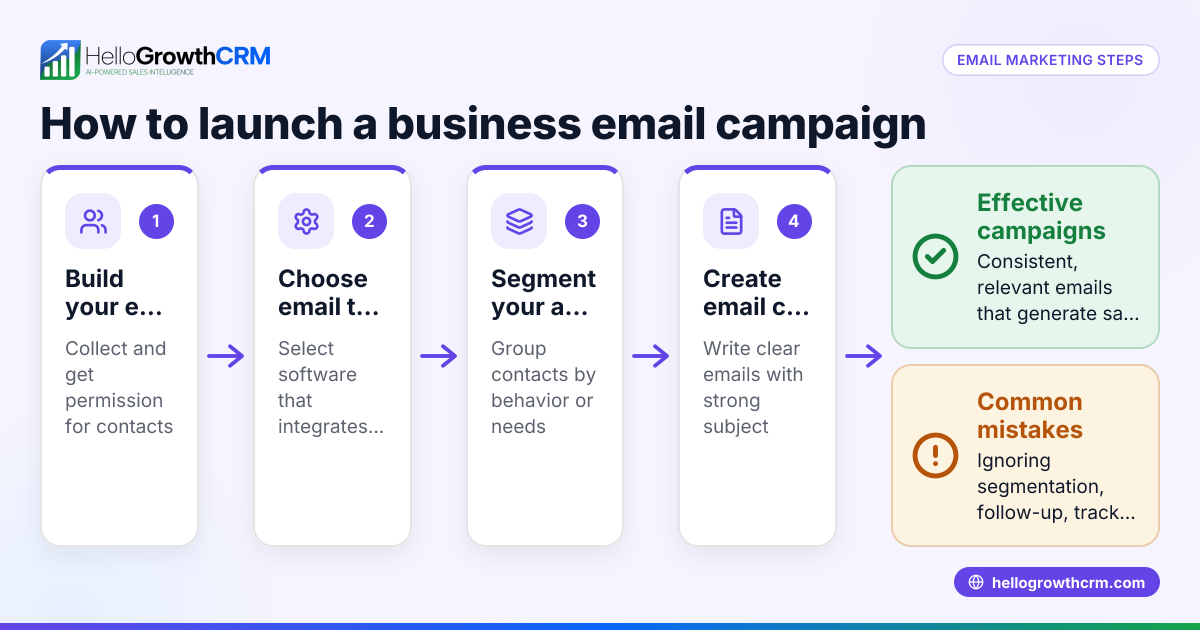
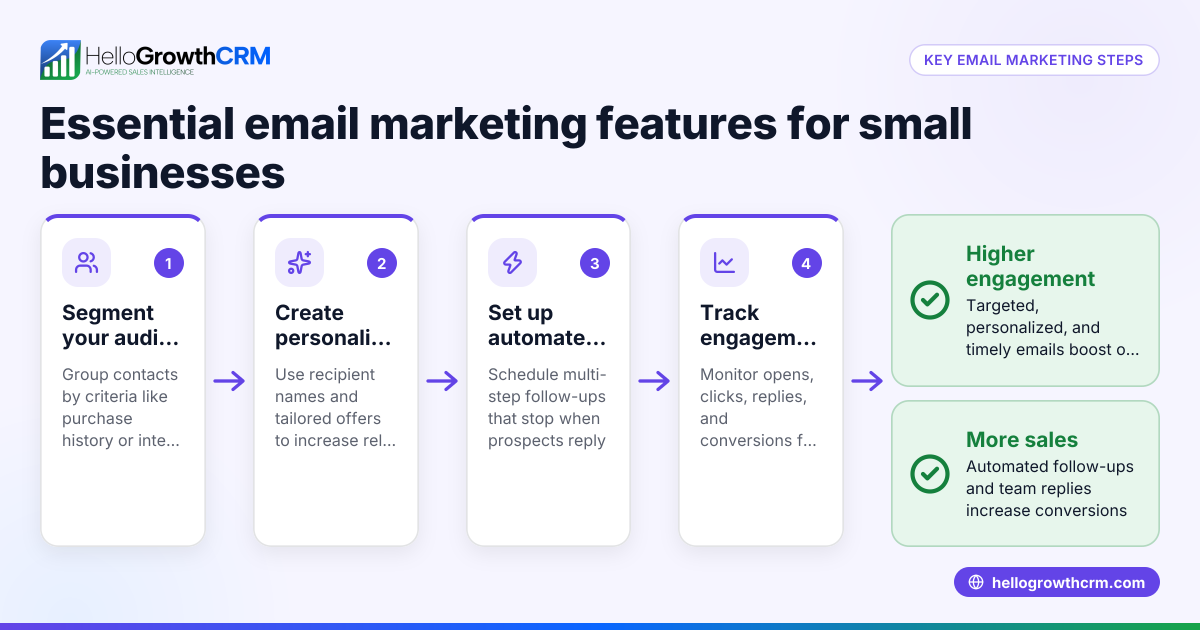
- Assess segmentation and personalization: Confirm your email lists are segmented by customer behavior or preferences and that emails use personalization tokens.
- Examine automation and follow-up sequences: Review how well your automated emails nurture leads and whether follow-up sequences stop appropriately when prospects reply.
- Review compliance: Ensure your emails include unsubscribe links and follow applicable email marketing laws.
- Document findings and prioritize fixes: List all issues discovered and create an action plan to address them.
See email automation and sequences for tools that can help automate and improve your campaigns.
Example (fictional figures)
BrightFlow Plumbing in Austin, Texas, sent an email campaign promoting spring maintenance services on 03/15/2026. They sent 5,000 emails.
- Sent emails: 5,000
- Bounced emails: 300
- Open rate: 20%
- Click-through rate: 4%
- Unsubscribes: 60
Step 1: Remove bounced emails 5,000 - 300 = 4,700 valid emails
Step 2: Calculate engaged contacts (opened emails) 4,700 × 20% = 940
Step 3: Calculate clicks 940 × 4% = 37.6 ≈ 38 clicks
Step 4: Calculate unsubscribe rate 60 ÷ 4,700 = 1.28%
BrightFlow Plumbing used these insights to improve subject lines, segment their list by customer type, and add personalized content to increase engagement and reduce unsubscribes.
Common mistakes
- Ignoring inactive subscribers: Not cleaning your list regularly harms deliverability and engagement. Prevent this by scheduling quarterly list hygiene.
- Not tracking key metrics consistently: Without tracking opens, clicks, and conversions, you can’t measure success. Use tools that provide clear reports.
- Sending generic emails to all subscribers: Lack of segmentation reduces relevance. Segment lists by behavior or interests to increase engagement. Check email automation and sequences for segmentation features.
- Failing to automate follow-ups: Many leads are lost without follow-up. Use automated sequences that stop immediately when a prospect replies to save time and improve response rates.
- Overlooking team visibility on replies: Not sharing email replies can cause duplicated effort or missed leads. HelloMail shared inbox helps your team stay coordinated.
- Neglecting compliance: Always include unsubscribe links and respect privacy laws to avoid penalties.
Doing this in HelloGrowthCRM
HelloGrowthCRM supports email marketing audits and management with two key features. The HelloMail shared inbox allows your team to see all replies to quotation emails on the deal, preventing missed or duplicated leads. The sequences and campaigns feature automates a five-step follow-up over two weeks that stops the moment a prospect replies, saving time and increasing efficiency. Learn more about these tools at email automation and sequences.
Frequently asked questions
What is the main goal of an email marketing audit? The main goal is to evaluate your email marketing performance and identify areas to improve engagement, deliverability, and sales.
How often should I perform an email marketing audit? Conduct an audit regularly or whenever you notice declining email metrics or changes in your business goals.
What tools can help me with an email marketing audit? Many email platforms provide analytics dashboards. HelloGrowthCRM offers a shared inbox and automated sequences that help track and improve campaigns. See WhatsApp and SMS CRM for multi-channel outreach.
Can I do an audit without technical skills? Yes. Focus on basic metrics like open and click rates, check your email list health, and review your email content. Use your email platform’s reports and simple automation tools.
Why is list segmentation important? Segmenting your list by customer interests or behavior allows you to send targeted and relevant messages, increasing engagement and reducing unsubscribes.
Key takeaways
- An email marketing audit reviews your campaigns, lists, and automation to improve results.
- Regularly clean your email list and track key metrics like open and click rates.
- Use segmentation and personalized content to engage subscribers effectively.
- Automate follow-ups and share email replies within your team to avoid lost leads.
- HelloGrowthCRM features like HelloMail shared inbox and sequences support better email marketing management.
Start improving your email marketing today. Start on the Free Forever plan (200 leads, no credit card).
This article is general information, not tax or legal advice. Rules change; confirm the current position with the IRS or your state's department of revenue, or with your CPA, before acting.
Ready to put this into practice?
Set up your pipeline, WhatsApp follow-ups, and AI lead scoring in minutes — free, no credit card.
Try HelloGrowthCRM freeGet CRM tips in your inbox
Join thousands of sales professionals who get weekly insights on CRM strategy, AI automation, and pipeline optimization.

The HelloGrowthCRM team publishes guides on CRM strategy, AI sales tools, and revenue operations for small business sales teams.