HelloGrowthCRM software
Built for real small-business sales teams
HelloGrowthCRM helps reps qualify faster, follow up on time, and close more deals—with practical automation in one place.
- AI lead scoring and pipeline visibility
- Built-in dialer, WhatsApp, and email automation
- Sales forecasting and RevOps-ready reporting
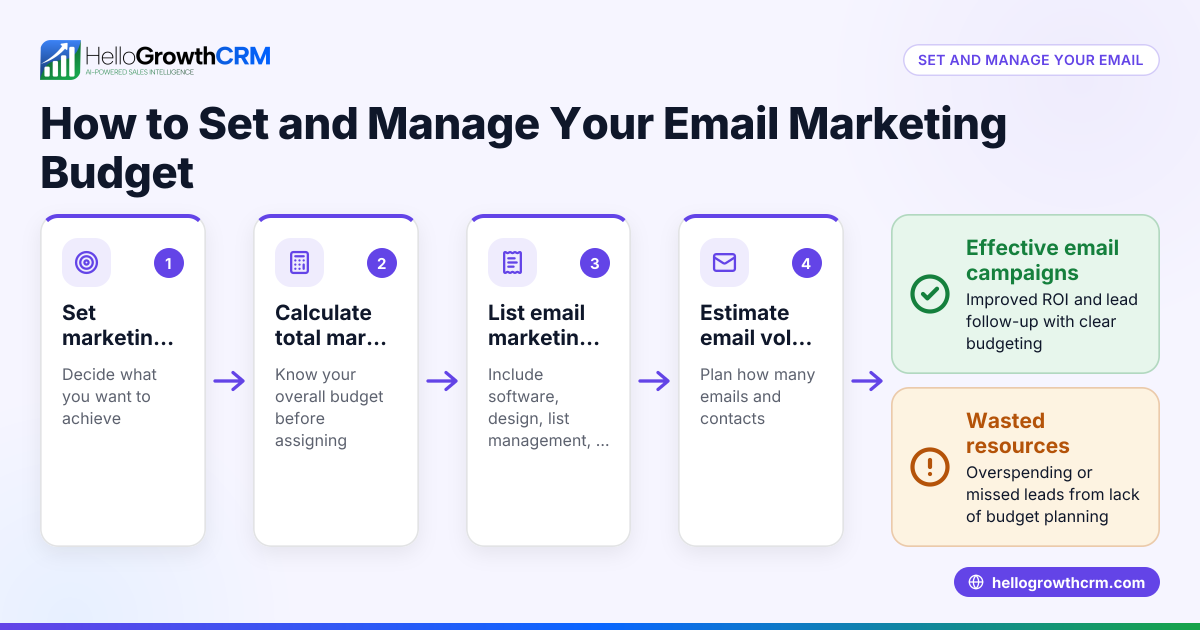
Email marketing goals are the clear objectives you want your email campaigns to achieve, such as growing your subscriber list, increasing sales conversions, or improving customer retention. Without defined goals, your email marketing can lack direction and measurable results. This article covers why setting these goals matters, how to create them step-by-step, a practical example, common pitfalls to avoid, and how HelloGrowthCRM features can help you manage email marketing efficiently.
Why this comes up / what goes wrong
Small-business owners often start email marketing without clear goals, leading to unfocused campaigns that waste time and resources. For example, a local retail shop might send newsletters without tracking if they generate sales or new leads. Without specific goals, it’s hard to know what works or how to improve. Slow follow-up or scattered communication across email, text, and spreadsheets can also cause lost leads and missed opportunities. Defining goals helps prioritize efforts and measure what matters.
Step-by-step
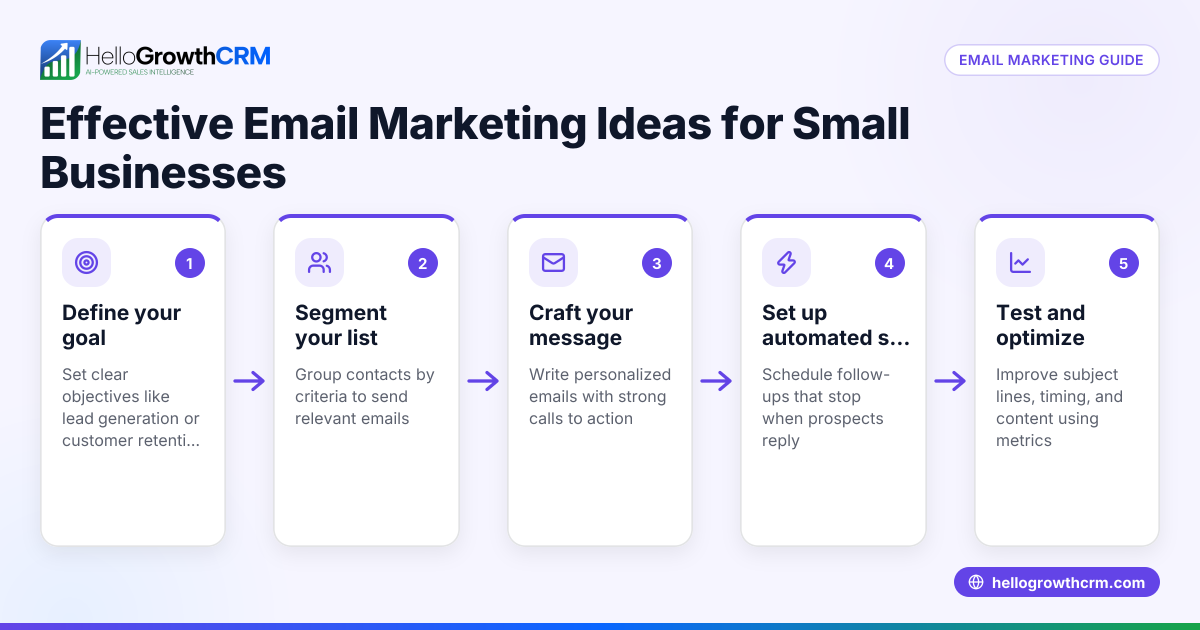
- Identify your primary business objective. Decide what you want your email marketing to support—lead generation, sales, customer loyalty, or brand awareness. Check that this goal aligns with your overall business plan.
- Set specific, measurable targets. Instead of “increase sales,” aim for “generate 50 new product sales via email in 3 months.” Confirm you have tools to track these metrics.
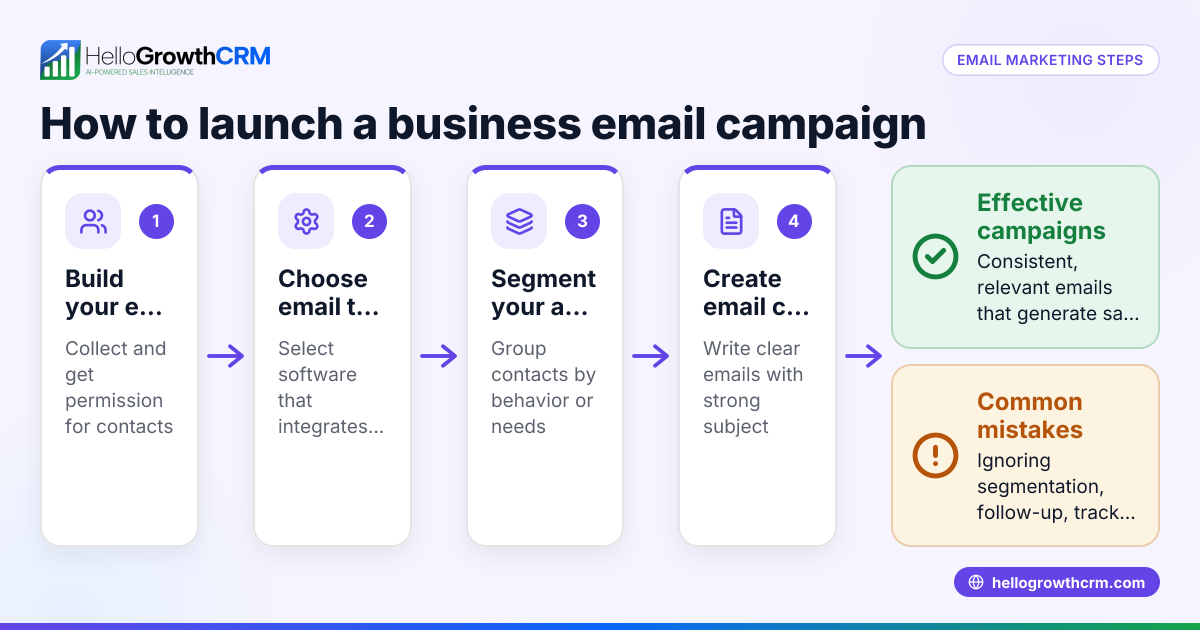
- Define your audience and segment your list. Understand who you’re emailing and create segments for personalized messaging. Check your contact list quality and update it regularly.
- Plan your email content and frequency. Decide the types of emails (promotions, newsletters, follow-ups) and how often to send them without overwhelming recipients.
- Choose key performance indicators (KPIs). Common KPIs include open rates, click-through rates, conversion rates, and unsubscribe rates. Set benchmarks to evaluate success.
- Implement automation and sequences. Use automated follow-ups to nurture leads and save time. Check that your automation stops when prospects respond to avoid over-contacting.
- Regularly review and adjust your strategy. Analyze campaign data monthly and tweak content, timing, or segments based on what works.
For managing sequences and email automation, see email automation and sequences. To combine email with other channels like WhatsApp and SMS, explore WhatsApp and SMS CRM.
Example (fictional figures)
A residential real-estate team in Phoenix, Arizona, wants to increase leads from email by 30% over 3 months starting 04/01/2026.
- Current monthly leads from email: 100
- Target increase: 30% × 100 = 30 additional leads
- Total target leads per month: 100 + 30 = 130
They set a goal to send a five-step email sequence to 500 prospects monthly, expecting a 6% conversion rate.
- Expected leads from sequence: 500 × 6% = 30 leads
They track open rates aiming for 25%, click rates of 10%, and adjust content if those fall short.
This clear goal guides their campaign planning and results review.
Common mistakes
- No clear goal defined. Prevent by writing down specific, measurable objectives before starting campaigns.
- Ignoring audience segmentation. Prevent by regularly updating and segmenting your email list for targeted messages.
- Over-emailing recipients. Prevent by setting a sensible frequency and using automation that stops when prospects reply.
- Not tracking key metrics. Prevent by choosing KPIs upfront and reviewing them regularly.
- Using multiple disconnected tools. Prevent by managing email and follow-ups in one system like HelloGrowthCRM to avoid lost leads.
- Failing to adapt based on data. Prevent by scheduling monthly reviews to adjust strategy.
Doing this in HelloGrowthCRM
HelloGrowthCRM helps small businesses run email marketing with features like the HelloMail shared inbox, where replies to quotation emails are visible to the whole team on the deal, reducing missed follow-ups. Its sequences and campaigns feature runs automated five-step follow-ups over two weeks, stopping immediately when a prospect replies. This saves time and keeps your outreach timely and relevant. Learn more at email automation and sequences.
Frequently asked questions
What are the most important email marketing goals for small businesses? Common goals include growing your email list, increasing sales through promotions, improving customer engagement, and reducing unsubscribe rates. Choose goals that align with your business priorities and can be tracked with your tools.
How often should I send marketing emails? Frequency depends on your audience and content quality. Typically, once a week or biweekly works well to stay top of mind without overwhelming recipients. Monitor unsubscribe rates to adjust frequency.
How do I measure if my email marketing is successful? Track KPIs like open rate, click-through rate, conversion rate, and unsubscribe rate. Compare results against your targets regularly and adjust your campaigns accordingly.
Can I automate email follow-ups? Yes, automated sequences can save time and improve lead nurturing. HelloGrowthCRM offers sequences that send timed messages and stop when prospects respond, preventing over-contacting.
Should I use email alone or combine it with other channels? Combining email with SMS and WhatsApp can increase reach and response rates. HelloGrowthCRM supports multi-channel sequences to manage this efficiently. See WhatsApp and SMS CRM for details.
Key takeaways
- Set specific, measurable email marketing goals tied to your business objectives.
- Segment your audience and personalize emails for better engagement.
- Use automated sequences to follow up consistently and save time.
- Track key metrics regularly and adjust your strategy based on data.
- Avoid common pitfalls like no clear goals, over-emailing, and disconnected tools.
- HelloGrowthCRM supports shared inboxes and automated sequences to streamline email marketing.
Start setting clear email marketing goals today to improve your campaigns’ impact. To get started with managing your email marketing and more, Start on the Free Forever plan (200 leads, no credit card).
Ready to put this into practice?
Set up your pipeline, WhatsApp follow-ups, and AI lead scoring in minutes — free, no credit card.
Try HelloGrowthCRM freeGet CRM tips in your inbox
Join thousands of sales professionals who get weekly insights on CRM strategy, AI automation, and pipeline optimization.

The HelloGrowthCRM team publishes guides on CRM strategy, AI sales tools, and revenue operations for small business sales teams.