HelloGrowthCRM software
Built for real small-business sales teams
HelloGrowthCRM helps reps qualify faster, follow up on time, and close more deals—with practical automation in one place.
- AI lead scoring and pipeline visibility
- Built-in dialer, WhatsApp, and email automation
- Sales forecasting and RevOps-ready reporting
Customer success outcomes are the tangible benefits your customers gain from your product or service, such as increased revenue, time savings, or improved efficiency. Tracking these outcomes helps your business ensure customers achieve their goals, which in turn supports retention and growth.
Why this comes up / what goes wrong
Small-business owners often struggle to clearly define or measure customer success outcomes. Without this clarity, it’s difficult to know if your product or service is truly delivering value. This can lead to missed opportunities for improving customer satisfaction, lowering churn, or generating referrals. For example, a plumbing company might know it fixes leaks but not track how much money or time customers save by choosing them. Without tracking outcomes, sales and service teams may also lack alignment on customer goals, resulting in inconsistent follow-up or support.
Many small businesses run their sales and customer service on disconnected tools like text messages, email, and spreadsheets, which makes it harder to keep customer success outcomes visible and actionable. This lack of integration can cause slow follow-up on service requests or lost leads that never turn into repeat business.
Step-by-step
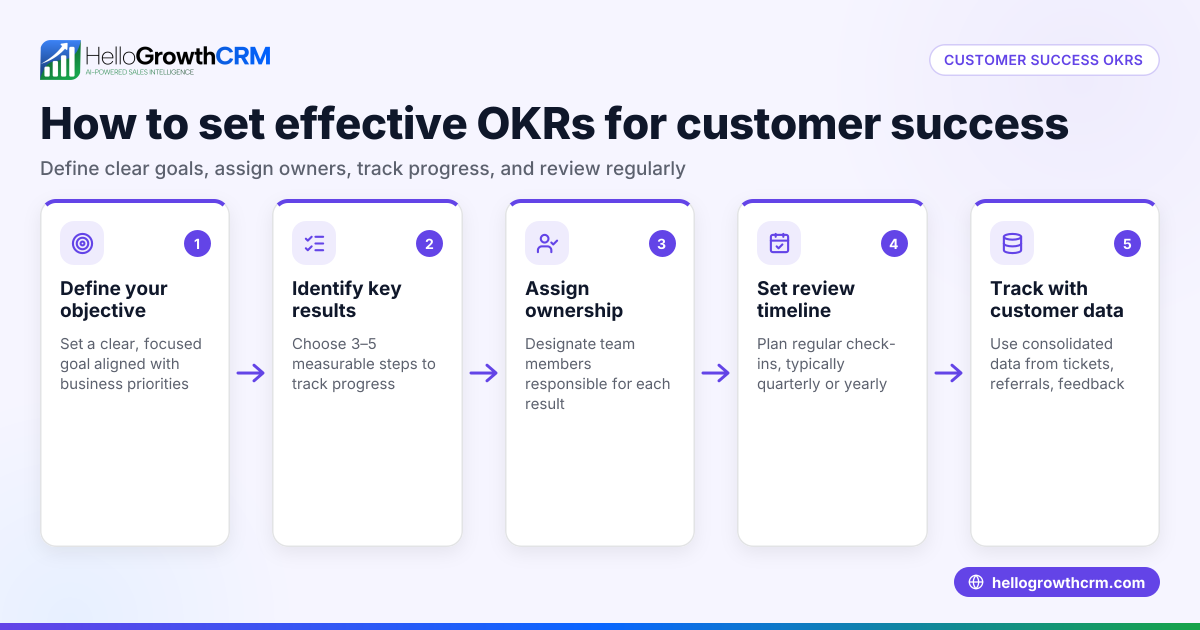
- Identify key customer goals: Talk directly to your customers or review feedback to understand what success means to them. This could be reducing downtime, saving money, or faster service delivery.
- Define measurable outcomes: Translate those goals into specific, quantifiable results such as “reduce repair time by 30%” or “save $500 monthly on utility bills.”
- Set baseline metrics: Determine current performance levels before your product or service is used to measure improvement accurately.
- Implement tracking methods: Use surveys, usage data, or service records to collect outcome data consistently over time.
- Analyze results regularly: Review the collected data to see if customers are achieving the desired outcomes and identify any gaps.
- Adjust your approach: Use the insights gained from analysis to improve your product, training, or customer support processes.
- Communicate outcomes internally: Share results with sales and service teams to align efforts and improve customer experience.
Checking your customer success outcomes helps prevent lost leads and slow follow-up by ensuring your team focuses on what matters most. For more on monitoring customer engagement, see customer health score.
Example (fictional figures)
A plumbing company in Austin, Texas, wants to measure customer success outcomes for its emergency repair service.
- Current average repair time: 4 hours
- Target repair time: 2.8 hours (30% reduction)
- Average customer cost saving goal: $200 per repair
After implementing a new scheduling system and faster parts delivery, they track the following for 100 repairs in Q1 2026:
- Average repair time achieved: 3 hours
- Average cost savings reported: $180
Calculations:
Time reduction achieved = 4 hours - 3 hours = 1 hour Time reduction percentage = (1 hour / 4 hours) × 100 = 25% Cost savings gap = $200 - $180 = $20
This shows the company nearly met its time reduction goal and is close on cost savings. They can focus on improving parts delivery to close the $20 gap.
Common mistakes
- Not defining clear outcomes: Prevent this by translating vague goals into measurable results that can be tracked.
- Ignoring baseline data: Always record current performance before making changes to have a clear comparison.
- Inconsistent tracking: Set regular intervals and consistent methods for data collection to avoid gaps.
- Failing to share results: Communicate outcomes across sales and service teams to keep everyone aligned.
- Confusing activity with outcomes: Focus on the benefits your customers gain, not just the tasks your team completes.
- Overlooking customer feedback: Regularly solicit customer input to validate that your outcomes match their expectations.
Learn how to keep customer requests and service aligned with outcomes using WhatsApp and SMS CRM.
Doing this in HelloGrowthCRM
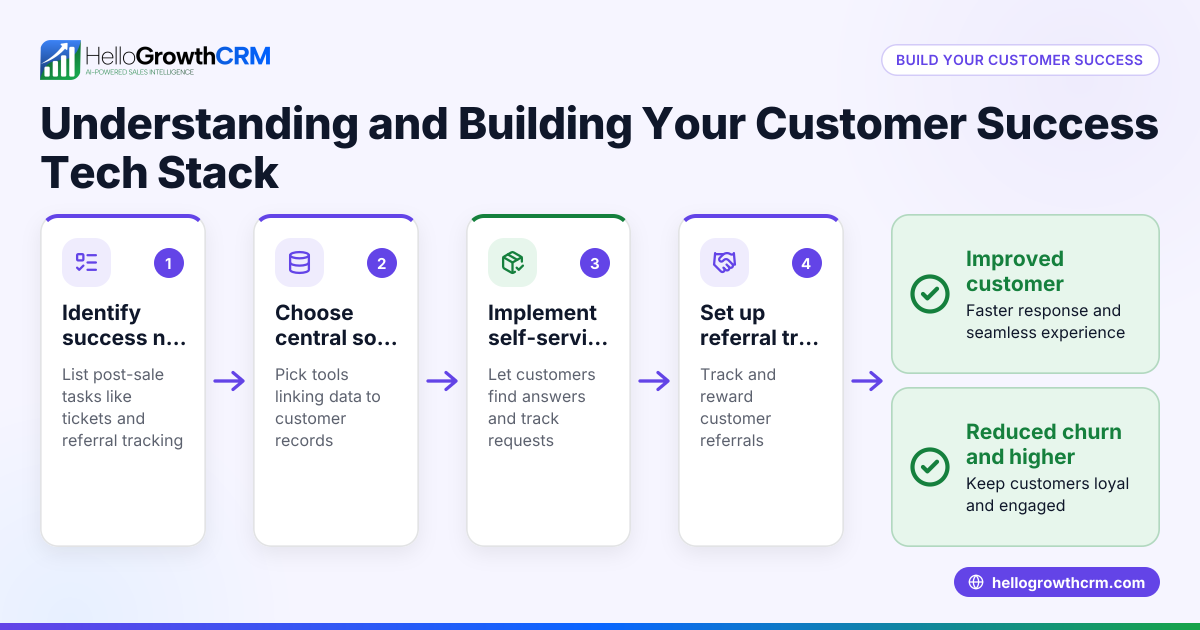
HelloGrowthCRM helps track customer success outcomes by keeping service requests, tickets, and support history linked to the same customer record as the original deal. Its customer portal allows clients to submit service requests and access your knowledge base directly. Referral tracking encourages satisfied customers to bring in new business. This all-in-one approach ensures your team has complete visibility on customer interactions and outcomes after the sale. For more details, see HelloGrowthCRM for the United States.
Frequently asked questions
What are customer success outcomes? They are the specific, measurable benefits your customers achieve by using your product or service, such as cost savings, improved efficiency, or reduced downtime.
Why are customer success outcomes important for small businesses? They help you understand if your product delivers real value, improve customer satisfaction, reduce churn, and create opportunities for referrals and upselling.
How do I measure customer success outcomes? Identify customer goals, set measurable targets, collect baseline data, track results over time, and analyze for improvement opportunities.
Can HelloGrowthCRM help with customer success? Yes, it keeps service requests, tickets, and customer history on one record, supports a customer portal, and tracks referrals, helping you manage outcomes after the sale.
What is the difference between customer success outcomes and customer health score? Customer success outcomes are specific results customers achieve, while customer health score is a metric that predicts customer satisfaction and risk based on various indicators. See customer health score for more.
Key takeaways
- Customer success outcomes are measurable benefits your customers gain from your product or service.
- Defining clear, quantifiable goals and tracking baseline and progress is essential.
- Regular analysis and communication of outcomes align your team and improve service.
- Avoid common mistakes like vague goals and inconsistent tracking.
- HelloGrowthCRM supports managing customer success with linked service tickets, a customer portal, and referral tracking.
Start improving your customer success outcomes today. Start on the Free Forever plan (200 leads, no credit card).
Ready to put this into practice?
Set up your pipeline, WhatsApp follow-ups, and AI lead scoring in minutes — free, no credit card.
Try HelloGrowthCRM freeGet CRM tips in your inbox
Join thousands of sales professionals who get weekly insights on CRM strategy, AI automation, and pipeline optimization.

The HelloGrowthCRM team publishes guides on CRM strategy, AI sales tools, and revenue operations for small business sales teams.