HelloGrowthCRM software
Built for real small-business sales teams
HelloGrowthCRM helps reps qualify faster, follow up on time, and close more deals—with practical automation in one place.
- AI lead scoring and pipeline visibility
- Built-in dialer, WhatsApp, and email automation
- Sales forecasting and RevOps-ready reporting
Exceptional customer service means going beyond basic support to create positive, memorable experiences for your customers. It involves fast responses, personalised communication, and effective problem resolution that builds loyalty and encourages repeat business. This article covers why exceptional service is crucial for small businesses, practical steps to achieve it, a worked example with UK figures, common pitfalls, and how HelloGrowthCRM supports managing customer service efficiently.
Why this comes up / what goes wrong
Small business owners in the UK often struggle to deliver exceptional customer service because they juggle multiple roles and lack dedicated tools. Customers expect quick replies and personalised help, but businesses relying on WhatsApp, email, and spreadsheets can lose track of requests or delay responses. This leads to frustrated customers, lost sales, and damage to reputation. Without a clear process or system, service requests may fall through the cracks or follow-ups happen too late. Exceptional service requires organisation, speed, and consistency, which can be hard without the right approach.
Step-by-step
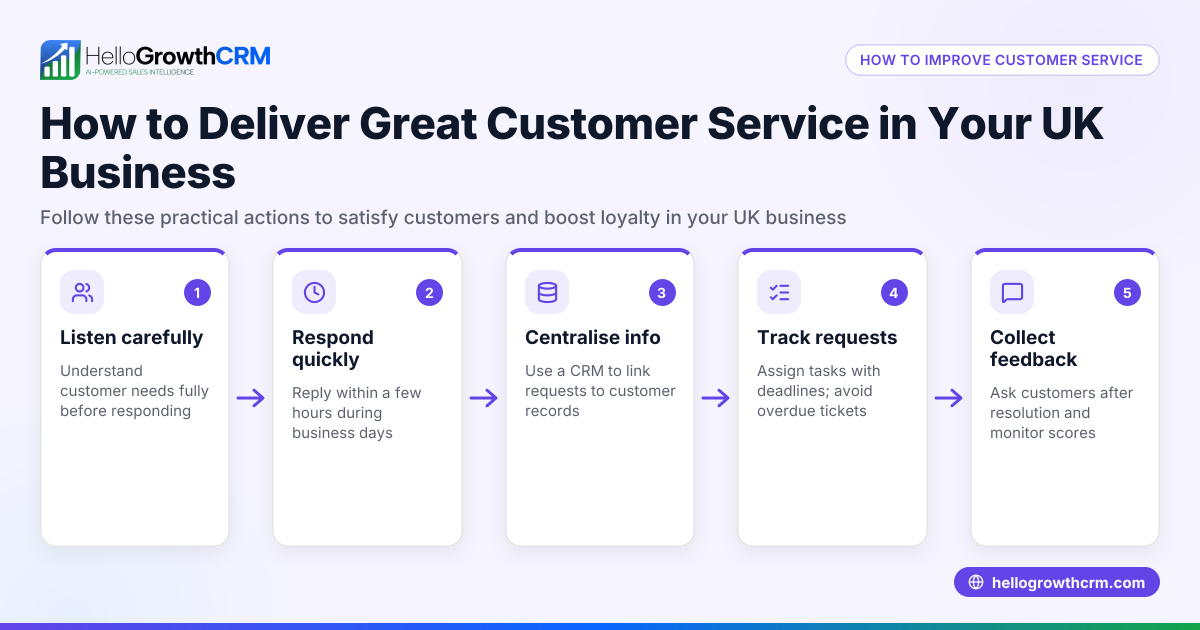
- Set clear customer service goals. Define what exceptional means for your business—fast replies, personalised support, or proactive follow-ups. Check these goals regularly.
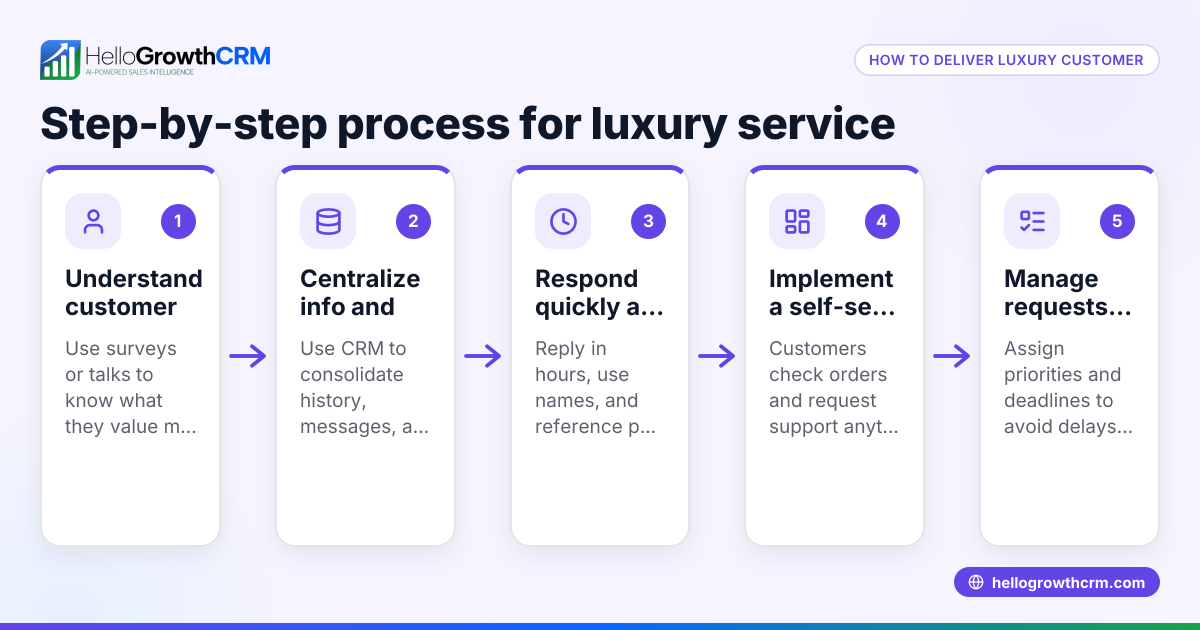
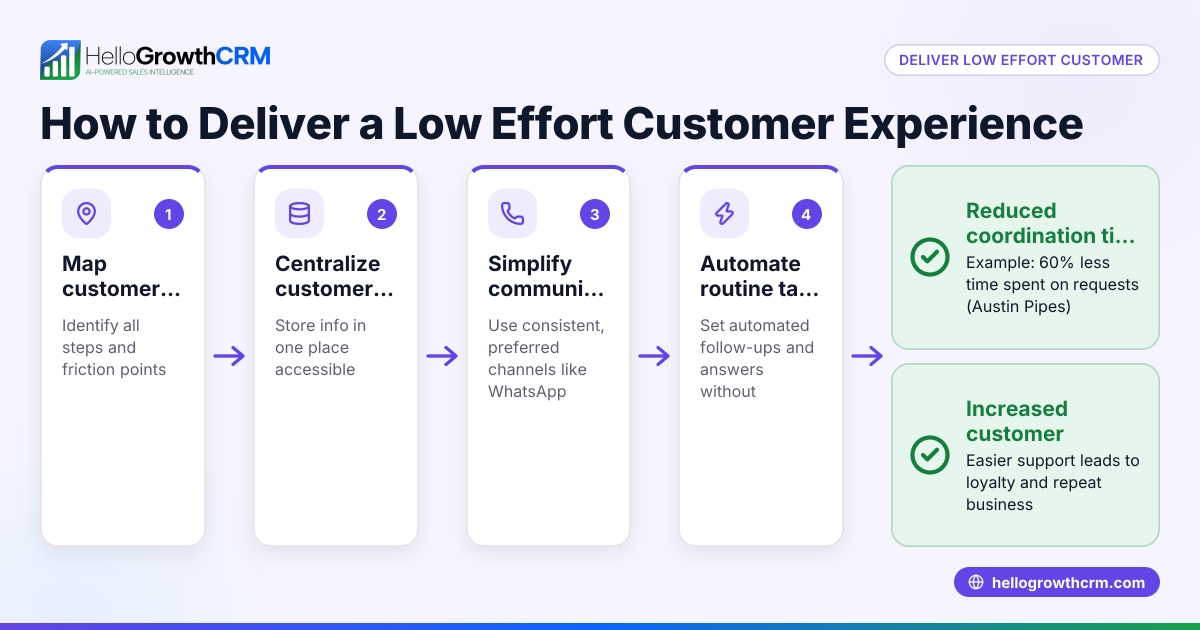
- Organise customer information centrally. Keep all customer interactions, past purchases, and service requests in one place to avoid repeated questions and delays. Check your system daily for updates.
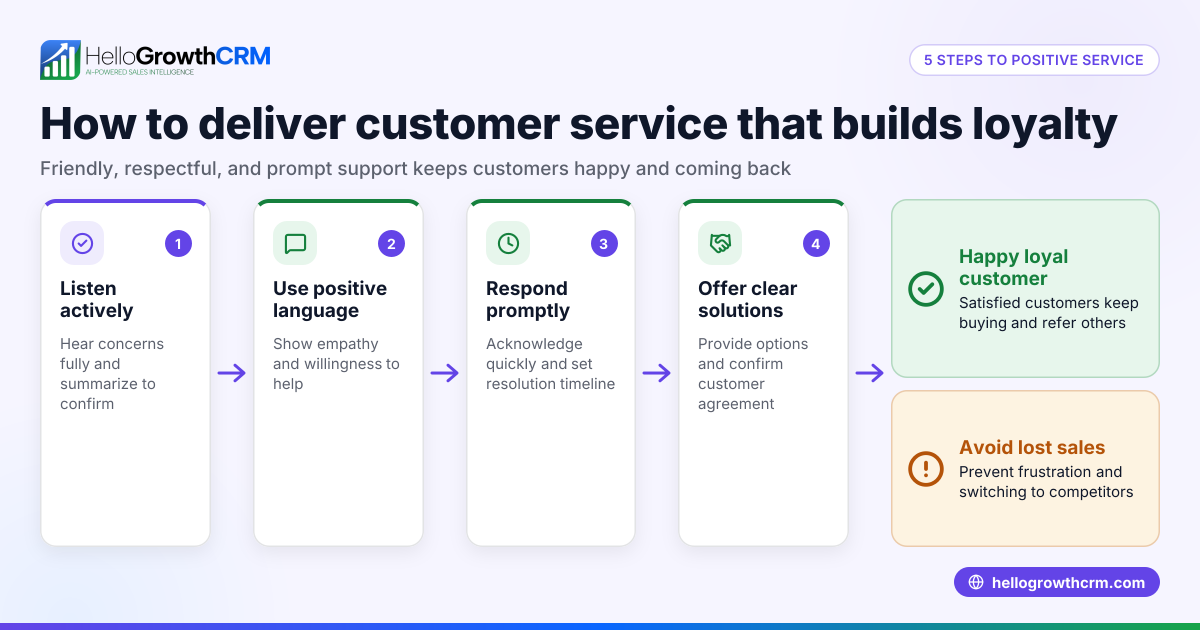
- Respond quickly and personally. Aim to reply to queries within hours, not days. Use the customer’s name and refer to their previous interactions to show you value them.
- Track and resolve issues thoroughly. Record all service requests and follow through until fully resolved. Check regularly that no tickets remain open too long.
- Collect and act on feedback. Ask customers how their experience was and use this to improve. Check feedback trends monthly.
- Train your team consistently. Ensure everyone understands your service standards and how to use your tools effectively. Review training every quarter.
- Use technology to support your process. Employ tools that integrate communication channels and automate reminders to prevent missed follow-ups. For example, a WhatsApp and SMS CRM can help centralise messages and speed up replies.
Example (fictional figures)
A solar-panel installer in Glasgow receives 120 customer service requests in March 2026. They aim to respond to all requests within 24 hours and resolve as many as possible promptly.
- Total requests: 120
- Achieved quick responses: 110
- Achieved resolutions within a few days: 100
Response rate = 110 / 120 × 100% = 91.67% Resolution rate = 100 / 120 × 100% = 83.33%
The business identifies that delays were mostly due to manual tracking errors and missed follow-ups.
By adopting a centralised system to track tickets and automate follow-ups, they improve response and resolution rates to:
- Improved quick responses: 117
- Improved resolutions: 112
New response rate = 117 / 120 × 100% = 97.5% New resolution rate = 112 / 120 × 100% = 93.33%
They also save time and reduce customer complaints.
Common mistakes
- Using separate tools for communication and tracking. Prevent this by centralising all customer data and interactions in one system to avoid lost messages.
- Delaying responses due to unclear responsibility. Assign clear roles and use reminders to ensure no query is ignored.
- Ignoring customer feedback. Regularly review feedback and act on it to improve service quality.
- Failing to train staff on customer service standards. Provide ongoing training and refreshers to keep standards high.
- Not following up after resolving an issue. Schedule follow-ups to confirm customer satisfaction.
- Overlooking the value of referrals and repeat business. Encourage satisfied customers to refer others and track these referrals.
Doing this in HelloGrowthCRM
HelloGrowthCRM helps small UK businesses deliver exceptional customer service by keeping service requests on the same customer record as the deal. Its customer portal allows clients to self-serve, reducing response times. Support tickets and a knowledge base provide organised tracking and quick answers. Referral programme tracking encourages word-of-mouth growth. Using HelloGrowthCRM ensures all customer interactions are centralised and easy to manage, supporting your service goals. Learn more about HelloGrowthCRM for the United Kingdom.
Frequently asked questions
What is the difference between good and exceptional customer service? Good customer service meets basic expectations like polite replies and problem-solving. Exceptional service goes further by responding quickly, personalising communication, anticipating needs, and creating a positive lasting impression.
How can small businesses deliver fast customer service without large teams? Small businesses should use centralised CRM tools to organise queries, automate reminders, and provide self-service options. Training and clear processes help teams work efficiently without delays. Features like support tickets and a customer portal help manage this.
Why is customer feedback important for exceptional service? Feedback shows how customers perceive your service and highlights areas to improve. Acting on feedback builds trust and loyalty by demonstrating you listen and care.
How can referrals improve customer service outcomes? Referrals come from satisfied customers who trust your service. Tracking referrals encourages repeat business and rewards loyal customers, enhancing overall service quality.
What role does technology play in exceptional customer service? Technology centralises information, automates routine tasks, and integrates communication channels. This reduces errors and speeds up responses, making service more consistent and reliable. See WhatsApp and SMS CRM for communication features.
Key takeaways
- Exceptional customer service means fast, personalised, and thorough support that exceeds expectations.
- Centralise customer data and interactions to avoid lost messages and delays.
- Use clear processes and regular training to maintain high service standards.
- Collect and act on customer feedback to improve continuously.
- Leverage technology like HelloGrowthCRM to manage tickets, referrals, and customer portals efficiently.
Start improving your customer service today. Start on the Free Forever plan (200 leads, no credit card).
Ready to put this into practice?
Set up your pipeline, WhatsApp follow-ups, and AI lead scoring in minutes — free, no credit card.
Try HelloGrowthCRM freeGet CRM tips in your inbox
Join thousands of sales professionals who get weekly insights on CRM strategy, AI automation, and pipeline optimization.

The HelloGrowthCRM team publishes guides on CRM strategy, AI sales tools, and revenue operations for small business sales teams.