HelloGrowthCRM software
Built for real small-business sales teams
HelloGrowthCRM helps reps qualify faster, follow up on time, and close more deals—with practical automation in one place.
- AI lead scoring and pipeline visibility
- Built-in dialer, WhatsApp, and email automation
- Sales forecasting and RevOps-ready reporting
Low effort customer experience means making it easy and quick for your customers to get what they need from your business without unnecessary hassle or delays. This article explains why low effort matters, how to implement it step-by-step, and practical tips to avoid common pitfalls. You'll also see a realistic example and learn how HelloGrowthCRM helps keep service simple and efficient.
Why this comes up / what goes wrong
Small and mid-sized US business owners often face challenges where customers have to jump through multiple hoops to get service or support. This can be because of slow responses, needing to repeat information multiple times, or having to contact different people or channels for help. Such friction causes frustration, lost sales, and lower customer retention. Business owners want to reduce the effort customers put in to increase satisfaction and loyalty, but they may not know where to start or how to organize their sales and support processes to achieve this.
Step-by-step
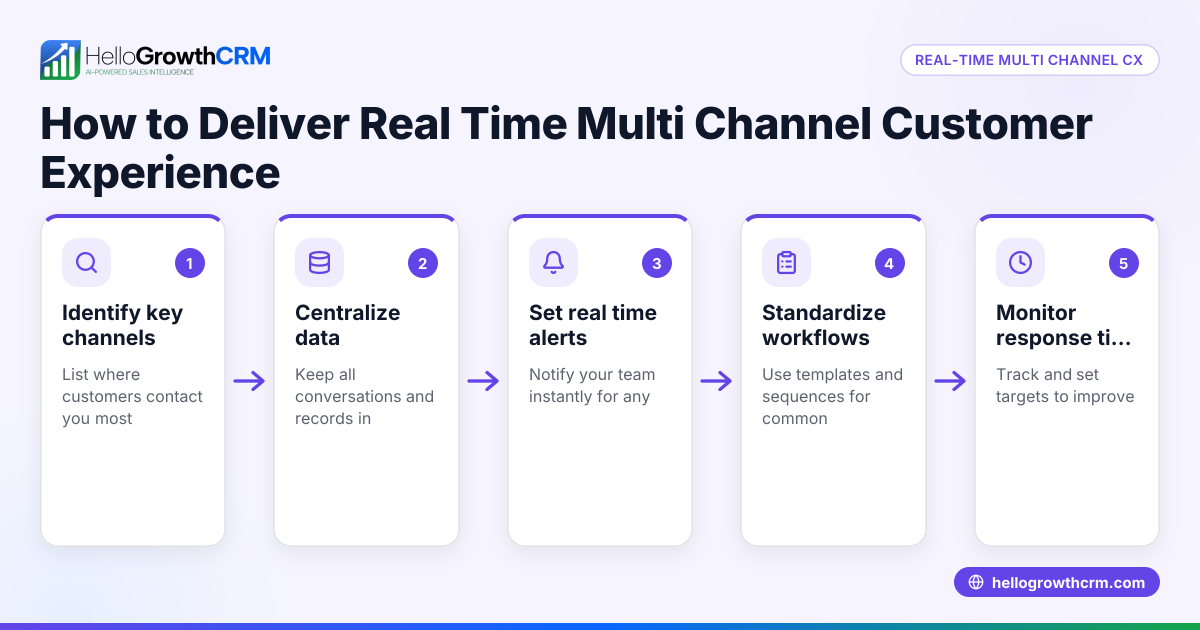
- Map your customer journey: Identify every step your customer takes from first contact, purchase, to after-sale support. Check for points where customers have to do extra work like filling forms multiple times or waiting for follow-up.
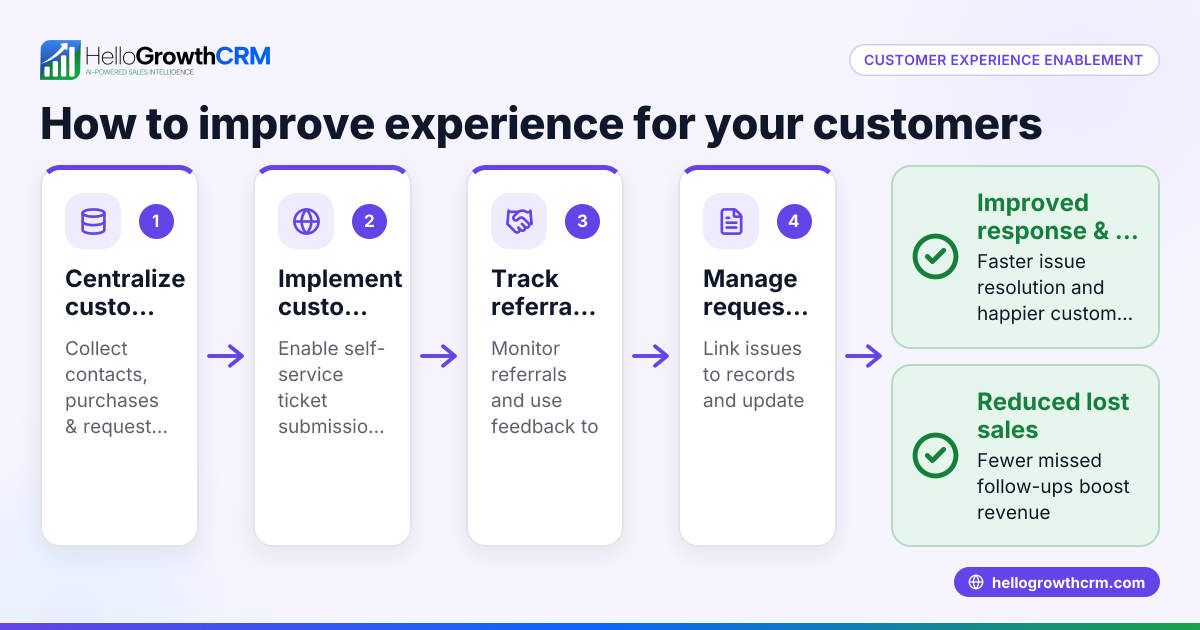
- Centralize customer information: Ensure all customer data, including past interactions and service requests, is stored in one place accessible to your team. Check that no information is lost between departments.
- Simplify communication channels: Use clear, consistent channels (e.g., WhatsApp, SMS, email) and avoid forcing customers to switch platforms. Check that customers can reach help easily without confusion.
- Automate routine tasks: Set up automated follow-ups, reminders, and answers to common questions to reduce wait times. Check that automation doesn’t feel robotic.
- Provide self-service options: Offer a customer portal or knowledge base where customers can find answers or track requests themselves. Check that the portal is easy to use and updated.
- Train your team: Make sure your sales and support teams understand the importance of reducing customer effort and have the tools to do so. Check their responsiveness and empathy.
- Collect feedback and improve: Regularly ask customers about their experience and identify new friction points. Check that feedback leads to action.
Example (fictional figures)
A plumbing company in Austin, Texas, "Austin Pipes," wants to reduce customer effort in handling service requests.
- They currently receive 300 service calls a month.
- Each call takes 10 minutes to log and coordinate.
- Staff spends 300 calls × 10 minutes = 3,000 minutes = 50 hours monthly just on manual coordination.
Austin Pipes implements a self-service customer portal and centralized ticketing system.
- The portal reduces coordination time by 60%.
- New coordination time: 50 hours × 40% = 20 hours.
Time saved monthly:
50 hours - 20 hours = 30 hours.
Assuming $25/hour labor cost,
30 hours × $25 = $750 saved monthly.
This saved time allows faster response and reduces customer effort by letting customers track and update requests themselves.
Common mistakes
- Overcomplicating processes: Adding too many steps or forms increases effort. Prevent by mapping and removing unnecessary steps.
- Fragmented customer data: Storing information in multiple places causes repeated questions and delays. Prevent by centralizing data.
- Ignoring communication preferences: Forcing customers onto unfamiliar channels frustrates them. Prevent by using channels customers prefer, like WhatsApp or SMS. See more on WhatsApp and SMS CRM.
- Lack of self-service: Not providing easy ways for customers to find answers or track issues increases support load. Prevent by offering a customer portal and knowledge base.
- Poor team training: Staff unaware of the importance of low effort can slow responses. Prevent by training and setting clear expectations.
- Not tracking customer health: Without monitoring customer satisfaction and effort, problems go unnoticed. Prevent by using tools like customer health score.
Doing this in HelloGrowthCRM
HelloGrowthCRM supports low effort customer experience by keeping all service requests, tickets, and referrals on the same customer record as the deal. It offers a branded self-service customer portal and a knowledge base so customers can find answers and track their requests independently. This reduces back-and-forth and helps your team respond faster and more accurately. Learn more about how HelloGrowthCRM fits US businesses at HelloGrowthCRM for the United States.
Frequently asked questions
What does low effort customer experience mean? Low effort customer experience means designing your business processes so customers can get help, buy, or resolve issues quickly and easily without unnecessary steps or delays.
Why is low effort important for small businesses? Small businesses often compete by providing better service. Reducing customer effort improves satisfaction, loyalty, and repeat business, which is critical for growth.
How can I measure if my customer experience is low effort? You can measure it by tracking customer feedback on ease of use, monitoring response times, and using metrics like customer health score to identify friction points.
Can automation help reduce customer effort? Yes, automation can speed up routine communications and follow-ups, but it should be balanced to avoid making customers feel ignored or frustrated.
What role does a customer portal play? A customer portal lets customers find information and manage service requests themselves anytime, reducing their need to contact support and decreasing effort.
Key takeaways
- Low effort customer experience means making it easy for customers to get what they need without hassle.
- Map your customer journey and remove friction points step-by-step.
- Centralize customer data and simplify communication channels like WhatsApp and SMS.
- Provide self-service portals and knowledge bases to empower customers.
- Train your team and monitor customer health to continuously improve.
- HelloGrowthCRM helps by keeping service requests on the same customer record with a customer portal and tickets.
Start simplifying your customer experience today. Start on the Free Forever plan (200 leads, no credit card) to see how HelloGrowthCRM can help.
Ready to put this into practice?
Set up your pipeline, WhatsApp follow-ups, and AI lead scoring in minutes — free, no credit card.
Try HelloGrowthCRM freeGet CRM tips in your inbox
Join thousands of sales professionals who get weekly insights on CRM strategy, AI automation, and pipeline optimization.

The HelloGrowthCRM team publishes guides on CRM strategy, AI sales tools, and revenue operations for small business sales teams.