HelloGrowthCRM software
Built for real small-business sales teams
HelloGrowthCRM helps reps qualify faster, follow up on time, and close more deals—with practical automation in one place.
- AI lead scoring and pipeline visibility
- Built-in dialer, WhatsApp, and email automation
- Sales forecasting and RevOps-ready reporting
Positive customer service means providing friendly, respectful, and solution-oriented support that meets customer needs and leaves them satisfied. It involves listening carefully, using positive language, responding promptly, and following up to ensure issues are resolved. This article covers why positive customer service matters for small businesses, practical steps to deliver it, a worked example with figures, common pitfalls to avoid, and how HelloGrowthCRM features can help you manage service requests efficiently.
Why this comes up / what goes wrong
Many small-business owners struggle with customer service because they lack a clear approach or system to handle requests and complaints. Without positive customer service, customers may feel ignored, frustrated, or undervalued, leading to lost sales and damaged reputation. Small teams often juggle sales, operations, and service without dedicated tools, resulting in slow responses or inconsistent messaging. This can cause customers to seek competitors who provide friendlier, faster support. Understanding positive customer service helps owners improve customer retention and grow their business.
Step-by-step
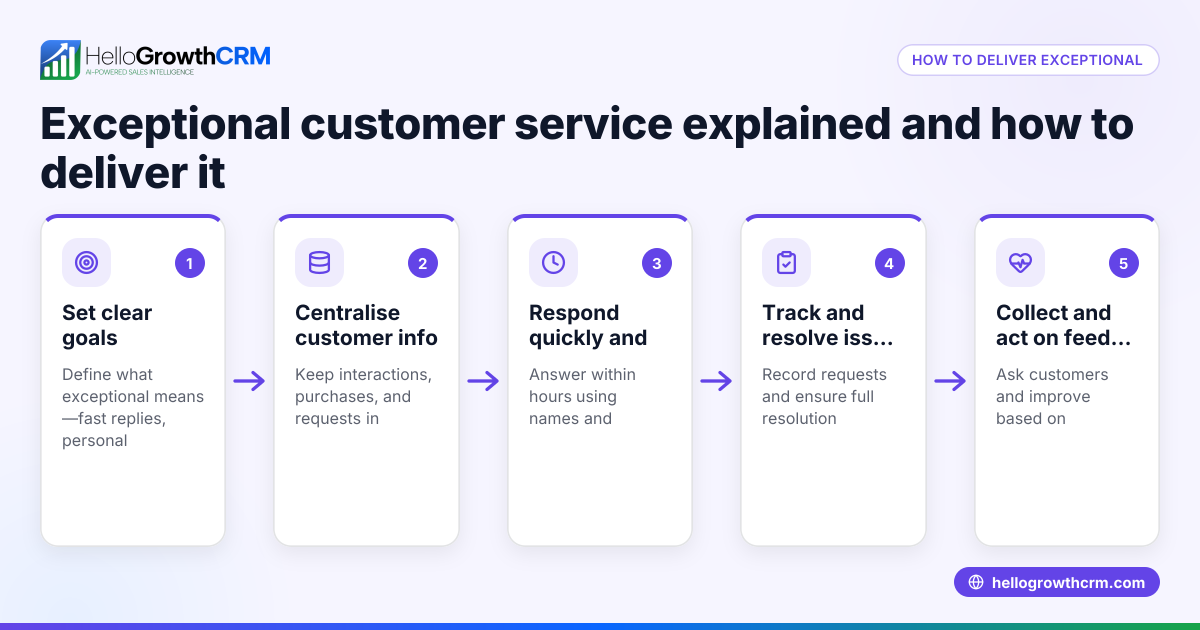
- Listen actively to the customer: Pay close attention to their concerns without interrupting. Check that you understand by summarizing their issue.
- Use positive language: Choose words that show empathy and willingness to help, such as “I’m happy to assist” or “Let’s find a solution together.” Avoid negative phrases like “I don’t know” or “That’s not my problem.”
- Respond promptly: Aim to reply quickly to inquiries or complaints, even if it’s just to acknowledge receipt and give a timeline for resolution.
- Offer clear solutions: Provide specific steps or options to resolve the issue. Confirm the customer agrees with the plan.
- Follow up after resolution: Check back to ensure the customer is satisfied and offer further assistance if needed.
- Document interactions: Keep records of customer communications and resolutions to track recurring issues and improve service.
- Encourage feedback and referrals: Ask customers to share their experience and recommend your business to others.
Check your customer service regularly by reviewing feedback and response times. Adjust your approach based on what works best for your customers.
Example (fictional figures)
Sarah owns a landscaping business in Charlotte, North Carolina. On 03/15/2026, a customer called to complain about a delayed lawn treatment.
Step 1: Sarah listens carefully and summarizes: “You’re upset because the treatment was scheduled for last week but hasn’t been done yet.” Step 2: She uses positive language: “I’m sorry for the delay. I’m happy to fix this quickly.” Step 3: She promises a prompt response: “I’ll schedule the treatment for tomorrow and confirm by 5 PM.” Step 4: Sarah offers a solution: “We’ll do the treatment tomorrow morning and give you a 10% discount for the inconvenience.” Step 5: After the treatment on 03/16/2026, she calls the customer to confirm satisfaction.
This approach helps Sarah keep the customer happy and avoid losing future business.
Common mistakes
- Ignoring customer messages or delaying responses: Prevent by setting response time goals and alerts.
- Using negative or vague language: Prevent by training staff on positive language and phrases.
- Failing to follow up after resolving an issue: Prevent by scheduling follow-up reminders.
- Not documenting customer interactions: Prevent by using a CRM or system to log communications.
- Overpromising and underdelivering: Prevent by giving realistic timelines and updates.
- Not encouraging referrals or feedback: Prevent by creating simple referral programs and feedback requests.
Using tools like HelloGrowthCRM can help avoid these mistakes by centralizing customer records and automating follow-ups.
Doing this in HelloGrowthCRM
HelloGrowthCRM helps small businesses keep customer service positive and organized. Its customer portal allows clients to submit service requests directly, which stay linked to their deal record for easy tracking. Support tickets and a knowledge base help your team respond consistently and quickly. Referral program tracking encourages happy customers to bring in new leads. Learn more about HelloGrowthCRM’s customer management features at customer health score.
Frequently asked questions
What are positive words in customer service? Positive words include phrases like “thank you,” “happy to help,” “absolutely,” and “let’s solve this.” They create a friendly tone and show willingness to assist.
How does positive language in customer service help my business? Using positive language builds trust and rapport with customers. It reduces conflict, encourages cooperation, and improves overall satisfaction.
How can I measure if my customer service is positive? You can track response times, customer feedback scores, repeat business rates, and the number of referrals. HelloGrowthCRM’s customer health score can help monitor these indicators.
How do I handle negative customer feedback positively? Acknowledge the concern without becoming defensive. Thank the customer for their input and explain how you will address the issue.
Can HelloGrowthCRM manage service requests and referrals efficiently? Yes, it centralizes tickets, keeps service requests linked to customer records, and tracks referrals to help grow your business. See details at HelloGrowthCRM for the United States and WhatsApp and SMS CRM.
Key takeaways
- Positive customer service means respectful, helpful, and timely support.
- Use active listening and positive language to create good customer experiences.
- Document and follow up on all service interactions to ensure satisfaction.
- Avoid common mistakes like slow responses or negative phrasing.
- HelloGrowthCRM’s customer portal, tickets, and referral tracking help manage service requests efficiently.
Start improving your customer service today with HelloGrowthCRM. Start on the Free Forever plan (200 leads, no credit card) and see how easy it is to keep your customers happy.
Ready to put this into practice?
Set up your pipeline, WhatsApp follow-ups, and AI lead scoring in minutes — free, no credit card.
Try HelloGrowthCRM freeGet CRM tips in your inbox
Join thousands of sales professionals who get weekly insights on CRM strategy, AI automation, and pipeline optimization.

The HelloGrowthCRM team publishes guides on CRM strategy, AI sales tools, and revenue operations for small business sales teams.