HelloGrowthCRM software
Built for real small-business sales teams
HelloGrowthCRM helps reps qualify faster, follow up on time, and close more deals—with practical automation in one place.
- AI lead scoring and pipeline visibility
- Built-in dialer, WhatsApp, and email automation
- Sales forecasting and RevOps-ready reporting
A field sales CRM is software designed to help sales teams working outside the office manage customer interactions, track visits, and close deals more efficiently. It centralises leads, schedules follow-ups, and logs field activities from mobile devices. This article explains why Singapore small businesses look for field sales CRMs, the steps to evaluate them, common pitfalls, and how HelloGrowthCRM supports field sales teams.
Why this comes up / what goes wrong
Small and mid-sized businesses (SMBs) in Singapore often rely on field sales teams who visit customers or prospects in person. These teams face challenges such as losing leads due to slow follow-up, managing sales activities spread across WhatsApp, email, and spreadsheets, and difficulty tracking visits or commissions. Without a dedicated field sales CRM, sales managers lack visibility on field reps’ daily activities and pipeline status. This leads to missed opportunities, inefficient territory management, and poor sales forecasting.
Step-by-step
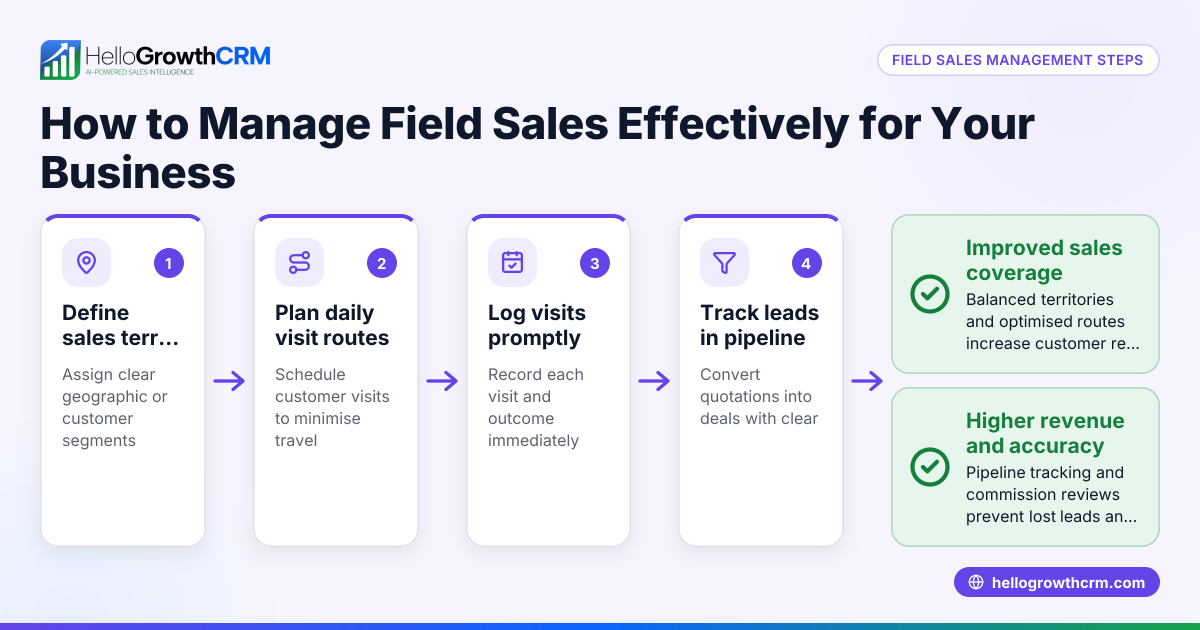
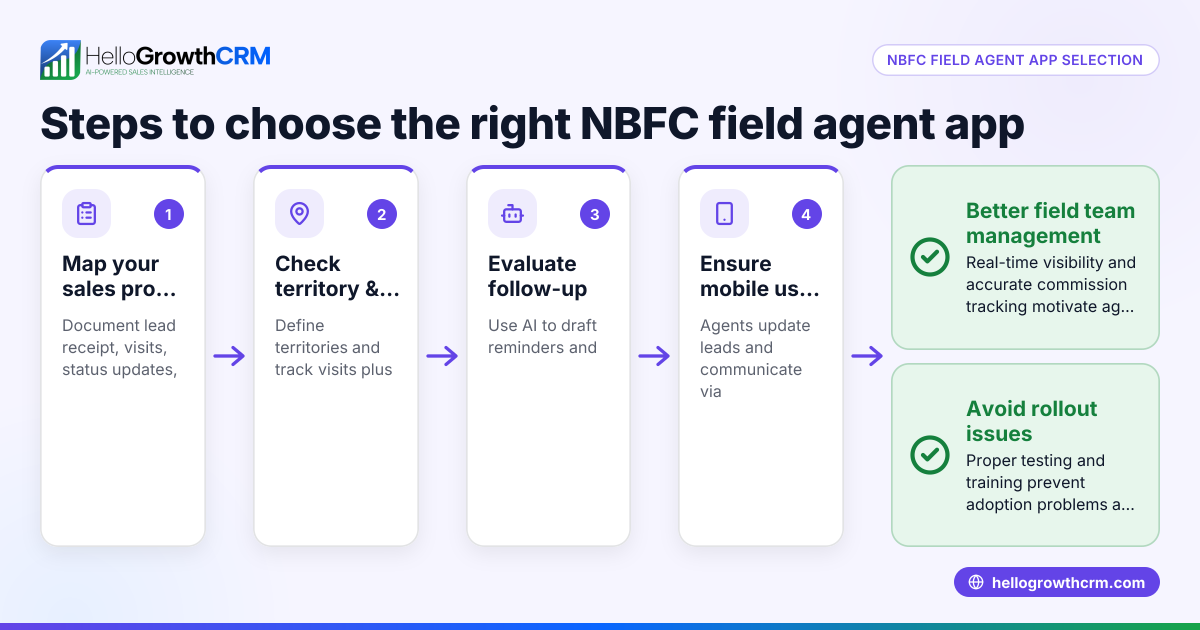
- Identify your field sales needs: List what your team must do in the field—logging visits, managing territories, tracking commissions, or sending follow-ups via WhatsApp or SMS. Check if your team uses mobile devices primarily.
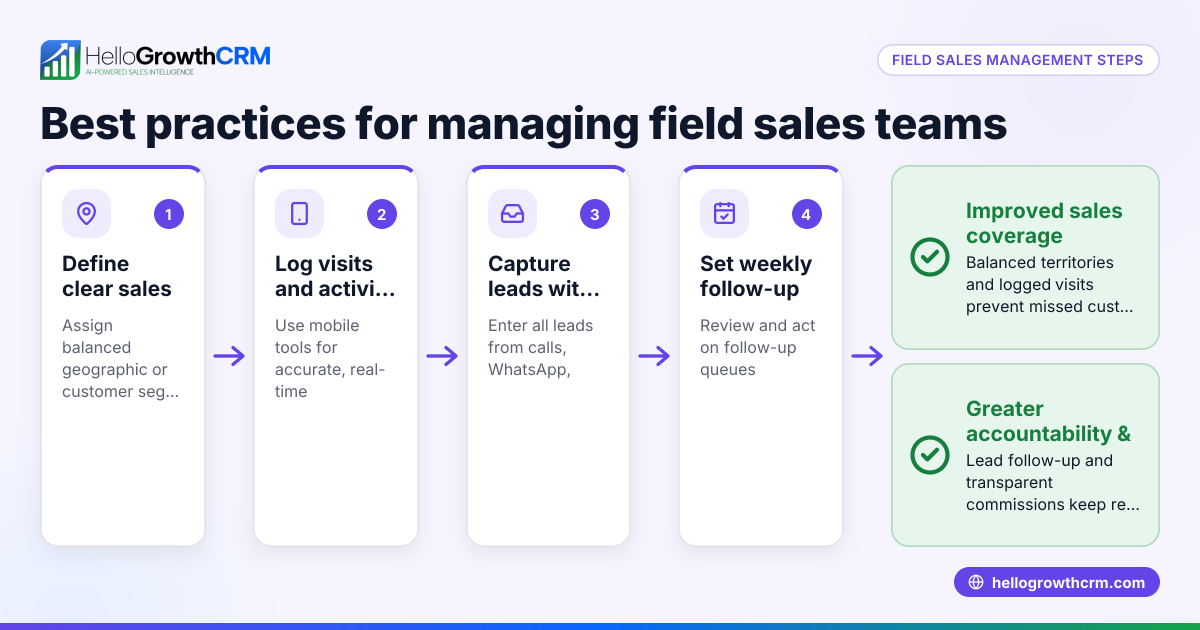
- Evaluate CRM features for field operations: Look for territory management, visit logging, route planning, and mobile activity capture. These features help reps stay organised and managers monitor performance.
- Check pipeline and deal tracking capabilities: Ensure the CRM supports managing deals from first contact to close, with stages and follow-up reminders. This prevents leads from falling through the cracks.
- Assess communication channels supported: Since many Singapore businesses use WhatsApp and SMS, confirm the CRM integrates these channels to log conversations and automate messaging sequences.
- Consider ease of use and adoption: The CRM should be simple enough for field reps to update on their phones without extra admin work. High adoption rates improve data accuracy.
- Review reporting and forecasting tools: Accurate sales forecasts and commission tracking help with planning and motivating your team.
- Compare pricing and plans: Check if field sales features are included or require higher-tier plans. Also, verify any limits on users or leads.
- Test with a trial or demo: Use a free plan or trial to see if the CRM fits your team’s workflow and improves follow-up speed.
Example (fictional figures)
A property agency in Novena has 5 field agents visiting clients. They want to track visits, manage territories, and keep deals moving.
- Monthly sales target: S$150,000
- Average deal size: S$15,000
- Expected deals per month: 10
Using a field sales CRM, they log each visit with notes and set follow-up reminders.
If 2 deals are lost due to slow follow-up, that equals:
S$15,000 × 2 = S$30,000 lost sales
By improving follow-up with CRM reminders, they recover these deals and meet their target:
S$150,000 - S$30,000 = S$120,000 (without CRM)
S$120,000 + S$30,000 = S$150,000 (with CRM)
This simple tracking helps the manager see daily beats and adjust territories to improve coverage.
Common mistakes
- Ignoring mobile usability: Field reps won’t update data if the CRM is hard to use on phones. Prevent by choosing a mobile-friendly CRM with visit logging.
- Not integrating communication channels: If WhatsApp or SMS chats aren’t logged, follow-ups get missed. Choose a CRM that supports WhatsApp and SMS CRM features.
- Overcomplicating the pipeline: Too many deal stages confuse reps. Keep the pipeline simple and clear.
- Forgetting territory management: Without clear territories, reps overlap or miss clients. Use CRM territory tools to assign areas.
- Neglecting follow-up reminders: Leads go cold without scheduled follow-ups. Ensure the CRM has automatic reminders.
- Skipping trial periods: Not testing the CRM leads to poor fit. Always try before buying.
Doing this in HelloGrowthCRM
HelloGrowthCRM supports field sales with features like Territories, field operations and commissions. A distributor’s field reps log visits from their phones, and managers see the day's beat to monitor activity. The Deals (pipeline) feature tracks opportunities from first contact to close, showing quotations sent with follow-up dates so nothing is forgotten. WhatsApp and SMS communication is integrated, logging conversations on lead records and enabling follow-ups via messaging sequences. Learn more about territory management, WhatsApp and SMS CRM, and HelloGrowthCRM for Singapore.
Frequently asked questions
What is a field sales CRM and why do I need one? A field sales CRM helps teams working outside the office manage customer visits, track leads, and close deals efficiently. It centralises data, schedules follow-ups, and logs field activity, reducing lost leads and improving sales visibility.
How does territory management help my field sales team? Territory management assigns sales reps to specific geographic areas, preventing overlaps and ensuring coverage. It helps managers monitor visits and plan routes, increasing sales efficiency.
Can I use WhatsApp and SMS with a field sales CRM? Yes, many field sales CRMs integrate WhatsApp and SMS to log conversations and automate follow-ups. This is crucial in Singapore where these channels are widely used.
What features should I prioritise when choosing a field sales CRM? Prioritise mobile usability, territory and visit logging, pipeline tracking with follow-up reminders, and communication channel integration. These ensure your field team stays organised and responsive.
Is it worth trying a free CRM plan first? Yes, a free or trial plan lets you test if the CRM fits your team’s workflow and improves follow-up speed before committing financially.
Key takeaways
- A field sales CRM centralises lead and visit management for mobile teams.
- Territory management prevents coverage gaps and overlaps.
- Pipeline tracking with follow-up reminders reduces lost leads.
- WhatsApp and SMS integration is essential for Singapore field sales.
- Mobile usability drives CRM adoption by field reps.
- Trial plans help confirm the CRM fits your business needs.
Start improving your field sales process with HelloGrowthCRM. Start on the Free Forever plan (200 leads, no credit card).
Ready to put this into practice?
Set up your pipeline, WhatsApp follow-ups, and AI lead scoring in minutes — free, no credit card.
Try HelloGrowthCRM freeGet CRM tips in your inbox
Join thousands of sales professionals who get weekly insights on CRM strategy, AI automation, and pipeline optimization.

The HelloGrowthCRM team publishes guides on CRM strategy, AI sales tools, and revenue operations for small business sales teams.