HelloGrowthCRM software
Built for real small-business sales teams
HelloGrowthCRM helps reps qualify faster, follow up on time, and close more deals—with practical automation in one place.
- AI lead scoring and pipeline visibility
- Built-in dialer, WhatsApp, and email automation
- Sales forecasting and RevOps-ready reporting
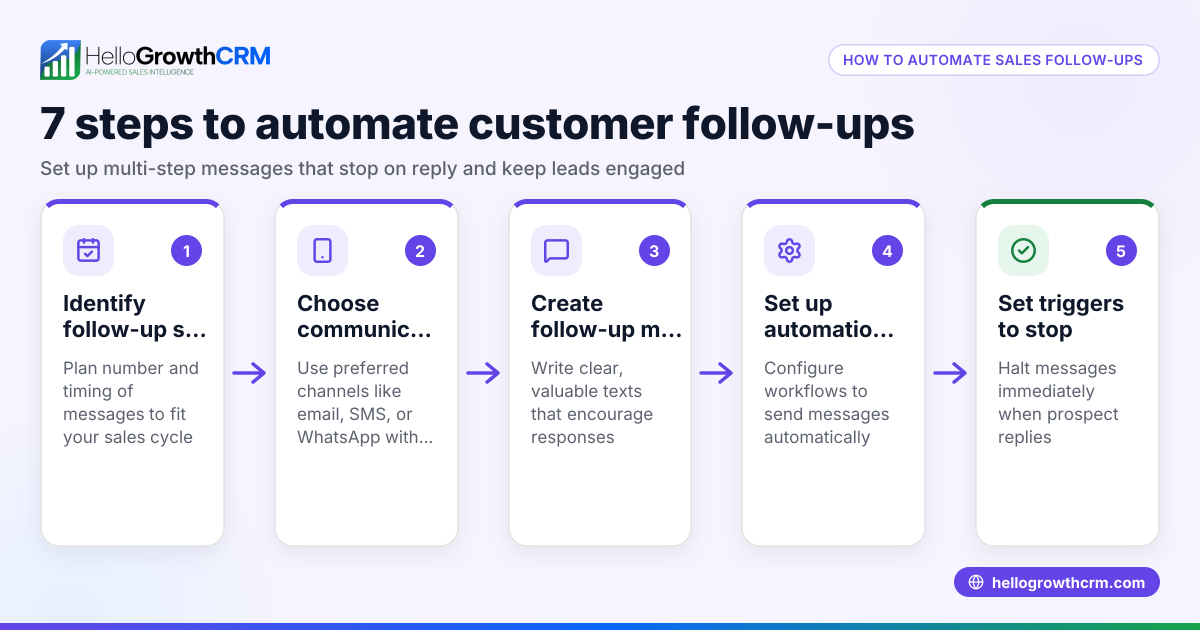
Follow up automation sales is the process of using software to automatically send scheduled follow-up messages to your sales leads. These messages are sent in a sequence over a set period, stopping immediately when the prospect replies. This ensures consistent contact with leads without relying on manual reminders or memory, helping businesses convert more prospects into customers.
Why this comes up / what goes wrong
Small UK businesses often face lost sales because leads are not followed up promptly or consistently. Many founders and sales teams use WhatsApp chats, emails, or spreadsheets to track follow-ups, which can easily lead to missed or delayed responses. This disorganisation frustrates prospects and wastes valuable selling time. Without automation, sales reps may forget who to contact next or when, reducing conversion rates and slowing growth.
Step-by-step
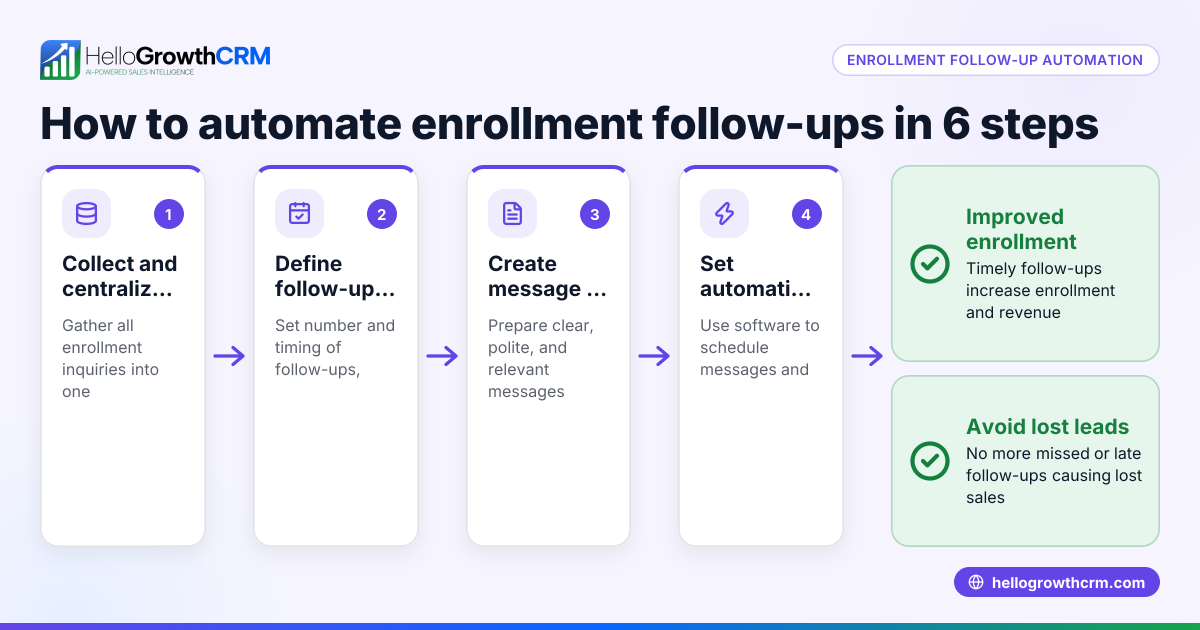
- Collect and centralise leads: Gather all leads from web forms, WhatsApp, email, and other sources into one CRM system to avoid scattered information.
- Design your follow-up sequence: Decide the number of follow-up messages (commonly five) and the channels to use, such as email, SMS, and WhatsApp.
- Set timing and triggers: Schedule messages at specific intervals (for example, every 3 days) and configure the automation to stop as soon as the prospect replies.
- Write clear, personalised messages: Create messages that add value and encourage replies. Avoid generic or spammy content.
- Assign follow-up tasks: Convert each follow-up into a task with a due date so sales reps know exactly when to act, reducing reliance on memory.
- Monitor and optimise: Track response rates and adjust the frequency, timing, or content of messages based on what works best.
Using sales task boards helps visualise daily calls and follow-ups, so reps focus on the right leads without guessing. Learn more about managing tasks with sales task boards.
Example (fictional figures)
A recruitment consultancy in Bristol receives 150 new leads in March 2024. They set up a five-step follow-up sequence over two weeks using email and WhatsApp messages.
- Leads: 150
- Conversion goal: 10% (15 hires)
Follow-up steps:
- Step 1: Initial message sent immediately
- Step 2: Reminder after 3 days
- Step 3: Follow-up after 7 days
- Step 4: Final offer after 10 days
- Step 5: Last check-in after 14 days
Assuming a 20% response rate at each step, the lead responses progress as follows:
150 × 20% = 30 respond after step 1 (150 - 30) = 120 continue 120 × 20% = 24 respond after step 2 (120 - 24) = 96 continue 96 × 20% = 19 respond after step 3 (96 - 19) = 77 continue 77 × 20% = 15 respond after step 4 (77 - 15) = 62 continue 62 × 20% = 12 respond after step 5
Total responses = 30 + 24 + 19 + 15 + 12 = 100
This means 100 prospects respond out of 150 leads, significantly improving follow-up efficiency. If each hire brings £48,000 in revenue, and the goal is 15 hires:
15 hires × £48,000 = £720,000 revenue
This example shows how consistent automated follow-up can increase conversions and revenue.
Common mistakes
- Relying on manual reminders: Leads slip through cracks. Prevent this by using task boards and automated sequences.
- Sending too many or too few follow-ups: Either overwhelms prospects or misses them. Prevent by testing and adjusting sequence length.
- Ignoring replies and continuing automation: This annoys prospects. Prevent by configuring automation to stop on reply.
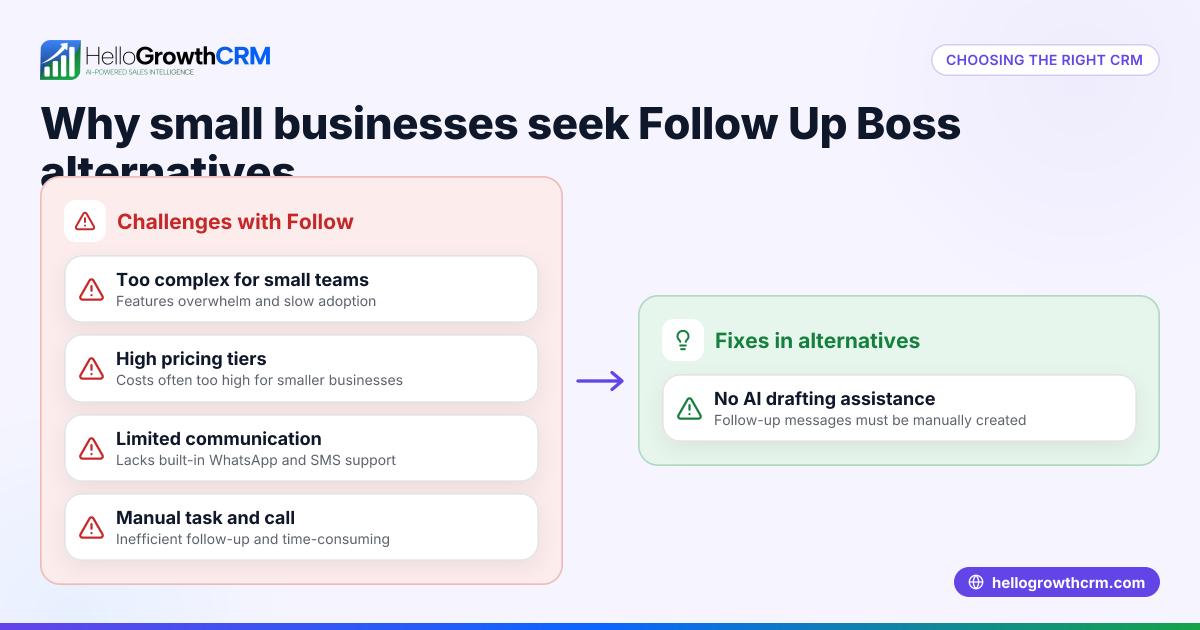
- Using generic messages: Lowers engagement. Prevent by personalising messages and using AI agents to draft follow-ups.
- Not tracking task completion: Leads get forgotten. Prevent by logging activities and using task boards daily.
For more on managing tasks, see sales task boards.
Doing this in HelloGrowthCRM
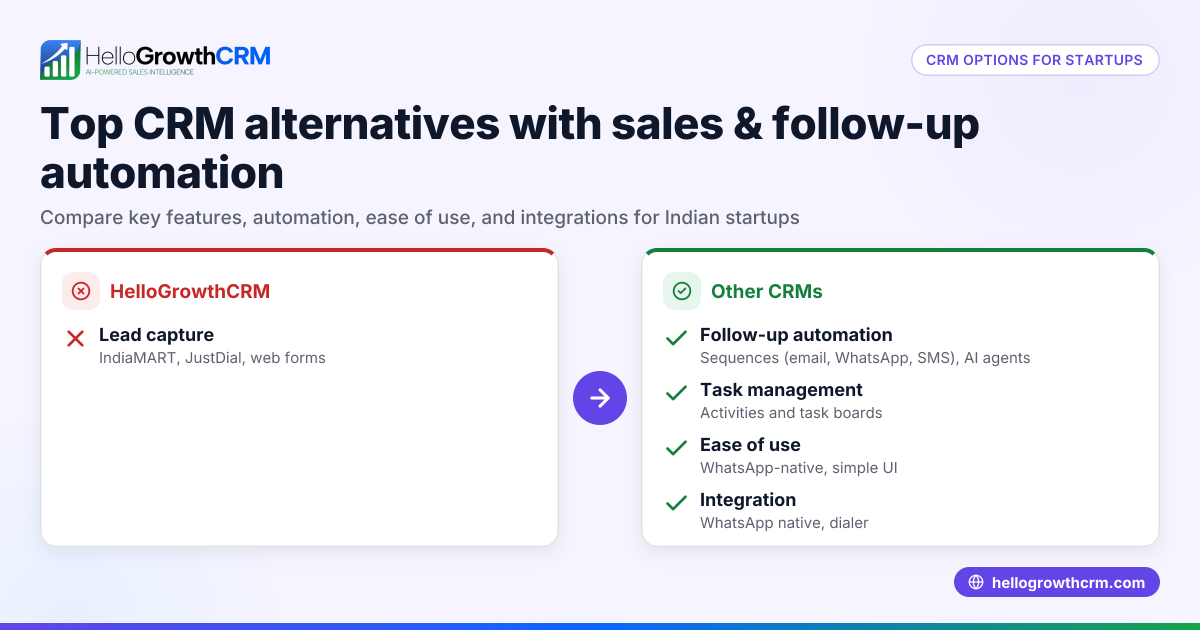
HelloGrowthCRM offers Sequences and campaigns that run a five-step follow-up over two weeks automatically, stopping immediately when a prospect replies. AI agents draft follow-up messages after calls for reps to review and send, saving time and improving message quality. Activities and task boards turn each follow-up into a task with due dates, so reps see their day’s calls as a clear list instead of relying on memory. Learn more about these features at email automation and sequences, AI CRM, and sales task boards.
Frequently asked questions
What is follow-up automation in sales? Follow-up automation uses software to send scheduled messages and reminders to prospects automatically, ensuring consistent contact without manual effort.
How many follow-ups should I automate? A typical sequence has around five steps over two weeks, but this depends on your industry and lead behaviour. Test and adjust based on response rates.
Can automation handle replies from prospects? Yes, good automation stops sending messages as soon as the prospect replies, preventing over-contacting.
Is personalisation possible in automated follow-ups? Yes, using AI agents and templates, messages can be personalised to include names, company details, and relevant information.
Will automation replace my sales team? No, automation supports your team by handling routine follow-ups and reminders, freeing reps to focus on conversations and closing deals.
How do I keep track of follow-up tasks? Task boards in a CRM help assign, schedule, and monitor follow-up activities so nothing is missed. See sales task boards for details.
Key takeaways
- Automate follow-ups with multi-step sequences to engage leads consistently.
- Use task boards to organise daily calls and follow-up tasks clearly.
- Stop automation immediately when a prospect replies to avoid over-contacting.
- Personalise messages using AI agents to improve response rates.
- Monitor and adjust your follow-up sequence based on results.
Start automating your sales follow-up to save time and increase conversions. You can Start on the Free Forever plan (200 leads, no credit card) today.
Ready to put this into practice?
Set up your pipeline, WhatsApp follow-ups, and AI lead scoring in minutes — free, no credit card.
Try HelloGrowthCRM freeGet CRM tips in your inbox
Join thousands of sales professionals who get weekly insights on CRM strategy, AI automation, and pipeline optimization.

The HelloGrowthCRM team publishes guides on CRM strategy, AI sales tools, and revenue operations for small business sales teams.