HelloGrowthCRM software
Built for real small-business sales teams
HelloGrowthCRM helps reps qualify faster, follow up on time, and close more deals—with practical automation in one place.
- AI lead scoring and pipeline visibility
- Built-in dialer, WhatsApp, and email automation
- Sales forecasting and RevOps-ready reporting
Automating lead follow-up in the UK means using tools or systems to ensure every sales lead is contacted promptly and consistently without manual reminders. This article explains why slow follow-up loses leads, how to automate the process step-by-step, common pitfalls to avoid, and how HelloGrowthCRM supports automated follow-up tasks and sequences.
Why this comes up / what goes wrong
Small and mid-sized UK businesses often struggle with lead follow-up because leads arrive through multiple channels like web forms, calls, WhatsApp messages or email. Without a clear system, leads get lost in notebooks, spreadsheets or forgotten after initial contact. Sales teams working across WhatsApp, email and spreadsheets face delays and inconsistent outreach. This slows response times, lowers conversion rates, and wastes valuable sales opportunities.
Many business owners rely on memory or manual lists to track follow-ups. This leads to missed calls and emails, duplicated efforts, or leads slipping through the cracks. The problem grows as the business scales and the volume of leads increases. Automating follow-up ensures every lead is contacted quickly, follow-ups happen on schedule, and the sales process moves forward efficiently.
Step-by-step
- Capture leads centrally: Use a CRM or lead management tool to gather enquiries from web forms, calls and WhatsApp into one place. Check that each lead has an owner assigned and a next step planned.
- Set follow-up tasks with due dates: For each lead, create a follow-up task with a clear deadline. This keeps calls and emails organised and prevents leads being forgotten.
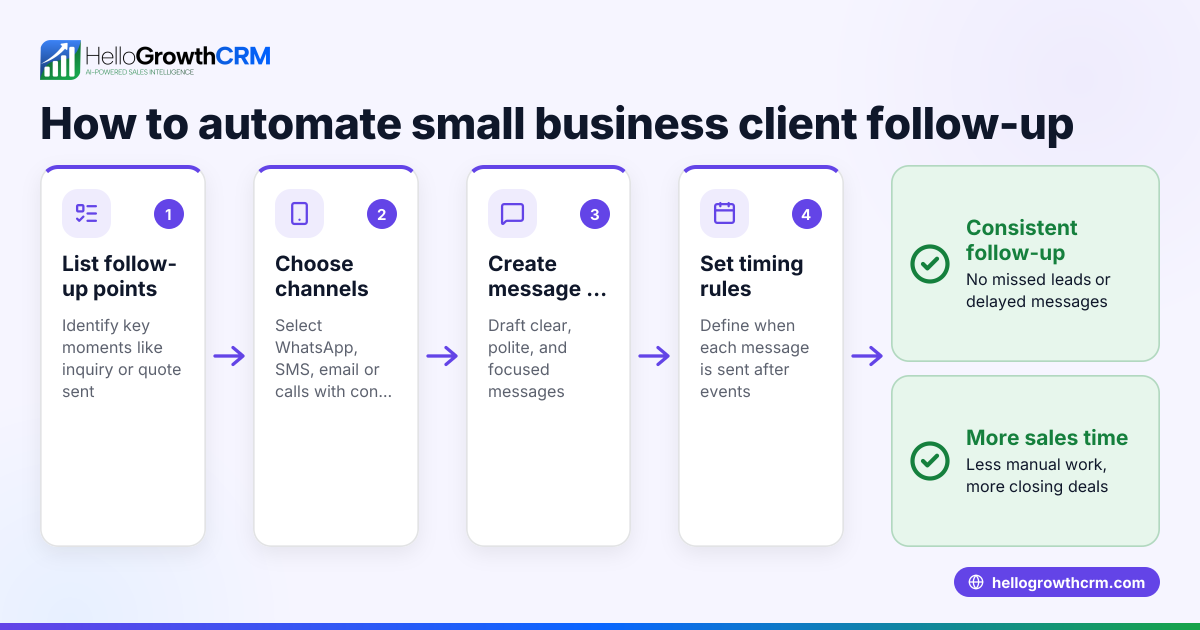
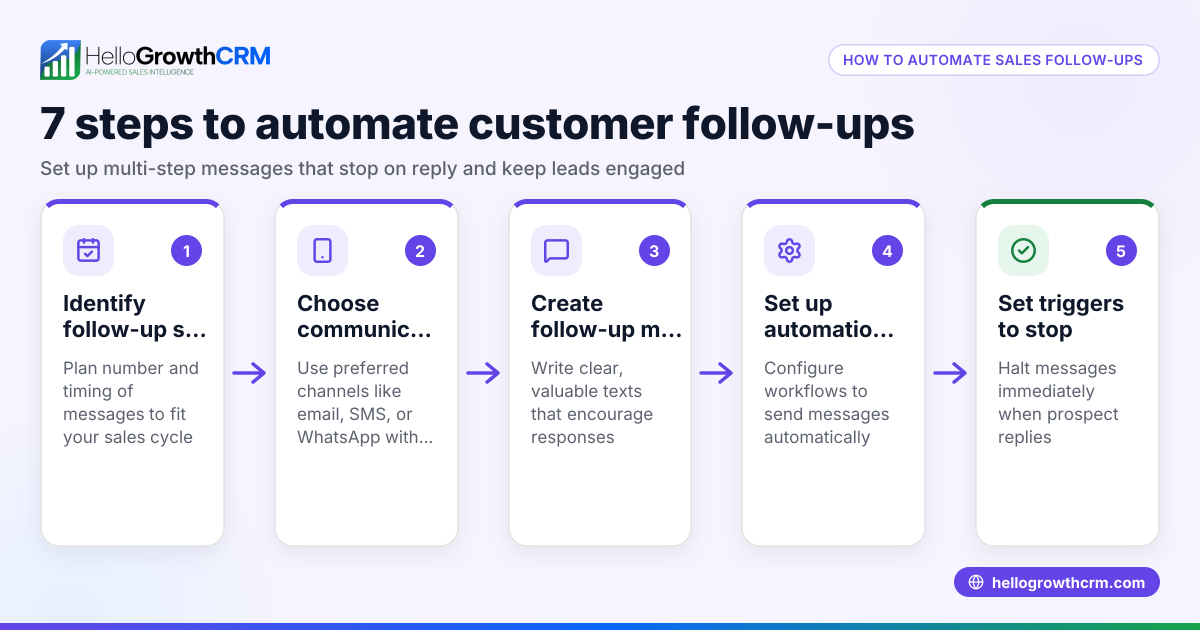
- Automate multi-step sequences: Create automated outreach sequences that send messages across email, WhatsApp or SMS at timed intervals until the lead responds. Check the sequence stops immediately on reply.
- Use task boards to manage daily follow-ups: Review your task board each day for scheduled calls and emails. This replaces memory with a clear, actionable list.
- Track all interactions in one place: Log calls, notes and emails against each lead record to maintain a complete history. Check regularly to update next steps.
- Review lead progress and pipeline: Monitor which leads have responded, which need further follow-up, and which should be disqualified. Adjust tasks and sequences accordingly.
- Use AI lead scoring if available: Prioritise leads most likely to convert based on behaviour or data signals to focus your team’s efforts.
- Integrate with your communication channels: Ensure your CRM connects with WhatsApp, email and phone systems to send messages and make calls without switching apps.
Example (fictional figures)
A solar-panel installer in Glasgow receives 30 web enquiries monthly. They want to automate follow-up to improve conversions.
- Average sale value: £12,000
- Current conversion rate: 10% (3 sales/month)
- Goal: increase conversion to 15% with faster follow-up (4.5 sales/month)
Current revenue = 3 sales × £12,000 = £36,000
Target revenue = 4.5 sales × £12,000 = £54,000
Increase in revenue = £54,000 - £36,000 = £18,000
By automating follow-up with a 5-step sequence over two weeks and task boards for daily calls, the installer ensures no lead is missed and prospects are contacted promptly. This boosts conversion by 5 percentage points and adds £18,000 monthly revenue.
Common mistakes
- Not centralising leads: Leads scattered across WhatsApp, email and paper cause confusion. Prevent by using a CRM to capture all leads in one place.
- Relying on memory or spreadsheets: Manual tracking leads to missed follow-ups. Use task boards to organise daily calls and emails instead.
- No automated sequences: Manually sending follow-ups is slow and inconsistent. Set up automated multi-step sequences that stop on reply.
- Ignoring interaction history: Without logging calls and messages, teams repeat work or lose context. Always record activities against leads.
- Not assigning lead owners: Leads without clear owners get neglected. Assign each lead to a team member responsible for follow-up.
- Failing to prioritise leads: Treating all leads equally wastes time. Use AI lead scoring or qualification criteria to focus on high-potential leads.
Doing this in HelloGrowthCRM
HelloGrowthCRM helps UK businesses automate lead follow-up by capturing every enquiry from forms, calls or WhatsApp as a lead with an owner and a next step, instead of losing them in notebooks. Each follow-up becomes a task with a due date, and the day’s calls appear as a clear list on sales task boards, not a memory test. Automated five-step sequences run over two weeks across email, WhatsApp and SMS, stopping immediately when the prospect replies. Learn more about sales task boards, email automation and sequences, and AI lead scoring to improve your follow-up efficiency.
Frequently asked questions
How quickly should I follow up a new lead? Aim to contact a new lead within an hour if possible, or at least the same business day. Fast follow-up increases your chances of converting the lead before competitors do.
Can I automate follow-up on WhatsApp? Yes, using a CRM that integrates WhatsApp messaging allows you to send automated sequences and log conversations, ensuring consistent outreach without manual effort.
What if a lead replies during an automated sequence? Automated follow-ups should stop immediately when a lead responds. This prevents spamming and allows your sales team to engage personally.
Is it better to call or email first? The best channel depends on your audience. Combining both in sequences can increase response rates. Using a CRM with a built-in dialer and email integration streamlines this process.
How can I prioritise which leads to follow up first? AI lead scoring or simple qualification criteria help identify leads most likely to convert. Prioritise these for faster, personalised follow-up.
Key takeaways
- Automate lead capture and follow-up to avoid losing leads across WhatsApp, email and calls.
- Use task boards to organise daily follow-ups instead of relying on memory or spreadsheets.
- Set up multi-step automated sequences that stop immediately on lead response.
- Assign each lead an owner and track all interactions in one place.
- Prioritise leads using AI scoring or qualification to focus efforts effectively.
- Integrate communication channels like WhatsApp, email and phone within your CRM.
Start automating your lead follow-up today with HelloGrowthCRM. You can start on the Free Forever plan (200 leads, no credit card) and see how it helps your team stay on top of every lead.
Ready to put this into practice?
Set up your pipeline, WhatsApp follow-ups, and AI lead scoring in minutes — free, no credit card.
Try HelloGrowthCRM freeGet CRM tips in your inbox
Join thousands of sales professionals who get weekly insights on CRM strategy, AI automation, and pipeline optimization.

The HelloGrowthCRM team publishes guides on CRM strategy, AI sales tools, and revenue operations for small business sales teams.