HelloGrowthCRM software
Built for real small-business sales teams
HelloGrowthCRM helps reps qualify faster, follow up on time, and close more deals—with practical automation in one place.
- AI lead scoring and pipeline visibility
- Built-in dialer, WhatsApp, and email automation
- Sales forecasting and RevOps-ready reporting
Following up on the email below means sending a polite, clear message that references your previous email to prompt a response. This article explains why following up is important, provides a step-by-step guide, a practical example with calculations, common mistakes to avoid, and how HelloGrowthCRM can help automate and organize your follow-ups.
Why this comes up / what goes wrong
Small-business owners often send an initial email—such as a sales proposal, quote, or inquiry—but don’t get a timely reply. This delays deals, wastes effort, and can cause frustration. Many owners juggle multiple responsibilities and may forget or delay sending follow-ups. Others don’t know how to write a follow-up that prompts a response without seeming pushy. Without a clear follow-up process, leads go cold and revenue opportunities slip away.
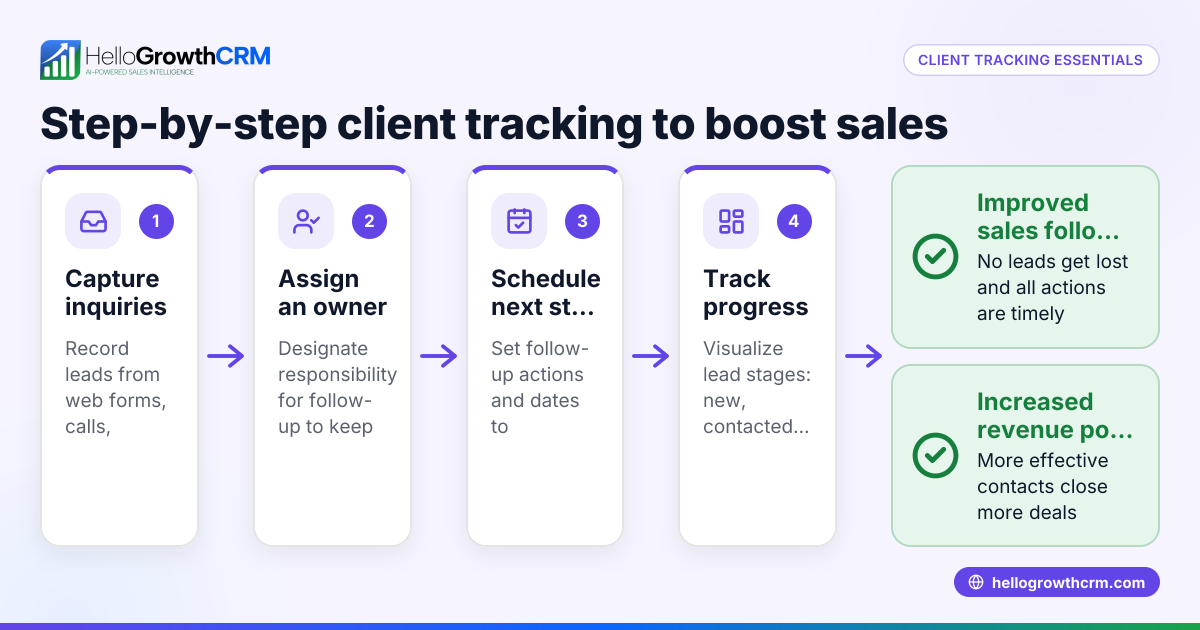
Step-by-step
- Review the original email: Confirm the date, recipient, and content of the email you sent. This ensures your follow-up references the correct message.
- Wait an appropriate time: Generally, allow a few business days after the original email before following up to give the recipient time to respond.
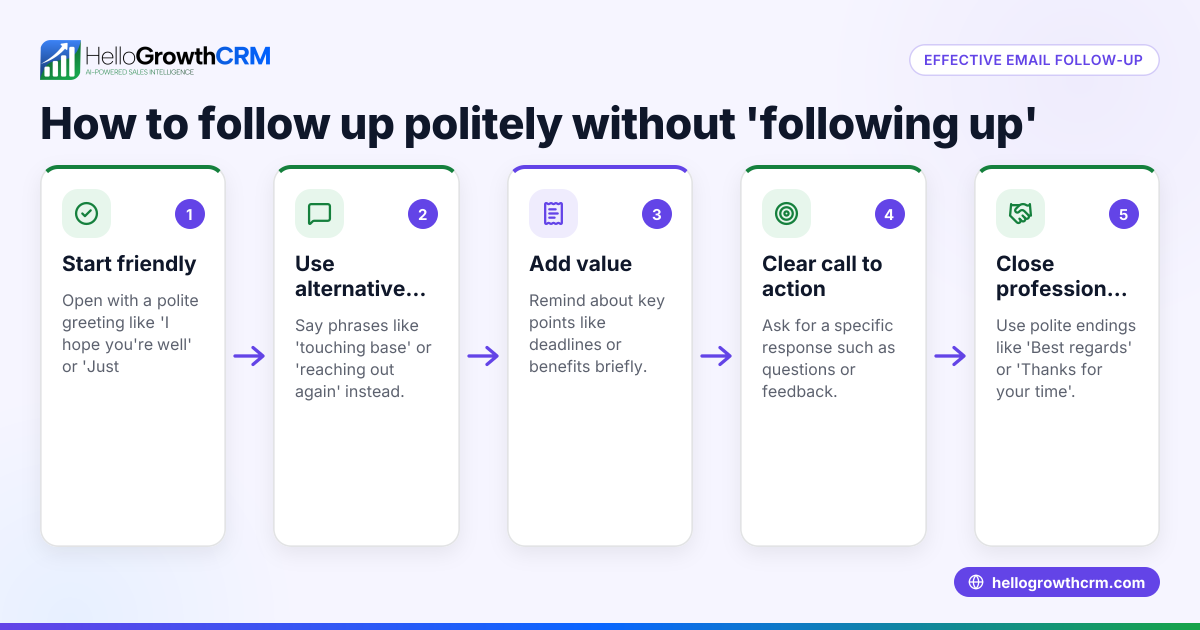
- Write a clear subject line: Use a subject like "Following up on the email below" or "Checking in on my previous message" to catch attention.
- Reference the original email: Briefly mention the date and topic of your previous message to remind the recipient what you are following up on.
- Keep it polite and concise: Express your interest in their response without sounding impatient or demanding.
- Include a clear call to action: Ask a specific question or suggest the next step, such as scheduling a call or providing more information.
- Proofread your email: Check for clarity, professionalism, and any typos before sending.
- Send the follow-up: Use your email client or a CRM tool to send and track the message.
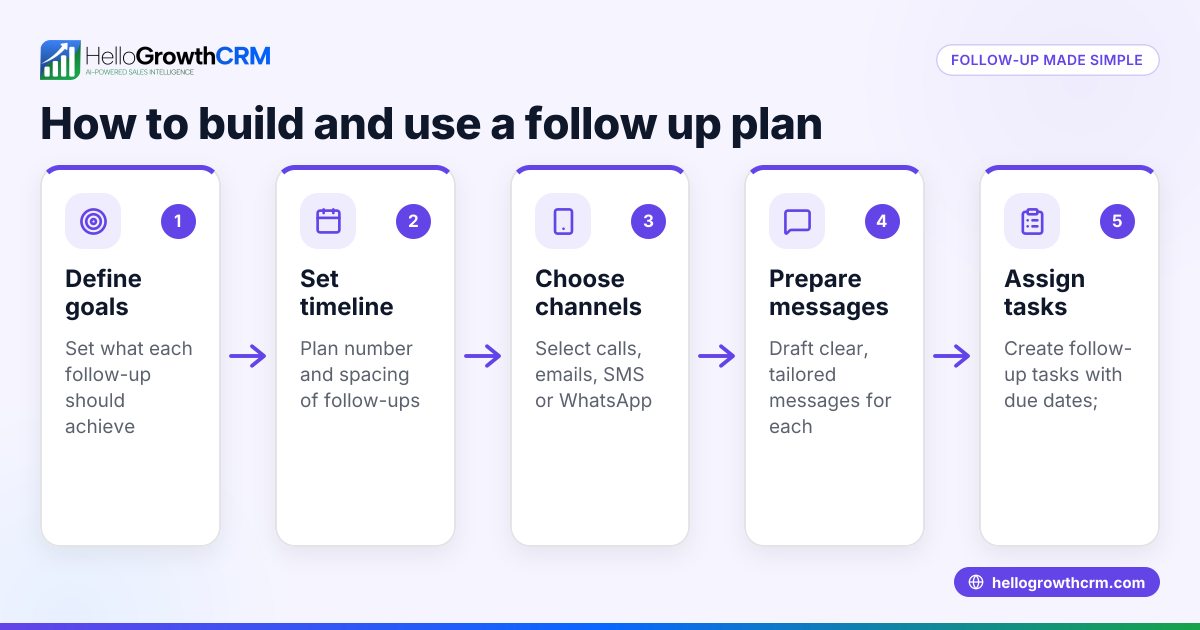
- Set a reminder or task: Schedule a follow-up or call if you don’t receive a reply within another 3-5 business days.
Using tools like email automation and sequences can help schedule and automate these steps efficiently.
Example (fictional figures)
A B2B software reseller in Denver, Colorado, sent a quotation email on 03/01/2026 for a $48,000 software package. No reply was received by 03/06/2026.
Step 1: Review the original email date and content. Step 2: Wait 5 days (03/01/2026 + 5 days = 03/06/2026). Step 3: Write subject line: "Following up on the email below – Software Package Quote". Step 4: Reference: "I wanted to check in on the quote I sent on 03/01/2026 for the $48,000 software package." Step 5: Polite note: "Please let me know if you have any questions or need further details." Step 6: Call to action: "Are you available for a quick call this week to discuss next steps?"
This clear follow-up helps revive the conversation without pressure.
Common mistakes
- Following up too soon: Contacting the recipient before 3 business days can seem pushy. Prevent this by scheduling follow-ups in advance using task boards.
- Being vague or generic: Not referencing the original email’s date or topic may confuse the recipient. Always include these details.
- Writing overly long emails: Lengthy follow-ups can overwhelm or annoy. Keep your message concise and to the point.
- Forgetting to set reminders: Without reminders, follow-ups can be missed. Use activities and task boards to keep follow-ups on schedule.
- Ignoring team visibility: If multiple team members contact the same lead, duplicate follow-ups can occur. Use shared inboxes to keep everyone informed.
Doing this in HelloGrowthCRM
HelloGrowthCRM helps small businesses follow up effectively with these features:
- Sequences and campaigns: Set up automated five-step follow-up sequences over two weeks that run on their own and stop immediately when the prospect replies. This ensures timely and consistent outreach without manual effort. Learn more about email automation and sequences.
- HelloMail shared inbox: All replies to quotation emails are visible to the whole team on the deal, preventing duplicate follow-ups and keeping everyone aligned.
- Activities and task boards: Each follow-up becomes a task with a due date, so your daily calls and follow-ups are organized and not dependent on memory. See how task boards help at activities and task boards.
These features support managing follow-ups across email, WhatsApp, and SMS channels. Explore more about WhatsApp and SMS CRM.
Frequently asked questions
How soon should I follow up on an email? Wait 3-5 business days after your initial email to give the recipient time to respond. Following up too quickly can seem pushy, while waiting too long might lose the lead.
What should I include in a follow-up email? Include a polite reference to your previous email, the date it was sent, a concise message expressing your interest, and a clear call to action like scheduling a call or requesting feedback.
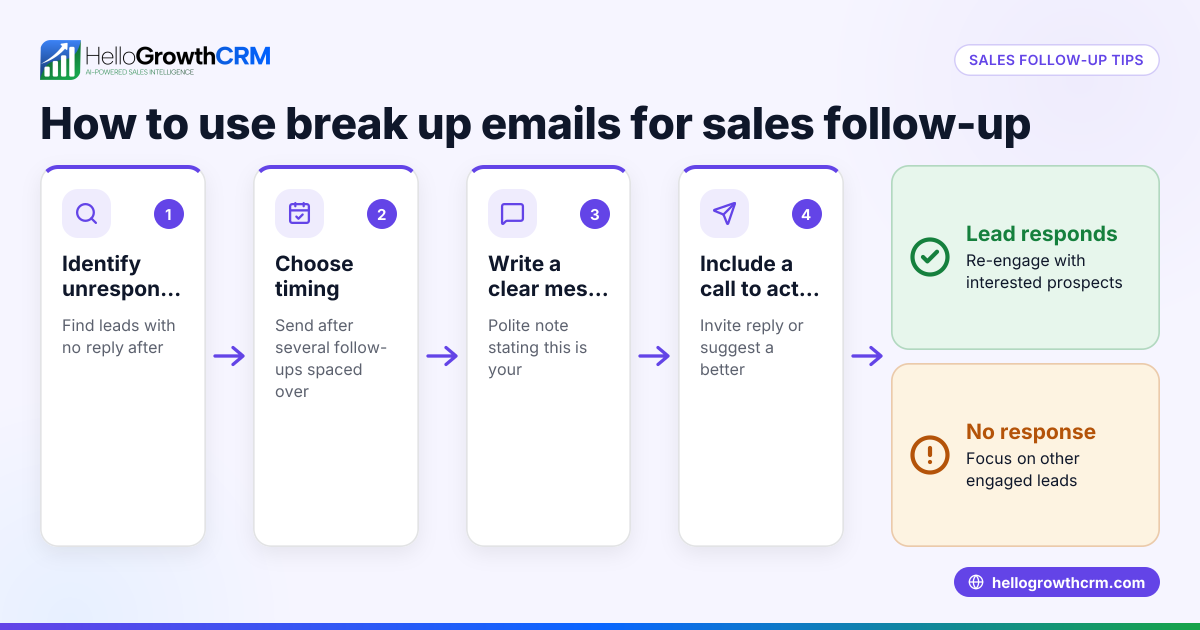
How many follow-ups are appropriate? Typically, 2-3 follow-ups spaced a few days apart are enough. If there is no response after that, consider pausing or trying a different communication channel.
Can I automate follow-ups? Yes, using tools like email automation and sequences in HelloGrowthCRM, you can set multi-step follow-up sequences that run automatically and stop when the prospect replies.
What if I get no response after multiple follow-ups? If repeated attempts fail, it’s best to pause and revisit the lead later. Continuing to follow up too often can harm your relationship.
Key takeaways
- Follow up politely 3-5 business days after your original email.
- Reference the original email’s date and topic clearly to jog memory.
- Keep follow-ups concise with a clear call to action.
- Use task boards and reminders to schedule and track follow-ups.
- Limit follow-ups to 2-3 attempts before pausing.
- Use shared inboxes to keep your team aligned on replies.
Following up on emails is essential for maintaining momentum in sales and customer communication.
Start managing your follow-ups efficiently with HelloGrowthCRM. Start on the Free Forever plan (200 leads, no credit card).
Ready to put this into practice?
Set up your pipeline, WhatsApp follow-ups, and AI lead scoring in minutes — free, no credit card.
Try HelloGrowthCRM freeGet CRM tips in your inbox
Join thousands of sales professionals who get weekly insights on CRM strategy, AI automation, and pipeline optimization.

The HelloGrowthCRM team publishes guides on CRM strategy, AI sales tools, and revenue operations for small business sales teams.