HelloGrowthCRM software
Built for real small-business sales teams
HelloGrowthCRM helps reps qualify faster, follow up on time, and close more deals—with practical automation in one place.
- AI lead scoring and pipeline visibility
- Built-in dialer, WhatsApp, and email automation
- Sales forecasting and RevOps-ready reporting
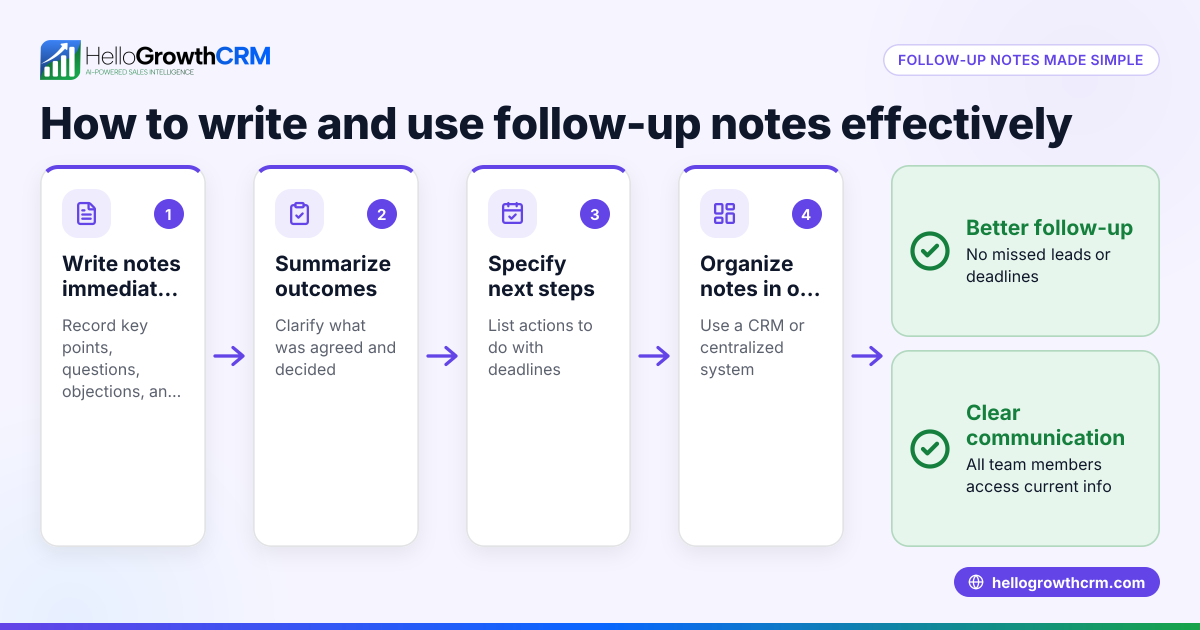
A follow up plan is a clear, organized approach to contacting prospects after your first interaction. It lays out when and how to reach out, what messages to send, and how to track responses. Without a plan, leads can slip through the cracks due to missed calls or forgotten emails.
Why this comes up / what goes wrong
Small business owners often struggle with follow-up because they juggle many tasks and rely on memory or scattered notes. They may respond late or inconsistently, losing potential sales. Sales processes run on text messages, emails, and spreadsheets can become chaotic without a defined plan. This leads to slow follow-ups, missed opportunities, and frustrated prospects.
Step-by-step
- Define your follow-up goals. Decide what you want to achieve with each follow-up—whether it’s scheduling a meeting, providing more information, or closing a sale. Check that goals align with your sales process.
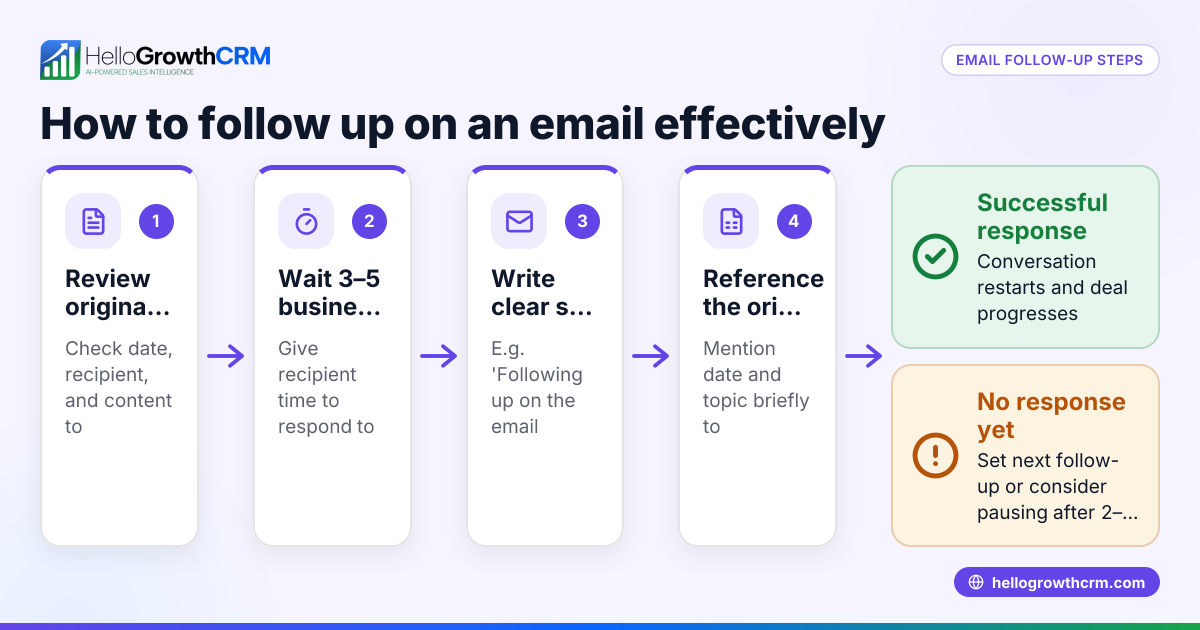
- Set a timeline. Plan the number of follow-ups and their intervals. For example, a common pattern is 5 follow-ups over two weeks. Ensure timing is frequent enough to stay on the prospect’s radar but not so often it feels pushy.
- Choose communication channels. Decide whether to use calls, emails, WhatsApp, or SMS based on your audience preferences. Check that your tools support these channels.
- Prepare follow-up messages. Draft clear, concise messages tailored to each step. Include reminders, offers, or answers to common questions. Review and update messages regularly.
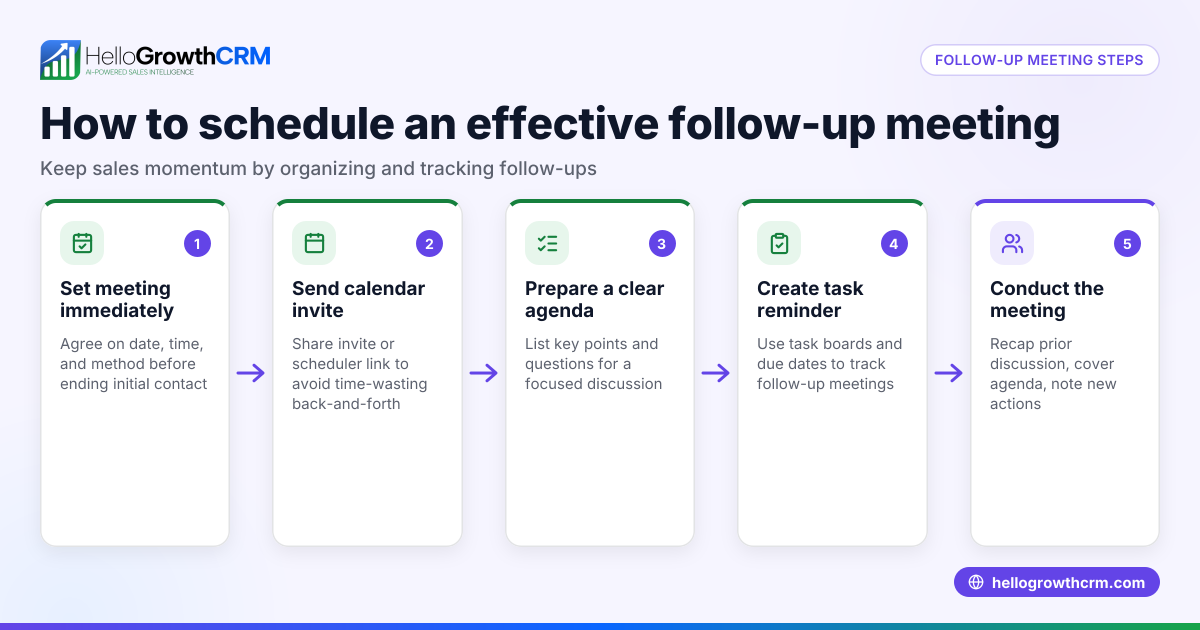
- Assign tasks and due dates. Turn each follow-up into a task with a clear due date so nothing is missed. Check your task list daily to stay on track.
- Track responses and adjust. Monitor which follow-ups get replies or interest. Adjust your plan by stopping outreach when a prospect responds or changing messages if engagement is low.
- Review and improve. After completing a cycle, analyze what worked and what didn’t. Update your plan accordingly for better results.
For managing tasks and scheduling follow-ups, consider using sales task boards to keep organized.
Example (fictional figures)
A residential real-estate team in Phoenix, Arizona, wants to follow up on leads from a recent open house.
- Goal: Schedule property tours within 14 days.
- Plan: 5 follow-ups over 14 days.
Timeline and actions:
- Day 1 (05/01/2026): Send initial thank-you message.
- Day 3 (05/03/2026): Call to check interest.
- Day 6 (05/06/2026): Send email with listings.
- Day 10 (05/10/2026): Send SMS reminder.
- Day 14 (05/15/2026): Final call.
If the team contacts 100 leads and expects to convert 10 leads into sales, with each sale averaging $350,000:
- Number of sales = 10
- Average sale value = $350,000
- Total sales revenue = 10 × $350,000 = $3,500,000
By following up consistently, they maximize the chance of closing these sales.
Common mistakes
- Inconsistent timing: Follow-ups too close or too far apart lose effectiveness. Prevent by setting clear intervals.
- No tracking system: Relying on memory leads to missed follow-ups. Use task boards or CRM activities to log tasks.
- Generic messages: Sending the same message repeatedly can annoy prospects. Tailor messages and update them.
- Ignoring responses: Continuing follow-ups after a prospect replies wastes effort. Stop outreach immediately upon reply.
- Overloading reps: Too many manual follow-ups cause burnout. Automate sequences where possible.
Avoid these by implementing clear steps and using tools like email automation and sequences.
Doing this in HelloGrowthCRM
HelloGrowthCRM helps you manage follow-up plans with these features:
- Activities and task boards: Each follow-up becomes a task with a due date; your day’s calls appear as a list, so you don’t rely on memory. Learn more about sales task boards.
- Sequences and campaigns: Set up automated five-step follow-ups over two weeks that run on their own and stop as soon as the prospect replies. See details on email automation and sequences.
- AI agents: After a call, an AI drafts the follow-up message for your review and sending, saving time. This feature is in beta on Growth plans. More at /product/ai-crm.
Frequently asked questions
What is a good follow-up schedule? A practical follow-up schedule often involves multiple contacts over a couple of weeks, mixing calls, emails, and texts. The key is consistent timing without overwhelming the prospect.
How do I know when to stop following up? Stop follow-ups immediately when the prospect responds or explicitly asks to stop. Continuing outreach after a reply can damage relationships.
Can I automate follow-ups? Yes, automating follow-ups with sequences saves time and ensures consistency. Automation stops automatically when prospects reply, so you don’t over-contact.
What if I forget to follow up? Using task boards or CRM activities to assign due dates and reminders prevents forgetting. Check your daily task list to stay organized.
How personalized should follow-ups be? Personalized messages perform better than generic ones. Tailor your follow-ups based on previous interactions and prospect needs.
Key takeaways
- A follow up plan is a scheduled series of contacts to engage prospects effectively.
- Consistency and timing are critical to avoid lost leads and annoyed prospects.
- Use task boards and automation to manage follow-ups without relying on memory.
- Stop follow-ups immediately when prospects respond.
- Tailor messages for better engagement.
- HelloGrowthCRM offers task boards, sequences, and AI agents to simplify follow-up management.
Start building your follow up plan today and improve your sales results. You can start on the Free Forever plan (200 leads, no credit card) to organize your follow-ups and leads efficiently.
Ready to put this into practice?
Set up your pipeline, WhatsApp follow-ups, and AI lead scoring in minutes — free, no credit card.
Try HelloGrowthCRM freeGet CRM tips in your inbox
Join thousands of sales professionals who get weekly insights on CRM strategy, AI automation, and pipeline optimization.

The HelloGrowthCRM team publishes guides on CRM strategy, AI sales tools, and revenue operations for small business sales teams.