HelloGrowthCRM software
Built for real small-business sales teams
HelloGrowthCRM helps reps qualify faster, follow up on time, and close more deals—with practical automation in one place.
- AI lead scoring and pipeline visibility
- Built-in dialer, WhatsApp, and email automation
- Sales forecasting and RevOps-ready reporting
Genuine customer service means offering honest, empathetic, and reliable support that truly meets your customers' needs. It involves listening carefully, responding quickly, and following through on promises. This article covers why genuine customer service matters, detailed steps to provide it, common pitfalls to avoid, a practical example, and how a CRM can help you manage service requests effectively.
Why this comes up / what goes wrong
Small-business owners often face challenges delivering genuine customer service because they juggle multiple roles and rely on scattered tools like email, text messages, or spreadsheets. This can cause slow responses, lost service requests, or impersonal replies that frustrate customers. Without a clear system to track and own customer issues, businesses risk damaging trust and losing repeat sales. Genuine customer service addresses these problems by prioritizing sincere communication and organized follow-up.
Step-by-step
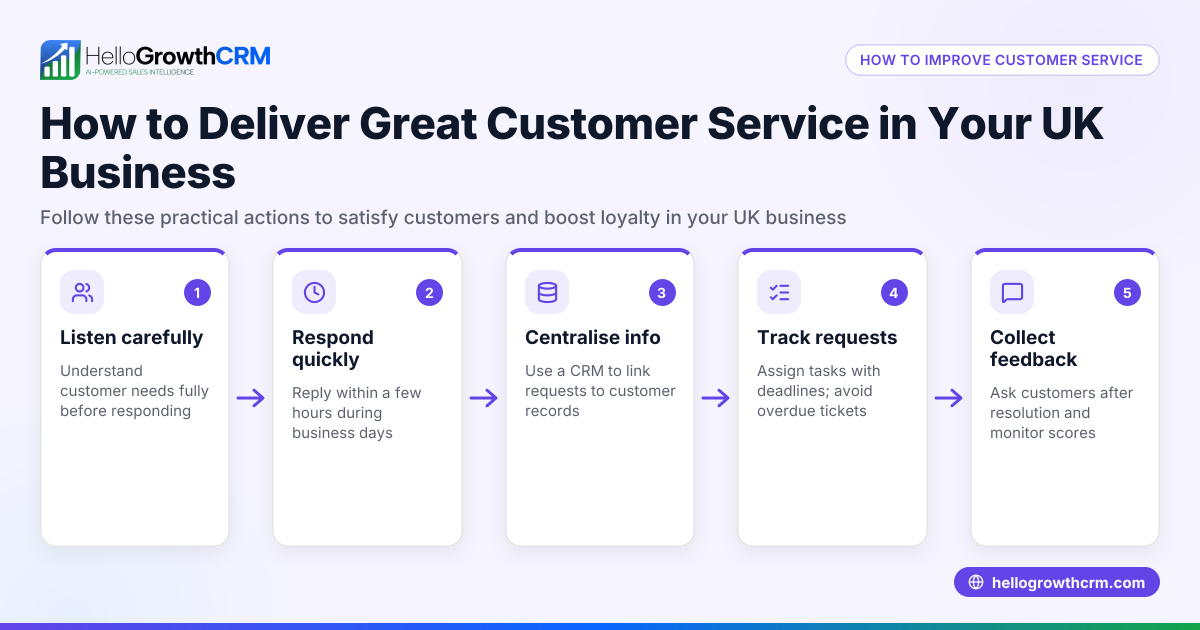
- Listen actively and empathetically. When a customer contacts you, focus fully on their concern. Confirm your understanding by repeating key points back to them.
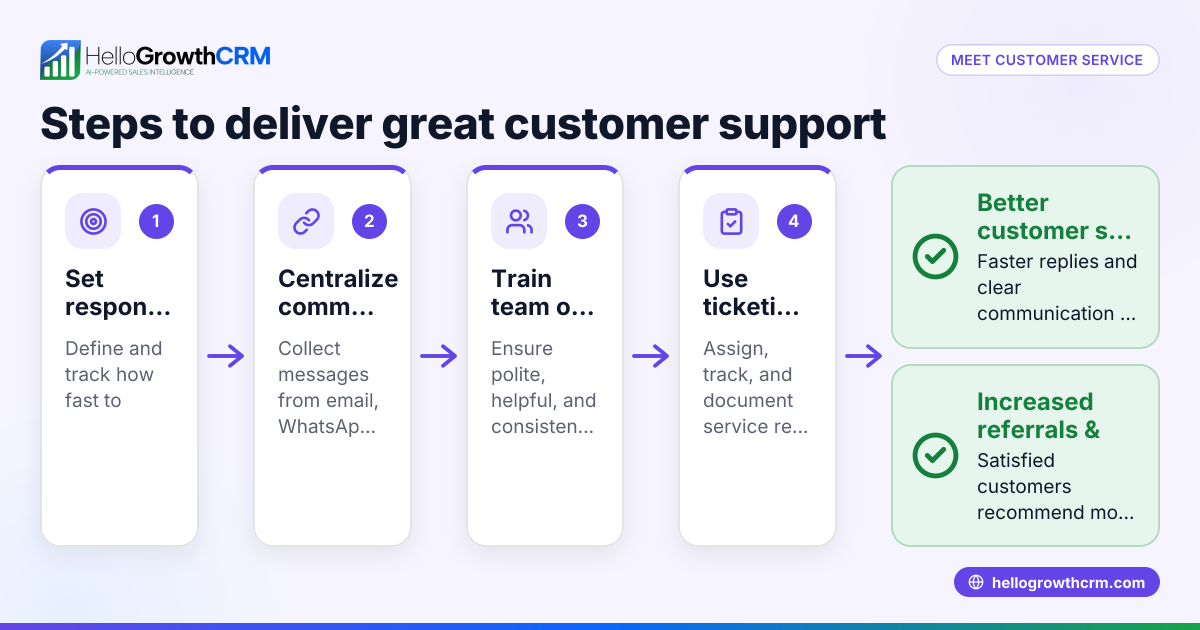
- Respond promptly and clearly. Acknowledge requests quickly, even if you need more time to solve the issue. Use plain language and avoid jargon.
- Take ownership of the issue. Assign responsibility to a specific team member or yourself to ensure the problem is tracked and resolved without passing the customer around.
- Provide honest updates. If resolution takes time, keep customers informed regularly to build trust.
- Follow through on promises. Deliver the agreed solution or explain delays and alternatives.
- Ask for feedback and referrals. After resolving the issue, check customer satisfaction and encourage referrals to grow your business.
- Document interactions. Record details of the customer’s issue and resolution in a central system to maintain history and improve service.
- Use tools to organize service. A CRM with a customer portal, tickets, and knowledge base can help keep track of requests and make information accessible.
See how managing customer service fits with a customer health score for better insights.
Example (fictional figures)
Linda owns a landscaping company in Denver, Colorado. On 06/10/2026, a client reports a sprinkler malfunction via email.
- Linda listens actively: confirms the problem is a broken sprinkler head.
- She responds within 2 hours to schedule a service visit.
- Linda assigns technician Joe to the job.
- Joe updates the client on 06/11/2026, confirming arrival between 9 AM and 11 AM.
- Joe fixes the sprinkler and invoices $200.
- Linda follows up on 06/15/2026 to confirm satisfaction and requests a referral.
Calculations showing customer satisfaction value:
Service cost: $200
Prompt response value (assumed factor): 1.2
$200 × 1.2 = $240 (perceived value from timely service)
Follow-up impact (assumed factor): $50 (additional goodwill)
Total perceived customer value = $240 + $50 = $290
This process helps Linda build trust and encourages repeat business.
Common mistakes
- Delaying responses. Prevent by setting clear response time goals and monitoring them regularly.
- Using scripted or insincere replies. Prevent by training staff to communicate with empathy and authenticity.
- Losing track of service requests. Prevent by logging all requests in a CRM or ticket system.
- Failing to update customers during delays. Prevent by establishing regular communication intervals.
- Not following up after resolution. Prevent by scheduling follow-up calls or emails.
- Separating sales and service records. Prevent by keeping all customer information and service requests in one system.
Learn more about organizing customer service at WhatsApp and SMS CRM.
Doing this in HelloGrowthCRM
HelloGrowthCRM keeps all service requests linked to the same customer record as the deal, ensuring nothing is lost after the sale. Its customer portal lets clients submit tickets and access a knowledge base, which reduces repetitive questions and speeds up resolutions. Referral program tracking helps you grow your business by encouraging word-of-mouth. These features help organize, track, and respond to service needs efficiently. Discover more about the customer health score and HelloGrowthCRM's support for US businesses at HelloGrowthCRM for the United States.
Frequently asked questions
What makes customer service genuine? Genuine customer service is honest, empathetic, and consistent. It means truly understanding customer needs, responding promptly, and following through on commitments.
How can small businesses deliver genuine service without big budgets? Start by training your team to listen and communicate sincerely. Use affordable tools like a CRM with a customer portal and ticketing to keep requests organized.
Why is follow-up important in customer service? Following up confirms that the customer’s issue is fully resolved and shows you value their satisfaction, which builds loyalty and encourages referrals.
Can a CRM help improve genuine customer service? Yes, a CRM centralizes customer data, tracks interactions, and manages tickets so requests don’t get lost and responses are timely.
How do referrals connect to customer service? Satisfied customers are more likely to refer others. Tracking referrals through your CRM helps reward and encourage this behavior.
What role does a knowledge base play in customer service? A knowledge base offers self-service answers to common questions, speeding up resolutions and freeing your team to handle complex issues. See its benefits at WhatsApp and SMS CRM.
Key takeaways
- Genuine customer service is honest, empathetic, and timely.
- Active listening and clear communication are essential.
- Track and own every service request to avoid losing customers.
- Follow up after resolution to confirm satisfaction.
- Organize service with a CRM featuring a customer portal, tickets, and referrals.
- Avoid mistakes like delayed responses and scripted replies.
Delivering genuine customer service builds trust and repeat business. To start managing your customer interactions better, start on the Free Forever plan (200 leads, no credit card) today.
Ready to put this into practice?
Set up your pipeline, WhatsApp follow-ups, and AI lead scoring in minutes — free, no credit card.
Try HelloGrowthCRM freeGet CRM tips in your inbox
Join thousands of sales professionals who get weekly insights on CRM strategy, AI automation, and pipeline optimization.

The HelloGrowthCRM team publishes guides on CRM strategy, AI sales tools, and revenue operations for small business sales teams.