HelloGrowthCRM software
Built for real small-business sales teams
HelloGrowthCRM helps reps qualify faster, follow up on time, and close more deals—with practical automation in one place.
- AI lead scoring and pipeline visibility
- Built-in dialer, WhatsApp, and email automation
- Sales forecasting and RevOps-ready reporting
Customer service metrics are specific numbers that quantify how effectively your business supports customers. These include metrics like average response time, first contact resolution rate, customer satisfaction scores, ticket volume, and repeat contact rate. Tracking these metrics helps you identify problems, improve your service quality, and keep customers happy.
Why this comes up / what goes wrong
Small-business owners often handle customer service informally using emails, text messages, or spreadsheets. This can cause slow responses, lost service requests, and unhappy customers. Without clear metrics, it’s difficult to know if your customer service is effective or where improvements are needed. Measuring customer service metrics gives you concrete data to improve your processes and grow your business.
Step-by-step
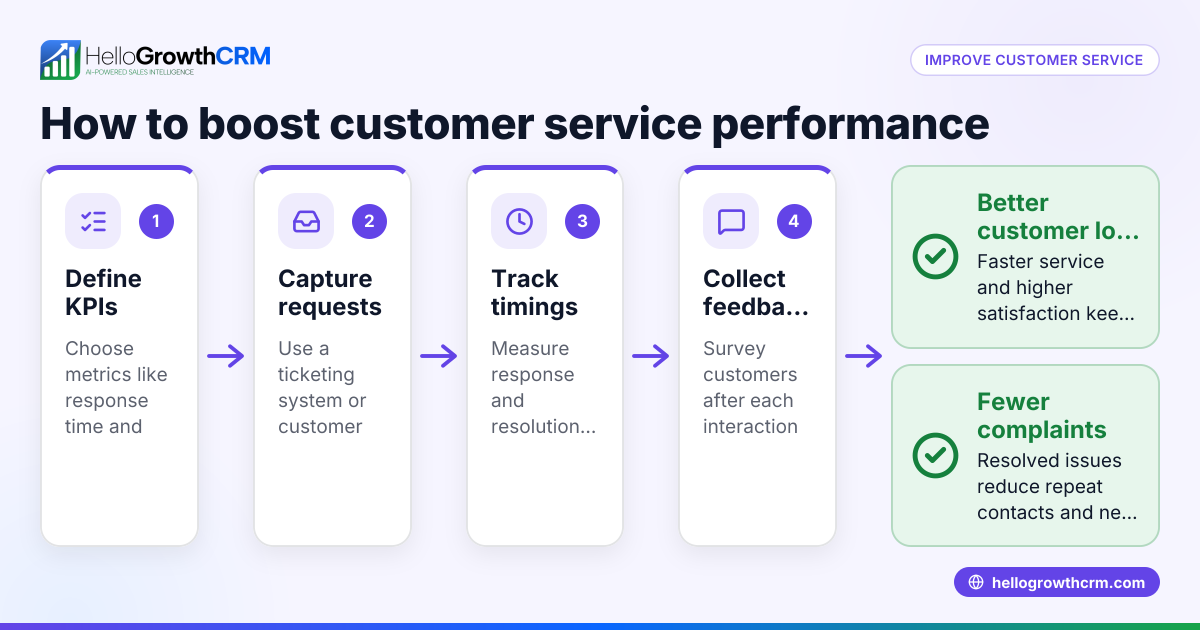
- Define your key customer service metrics. Common ones include:
- Average response time: How long it takes to reply to a customer inquiry.
- First contact resolution rate: The percentage of issues resolved on the first customer contact.
- Customer satisfaction score (CSAT): Ratings customers give after service.
- Ticket volume: The total number of support requests received.
- Repeat contact rate: How often customers contact you again about the same issue.
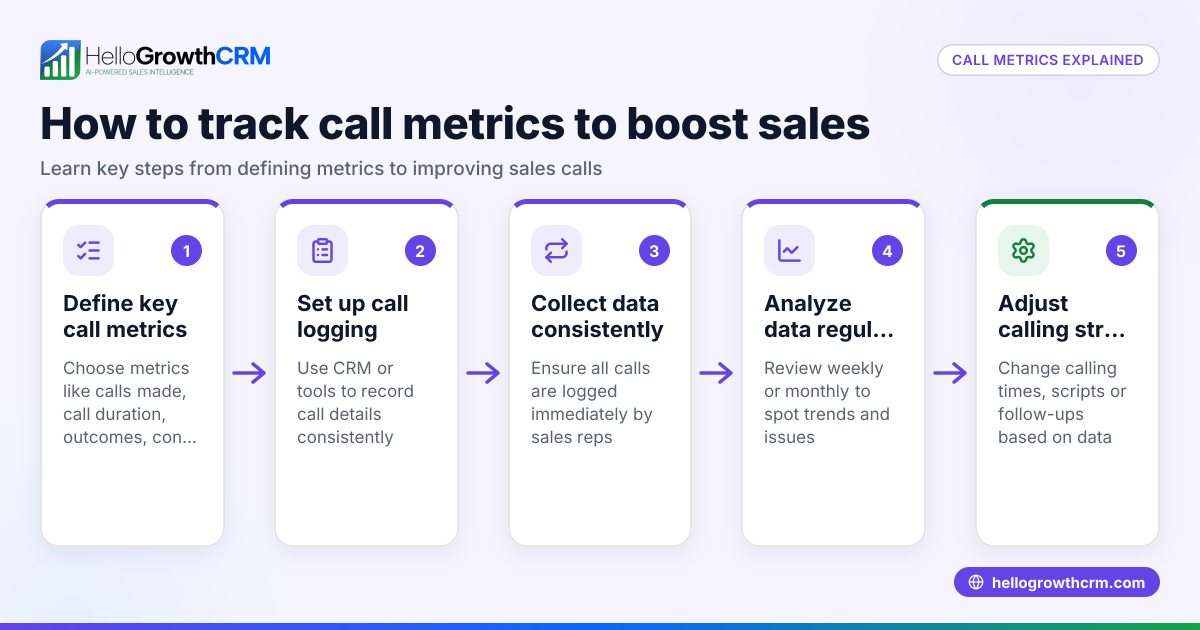
- Collect data consistently. Use a system to log every customer interaction, including timestamps and outcomes. Avoid scattered notes or emails.
- Calculate each metric regularly. For example, calculate average response time by dividing total response time by the number of tickets.
- Analyze trends over time. Review your metrics monthly or quarterly to spot improvements or declines.
- Set goals and benchmarks. Decide what good performance means for your business and aim for those targets.
- Act on the data. If response times are slow, consider adding staff or improving workflows. If satisfaction scores are low, provide more training or revise policies.
- Review and update your metrics. As your business grows, add or adjust metrics to fit new challenges.
Example (fictional figures)
A residential real-estate team in Phoenix, Arizona tracks customer service metrics for March 2026.
- Total tickets received: 120
- Total response time (hours): 360
- Tickets resolved on first contact: 90
- Customer satisfaction survey responses: 80
- Total satisfaction score sum: 336
Calculations:
Average response time = Total response time / Number of tickets = 360 hours / 120 tickets = 3 hours per ticket
First contact resolution rate = (Tickets resolved on first contact / Total tickets) × 100 = (90 / 120) × 100 = 75%
Average CSAT score = Total satisfaction score sum / Number of responses = 336 / 80 = 4.2 out of 5
This example shows the team replies within 3 hours on average, resolves 75% of issues on first contact, and maintains a strong satisfaction score of 4.2.
Common mistakes
- Ignoring data consistency. Prevent this by logging every customer interaction in one place, not scattered emails or notes.
- Tracking too many metrics at once. Focus on a few key metrics that align with your business goals.
- Not setting benchmarks. Without targets, you can’t tell if your numbers are good or need improvement.
- Failing to act on insights. Use your metrics to change processes or train staff, not just collect numbers.
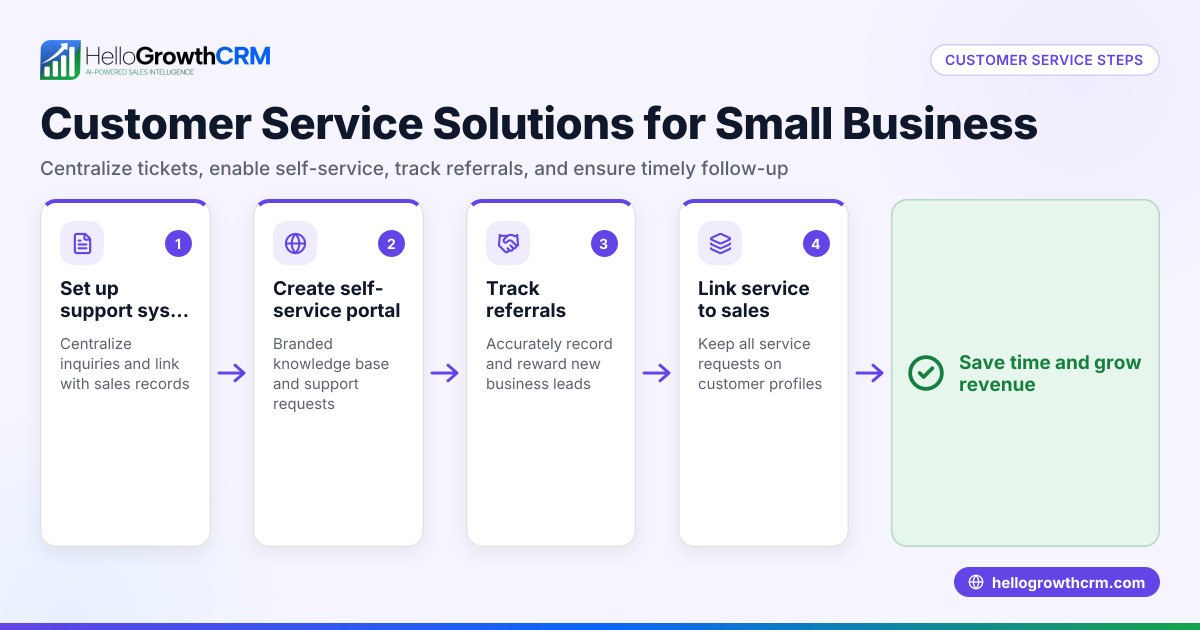
- Separating service data from sales data. Keep service requests linked to customer records to get a full picture of customer health; see customer health score.
Doing this in HelloGrowthCRM
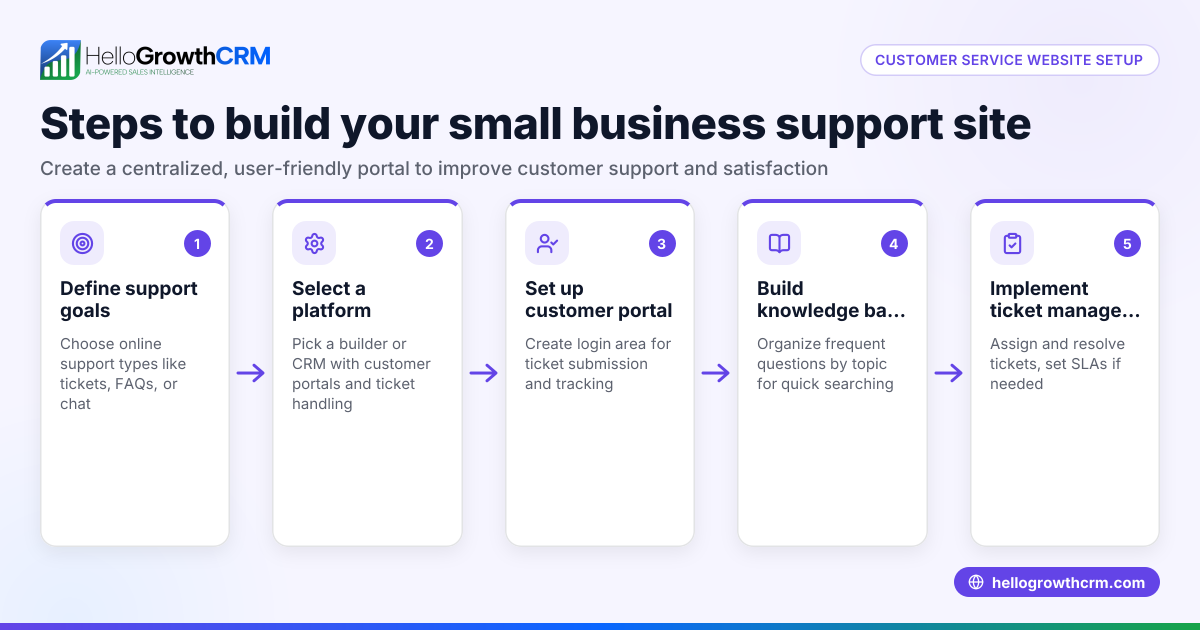
HelloGrowthCRM helps small businesses manage customer service efficiently by keeping service requests on the same customer record as the deal. Its customer portal, referrals, tickets, and knowledge base features let you track support tickets and provide self-service options. This keeps all customer interactions organized and accessible, speeding up response times and improving satisfaction. Learn more about WhatsApp and SMS CRM and how it fits your US business needs at HelloGrowthCRM for the United States.
Frequently asked questions
What are the most important customer service metrics for small businesses? The key metrics are average response time, first contact resolution rate, customer satisfaction score (CSAT), ticket volume, and repeat contact rate. These cover how quickly you respond, how effectively you solve issues, and how happy customers are.
How often should I measure customer service metrics? Monthly measurement is common to track trends and spot issues early. Some businesses with high support volume check weekly.
Can I track customer service metrics without special software? Yes, you can use spreadsheets to log tickets and calculate averages, but it is time-consuming and error-prone. A CRM like HelloGrowthCRM automates tracking and links service data with sales.
How do customer service metrics improve my sales? Good customer service builds trust and loyalty, leading to repeat business and referrals. Metrics help you identify and fix problems before they hurt your reputation.
What is the customer health score and how is it related? Customer health score combines service, sales, and engagement data to show how likely a customer is to stay or buy more. Tracking service metrics is a key part of this; see customer health score.
Key takeaways
- Customer service metrics are measurable numbers showing how well you support customers.
- Focus on key metrics like response time, resolution rate, and customer satisfaction.
- Collect and analyze data consistently to make informed improvements.
- Avoid mistakes like inconsistent logging and ignoring your data.
- Use tools like HelloGrowthCRM to keep service requests linked to customer records.
Start improving your customer service today. Start on the Free Forever plan (200 leads, no credit card) to organize and track your customer interactions efficiently.
Ready to put this into practice?
Set up your pipeline, WhatsApp follow-ups, and AI lead scoring in minutes — free, no credit card.
Try HelloGrowthCRM freeGet CRM tips in your inbox
Join thousands of sales professionals who get weekly insights on CRM strategy, AI automation, and pipeline optimization.

The HelloGrowthCRM team publishes guides on CRM strategy, AI sales tools, and revenue operations for small business sales teams.