HelloGrowthCRM software
Built for real small-business sales teams
HelloGrowthCRM helps reps qualify faster, follow up on time, and close more deals—with practical automation in one place.
- AI lead scoring and pipeline visibility
- Built-in dialer, WhatsApp, and email automation
- Sales forecasting and RevOps-ready reporting
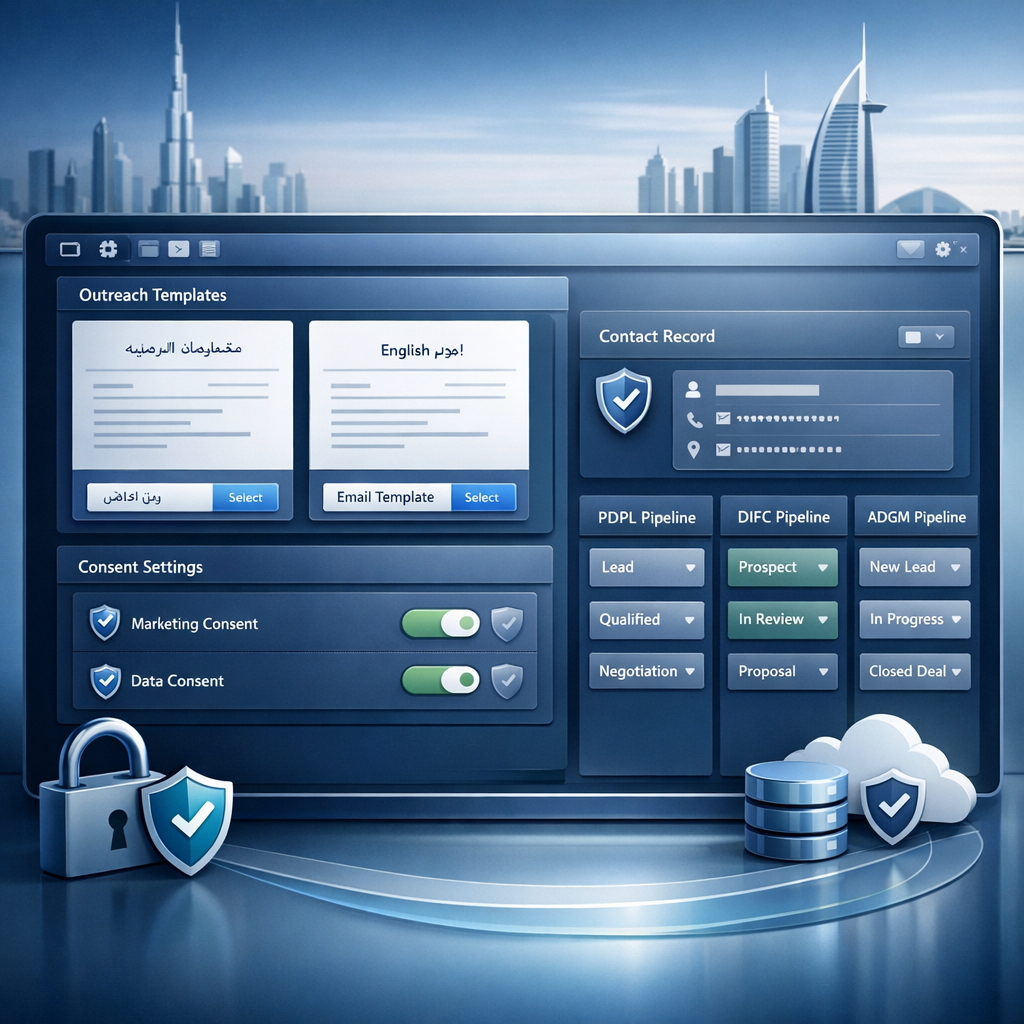
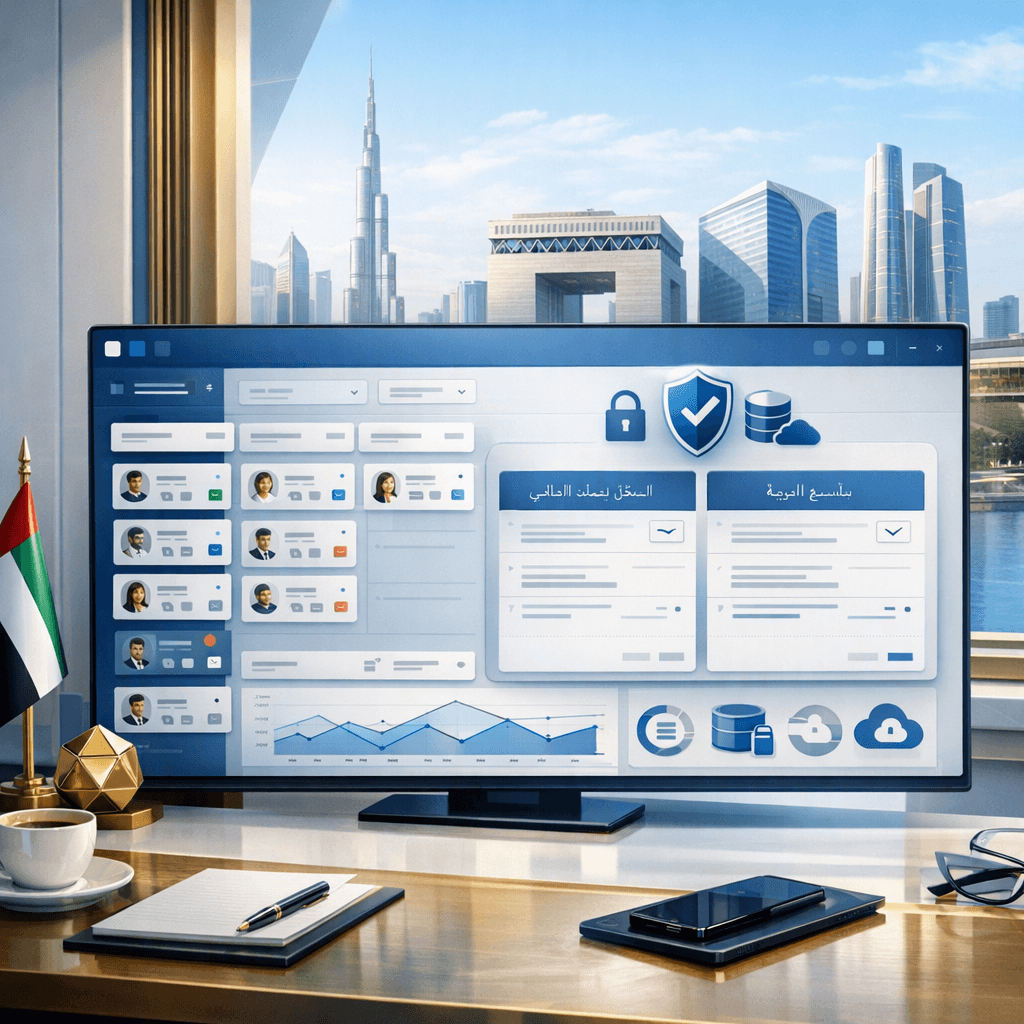
A UAE bilingual outreach template kit is a ready-to-use set of Arabic and English follow-up messages, consent fields, workflow rules, and compliance checks inside HelloGrowthCRM that helps teams in Dubai, Abu Dhabi, and Sharjah contact leads in a structured way aligned with Federal PDPL and, where relevant, DIFC and ADGM data rules.
Key Takeaways
- HelloGrowthCRM lets UAE teams run bilingual Arabic/English lead follow-up from one workspace with templates, consent tracking, and automated routing.
- Compliance starts with process, not just copy. You need a lawful contact basis, channel rules, consent history, and data access controls.
- Federal PDPL applies across the UAE, while free-zone entities may also need to follow the DIFC or ADGM data protection regimes.
- WhatsApp and email outreach work best when each message template includes source, purpose, language preference, and opt-out handling.
- UAE sales teams should capture practical local fields like emirate, AED deal value, FTA VAT registration status, and Arabic/English preference.
- HelloGrowthCRM makes this easier with WhatsApp & SMS CRM, Email Automation, Smart Inbox, and AI CRM.
What is a UAE bilingual outreach template kit in HelloGrowthCRM?
A UAE bilingual outreach template kit in HelloGrowthCRM is a product-led setup that combines Arabic and English message templates, consent records, lead-source tagging, channel rules, and automated follow-up sequences so sales teams can contact prospects consistently while respecting UAE data and communication requirements.
For most UAE B2B teams, the real problem is not writing one good message. It is keeping every message, field, and follow-up action consistent across reps, channels, and legal entities.
In HelloGrowthCRM, a bilingual template kit usually includes:
- Email templates in Arabic and English
- WhatsApp templates for first touch, reminder, and re-engagement
- Lead fields for consent status, language preference, source, and entity type
- Workflows that stop outreach when consent is missing or withdrawn
- Routing rules by emirate, segment, or owner
- AED-based pipeline stages and deal fields
That matters because UAE businesses often sell across multiple contexts at once. A Dubai mainland company may market under Federal rules. A DIFC entity may need separate internal handling. An Abu Dhabi team selling through ADGM may need different governance again.
The UAE government states that the Federal Personal Data Protection Law is the main UAE data protection framework, with separate regimes in financial free zones such as DIFC and ADGM for entities operating there, as explained on the official UAE data protection laws page.
In one rollout we did with a 12-person sales team selling software into Dubai and Sharjah, the biggest gain came from reducing message variation. Reps had been copying old WhatsApp texts from personal notes. Once we moved them into a shared kit with approval rules, response quality improved and compliance review became much faster.
What the kit should contain
A strong UAE bilingual outreach kit inside HelloGrowthCRM should include these core assets:
- Language preference field: Arabic, English, bilingual, or unknown
- Consent basis field: Explicit consent, existing customer relationship, inbound request, or do-not-contact
- Entity jurisdiction field: UAE mainland, DIFC, ADGM, or other
- Channel eligibility field: Email allowed, WhatsApp allowed, call allowed
- VAT and commercial fields: FTA VAT registered yes/no, TRN if needed, billing entity
- Pipeline context: AED expected value, use case, next action date
You can manage those fields inside Features and connect them to automations through AI Pipeline Management.
Why do PDPL, DIFC, and ADGM rules matter for lead follow-up?
PDPL, DIFC, and ADGM rules matter for lead follow-up because outreach is not only a sales activity. It is also personal data processing, and the legal basis, consent handling, retention, and communication controls can differ depending on whether your business operates under mainland UAE law or a free-zone regime.
The compliance point is simple. If your team stores a name, mobile number, work email, job title, or reply history, you are processing personal data.
For UAE teams, the practical model is:
| Area | Main rule set | What sales teams should check |
|---|---|---|
| UAE mainland | Federal PDPL | Lawful basis, consent handling, data minimization, secure storage |
| DIFC entity | DIFC Data Protection Law | Internal policies, transfer controls, access permissions, records |
| ADGM entity | ADGM data protection regime | Similar governance, lawful processing, transparency, control rights |
The DIFC Commissioner of Data Protection publishes the official framework and guidance on the DIFC Data Protection page.
This does not mean every SDR needs to become a lawyer. It means your CRM setup should do three basic things well:
- Record why a lead can be contacted
- Show what channel is permitted
- Stop or limit automation when the record is not compliant
When I have audited pipelines like this, the common failure is not malicious outreach. It is messy data. Teams forget where the lead came from. Language preference is missing. One rep emails while another sends WhatsApp. Nobody can prove what consent existed at the time.
Where TDRA-aware practice fits
A TDRA-aware outreach practice means you respect channel norms, identity transparency, and telecom expectations in the UAE. In plain terms:
- Use business-owned sending numbers and inboxes
- Identify your company clearly in first outreach
- Keep opt-out handling easy
- Avoid aggressive repeated messaging
- Keep contact windows reasonable for local business hours
HelloGrowthCRM helps by centralizing messaging in Smart Inbox and CRM Dialer, instead of leaving follow-up scattered across personal devices.
Which HelloGrowthCRM features support compliant bilingual outreach?
HelloGrowthCRM supports compliant bilingual outreach through a combination of templates, custom fields, consent logging, workflow automation, channel controls, and reporting, so UAE teams can manage Arabic and English follow-up from one system instead of stitching together inboxes, spreadsheets, and personal messaging apps.
The most useful feature stack for this use case includes:
1. Template kits for Arabic and English follow-up
Use approved templates for:
- Inbound lead acknowledgement
- Demo confirmation
- No-response follow-up
- Quote reminder
- Renewal or reactivation
These can be triggered through Email Automation or WhatsApp & SMS CRM. The key is that each template should have a matching Arabic and English version, not a machine-translated one-size-fits-all script.
2. Consent and source tracking
Every lead should capture:
- Original lead source
- Date collected
- Consent basis
- Preferred language
- Channel permissions
- Withdrawal date if applicable
This is where AI CRM and Revenue Attribution work well together. You can trace not only where a lead came from, but also which channel and message path created pipeline.
3. Workflow controls
Good workflows should:
- Route Arabic-preference leads to the right rep
- Pause outbound sequences if consent is unclear
- Trigger approval when a record is tagged DIFC or ADGM
- Set reminders for human review before re-engagement
- Log every send, reply, and opt-out
4. UAE commercial context fields
For serious B2B sales in the UAE, generic deal fields are not enough. Add fields for:
- Emirate: Dubai, Abu Dhabi, Sharjah, other
- Deal value in AED
- VAT registration status
- TRN where needed
- Legal entity name
- Free-zone or mainland classification
The UAE Federal Tax Authority provides official VAT registration information on the FTA website.
What should a compliant UAE outreach template include?
A compliant UAE outreach template should include a clear business identity, a relevant reason for contact, the right language version, an easy opt-out path, and enough CRM fields behind the message to prove source, consent status, and channel eligibility if the record is later reviewed.
The message itself is only half the system. The hidden metadata is what makes the template operationally useful.
Recommended template structure
For each Arabic and English version, include:
- Sender identity: Company name and rep name
- Reason for outreach: Demo request, form submission, event signup, referral, or existing conversation
- Value statement: One sentence only
- Next step: Reply, book, confirm, or stop
- Opt-out language: Short and clear
- CRM mapping: Template ID, approved date, owner team
Example field mapping in HelloGrowthCRM
| Template element | CRM field or control |
|---|---|
| Arabic or English version | Language preference |
| First contact reason | Lead source + consent basis |
| WhatsApp or email send | Channel permission |
| Follow-up timing | Workflow delay rule |
| Opt-out response | Do-not-contact flag |
| Deal quote context | AED amount + pipeline stage |
In one Abu Dhabi deployment, we learned that bilingual outreach fails when the language field defaults to English. Reps stop checking. We switched the default to "unknown" and forced selection after the first reply. That one change reduced awkward language mismatches right away.
Practical copy standards
Use these writing rules:
- Keep first messages under 90 words
- Avoid slang in either language
- Do not imply consent if you do not have it
- Use plain business Arabic, not regional shorthand
- Confirm time zones and working week expectations
If your team also uses meetings heavily, connect Meeting Scheduler and Google Meet or Microsoft Teams to keep follow-up logged automatically.
How to set up a UAE bilingual outreach template kit in HelloGrowthCRM: Step-by-Step
Setting up a UAE bilingual outreach template kit in HelloGrowthCRM means defining your data fields first, then building approved Arabic and English templates, then connecting channel permissions and workflows so each lead gets the right follow-up path based on consent, location, language, and entity type.
- Define your compliance fields
- Map your jurisdictions
- Build paired Arabic and English templates
- Set channel rules
- Create workflow branches
- Add UAE business fields to deals
- Connect team inboxes and messaging tools
- Test with internal seed leads
- Train reps on approved use
- Review monthly
How does HelloGrowthCRM compare with manual outreach tracking?
HelloGrowthCRM compares with manual outreach tracking by replacing scattered spreadsheets, personal WhatsApp history, and inconsistent email drafts with a controlled, auditable system that supports bilingual messaging, consent status, and UAE-specific data fields, making compliance and follow-up quality far easier to maintain as the team grows.
Here is the practical difference:
| Capability | Manual tracking | HelloGrowthCRM |
|---|---|---|
| Arabic/English template control | Inconsistent | Shared approved kit |
| Consent history | Often missing | Logged on record |
| WhatsApp + email visibility | Fragmented | Unified workflow |
| DIFC/ADGM routing | Manual memory | Rule-based automation |
| AED pipeline reporting | Basic or absent | Native deal tracking |
| VAT status fields | Spreadsheet add-on | Structured CRM fields |
| Audit readiness | Low | Much stronger |
Manual outreach can work for a founder and one rep. It usually breaks after five to ten active users. This is especially true when teams mix inbound leads, channel partners, and event lists.
If you want a lower-risk rollout, start with one segment only, such as inbound demo leads in Dubai. Then expand into renewals, Sharjah distributor leads, or Abu Dhabi enterprise accounts. If you want help building that process, Managed RevOps is the fastest path.
For teams comparing cost, the best next step is to review Pricing, book a Demo, or start a Free Trial with your UAE workflow fields already mapped.
For Emirati teams that need Arabic/English outreach, consent-aware automation, and AED pipeline visibility in one place, HelloGrowthCRM gives you a practical way to follow up faster without ignoring PDPL, DIFC, or ADGM obligations.
About the author
Naveed Rahman is a Revenue Operations Lead at HelloGrowthCRM with 11 years of experience in B2B SaaS sales systems, automation, and CRM governance. He has led CRM and outreach process rollouts for GCC sales teams selling into Dubai, Abu Dhabi, and Sharjah. One project that informed this article was a bilingual workflow rebuild for a 12-rep UAE SaaS team that needed WhatsApp, email, and consent logging aligned in one pipeline.
Frequently Asked Questions
Q: What is a UAE bilingual outreach template kit?
A: A UAE bilingual outreach template kit is a set of Arabic and English sales follow-up templates, CRM fields, and workflow rules built for UAE teams. It helps reps send consistent messages while tracking consent, source, and channel permissions inside HelloGrowthCRM.
Q: Does Federal PDPL apply to normal sales follow-up in the UAE?
A: Yes, Federal PDPL can apply to normal sales follow-up in the UAE when your team processes personal data such as names, emails, and phone numbers. The key issue is having a valid basis, clear handling, and proper controls around storage and communication.
Q: Do DIFC and ADGM companies need a different CRM process?
A: Yes, DIFC and ADGM companies often need a different CRM process because free-zone entities may follow their own data protection regimes. In practice, this means using jurisdiction tags, approval paths, and access controls inside the same HelloGrowthCRM setup.
Q: Can HelloGrowthCRM track Arabic and English template usage separately?
A: Yes, HelloGrowthCRM can track Arabic and English template usage separately through template IDs, language preference fields, and send logs. That helps managers review which language version was used, by whom, and on what date.
Q: Is WhatsApp outreach allowed for UAE B2B lead follow-up?
A: WhatsApp outreach can be used for UAE B2B lead follow-up, but it should be handled carefully with clear identity, channel permission checks, and opt-out handling. Teams should use business-managed workflows, not personal unmanaged message threads.
Q: What fields should UAE teams add to leads and deals?
A: UAE teams should add fields for language preference, consent basis, source, emirate, legal entity type, VAT status, TRN where needed, and AED deal value. These fields make both compliance review and sales forecasting much more reliable.
Q: How many reps can this setup support well?
A: This setup works especially well for teams under 50 reps because governance is easier to standardize at that size. Above that, expect to add stronger approval layers, role-based permissions, and more formal admin ownership.
Frequently Asked Questions
Ready to put this into practice?
Set up your pipeline, WhatsApp follow-ups, and AI lead scoring in minutes — free, no credit card.
Try HelloGrowthCRM freeGet CRM tips in your inbox
Join thousands of sales professionals who get weekly insights on CRM strategy, AI automation, and pipeline optimization.

The HelloGrowthCRM team publishes guides on CRM strategy, AI sales tools, and revenue operations for small business sales teams.