HelloGrowthCRM software
Built for real small-business sales teams
HelloGrowthCRM helps reps qualify faster, follow up on time, and close more deals—with practical automation in one place.
- AI lead scoring and pipeline visibility
- Built-in dialer, WhatsApp, and email automation
- Sales forecasting and RevOps-ready reporting
Assigning customer support tickets efficiently is essential for timely responses and customer satisfaction in Singapore small businesses. This guide explains why proper ticket assignment matters, provides detailed step-by-step instructions, a worked example with arithmetic, common mistakes to avoid, and how HelloGrowthCRM helps streamline the process.
Why this comes up / what goes wrong
Many small businesses in Singapore manage customer support using WhatsApp, email, or spreadsheets, which often leads to lost, delayed, or duplicated tickets. Without a clear assignment process, tickets can be ignored or handled inconsistently, causing slow follow-up and unhappy customers. Founders and sales leaders frequently face challenges organising tickets among small teams, especially when workloads and skills vary. Establishing a simple, reliable ticket assignment process helps ensure accountability and faster resolution.
Step-by-step
- Capture Ticket Details: Record the customer's full name, contact information, detailed issue description, and the date and time the ticket was received. Check that all necessary details are included to allow effective resolution.
- Prioritise the Ticket: Assess the urgency (e.g., system outage, billing issue, general inquiry) and type of request. Verify if any Service Level Agreement (SLA) applies to set response expectations.
- Identify the Right Team Member: Select a staff member with the relevant expertise and current availability. Review their current ticket load to ensure balanced workload.
- Assign the Ticket: Use your customer support software or CRM to allocate the ticket to the chosen team member. Confirm the assignment by notifying them promptly via email or WhatsApp.
- Track Progress: Monitor the ticket status regularly until it is resolved. Check for updates and intervene if delays or obstacles arise.
- Close the Ticket: After resolution, confirm with the customer that the issue is satisfactorily addressed. Mark the ticket as closed in the system and log any final notes.
Throughout, keep ticket statuses updated and maintain communication logs for accountability and reference. Using a CRM with integrated ticket management can help avoid lost tickets and improve team coordination. For example, tracking customer health score can help prioritise support efforts effectively customer health score.
Example (fictional figures)
An interior-design studio in Tanjong Pagar receives a customer support ticket on 15/05/2024 about a delayed furniture delivery costing S$12,000.
Step 1: Capture details
- Customer: Ms Tan
- Contact: +65 9123 4567
- Issue: Furniture delivery delayed
- Date/time: 15/05/2024 10:30 am
Step 2: Prioritise
- Urgency: High (delivery delay)
- Type: Delivery issue
Step 3: Identify team member
- Staff: Delivery coordinator Mr Lee
- Current tickets handled: 3
Step 4: Assign ticket
- Assign ticket ID #20240515-01 to Mr Lee
- Notify Mr Lee via WhatsApp
Step 5: Track progress
- 16/05/2024: Mr Lee updates ticket: Delivery rescheduled to 20/05/2024
Step 6: Close ticket
- 21/05/2024: Customer confirms delivery received
- Ticket #20240515-01 closed
This process ensures clear responsibility and keeps the customer informed.
Common mistakes
- Assigning tickets without checking workload: Overloading staff causes delays. Prevent by reviewing current ticket assignments before assigning new ones.
- Ignoring ticket priority: Urgent issues may be delayed if priority is not set. Prevent by defining and applying clear priority criteria.
- Not confirming assignment: Staff may miss tickets if not notified. Prevent by immediately informing assignees via WhatsApp or email.
- Using multiple unlinked systems: Leads to lost or inconsistent information. Prevent by centralising ticket management in one CRM.
- Failing to track progress: Tickets may remain unresolved unnoticed. Prevent by scheduling regular status reviews.
- Closing tickets without customer confirmation: Can cause repeat complaints. Prevent by confirming resolution with the customer before closing.
Using tools with features like customer health score helps monitor ticket impact and team workload. Learn more here customer health score.
Doing this in HelloGrowthCRM
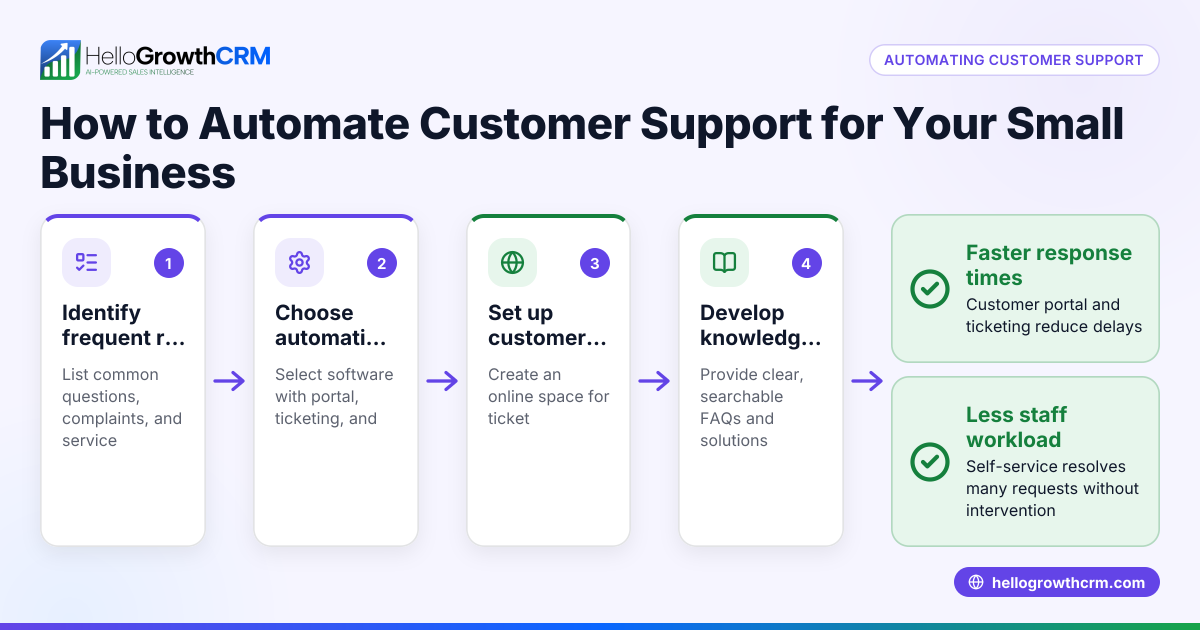
HelloGrowthCRM provides a branded self-service customer portal, referrals, tickets, and a knowledge base. After the sale, all service requests stay on the same customer record as the deal, keeping information organised and accessible. The ticket system allows easy assignment and tracking of support tickets within the CRM. For Singapore businesses using WhatsApp and SMS, HelloGrowthCRM integrates these channels for smooth communication. More details are available in the WhatsApp and SMS CRM section WhatsApp and SMS CRM. Learn about HelloGrowthCRM for Singapore businesses here HelloGrowthCRM for Singapore.
Frequently asked questions
How do I prioritise customer support tickets effectively? Prioritise tickets by urgency and impact on the customer. Critical issues like service outages should be addressed first, while general queries can wait. Setting clear priority levels helps your team focus on what matters most.
What if my team is too small to assign tickets by skill? In small teams, assign tickets based on availability and rotate responsibilities to balance workload. Use a simple system to track who handles what, avoiding duplication or missed tickets.
How can I keep customers informed during ticket resolution? Communicate regularly via their preferred channel, such as WhatsApp or email. Provide updates on progress and expected resolution times to manage expectations.
Can I assign tickets automatically? Some CRM systems offer automatic ticket assignment based on rules like skill, availability, or round-robin distribution. This reduces manual work but requires setup and monitoring.
Why integrate ticketing with CRM? Integrating tickets with CRM keeps all customer information and interactions in one place, improving response quality and enabling better reporting and forecasting.
Key takeaways
- Capture complete ticket details and customer information immediately.
- Prioritise tickets by urgency and type for efficient handling.
- Assign tickets to team members based on skills and workload.
- Notify assignees promptly and track ticket progress until closure.
- Avoid common mistakes such as ignoring priorities or failing to confirm assignments.
- Use a CRM with integrated ticketing and communication channels for better organisation.
Start managing your customer support tickets today with HelloGrowthCRM. Start on the Free Forever plan (200 leads, no credit card).
Ready to put this into practice?
Set up your pipeline, WhatsApp follow-ups, and AI lead scoring in minutes — free, no credit card.
Try HelloGrowthCRM freeGet CRM tips in your inbox
Join thousands of sales professionals who get weekly insights on CRM strategy, AI automation, and pipeline optimization.

The HelloGrowthCRM team publishes guides on CRM strategy, AI sales tools, and revenue operations for small business sales teams.