HelloGrowthCRM software
Built for real small-business sales teams
HelloGrowthCRM helps reps qualify faster, follow up on time, and close more deals—with practical automation in one place.
- AI lead scoring and pipeline visibility
- Built-in dialer, WhatsApp, and email automation
- Sales forecasting and RevOps-ready reporting
To automate customer email campaigns in the USA, start by clearly defining your campaign goals and target audience. Then segment your customer list accordingly. Create tailored email content for each segment. Use an email automation tool to set up a sequence of emails with scheduled send times. Finally, monitor the campaign’s performance and adjust as needed. This article explains why automation is important, provides step-by-step instructions, a worked example, common mistakes to avoid, and how HelloGrowthCRM supports this process.
Why this comes up / what goes wrong
Small business owners in the USA often struggle with timely and consistent customer communication. Manually sending emails is time-consuming and prone to errors or delays, which leads to lost sales and poor customer engagement. Many run sales on spreadsheets, text messages, or basic email without automation, causing slow follow-up and missed opportunities. Automating email campaigns helps ensure every lead and customer receives the right message at the right time without extra manual work.
Step-by-step
- Define your campaign goal: Decide what you want to achieve—new customer acquisition, upselling, re-engagement, or feedback collection. Check that your goal is specific and measurable.
- Segment your customer list: Group your customers based on criteria like purchase history, location, or engagement level. Ensure your email list is clean and updated.
- Create email content: Write clear, concise emails tailored to each segment. Include a strong call to action and personalize where possible.
- Choose an email automation tool: Select software that supports multi-step sequences and scheduling. Check it can stop sending when a customer replies.
- Set up your email sequence: Schedule a series of emails over a defined period (e.g., five emails over two weeks). Set triggers for sending the next email only if no reply is received.
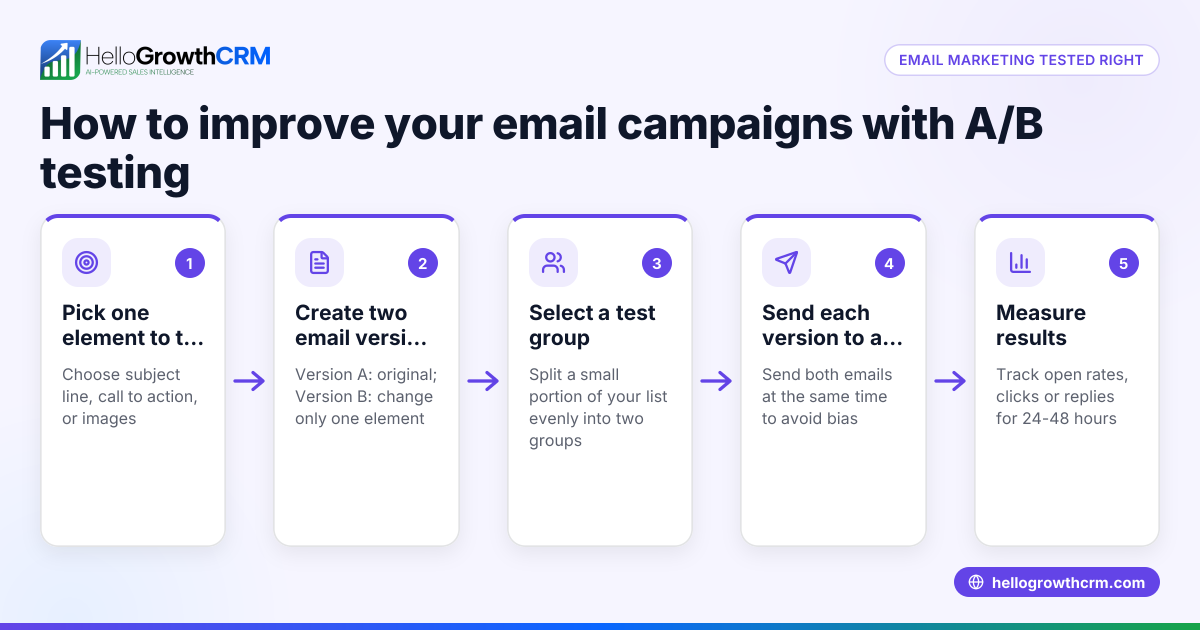
- Test your sequence: Send test emails to yourself and your team to check formatting, links, and timing.
- Launch the campaign: Start the automation and monitor initial results.
- Track and analyze performance: Use open rates, click rates, and reply rates to measure success. Adjust content or timing based on data.
- Integrate with your CRM: Keep customer interactions and replies linked to customer records for easy team access.
For more details on automation tools, see email automation and sequences.
Example (fictional figures)
A plumbing company in Austin, Texas wants to automate a customer re-engagement campaign.
- Goal: Increase repeat service bookings by 10% over 3 months.
- Customer segment: 1,000 customers who used services over a year ago.
- Email sequence: 5 emails over 14 days.
Assume the cost per email sent is $0.01.
Total emails sent = 1,000 customers × 5 emails = 5,000 emails
Total cost = 5,000 emails × $0.01 = $50
If 50 customers book a service worth $200 each:
Revenue = 50 × $200 = $10,000
Return on investment (ROI) calculation:
ROI = Revenue - Cost = $10,000 - $50 = $9,950
This shows a small investment in automation can drive significant revenue.
Common mistakes
- Not segmenting the email list: Sending the same message to all customers reduces relevance. Prevent by grouping customers based on behavior or demographics.
- Overloading customers with emails: Too many emails annoy recipients. Limit to a reasonable number like five over two weeks and stop if they reply.
- Ignoring replies: Automated campaigns that do not stop after a reply waste effort and frustrate customers. Use automation that stops on reply.
- Failing to test emails: Broken links or formatting errors reduce effectiveness. Always send test emails before launch.
- Not tracking results: Without tracking, you can’t improve campaigns. Use analytics to monitor open and reply rates.
- Running automation outside a CRM: This leads to scattered data and team confusion. Integrate automation with CRM for unified customer records. See customer health score for managing customer data.
Doing this in HelloGrowthCRM
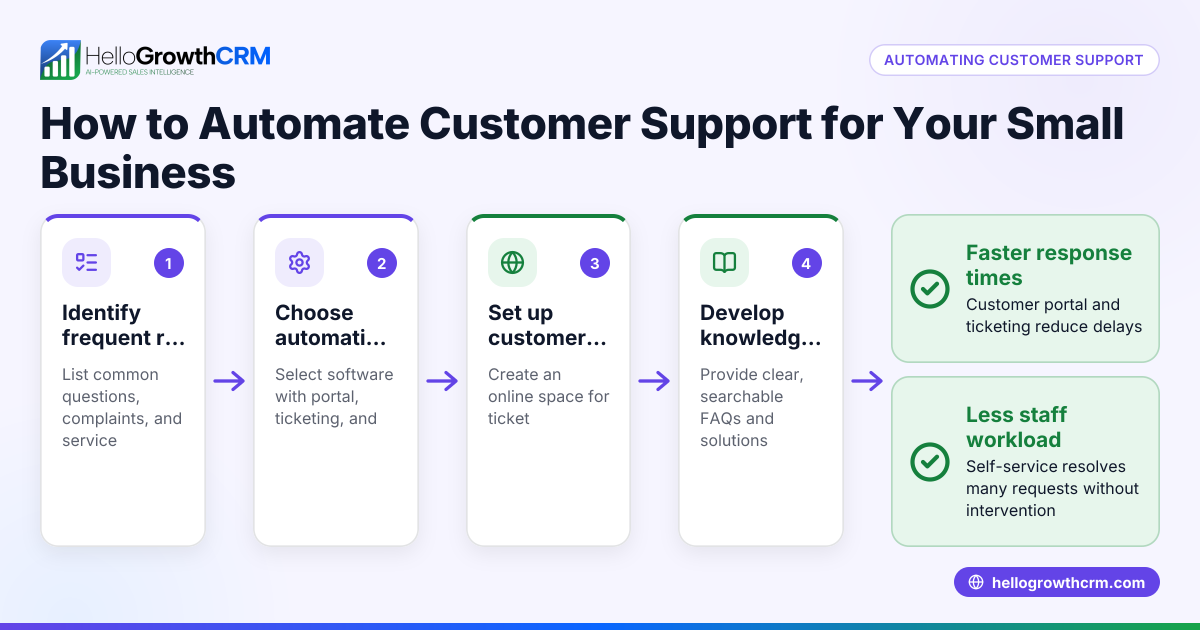
HelloGrowthCRM offers Sequences and campaigns that automate multi-step email follow-ups over two weeks, stopping immediately when a prospect replies. The HelloMail shared inbox lets your team see all replies to quotation emails on the deal record without switching apps. After the sale, customer service requests stay linked to the same customer record using the customer portal, referrals, tickets, and knowledge base features. Learn more about these capabilities at HelloGrowthCRM for the United States.
Frequently asked questions
How many emails should I include in an automated campaign? A typical sequence includes about five emails spaced over one to two weeks. This balances staying top of mind without overwhelming the recipient.
Can I personalize automated emails? Yes, most automation tools let you insert customer names and other details to make emails feel personal and relevant.
What if a customer replies during the campaign? Choose an automation tool that stops sending further emails when a reply is received. This prevents annoyance and allows your team to follow up personally.
Do I need technical skills to set up email automation? Basic skills are enough if your tool has a user-friendly interface with templates and drag-and-drop features. Follow step-by-step instructions carefully.
How do I measure the success of my email campaign? Track open rates, click-through rates, reply rates, and conversions like sales or bookings. Adjust your campaign based on these metrics.
Key takeaways
- Define clear goals and segment your customer list before automating emails.
- Use a multi-step sequence with scheduled sends and automatic stops on reply.
- Test your emails and track campaign metrics to improve results.
- Avoid mistakes like over-emailing, ignoring replies, and not integrating with CRM.
- HelloGrowthCRM supports email sequences, shared inbox, and customer service on one platform.
Start automating your email campaigns today to save time and increase sales. You can Start on the Free Forever plan (200 leads, no credit card).
Ready to put this into practice?
Set up your pipeline, WhatsApp follow-ups, and AI lead scoring in minutes — free, no credit card.
Try HelloGrowthCRM freeGet CRM tips in your inbox
Join thousands of sales professionals who get weekly insights on CRM strategy, AI automation, and pipeline optimization.

The HelloGrowthCRM team publishes guides on CRM strategy, AI sales tools, and revenue operations for small business sales teams.