HelloGrowthCRM software
Built for real small-business sales teams
HelloGrowthCRM helps reps qualify faster, follow up on time, and close more deals—with practical automation in one place.
- AI lead scoring and pipeline visibility
- Built-in dialer, WhatsApp, and email automation
- Sales forecasting and RevOps-ready reporting
To avoid missing customer follow ups in Singapore, organise every follow-up as a scheduled task with a clear due date, track these tasks daily, and automate reminders or follow-up sequences where possible. This article covers why missed follow-ups happen, detailed steps to stay on top of customer contacts, a worked example with figures, common mistakes to avoid, and how HelloGrowthCRM can help streamline your follow-up process.
Why this comes up / what goes wrong
Small business owners in Singapore often juggle many roles and communication channels like WhatsApp, email, and spreadsheets. Without a structured system, follow-ups can be forgotten amid daily tasks. Sales or customer service teams might rely on memory or scattered notes, leading to missed opportunities or delayed responses. Slow follow-up can cause lost leads, unhappy customers, and lower sales. The root causes include lack of task scheduling, no centralised tracking, and no automation to remind or prompt timely actions.
Step-by-step
- Record every follow-up as a task immediately after contact
- After each customer interaction, create a follow-up task with a specific due date and time.
- Check that the task includes customer details and the purpose of the follow-up.
- Use a daily task list to prioritise follow-ups
- Each morning, review your list of follow-up tasks due that day.
- Confirm you have contact details ready and any notes needed.
- Set reminders and alarms
- Use calendar alerts or task management tools to remind you ahead of follow-up deadlines.
- Ensure reminders are visible and actionable.
- Automate multi-step follow-ups where possible
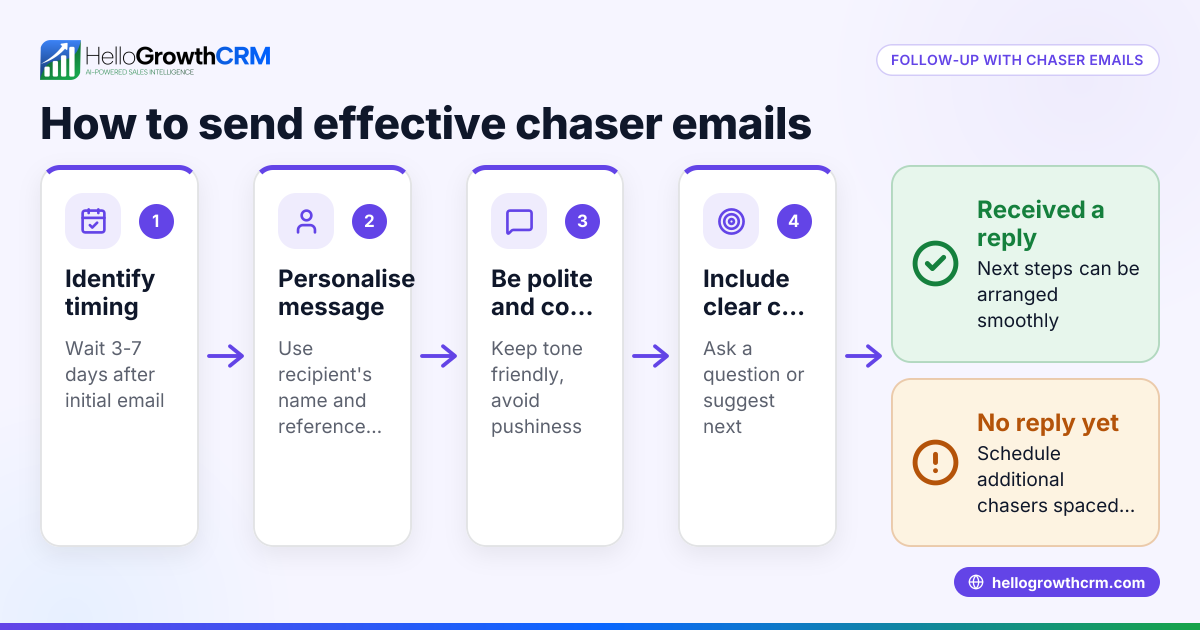
- Plan a sequence of follow-ups (e.g., 5 steps over 2 weeks) to run automatically until the customer replies.
- Check the sequence regularly to adjust messaging or pause if the customer responds.
- Log all follow-up activities and responses
- Keep a record of calls, messages, and notes tied to each customer.
- Review these logs before each follow-up to personalise communication.
- Review and update your follow-up system weekly
- Check for overdue tasks or stalled prospects.
- Re-prioritise and assign new due dates as needed.
- Train your team on standard follow-up procedures
- Ensure everyone understands how to create tasks, use reminders, and handle follow-up sequences.
Example (fictional figures)
Grace runs an F&B supplier business in Woodlands. On 01/05/2024, she contacts a potential client who is interested but busy. She creates a follow-up task:
- Follow-up task created on 01/05/2024 with due date 08/05/2024.
- On 08/05/2024, Grace calls the client but no answer; she logs the call.
- She sets a sequence of 5 follow-ups every 3 days:
- 11/05/2024, 14/05/2024, 17/05/2024, 20/05/2024.
Calculations for follow-up days:
Starting date: 08/05/2024
Next follow-ups every 3 days:
08/05/2024 + 3 days = 11/05/2024 11/05/2024 + 3 days = 14/05/2024 14/05/2024 + 3 days = 17/05/2024 17/05/2024 + 3 days = 20/05/2024
Grace reviews her daily task board each morning to see which follow-ups are due and ensures she contacts the client on those days. When the client replies on 14/05/2024, the sequence automatically stops.
This system helps Grace avoid missing any follow-up and keeps her sales pipeline active.
Common mistakes
- Relying on memory alone: Prevent by immediately recording follow-ups as tasks with due dates.
- Using multiple unlinked tools (WhatsApp, email, spreadsheets): Prevent by centralising follow-ups in one system or task board like sales task boards to avoid scattered information. See sales task boards.
- No reminders or alerts: Prevent by setting alarms or automated notifications for each follow-up.
- Not personalising follow-ups: Prevent by reviewing previous interaction notes before each contact.
- Stopping follow-ups too soon: Prevent by planning multi-step sequences and letting automation run until a response.
- Failing to train the team: Prevent by standardising procedures and ensuring everyone follows the same follow-up process.
Doing this in HelloGrowthCRM
HelloGrowthCRM helps by turning each follow-up into a task with a clear due date on your sales task board. The day’s calls and follow-ups appear as a list, so you don’t rely on memory. You can set up sequences that run a five-step follow-up over two weeks automatically, stopping as soon as the prospect replies. AI agents draft follow-up messages after calls for your review and sending, saving time. Learn more about sales task boards, email automation and sequences, and AI agents at HelloGrowthCRM to keep your follow-ups on track.
Frequently asked questions
How can I ensure my team doesn’t miss follow-ups? Use a centralised task board where every follow-up is logged with a due date. Regularly review the daily task list and automate reminders. Training your team on using these tools consistently also helps.
What’s the best way to automate follow-ups without annoying customers? Set up a multi-step sequence with spaced intervals (e.g., every 3 days) and stop the sequence immediately when the customer replies. Personalise messages based on previous interactions to keep communication relevant.
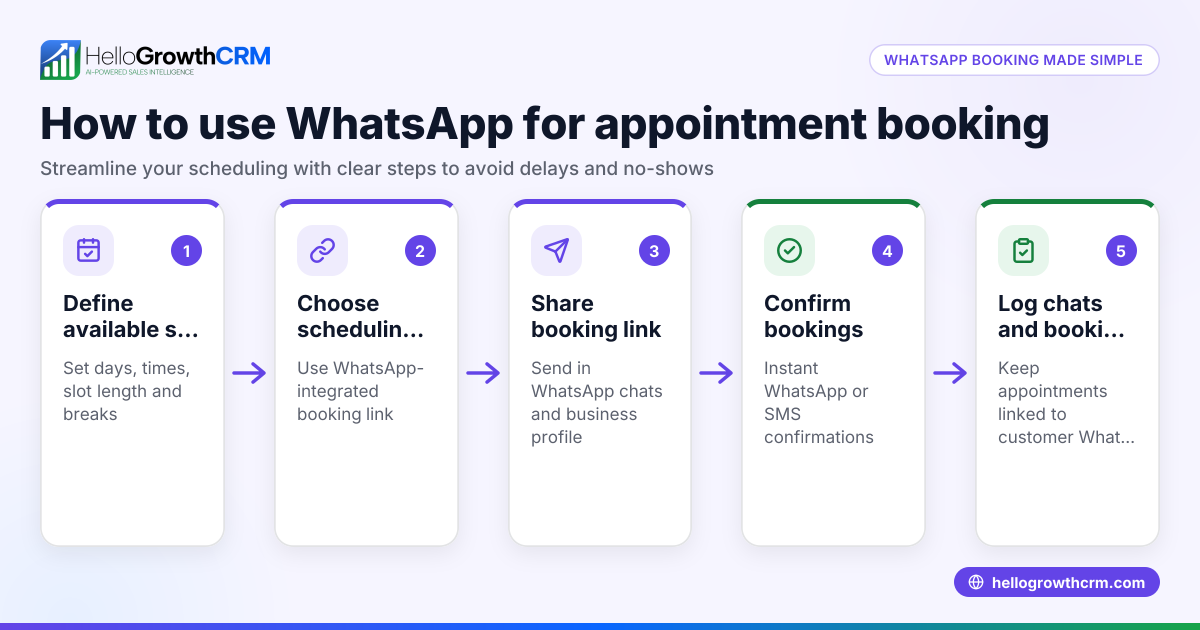
Can I manage follow-ups across WhatsApp and email in one place? Yes, using a CRM that integrates WhatsApp, email, and SMS sequences allows you to automate and track follow-ups across channels without switching apps. This reduces missed contacts and keeps history in one record.
How often should I review my follow-up tasks? Daily review of tasks due that day is essential. Also, weekly reviews help identify overdue or stalled prospects and adjust priorities accordingly.
What are common reasons follow-ups fail? Missed deadlines, lack of reminders, scattered information, and stopping follow-ups too soon are common reasons. Prevent these with a structured system and automation.
Key takeaways
- Record every follow-up as a scheduled task with a due date.
- Use daily task lists and reminders to prioritise follow-ups.
- Automate multi-step follow-up sequences that stop on reply.
- Keep all follow-up activities logged and accessible.
- Regularly review and update follow-up tasks and procedures.
- Train your team on consistent follow-up practices.
Start organising your customer follow-ups today to avoid missed opportunities. You can try HelloGrowthCRM’s Free Forever plan with 200 leads and no credit card required at Start on the Free Forever plan (200 leads, no credit card).
Ready to put this into practice?
Set up your pipeline, WhatsApp follow-ups, and AI lead scoring in minutes — free, no credit card.
Try HelloGrowthCRM freeGet CRM tips in your inbox
Join thousands of sales professionals who get weekly insights on CRM strategy, AI automation, and pipeline optimization.

The HelloGrowthCRM team publishes guides on CRM strategy, AI sales tools, and revenue operations for small business sales teams.