HelloGrowthCRM software
Built for real small-business sales teams
HelloGrowthCRM helps reps qualify faster, follow up on time, and close more deals—with practical automation in one place.
- AI lead scoring and pipeline visibility
- Built-in dialer, WhatsApp, and email automation
- Sales forecasting and RevOps-ready reporting
Calculating and optimizing user cost per month is essential for SaaS businesses to maintain profitability and scale effectively. The user cost per month measures how much it costs your company to serve each active user per month, including direct product expenses, support, and overhead. Knowing this metric helps you price your subscriptions and plan growth smartly.
Key takeaways
- User cost per month reflects the total monthly costs divided by active paying users.
- It includes direct product delivery, support, sales, and operational expenses.
- Optimizing user cost per month improves SaaS profitability and competitive pricing.
- Monitoring user costs alongside revenue per user guides smart business decisions.
- Using AI tools can help automate tracking and forecasting user costs and revenue.
- Regularly evaluate user cost per month when launching features or scaling user base.
What is user cost per month for a SaaS business?
User cost per month is the average cost your SaaS company spends to support one active user during a calendar month. It covers all expenses associated with delivering your software and services, including cloud hosting fees, customer support salaries, sales commissions, software licenses, and overhead.
For example, if you run a SaaS platform in Detroit with 1,500 active users, your user cost per month tells you how much it costs your company, on average, to serve one user each month. This number is crucial for setting subscription prices that cover your expenses and generate profit.
Without this metric, you risk underpricing your product or investing inefficiently, which can harm your business sustainability as you scale. Understanding user cost per month gives you a clear benchmark for evaluating operational efficiency and growth strategies.
How do you calculate user cost per month?
Calculating user cost per month involves several steps. It isn’t just dividing your total monthly expenses by your user count—you’ll want to ensure you include costs correctly and define active users properly.
Step 1: Define Active Users
Active users are those who pay and use your product features during a given month. This typically includes:
- Subscribed users on paid plans.
- Users generating revenue (e.g., through usage-based pricing).
Exclude free trial users or inactive accounts unless they consume meaningful resources or costs. For example, if you run a SaaS in Houston offering 500 paying users and 200 trial users, your active user count would be 500, not 700.
Step 2: Calculate Total Monthly Costs
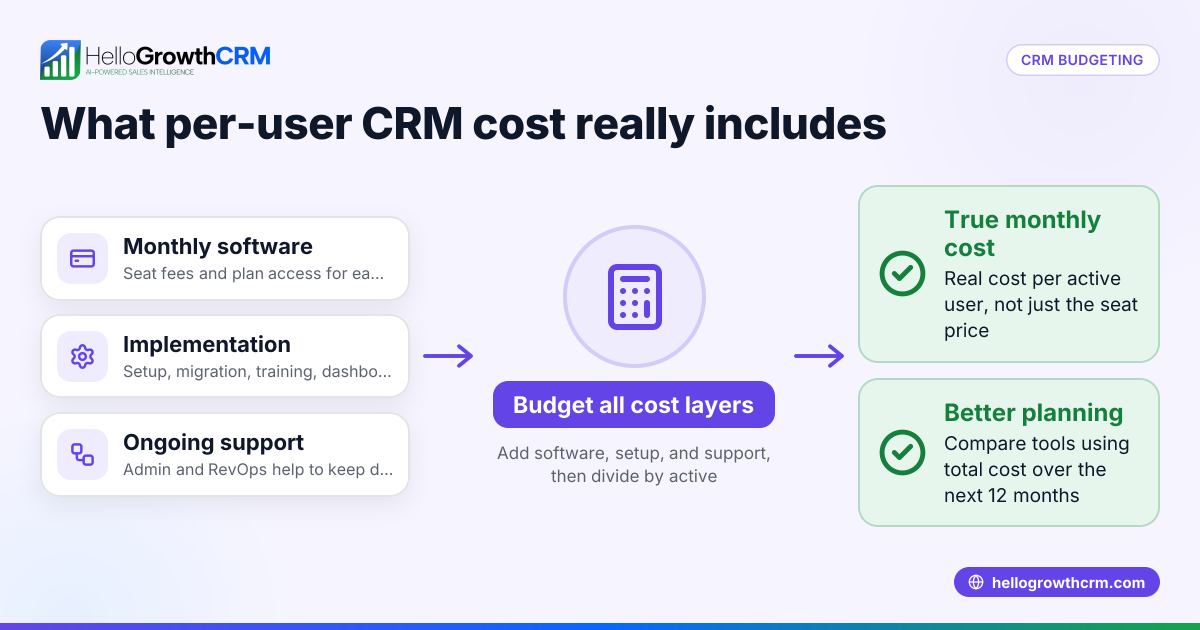
Sum all expenses directly or indirectly tied to serving your users. This includes:
- Cloud hosting and platform costs: Charges from AWS, Azure, or Google Cloud for servers, bandwidth, and databases required to run your app.
- Customer support and success team salaries including commissions or bonuses.
- Sales expenses: Salaries, commissions, bonuses for sales reps, and marketing efforts directly linked to acquiring and retaining users.
- Software licenses: Costs of third-party tools like CRM, customer support platforms, or analytics.
- General overhead: Rent (Chicago, Houston, or remote office), utilities, legal, accounting, and management salaries.
For instance, if your monthly costs are:
- $40,000 cloud hosting
- $30,000 support & success salaries
- $20,000 sales & marketing tied to acquisition
- $10,000 software licenses and overhead
Total = $100,000
Step 3: Compute User Cost Per Month
Divide total monthly costs by the number of active users to find your average user cost. Using the example above:
- Total monthly costs: $100,000
- Active users: 2,000
User cost per month = $100,000 / 2,000 = $50 per user
Why should SaaS businesses track user cost per month?
Tracking this metric helps SaaS founders and sales leaders in several key ways:
- Evaluate Pricing Effectiveness
- Identify Cost Drivers
- Optimize Customer Acquisition Spend
- Forecast Profitability
- Align Teams Around Growth Goals
By monitoring these areas, you can adjust strategy and operations to improve margins and competitiveness.
What costs should you include when calculating user cost per month?
Include the following major cost categories to get an accurate picture:
Product Delivery Costs
- Cloud infrastructure (AWS, Azure, Google Cloud)
- API and third-party license fees
- Security and compliance costs, like SOC 2 audits required by enterprise clients in Chicago or Detroit
- Support tools such as CRM systems like HelloGrowthCRM
Customer Support and Success
- Support team salaries, commissions, and bonuses
- Communication tools, including phone and WhatsApp systems
- Support platform subscriptions like Zendesk
Sales and Marketing Costs
- Sales team compensation and commissions
- Campaigns targeting US businesses, including trade shows and referral programs
- Content creation and email marketing efforts
General and Administrative (G&A)
- Office rent and utilities (Houston, Chicago, or remote)
- Finance systems like QuickBooks and Stripe fees
- Legal fees and insurance
- Management and executive salaries
Allocate G&A costs proportionally based on revenue or headcount for fair user cost assignment.
How can SaaS businesses optimize user cost per month?
Improving user cost per month is essential for scaling efficiently. Here are key strategies:
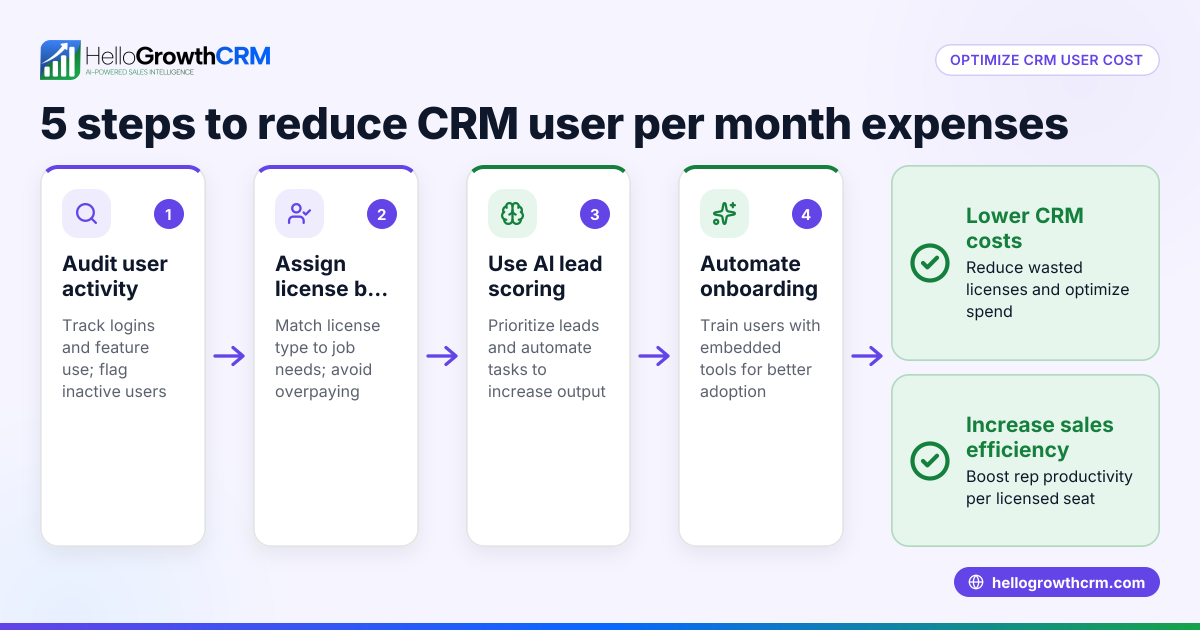
- Automate customer support and sales outreach using email automation to reduce manual effort. Apply AI lead scoring to prioritize prospects, freeing reps in Detroit or Houston to focus on high-value deals.
- Use scalable cloud infrastructure by rightsizing servers, removing unused resources, and employing reserved instances to cut hosting costs by up to 40%.
- Invest in onboarding and retention to reduce churn. For instance, a SaaS in Chicago raised 90-day retention by 15% with streamlined tutorials and automated touchpoints.
- Review pricing regularly to align with your actual user cost and value delivered. Consider usage-based pricing or premium tiers for high-value features.
- Leverage integrated sales tools and managed RevOps to improve forecasting and reduce administrative overhead.
How does AI improve managing user cost per month?
AI technology enables smarter cost management by automating data analysis and forecasting. AI CRM platforms collect data from calls, emails, and meetings to show which activities drive revenue and which do not. Using this insight, sales and support teams can focus on high-impact tasks and reduce waste.
AI can model scenarios to forecast the financial impact of increasing or decreasing investment in areas like marketing or support. It also identifies churn risk early, enabling preemptive customer retention efforts that lower costly user loss.
Understanding your average ai user per tool or workflow helps allocate budgets and resources effectively by linking AI tool usage directly to cost savings and revenue gains.
How often should SaaS businesses calculate user cost per month?
Calculating user cost monthly gives timely insight for growth and profitability decisions. It helps you react quickly to changes like user spikes, infrastructure updates, or marketing shifts. If monthly tracking is not feasible, perform the calculation quarterly. Use it as a key metric in sales forecasting and budget planning.
Can increasing user cost per month ever be beneficial?
Yes. Sometimes spending more per user drives long-term growth:
- Higher quality support can boost retention and lifetime value (LTV).
- Investing in enterprise sales or marketing may increase cost temporarily but attract higher-value customers.
- Launching innovative but costly features might raise costs upfront, improving differentiation and revenue over time.
The key is tracking ROI carefully to ensure these investments improve overall business margins.
Ready to track your SaaS user cost per month with smart automation? Try HelloGrowthCRM’s all-in-one AI CRM and managed RevOps services. Start a free trial or book a demo today to see how you can forecast, optimize, and grow efficiently.
Frequently asked questions
What does "user cost per month" mean in SaaS?
It’s the average cost to support one active user each month, including infrastructure, support, sales, and overhead expenses. It helps determine if your pricing covers your costs and guides profitability planning.
How do you count active users for this calculation?
Count only users who are subscribed or paying during the month. Exclude free trials unless they consume significant product resources or support time.
Can user cost per month vary by customer segment?
Yes. Enterprise customers often require more support and customized service, increasing costs. Tracking user cost by segment helps tailor pricing and resource allocation.
How can AI improve managing user cost per month?
AI automates analysis of sales and support data, identifying areas to reduce waste and improve efficiency. It also forecasts the impact of different investments on cost and revenue per user.
Should I include marketing expenses in user cost per month?
Include direct marketing tied to acquiring and converting paying users. General brand awareness expenses can be included in overhead but allocated proportionally.
How does optimizing user cost affect SaaS growth?
Lower user costs enable competitive pricing or higher profit margins. This creates a virtuous cycle of sustainable growth and the ability to reinvest in product development and sales.
By consistently measuring and managing user cost per month, your SaaS business can make smarter decisions, price correctly, and scale profitably in the competitive US market.
Read next
This article covers one part of a bigger topic. For the complete picture, read our guide to user per month.
Frequently Asked Questions
Ready to put this into practice?
Set up your pipeline, WhatsApp follow-ups, and AI lead scoring in minutes — free, no credit card.
Try HelloGrowthCRM freeGet CRM tips in your inbox
Join thousands of sales professionals who get weekly insights on CRM strategy, AI automation, and pipeline optimization.

The HelloGrowthCRM team publishes guides on CRM strategy, AI sales tools, and revenue operations for small business sales teams.