HelloGrowthCRM software
Built for real small-business sales teams
HelloGrowthCRM helps reps qualify faster, follow up on time, and close more deals—with practical automation in one place.
- AI lead scoring and pipeline visibility
- Built-in dialer, WhatsApp, and email automation
- Sales forecasting and RevOps-ready reporting
To calculate your average deal size in New Zealand, add the total value of all closed deals within a chosen period and divide by the number of those deals. This gives you the average revenue earned per deal. This article explains why this metric matters, provides detailed calculation steps, a worked NZD example, common mistakes to avoid, and how a CRM can help you track deals effectively.
Why this comes up / what goes wrong
Small and mid-sized business owners in New Zealand often want to know their average deal size to better understand how much revenue they typically earn per sale. This figure helps with setting realistic sales targets, pricing strategies, and forecasting future income. Without an accurate average deal size, businesses can misjudge their performance or revenue potential.
Common problems include mixing deals from different time periods, including deals that are still open or lost, or using inconsistent deal values such as quotes instead of final sales. These mistakes lead to incorrect averages and poor business decisions. For example, counting open deals inflates the average, while mixing periods can hide trends.
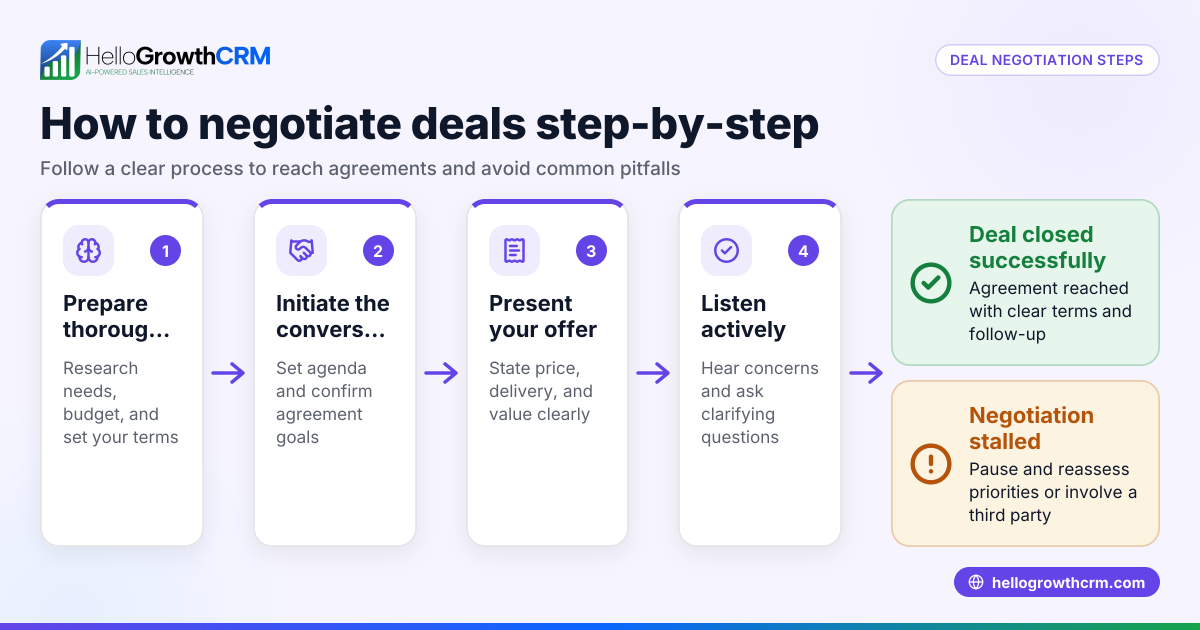
Step-by-step
- Choose your time period: Decide whether you want to calculate average deal size monthly, quarterly, or yearly. Pick a period that fits your reporting or forecasting needs.
- Gather deal data: List all deals that were closed and won during the chosen period. Only include deals where the sale was completed and revenue was received or invoiced.
- Sum total deal values: Add up the final sale values of all these closed deals. Use consistent figures like the final invoiced amount to avoid distortion.
- Count the number of deals: Count how many closed deals you have included.
- Calculate the average deal size: Divide the total deal value by the number of deals.
- Double-check your data: Review your list to ensure all deals are counted once, belong to the chosen period, and use consistent values.
Using a CRM helps organise and track deals accurately. HelloGrowthCRM’s Deals (pipeline) feature lets you follow deals through stages from first contact to close, with follow-up dates so no deal is forgotten.
Example (fictional figures)
A Queenstown-based tourism operator wants to calculate their average deal size for the quarter 01/01/2024 to 31/03/2024.
- Closed deals and values:
- 5 deals at NZ$12,000 each
- 3 deals at NZ$18,000 each
- 2 deals at NZ$25,000 each
Step 1: Calculate total value NZ$12,000 × 5 = NZ$60,000 NZ$18,000 × 3 = NZ$54,000 NZ$25,000 × 2 = NZ$50,000 Total deal value = NZ$60,000 + NZ$54,000 + NZ$50,000 = NZ$164,000
Step 2: Count deals 5 + 3 + 2 = 10 deals
Step 3: Calculate average deal size NZ$164,000 ÷ 10 = NZ$16,400
The average deal size for this quarter is NZ$16,400.
Common mistakes
- Including open or lost deals: Only include deals marked as closed and won. Prevent this by clearly tracking deal status.
- Mixing different time periods: Ensure all deals are from the same reporting period to avoid skewed results.
- Using inconsistent deal values: Use the final sale value, not initial quotes or estimates.
- Ignoring currency consistency: Always use NZD values to maintain accuracy.
- Not tracking deals properly: Without a system, some deals may be missed. Use a CRM like HelloGrowthCRM to keep deals visible and organised.
- Failing to update deal stages: Deals stuck in the wrong stage can distort calculations. Regularly update your pipeline stages.
For managing sales communication, check out WhatsApp and SMS CRM.
Doing this in HelloGrowthCRM
HelloGrowthCRM’s Deals (pipeline) feature helps you track every deal from first contact through to close. For example, a quotation sent last week appears as a deal at the 'quote sent' stage with a follow-up date, so you don’t forget to follow up. This keeps your deal data accurate and up to date for calculating average deal size.
Frequently asked questions
What is average deal size and why is it important? Average deal size is the average revenue you earn from each closed sale. It helps you understand sales performance, forecast revenue, and plan your sales strategy effectively.
How often should I calculate average deal size? Calculate it monthly, quarterly, or yearly depending on your business cycle. Regular calculations help you track trends and adjust your strategy as needed.
Can I include discounts or refunds in the calculation? Use the net deal value after discounts and refunds to get an accurate average deal size. This reflects the true revenue earned.
How does a CRM help with deal tracking? A CRM like HelloGrowthCRM organises deals by stage and reminds you of follow-ups, so you don’t miss any deals when calculating average deal size. It also helps keep deal data consistent and up to date.
Can I calculate average deal size for specific products or services? Yes, segment your deals by product or service category and follow the same calculation steps to find average deal size per category.
What if I have deals in multiple currencies? Convert all deal values to NZD using consistent exchange rates before calculating the average deal size to maintain accuracy. NEEDS EXPERT REVIEW
Key takeaways
- Add up the total value of all closed deals in your chosen period.
- Divide by the number of those deals to find your average deal size.
- Only include closed and won deals with consistent deal values.
- Use a CRM like HelloGrowthCRM to track and manage deals efficiently.
- Regularly calculating average deal size helps improve sales forecasting and strategy.
- Keep your deal data up to date and correctly staged for accurate calculations.
Calculating your average deal size is straightforward and essential for understanding your sales health. To manage your deals and follow-ups better, try HelloGrowthCRM’s Deals (pipeline) feature.
Start on the Free Forever plan (200 leads, no credit card) to simplify your sales tracking today.
Ready to put this into practice?
Set up your pipeline, WhatsApp follow-ups, and AI lead scoring in minutes — free, no credit card.
Try HelloGrowthCRM freeGet CRM tips in your inbox
Join thousands of sales professionals who get weekly insights on CRM strategy, AI automation, and pipeline optimization.

The HelloGrowthCRM team publishes guides on CRM strategy, AI sales tools, and revenue operations for small business sales teams.