HelloGrowthCRM software
Built for real small-business sales teams
HelloGrowthCRM helps reps qualify faster, follow up on time, and close more deals—with practical automation in one place.
- AI lead scoring and pipeline visibility
- Built-in dialer, WhatsApp, and email automation
- Sales forecasting and RevOps-ready reporting
To collect money from clients who won't pay, start by reviewing your contract and invoice for accuracy, then send a clear, polite payment reminder. If that fails, escalate with firmer follow-ups, phone calls, and if necessary, a formal demand letter. This article covers why clients delay payment, detailed steps to recover your money, a worked example with realistic figures, common mistakes to avoid, and answers to frequently asked questions.
Why this comes up / what goes wrong
Small business owners often face clients who delay or avoid payment. This can happen due to unclear payment terms, invoicing errors, cash flow problems on the client’s side, or simple neglect. When payments are overdue, it disrupts your cash flow, making it harder to pay your own bills and invest in growth. You may find yourself chasing payments through texts, emails, or phone calls without a clear process, which wastes time and strains client relationships.
Many small businesses run their sales and client communications on text messages, email, and spreadsheets, which can lead to missed follow-ups or inconsistent messaging. Without a system to organize reminders and calls, it’s easy to lose track of who owes what and when payment was last discussed.
Step-by-step
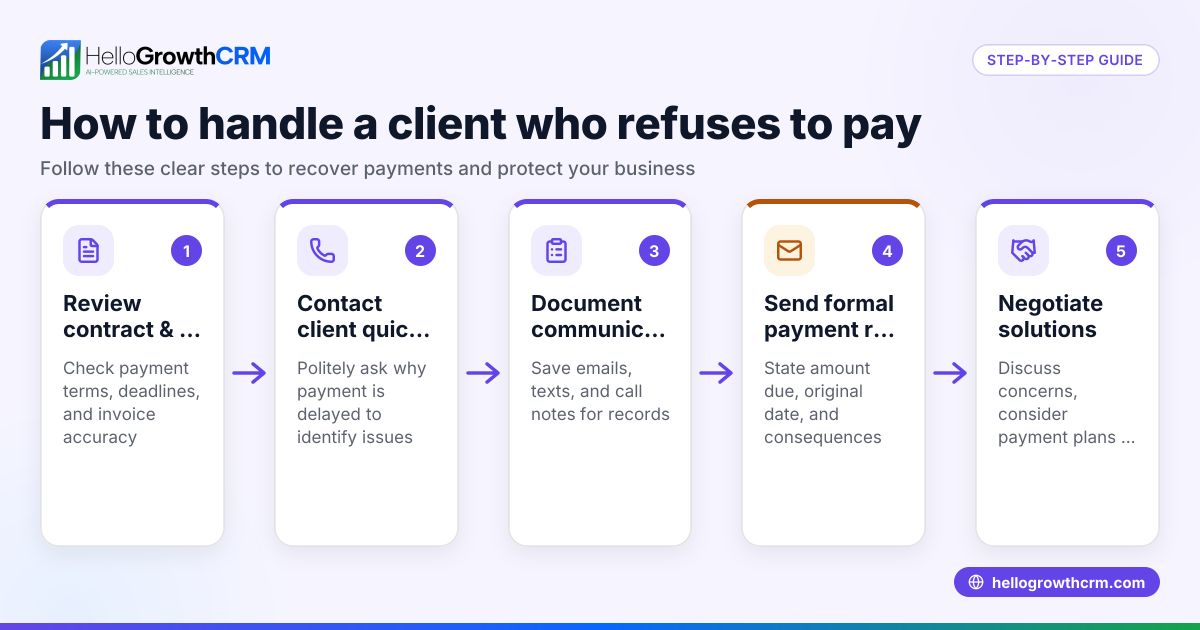
- Review your contract and invoice: Check your contract for agreed payment terms, deadlines, and penalties. Verify the invoice details: amount, due date, client information, and services/products delivered. Make sure there are no errors that could give the client a reason to delay payment.
- Send a polite payment reminder: Within a few days after the due date, send a clear, polite reminder by email or message. Include the invoice number, amount due, and payment instructions. Keep the tone professional and friendly.
- Follow up with a firmer message: If no response after 7 days, send a firmer reminder emphasizing the overdue status and potential consequences of non-payment. Clearly state the amount owed and request immediate payment.
- Make a phone call: Call the client to discuss the payment. Be professional and listen to any issues they raise. Sometimes a direct conversation can uncover problems and lead to a payment plan.
- Send a formal demand letter: If calls and messages do not resolve the issue within a reasonable time, consider sending a formal demand letter by certified mail. State the amount due, original due date, and a deadline for payment (e.g., 10 days). Include a warning about possible further action if payment is not made.
- Consider mediation or collection services: If payment is still not made, consider mediation or hiring a collection agency. Legal action is a last resort due to cost and time involved.
- Document all communications: Keep records of all invoices, reminders, calls, and letters. This documentation is crucial if legal steps become necessary.
Using a built-in CRM dialer can help you keep track of calls and reminders efficiently, reducing the risk of missed follow-ups.
Example (fictional figures)
A B2B software reseller in Denver, Colorado, invoiced a client $12,000 on 03/01/2026 with payment terms of net 30 days.
- Invoice due date: 03/31/2026
- 04/05/2026: Sent polite reminder email
- 04/12/2026: Sent firmer reminder email
- 04/15/2026: Called client to discuss payment
- Client said cash flow issues, requested payment plan
- Agreed to two payments of $6,000 on 04/30/2026 and 05/15/2026
Calculation for payment plan:
$12,000 ÷ 2 = $6,000 per payment
- 04/30/2026: Received first $6,000 payment
- 05/15/2026: Received second $6,000 payment
Total collected = $6,000 + $6,000 = $12,000
This step-by-step approach helped recover full payment without legal action.
Common mistakes
- Ignoring overdue payments hoping clients will pay eventually: Prevent this by setting reminders and following up promptly. Delays can worsen the problem.
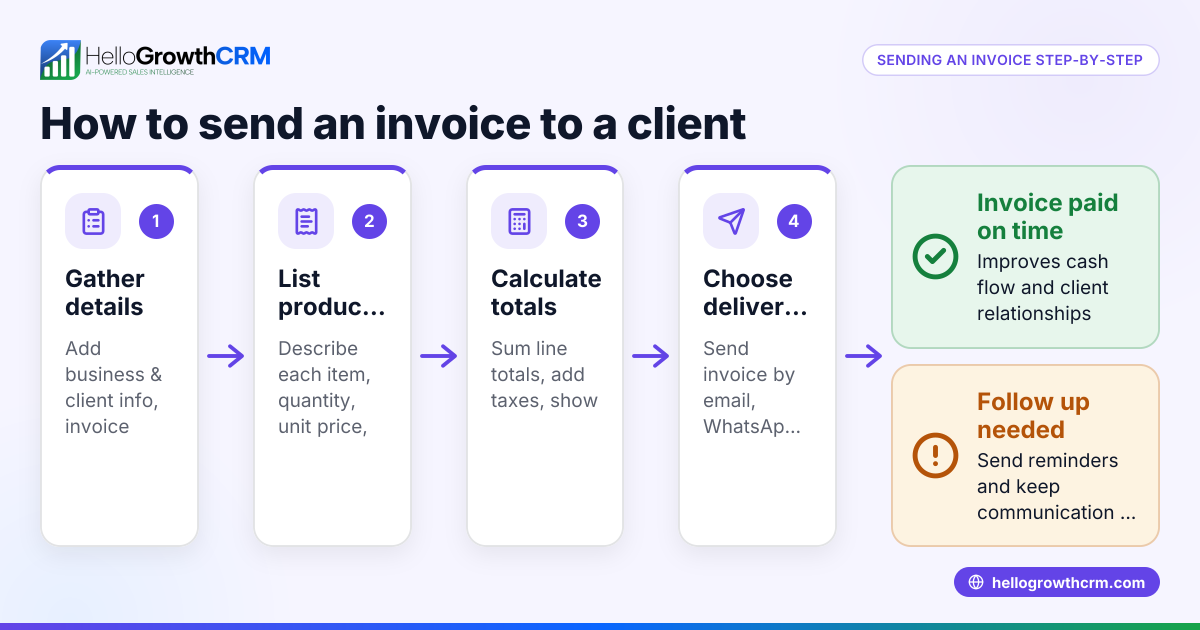
- Sending unclear or late invoices: Prevent by sending accurate invoices immediately after delivery and stating clear payment terms. Confusing invoices cause delays.
- Being too aggressive or rude in communications: Prevent by maintaining professionalism to preserve client relationships. Being firm but polite encourages payment.
- Failing to document communications and agreements: Prevent by keeping detailed records of all interactions. Documentation supports legal action if needed.
- Not offering payment plans when appropriate: Prevent by assessing client situations and proposing realistic options to facilitate payment.
- Relying on scattered communication tools: Prevent by using organized systems. For example, a WhatsApp and SMS CRM can automate reminders and keep messages consistent.
Frequently asked questions
What if the client refuses to pay at all? If polite reminders and calls fail, send a formal demand letter. If the client still refuses, consider mediation or a collection agency. Legal action is a last resort and can be costly.
How long should I wait before escalating the collection process? Start with a polite reminder immediately after the due date. Escalate to firmer messages and calls within 1-2 weeks. Send a demand letter after 2-3 weeks of non-payment.
Can I charge late fees? Only if your contract or invoice clearly states late fees or interest charges and they comply with state laws. Always communicate these terms upfront.
How can I avoid these issues in the future? Use clear contracts with payment terms, invoice promptly, and consider tools like HelloGrowthCRM for the United States to manage leads and follow-ups efficiently.
Is it legal to contact clients repeatedly for payment? Yes, but avoid harassment. Follow professional and legal communication guidelines. Document all contacts.
Key takeaways
- Review contracts and invoices carefully before starting collection.
- Use polite, then firmer reminders, followed by phone calls.
- Send a formal demand letter if needed.
- Document every communication.
- Offer payment plans to facilitate collection.
- Avoid common mistakes like ignoring overdue payments or being unprofessional.
Start collecting overdue payments today by following these clear steps. To organize your client communications and follow-ups better, consider starting with the Free Forever plan (200 leads, no credit card).
Ready to put this into practice?
Set up your pipeline, WhatsApp follow-ups, and AI lead scoring in minutes — free, no credit card.
Try HelloGrowthCRM freeGet CRM tips in your inbox
Join thousands of sales professionals who get weekly insights on CRM strategy, AI automation, and pipeline optimization.

The HelloGrowthCRM team publishes guides on CRM strategy, AI sales tools, and revenue operations for small business sales teams.