HelloGrowthCRM software
Built for real small-business sales teams
HelloGrowthCRM helps reps qualify faster, follow up on time, and close more deals—with practical automation in one place.
- AI lead scoring and pipeline visibility
- Built-in dialer, WhatsApp, and email automation
- Sales forecasting and RevOps-ready reporting
To create a follow up calendar in New Zealand, start by compiling your current leads and prospects. Decide how often and when you want to follow up with each contact, then assign specific dates for these follow-ups. Track these tasks in a calendar or task board and review it daily to stay on top of your outreach. This article explains why a follow-up calendar is important, gives step-by-step instructions, shows a worked example with realistic NZD figures, highlights common mistakes, and describes how HelloGrowthCRM can help.
Why this comes up / what goes wrong
Small and mid-sized business owners in New Zealand often lose leads because follow-ups are inconsistent or forgotten. Running sales on text messages, email, or spreadsheets without a clear schedule makes it easy to miss the best time to contact prospects. Without a follow-up calendar, sales teams rely on memory or scattered notes, leading to slow responses and lost opportunities. A clear, structured follow-up calendar helps organise outreach, improves lead conversion, and reduces stress.
Step-by-step
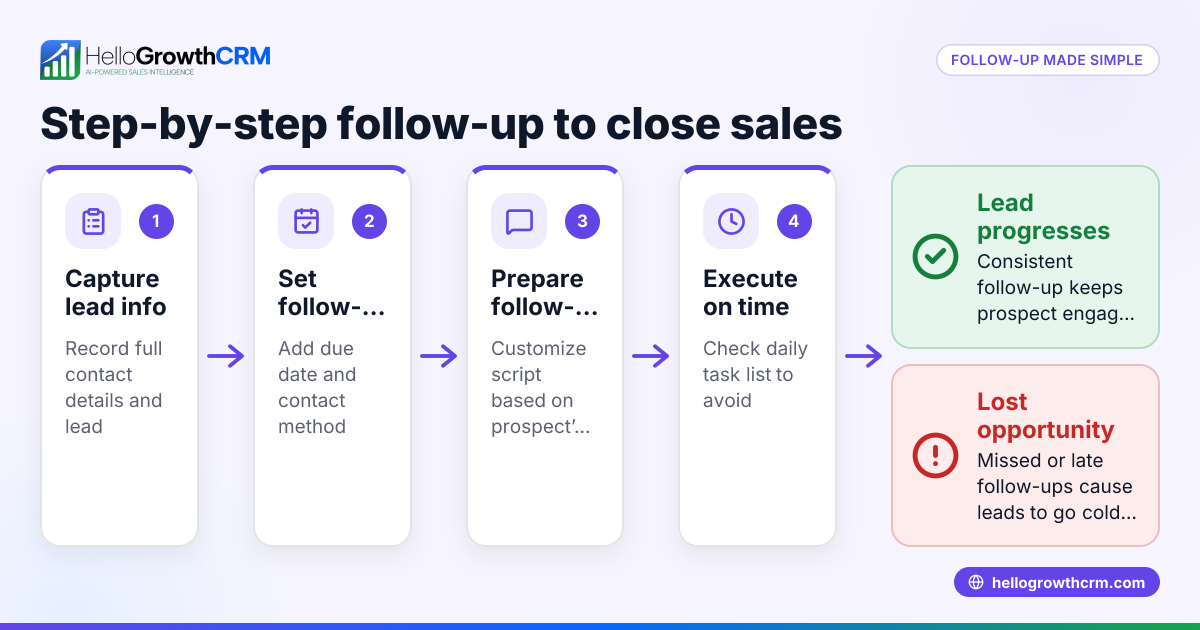
- Gather your leads and contacts: Collect all current leads from your CRM, spreadsheets, or email lists.
- Segment your leads: Group leads by priority, source, or sales stage to plan follow-up frequency.
- Decide follow-up timing: For example, follow up immediately after initial contact, then 3 days later, 1 week, and 2 weeks.
- Create follow-up tasks: For each lead, create tasks with due dates matching your timing plan.
- Choose a calendar or task management tool: Use a digital calendar, spreadsheet, or a CRM task board to track follow-ups.
- Assign tasks to team members: Make sure each follow-up task has a responsible person.
- Set reminders and notifications: Ensure you or your team get alerts before tasks are due.
- Review daily: Check your calendar or task board at the start of each day to prioritise follow-ups.
- Update after each contact: Mark tasks complete or reschedule as needed based on responses.
Check that your calendar covers all leads without gaps and that follow-up intervals are realistic for your sales cycle.
Example (fictional figures)
A Christchurch building company wants to follow up on 5 new enquiries received on 01/06/2024. They plan a 4-step follow-up: day 0, day 3, day 7, day 14.
- Lead 1: Initial call on 01/06/2024, follow-ups scheduled on 04/06/2024, 08/06/2024, 15/06/2024.
- Lead 2: Initial call on 01/06/2024, same follow-up dates.
They log each task with due dates:
Task 1: 01/06/2024 (initial call) Task 2: 04/06/2024 (follow-up call) Task 3: 08/06/2024 (email check-in) Task 4: 15/06/2024 (final SMS)
If the initial call resulted in a NZ$12,000 potential project, the value of timely follow-ups is high. Missing a follow-up could delay or lose this NZ$12,000 opportunity.
Common mistakes
- Not setting specific due dates: Without clear dates, follow-ups get forgotten. Prevent this by assigning exact calendar dates.
- Overloading follow-ups on one day: Spreading tasks evenly avoids overwhelming your team.
- Ignoring responses: Stop follow-ups immediately when a prospect replies to avoid annoyance.
- Failing to review daily: Without daily checks, tasks slip through. Use reminders or task boards to stay on track.
- No accountability: Assign each follow-up to a team member to ensure responsibility.
Use tools like sales task boards to manage these tasks visually and reduce errors.
Doing this in HelloGrowthCRM
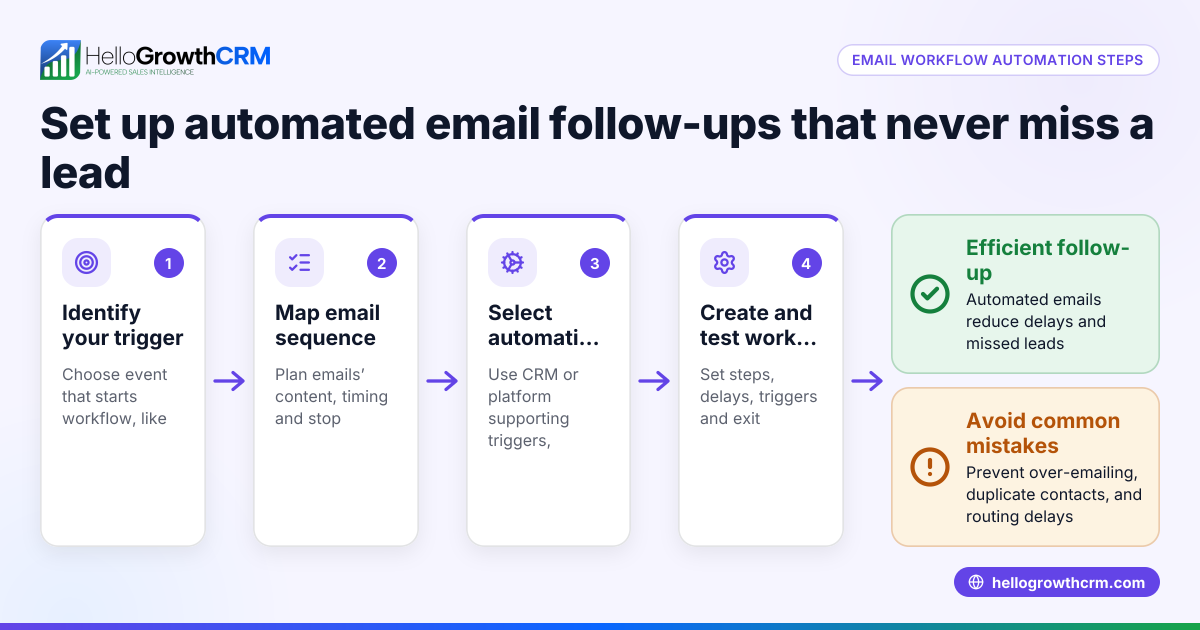
HelloGrowthCRM helps you create and manage your follow-up calendar with its Activities and task boards. Each follow-up becomes a task with a due date, so your daily calls and messages show as a clear list, not a memory test. You can also set up Sequences and campaigns for automated multi-step follow-ups over two weeks, which stop automatically when a prospect replies. For added efficiency, AI agents draft follow-up messages after calls for your review and sending. Learn more about sales task boards, email automation and sequences, and HelloGrowthCRM for New Zealand.
Frequently asked questions
How often should I follow up with a lead? A typical follow-up schedule starts immediately after initial contact, then at 3 days, 1 week, and 2 weeks. Adjust frequency based on your sales cycle and lead priority.
What tools can I use to create a follow-up calendar? You can use digital calendars, spreadsheets, or CRM task boards. HelloGrowthCRM offers task boards that automatically organise follow-up tasks and reminders.
What if a lead replies during the follow-up sequence? Stop the automated follow-ups immediately to avoid annoying the lead. HelloGrowthCRM sequences pause when a prospect responds.
How do I keep my team accountable for follow-ups? Assign each follow-up task to a specific team member and use task boards to track completion and due dates.
Can I automate follow-ups? Yes, using HelloGrowthCRM’s sequences, you can automate multi-step follow-ups across email, SMS, and WhatsApp.
Key takeaways
- List all leads and assign specific follow-up dates.
- Use a calendar or task board to track and review daily.
- Follow a consistent schedule like immediate, 3 days, 1 week, and 2 weeks.
- Assign tasks to team members for accountability.
- Stop follow-ups when prospects respond.
- Consider using HelloGrowthCRM task boards and automated sequences to streamline follow-ups.
Start organising your follow-ups today and improve your sales outcomes. You can Start on the Free Forever plan (200 leads, no credit card) with HelloGrowthCRM to try these features.
Ready to put this into practice?
Set up your pipeline, WhatsApp follow-ups, and AI lead scoring in minutes — free, no credit card.
Try HelloGrowthCRM freeGet CRM tips in your inbox
Join thousands of sales professionals who get weekly insights on CRM strategy, AI automation, and pipeline optimization.

The HelloGrowthCRM team publishes guides on CRM strategy, AI sales tools, and revenue operations for small business sales teams.